 Brixton Vintage Thrift Shop Finder: South London Retro Gems
Hidden Gems & Odd Finds
Soho Flea Market Browsing Guide: A 60-Minute Lunch Loop
Soho has no single flea market, so treat its stalls, basements and record bins as one spread-out market you can scan in an hour without missing lunch.
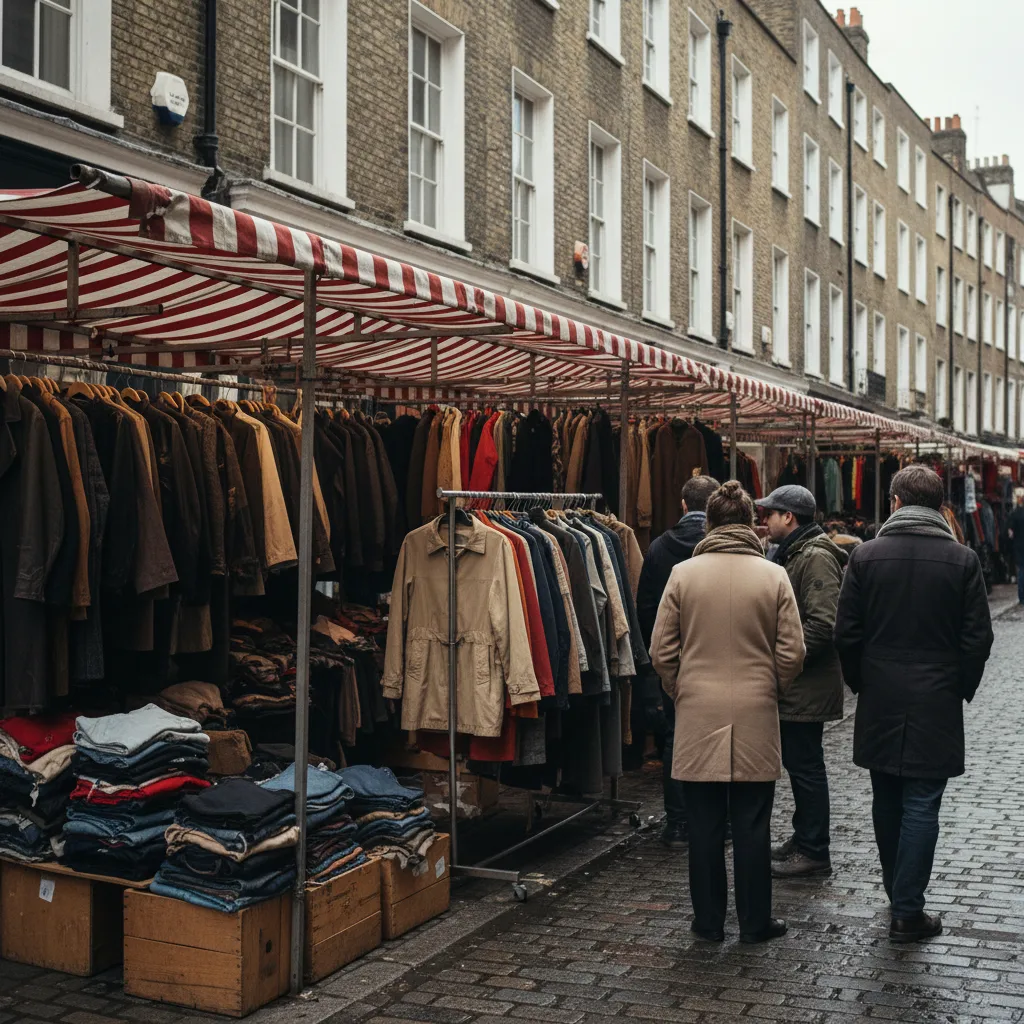
Soho does not have one big flea market, and that is the first thing to know before you plan a lunch-hour browse here. What it has instead is a scatter of street stalls on Berwick Street, vintage clothing basements tucked under side-street shopfronts, record bins in narrow shops and the odd trestle table of old prints near Carnaby. This flea market browsing guide treats the whole grid as one spread-out market you can scan in about an hour.
Why Soho Works as a Scattered Flea Market
Soho has traded in second-hand things for as long as anyone in the neighbourhood can remember. Tailors sold off-cuts, record dealers swapped stock across the counter and costume makers for the West End theatres let old pieces drift into resale rails. That habit never organised itself into one yard or car park. It lives in small rooms, stairwells and pavement tables, which means you browse it on foot, block by block, rather than lap by lap.
The upside is that nothing here takes long. A basement vintage shop might hold three rails and a basket of scarves, so you can judge it in five minutes. A record shop crate takes ten. The downside is that the good stuff is spread thin, and the trick is a route that keeps you moving in one direction instead of zigzagging back across Wardour Street with half your lunch break gone.
A Sixty-Minute Loop That Starts on Berwick Street
Start at the southern end of Berwick Street, where the old market still sets up its stalls along the pavement. Most of the trade now is food, and that is fine, because grabbing something to eat in the first ten minutes frees the rest of the hour. Eat standing and look along the stalls for the one or two that carry fabric, bags or bric-a-brac, which tend to sit between the lunch queues.
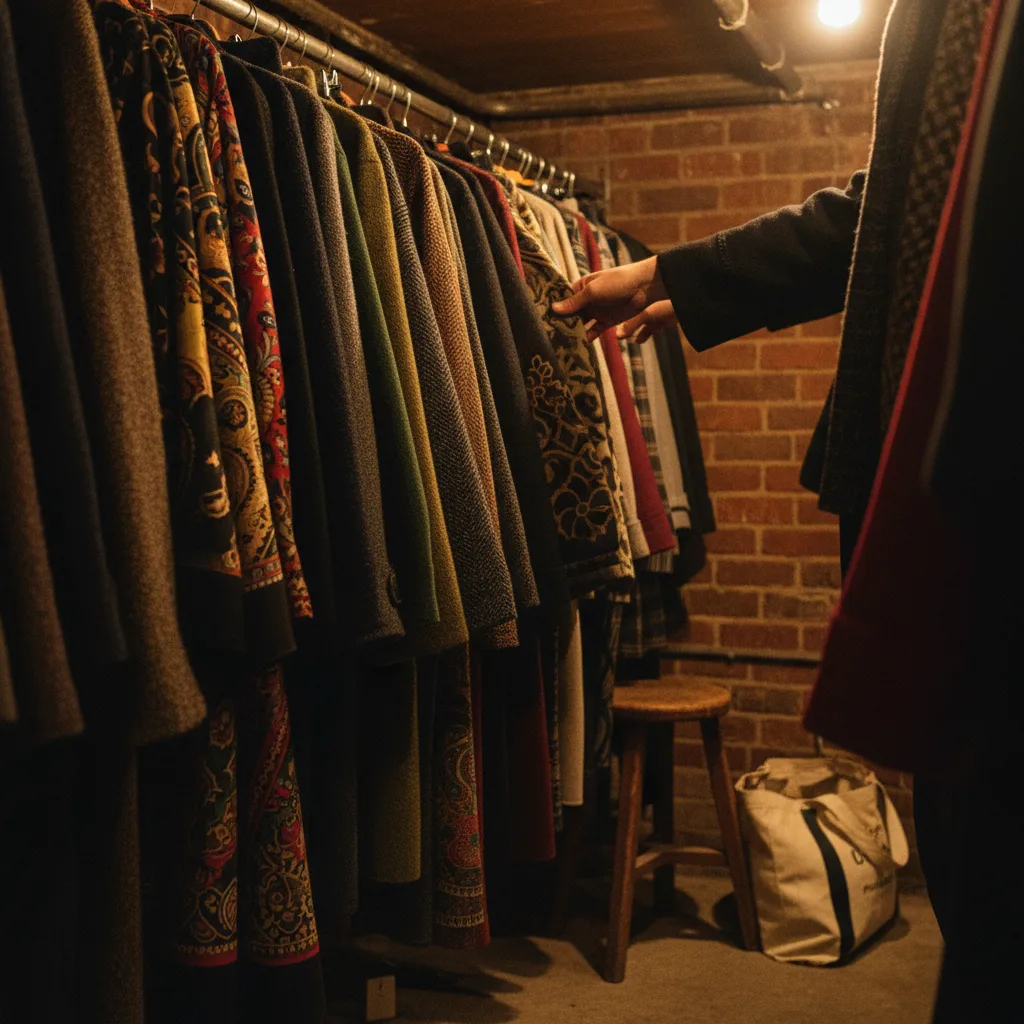
From there walk north and turn into the side streets toward Broadwick Street and Poland Street. This is basement territory. Look for open doors with stairs going down and a rail parked at street level as a signal. Spend no more than eight minutes in each one. If the first rail is all fast fashion with new tags, the rest of the room usually is too, so leave and try the next door.
How to Scan a Basement Rail in Five Minutes
Office workers who browse Soho at lunch tend to share one habit: they read rails by fabric, not by hanger. Run your hand along the shoulders and stop at anything that feels heavy, like wool, waxed cotton, thick denim or real leather. Pull only those pieces out. A good basement rail in Soho is often sorted by colour or decade, so once you find your era, the pieces worth trying sit close together.
Skip the fitting room unless you are fairly sure. Most of these rooms have one curtain and a short queue, and a ten-minute wait eats your loop. Hold a jacket against your shoulders in the mirror, check the cuffs and underarms for wear, then decide. If you love it but cannot try it, ask the person behind the counter whether they will hold it until the end of the day, which many small dealers will do for a regular.
Record Bins and Paper Ephemera Between Errands
Berwick Street became famous for record shops, and a few still trade in the area with crates of used vinyl near the door. If records are your thing, give yourself one shop, not three. Pick a single genre bin and flick through it from the back, where newer arrivals often get filed. Lunch-hour regulars in these shops rarely chat, so keep headphones off and your bag tucked in so it does not knock the crates.
Paper is the overlooked flea category in Soho. Old theatre programmes, film posters, postcards of the West End and sheet music turn up in boxes on counters and outside some print shops. They are light, they fit into a work bag and they make good small gifts. Look for anything with a theatre name you recognise from the streets around you, because a local object always means more than a generic one.
Who You Will See and the Unspoken Rules
At lunch you share the rails with a recognisable crowd. There are designers from nearby studios hunting for one strange shirt to wear to a pitch, costume assistants from the theatres looking for period buttons and students from the art colleges who know every basement by name. Everyone is in a hurry, so the main rule is simple: do not block the narrow aisle while you take a call, and step outside to think.
The second rule is to put things back where you found them. Small dealers spend their mornings sorting by size, colour or decade, and a jacket hung on the wrong rail costs them time. The third is cash courtesy. Most places take cards, but a dealer at a pavement table will often appreciate cash for small items, and having a little on you makes a quick sale less awkward.
What to Skip When the Clock Is Running
Skip Carnaby Street itself if your hour is tight. It is mostly new brand stores, and the vintage feel there is styled rather than sourced. The small courtyards and lanes off it are more rewarding, but they also pull you east and west, which breaks the loop. Save them for a slower afternoon. Also skip any shop with a long queue at the door, because a line in Soho at lunch usually means a sale on new stock.
The honest judgment is that Soho is not the place for big pieces. Furniture, lamps and framed art are rare and awkward to carry back to the office. Think of this neighbourhood as a hunting ground for one coat, a scarf, a record or a stack of postcards. If you want furniture or a full morning of digging, Soho is a starter course, not the meal.
Plan B for Rain and Busy Days
When it rains, the pavement stalls thin out, but the basements become the whole point of the trip. Swap the loop for a straight line along the side streets with the most stairwells and spend more time in fewer rooms. If everything is crowded, walk ten minutes north toward Fitzrovia, where quieter vintage and second-hand shops see fewer office crowds at the same hour.
If you only get half an hour, pick one basement and one record crate and leave the rest for another day. Coming back weekly is how lunch-hour browsers actually find things here, because stock in small rooms turns over quickly. Before you head out, open the Karpo APP to see which vintage shops and second-hand spots sit closest to your office, then build the loop around them.
Practical Notes for a Soho Lunch Browse
Bring a foldable tote so you are not carrying a paper bag back into a meeting. Wear something easy to slip off if you plan to try on a jacket, and leave bulky umbrellas at the desk if the sky allows. Walking is the only sensible way to get around, since the streets are short and the whole loop covers a small corner of the West End.
Keep a short list on your phone of what you are actually hunting for, such as a navy wool coat or a particular record. Soho rewards focus, and a list stops you from drifting into twenty rooms and buying nothing. When the hour is up, walk back along a different street so you pass new doors, and note any shop you want to save for a longer visit.
Ask Karpo for more information.
Keep reading
- Brixton Vintage Thrift Shop Finder: South London Retro Gems
 Notting Hill Vintage Thrift Shop Finder: Preloved Rails
 Soho Vintage Thrift Shop Finder: West End Designer Archives