 Brixton Vintage Thrift Shop Finder: South London Retro Gems
Hidden Gems & Odd Finds
Notting Hill Flea Market Browsing Guide: Portobello by Zone
Portobello Road changes character every few hundred metres, so this Notting Hill guide splits it into four zones and ends at the junk stalls of Golborne Road.
Most people treat Portobello Road as one long market, drift with the crowd for an hour and leave with tired feet and nothing in their bag. The road is easier to enjoy once you see it as a series of neighbourhoods strung along one street. The top end belongs to antique dealers, the middle to fruit, veg and food, the stretch under the Westway to clothes and bric-a-brac, and the far end spills into Golborne Road, where the stalls get scruffier and the finds get stranger. This flea market browsing guide walks you through the four zones in order, with a plan for what to look at, what to skip and where to rest.
Why Zones Beat Wandering
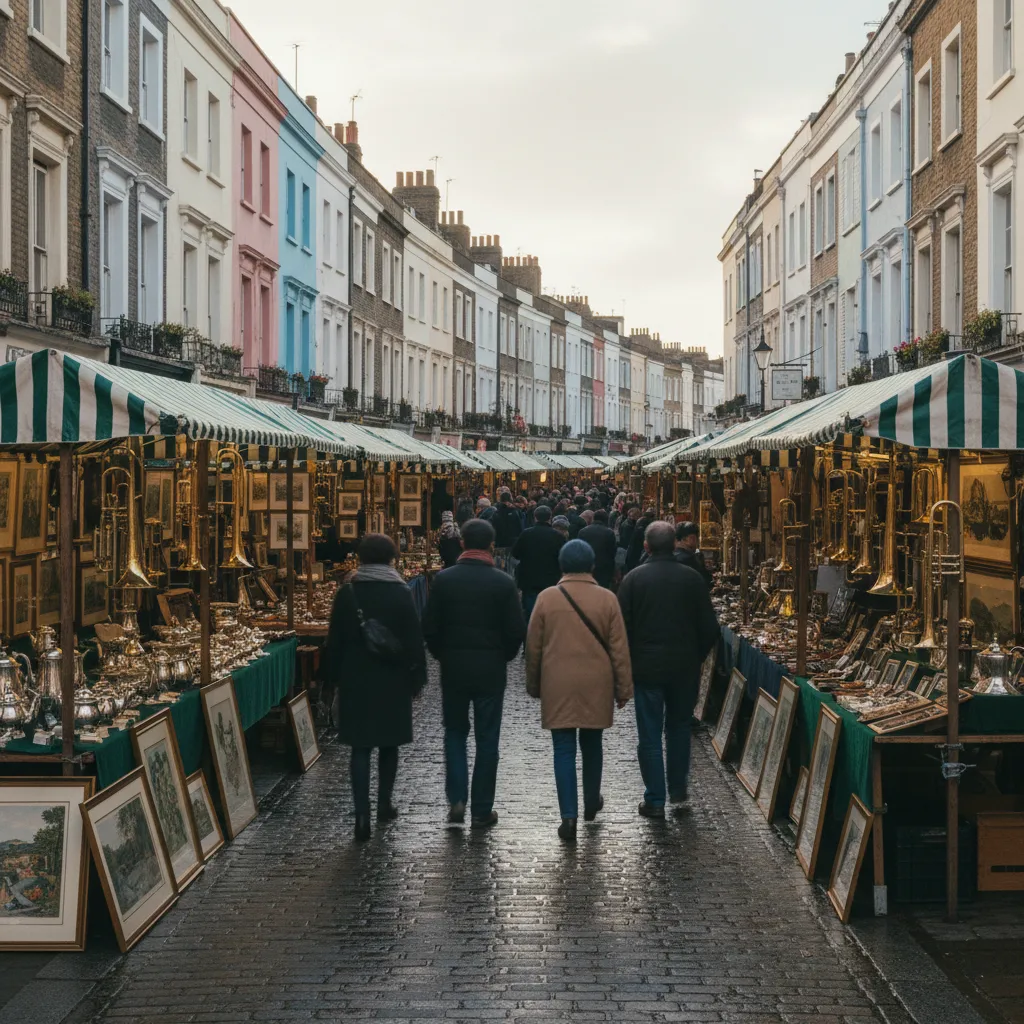
Portobello Road runs north from the pastel streets near Notting Hill Gate towards Ladbroke Grove, and the market grew up along it in stages. Antique dealers settled at the southern end, a traditional street market for produce sat in the middle, and the space under the elevated motorway became a home for second-hand clothes, records and odd household things. Golborne Road, which branches off near the top, kept its own older character, with Portuguese and Moroccan cafes and furniture dealers who put their stock straight onto the pavement.
If you know this layout before you arrive, you can decide where to spend your energy. Someone hunting for a silver sugar bowl should linger at the top and move quickly through the middle. Someone looking for a wool coat or a lamp for a rented flat can walk briskly past the antique arcades and save their attention for the Westway and beyond. Deciding this on the walk from the station is the single best thing you can do for the day.
Zone One: The Antique Arcades
The southern stretch is lined with arcades, which are covered halls where dozens of small dealers share one building. From the outside they look like single shops, but inside you walk through a maze of glass cabinets holding pocket watches, cufflinks, silver cutlery, cameras, militaria, toys and costume jewellery. On market days, more dealers set up tables along the pavement outside, so the street feels like one long display case.
This is the zone where knowledge pays. Take your time with a single cabinet rather than skimming fifty. Ask the dealer where a piece came from and whether it has been repaired. Many of the people here have traded on the road for years and enjoy explaining a hallmark or a maker's stamp to anyone who shows real interest. If you are new to antiques, choose one category, perhaps silver teaspoons or old postcards, and compare several examples so you start to see what makes one better than another.
Arrive early if this is the zone you care about. The serious buyers and trade dealers come first, and by mid-morning the pavement is thick with visitors taking photos of the coloured houses. Early in the day, conversations are easier and dealers have more time.
Zone Two: Fruit, Veg and a Breather
As the road flattens out, the antiques thin and the stalls turn to fruit, vegetables, flowers, bread and street food. This part of the market is the one locals use for their weekly shop, and it is a good place to slow down. Buy a coffee or a snack, step into a side street and look at what you have seen so far.
Use this break to make a short list. Write down the two or three pieces from the arcades you keep thinking about and the dealer or cabinet where you saw each one. Many visitors buy the first nice thing they see, then find something better later and regret it. A list lets you walk the rest of the road and still go back with a clear head. The arcades are only a few minutes behind you, so returning costs little.
Zone Three: Under the Westway
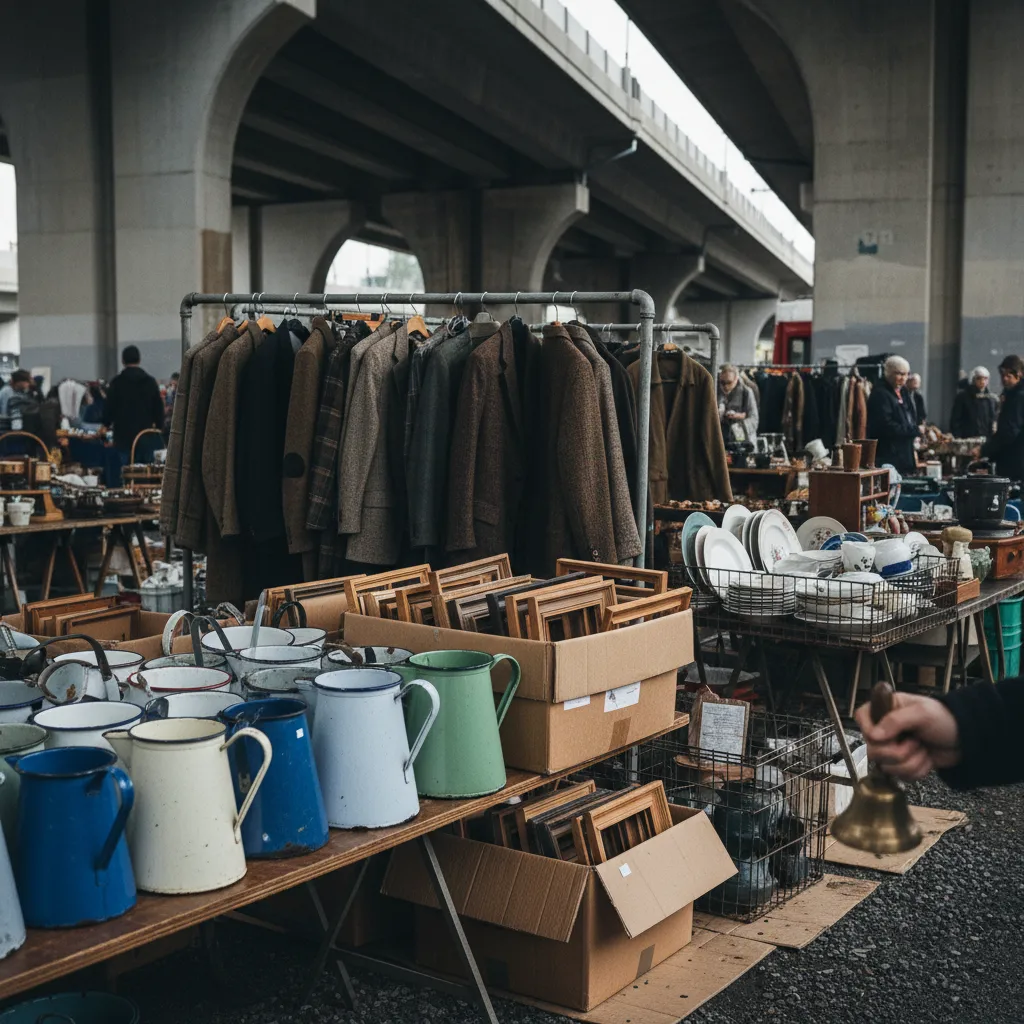
Where the elevated motorway crosses above Portobello Road, the mood changes completely. The concrete overhead creates a sheltered market space, which makes it one of the most useful places in west London on a rainy day. Here the stalls lean towards vintage clothing, leather jackets, band T-shirts, second-hand books, old picture frames, enamel jugs and boxes of mixed china.
This is real flea market territory, so browse with your hands. Run through rails quickly, pulling out anything with an interesting fabric or cut, then check it carefully: look at seams, zips, linings and the condition under the arms. With household pieces, tap china gently to listen for cracks and turn it over to check the base for chips. Prices here are more open to conversation than in the arcades, and a polite question about a small discount, especially if you are buying two or three things, is part of the culture.
The Westway area also has a long link with the Notting Hill Carnival and with the Caribbean community who shaped this part of London. You will hear sound systems, see murals and pass stalls selling food from across the islands, which makes it a good place to pause before the final stretch.
Zone Four: Golborne Road
Keep walking north and turn onto Golborne Road, and the market loses its polish. Here dealers lay furniture, mirrors, lamps, crates of tools and bundles of old textiles on the pavement, and the buyers are as likely to be set designers and restaurant owners as tourists. It is the zone for people who enjoy digging and do not mind a bit of dust on their hands.
Golborne Road also has some of the best places to sit down at the end of a long walk. Portuguese bakeries and Moroccan cafes face the street, and a custard tart or a mint tea at a pavement table is a fine way to judge your haul. Above the road, the tall outline of Trellick Tower reminds you that this corner of Notting Hill has always been more mixed and less glossy than the postcard view further south.
Who Each Zone Suits
First-time visitors who want the classic picture should spend most of their time in zone one, then walk the rest of the road for the atmosphere. Collectors of a single category, such as watches, cameras or silver, will find the arcades more rewarding than anything north of the produce stalls. Students and young renters furnishing a room should start near the Westway and finish on Golborne Road, where larger pieces and odd lamps sit on the pavement.
Families with small children will find the narrow pavements of zone one stressful at busy times. A better plan is to start near Ladbroke Grove, browse the Westway stalls and Golborne Road first, then walk south against the flow as the crowd thins later in the day. Photographers looking for the coloured houses will get cleaner shots in the side streets off the top of the road, away from the stalls.
Carrying and Getting Home
Bring a strong tote and a smaller cloth bag for fragile pieces. Newspaper or a scarf is useful for wrapping china. If you fall for a mirror or a chair on Golborne Road, ask the dealer whether they can hold it while you finish browsing, and plan your route home before you pay. Ladbroke Grove and Westbourne Park stations are closer to the northern end than Notting Hill Gate, which saves carrying a bulky piece the whole length of the road.
Carry some cash as well as a card. Many dealers take both, but small stalls under the Westway and on Golborne Road are often happier with notes for low-value items. Keep your bag in front of you in the crowded southern stretch, as you would in any busy London market.
Finding More Second-Hand Spots Nearby
Portobello is the main event, but the streets around it hide charity shops, small vintage boutiques and furniture dealers that are easy to miss. The Karpo APP can show second-hand and antique shops close to whichever zone you finish in, so you can add one or two quieter stops on your way home instead of walking back through the crowd.
Treat the road as four short visits rather than one long march, give your attention to the zone that fits what you want and save the coffee for Golborne Road. You will leave with fewer impulse buys, a better story behind each piece and enough energy left to enjoy the walk home.
Ask Karpo for more information.
Keep reading
- Brixton Vintage Thrift Shop Finder: South London Retro Gems
 Notting Hill Vintage Thrift Shop Finder: Preloved Rails
 Soho Vintage Thrift Shop Finder: West End Designer Archives