 Brixton Vintage Thrift Shop Finder: South London Retro Gems
Hidden Gems & Odd Finds
King's Cross Flea Market Browsing Guide: Canal Books, Vinyl
Treat King's Cross as a canal-side browse for secondhand books and vinyl: check sleeves and spines, carry flat, then pick a towpath direction.
King's Cross is usually described as a place you pass through, but the Regent's Canal gives it a slower edge. Below the busy squares, the towpath runs between old warehouses, gas holder frames and moored narrowboats, and it links the area to markets and secondhand dealers in both directions. For anyone who loves paperbacks and old records, that makes King's Cross a natural starting point for a flea browse where paper and vinyl, rather than furniture or clothes, set the theme.
From Coal Wharf to Browsing Ground
The canal was built to carry goods into London, and the yards around King's Cross once handled coal, grain and freight arriving by water and rail. The great brick sheds and the Granary Building were part of that working system. Their redevelopment into squares, studios and shops has kept the scale of the old infrastructure, which gives a browse here an unusual backdrop: you are hunting small, personal objects in a landscape built for heavy cargo.
That contrast is part of the pleasure. A battered paperback feels more precious when you carry it past walls that once held tonnes of coal, and the canal itself, quiet and green, slows your pace enough to read the back covers properly.
The Floating Bookshop and Towpath Tables
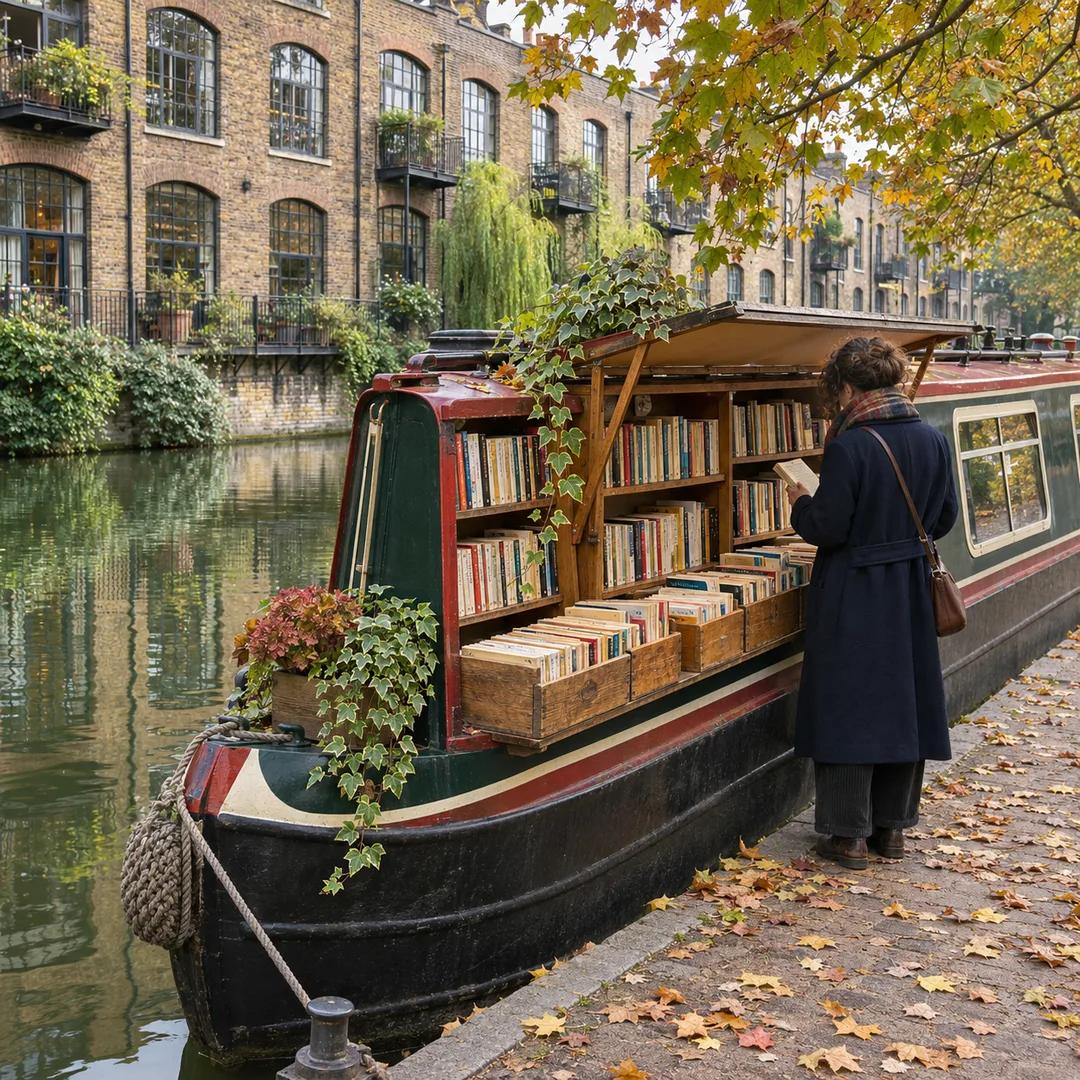
A secondhand bookshop run from a narrowboat has made the canal near Granary Square one of its familiar moorings, and spotting it is a small event. Shelves line the inside of the boat, crates sit on the towpath, and the mood is closer to a friend's living room than a shop. Because boats move, treat it as a lucky find rather than a fixed destination.
Elsewhere along the towpath and in the surrounding streets, you may come across pop-up stalls, charity shops and record dealers. The canal works as the thread that connects them, so the walk never feels like a list of errands.
Reading a Book Before It Comes Home
Secondhand books reward a slow check. Open the cover and look at the inscription page: a name, a date or a short message to a friend can be the best part of the purchase. Flick through for loose pages, water stains and pressed flowers. Check the spine for cracks if you plan to read it rather than shelve it.
Set yourself a theme to keep the stack manageable. It might be a single author, travel writing about rivers and canals, old cookery books or anything with a beautiful cover. A theme makes it easier to say no to the dozenth interesting title, and it turns your shelf at home into a small collection rather than a pile.
Flipping Through Old Vinyl
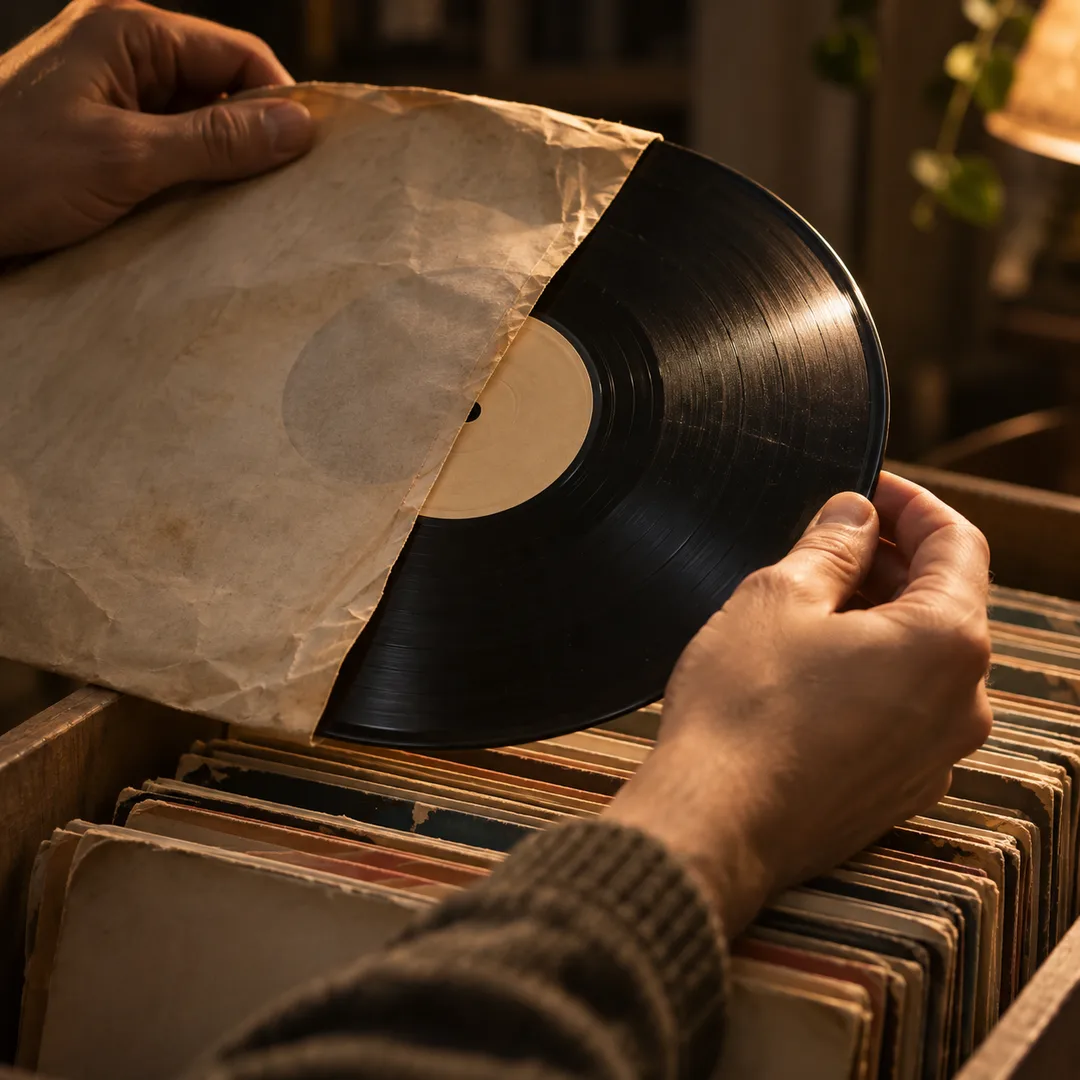
Record crates ask for a different technique. Flip with two fingers from the top of the sleeve so the records lean forward rather than sliding. When something catches your eye, ease the disc halfway out of its inner sleeve and tilt it toward the light. Fine surface marks are normal; deep scratches that catch a fingernail are not.
Look at the corners of the cover for splits and at the centre label for wear rings. If a dealer has a player set up, ask politely whether you can listen to a few seconds. Many crate-diggers say the best finds are albums they never meant to buy, picked up because the cover art was strange or the track list included one surprising song.
Pick a Direction for the Second Half
After an hour around King's Cross, decide which way the canal should take you. Head west along the towpath and you reach Camden, where the market stalls and record shops create a louder, busier browse. Head east and the route climbs over the hill toward Islington, where antique dealers and smaller vintage shops suit a quieter afternoon.
Choose based on energy. If you still want crowds and noise, go west. If you want to carry your finds through calmer streets and finish with a sit-down cup of tea, go east. Either way, the canal gives you a walk that feels like part of the outing rather than the gap between stops.
A Reader and a Crate-Digger Together
This route works especially well for two people with different obsessions. One heads for the shelves, the other for the crates, and you meet at an agreed bench every half hour to show what you found. The reader learns which albums came out the year a favourite novel was published; the record collector finds a paperback about the band whose sleeve they just bought.
Agree on a shared rule before you start, such as one item each per stop, so nobody waits too long while the other keeps digging. Swap one find at the end of the day. A record chosen for you by a book lover, or a novel picked by someone who mostly reads liner notes, is often the most memorable thing to come home.
Carrying Paper and Vinyl Safely
Books and records are heavier than they look and hate getting wet. Bring a sturdy tote with a flat bottom, and slip records in vertically so they do not warp. A large plastic folder or a thin piece of cardboard protects sleeves, and a zip bag keeps paperbacks dry if the weather turns.
Keep the total weight honest. A dozen records or a stack of hardbacks can make the walk home miserable, especially if you plan to follow the towpath for a while. Buy the best few, take a photograph of the rest and note where you saw them.
Steps by the Water
Granary Square's wide steps down to the canal are a good place to pause halfway. Sit with your stack, read the opening pages of each book and decide which ones are genuine keepers. Watching narrowboats pass and walkers trail along the towpath is a fine reset before the second half.
Planning a Paper-and-Vinyl Route With Karpo APP
When you want to repeat the outing with a different theme, open Karpo APP and describe what you are after, perhaps secondhand bookshops near a canal or record shops along a walkable route. Karpo can suggest nearby places to explore and help you string them into a plan, so the next browse starts with a direction instead of a search bar.
Practical Notes for a Canal Browse
Wear shoes with grip, because the towpath can be slippery after rain, and remember that cyclists and runners share the path. Keep bags close to your body near the water's edge. A small notebook helps you track titles you want to look for again, and a pencil lets you mark a page without damaging it.
Leave King's Cross with a light bag and an open mind. The best canal-side finds are often the ones you only spot because you slowed down, looked twice at a crate and let the water set the pace.
Ask Karpo for more information.
Keep reading
- Brixton Vintage Thrift Shop Finder: South London Retro Gems
 Notting Hill Vintage Thrift Shop Finder: Preloved Rails
 Soho Vintage Thrift Shop Finder: West End Designer Archives