 Brixton Vintage Thrift Shop Finder: South London Retro Gems
Hidden Gems & Odd Finds
Islington Flea Market Browsing Guide: Antiques for Beginners
Camden Passage in Islington is a gentle first antiques market, where dealers will explain hallmarks and maker's marks if you ask before you start to bargain.
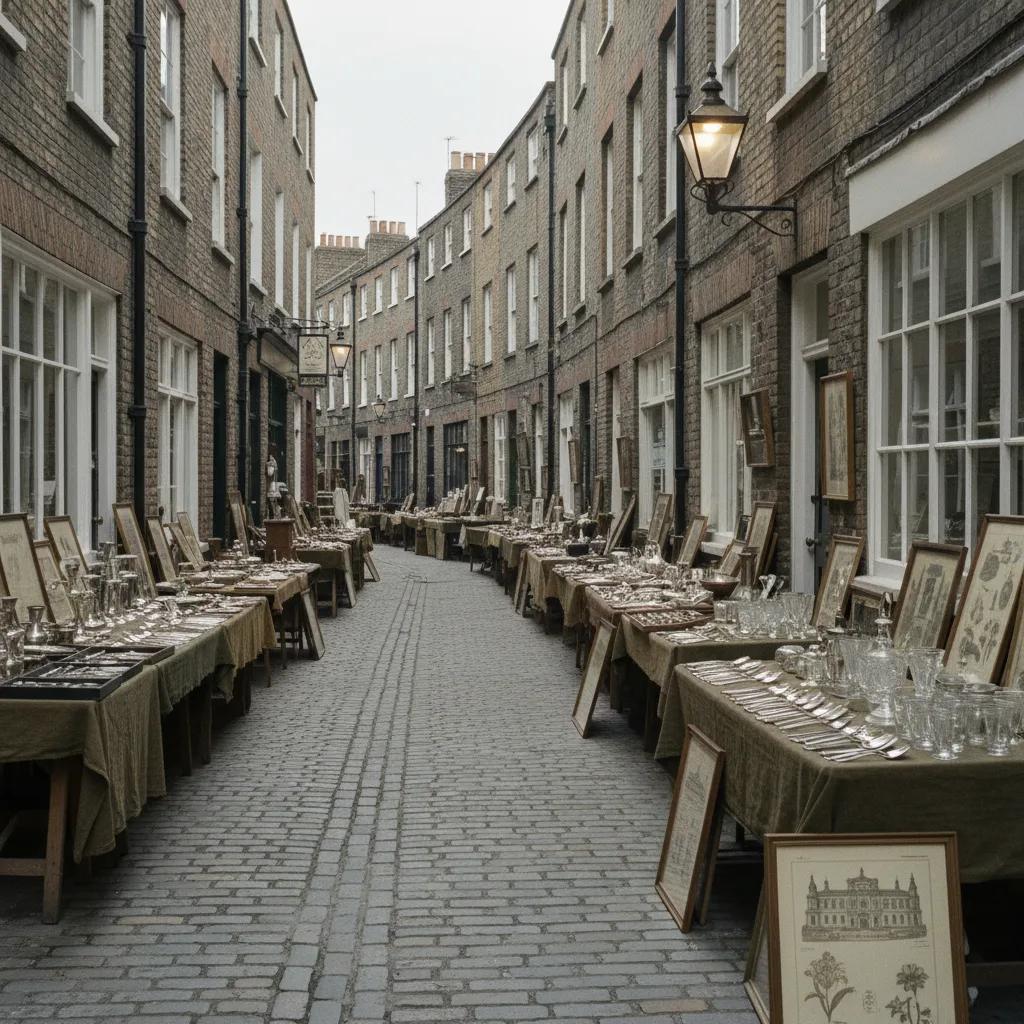
If you have never bought an antique, Camden Passage in Islington is one of the friendliest places in London to start. This narrow pedestrian lane near Angel is lined with small antique shops and, on market days, trestle tables of silver, glass, jewellery and old prints. This flea market browsing guide is a first lesson: how to look, what to ask and which small pieces make sense when you are still learning to read a hallmark.
Why Camden Passage Suits Beginners
Camden Passage has been an antiques lane for generations, and it has the feel of a village street tucked behind Upper Street. Dealers here tend to specialise. One table might hold only silver cutlery, another only costume jewellery, another only Victorian prints. That makes it easier to learn, because you can compare similar pieces side by side and ask questions of someone who knows that one category well.
The scale helps too. The lane is short and walkable, so you can do a slow lap and come back to the tables that interested you without feeling lost. Compared with sprawling markets elsewhere, it feels calm and conversational. Many dealers are used to visitors who are curious rather than serious collectors, and some of them clearly enjoy explaining their trade.
Reading a Silver Hallmark
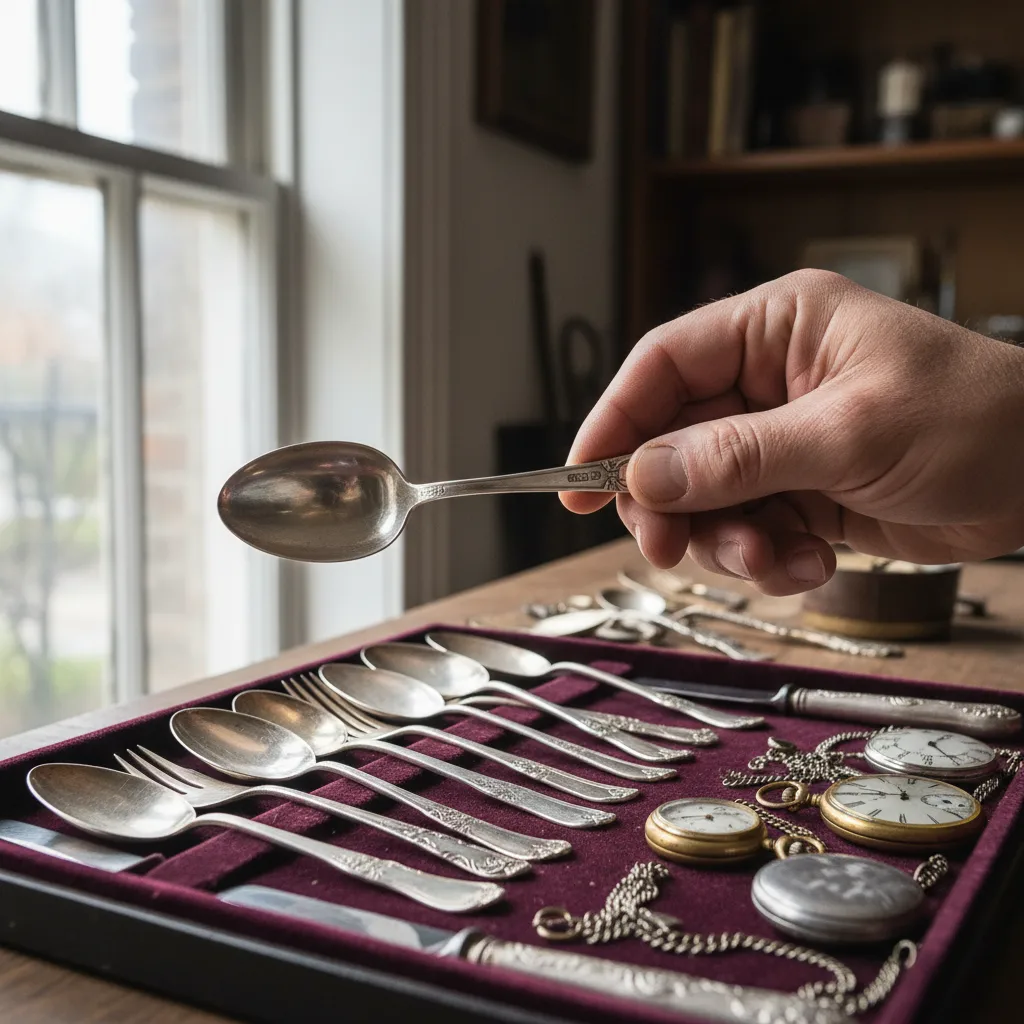
British silver is usually stamped with a small row of marks, and learning to read them is the single most useful skill for a beginner. There is often a mark showing the silver standard, a town mark showing where it was tested, a date letter and a maker's mark. Together they tell you that a spoon or a small dish is genuine silver and give clues to when and where it was made.
You do not need to memorise every symbol. Carry a small jeweller's loupe or use your phone camera on zoom, and ask the dealer to walk you through the marks on one piece. Many will happily do so. Compare a hallmarked silver spoon with a plated one on the same table, and you will soon notice the difference in weight, colour and how the marks are struck.
Questions to Ask a Dealer
Start with simple questions: where did this come from, roughly how old is it and what is it made of. Good dealers answer clearly and admit when they are unsure. Ask whether a piece has been repaired, polished or altered, since that affects both value and how it will age. With jewellery, ask whether stones are original and whether clasps have been replaced.
Ask about care too. A dealer can tell you whether an old print should be kept out of the sun, how to clean silver without wearing down the hallmarks and whether a glass decanter is safe to use. These are the details that turn a purchase into something you can actually live with, and they show the dealer that you are interested in more than a bargain.
Sensible First Purchases
Small pieces are the best first buys. A single hallmarked teaspoon, a sugar tong, a napkin ring, an old print in its original frame or a piece of costume jewellery are all affordable, easy to carry and good for learning. You can study the marks at home, compare them with books or online guides and build your eye before you think about anything more serious.
Avoid big furniture or anything very expensive on your first visit. Even a beautiful mahogany table is a big commitment if you have not yet learned how to judge condition. Think of your first purchase as tuition. If you enjoy owning it and learn something from it, it has done its job, whether or not it turns out to be a rare find.
Who Browses the Passage
Camden Passage draws a mix of locals, collectors and visitors. You will see older collectors with a magnifying glass on a cord, young couples looking for unusual engagement rings, interior designers sourcing small decorative pieces and families who wandered off Upper Street out of curiosity. Some dealers have been trading here for decades and greet regulars by name.
The unspoken rule is to handle pieces carefully and always ask before picking up anything fragile or valuable. Hold silver by the edges rather than the polished surface, and never put a glass down on another piece. Another rule is to wait your turn. If a dealer is talking with someone else, browse quietly and they will come to you.
Bargaining Politely and What to Skip
Bargaining is normal, but it is a gentle conversation rather than a contest. Once you have looked properly and asked questions, it is fine to ask whether there is any flexibility on the price. Many dealers will offer a small reduction, especially if you are buying more than one piece. Avoid aggressive offers, which can end the conversation quickly.
Skip anything described in vague terms like old or antique style without details. If a dealer cannot tell you more, the piece may be modern. Also skip items with obvious damage that will be expensive to fix, such as chipped porcelain or bent silver. The honest judgment is that a beginner is better off with a small, perfect piece than a large, damaged one.
Plan B When the Market Is Quiet
Camden Passage has shops as well as market tables, so even on days when the trestles are not out, there is plenty to see. Browse the antique shops along the lane, then walk along Upper Street, where more antique and second-hand shops appear among the cafes and restaurants. Chapel Market, a short walk away, offers a very different, everyday market atmosphere if you want a contrast.
If it rains, the shops become the main event, and many dealers are glad of the company on a slow day. Before visiting, you can use the Karpo APP to see which antique shops and markets are near Angel, so you can build a route that suits your interests and the weather.
Practical Notes for a First Visit
Bring a small loupe or magnifying glass, a soft cloth bag for fragile pieces and a notebook or phone for marks and notes. Carry a mix of cash and card, as some dealers prefer one or the other. Wear comfortable shoes, since the lane has uneven paving and you will be standing for long stretches.
Give yourself time. A first visit to Camden Passage works best as a slow afternoon rather than a quick stop. Talk to at least three dealers, look at a lot of silver and prints, and buy only one small piece. By the second or third visit, you will notice how much more you can see on each table, and that is the real reward of learning to browse antiques.
Ask Karpo for more information.
Keep reading
- Brixton Vintage Thrift Shop Finder: South London Retro Gems
 Notting Hill Vintage Thrift Shop Finder: Preloved Rails
 Soho Vintage Thrift Shop Finder: West End Designer Archives