 Brixton Vintage Thrift Shop Finder: South London Retro Gems
Hidden Gems & Odd Finds
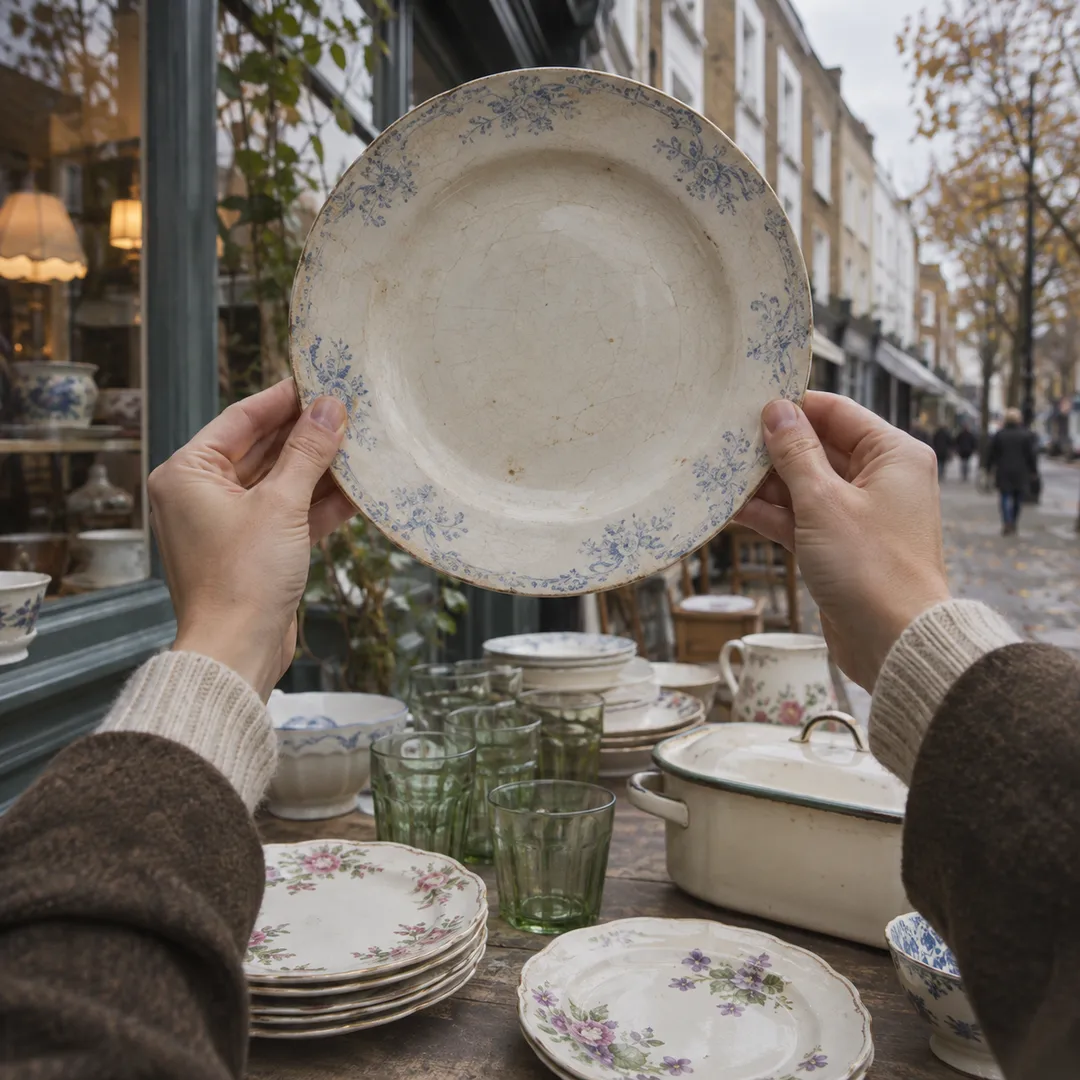
Hammersmith Flea Market Browsing Guide: Plates for Ten
Hosting a big Sunday lunch? Browse Hammersmith for mismatched plates, glasses and serving dishes, pick one colour to tie them together, and pack them safely.
Every host eventually hits the same wall: the guest list grows to ten and the cupboard holds six matching plates. Hammersmith is a good place to solve that problem with character rather than a flat-pack box set. Its long high street and side roads hold charity shops, secondhand dealers and occasional pop-up sales, and the riverside a few minutes away gives you somewhere to think before you carry a stack of crockery home. This guide is for anyone building a mismatched table, one plate at a time.
Why Mismatched Works Better Than a Set
A matching dinner service from a shop says that you bought plates. A table laid with odd pieces gathered over weeks says that you went looking. Guests notice the difference: they compare patterns, swap stories about a grandmother's china and ask where each piece came from. Conversation starts before the food is served.
Mismatched sets are also forgiving. When a plate breaks, you do not need to hunt for a discontinued pattern. You simply add another find. Over time, the collection becomes a record of where you have been and who you have fed.
Choose a Thread to Tie It Together
The trick to a mismatched table that looks deliberate is one shared thread. Pick a single colour, such as blue rims, green glass or cream enamel, and let everything else vary. Alternatively, choose a shape, like plates with a scalloped edge, or a mood, such as anything floral. Write your thread on a note before you leave home.
With a thread in mind, Hammersmith's tables become easier to read. You can walk past a beautiful orange bowl without guilt because it does not fit, and stop instantly at a blue-rimmed plate that does. The discipline makes the final table look curated rather than random.
Starting Along King Street
King Street runs west from the centre of Hammersmith and is lined with everyday shops, cafés and secondhand outlets. Walk one side first, then cross and walk back on the other, glancing into windows for shelves of crockery. Charity shops often keep china toward the back, so it is worth stepping inside even when the window shows clothes.
Count your stack as you go. Ten dinner plates are the backbone; side plates, bowls and glasses can be gathered over several trips. If you find four plates of the same pattern, that is a small win, but do not let it pull you away from your thread.
Checking Crockery in Your Hands
Run a fingertip around every rim. Small chips catch on skin before they catch the eye, and a chipped plate is not pleasant to eat from. Turn each piece over and look at the base: hairline cracks show up more clearly on the unglazed foot ring. Tap gently with a fingernail; a clear ring usually means sound china, while a dull note can signal a hidden crack.
Look for crazing too, the fine web of lines in old glaze. It can be charming on a decorative plate, but for everyday dining it can hold stains. Gold and silver rims look wonderful by candlelight but are rarely safe in a dishwasher or microwave, so plan to wash them by hand.
Serving Dishes and Glasses
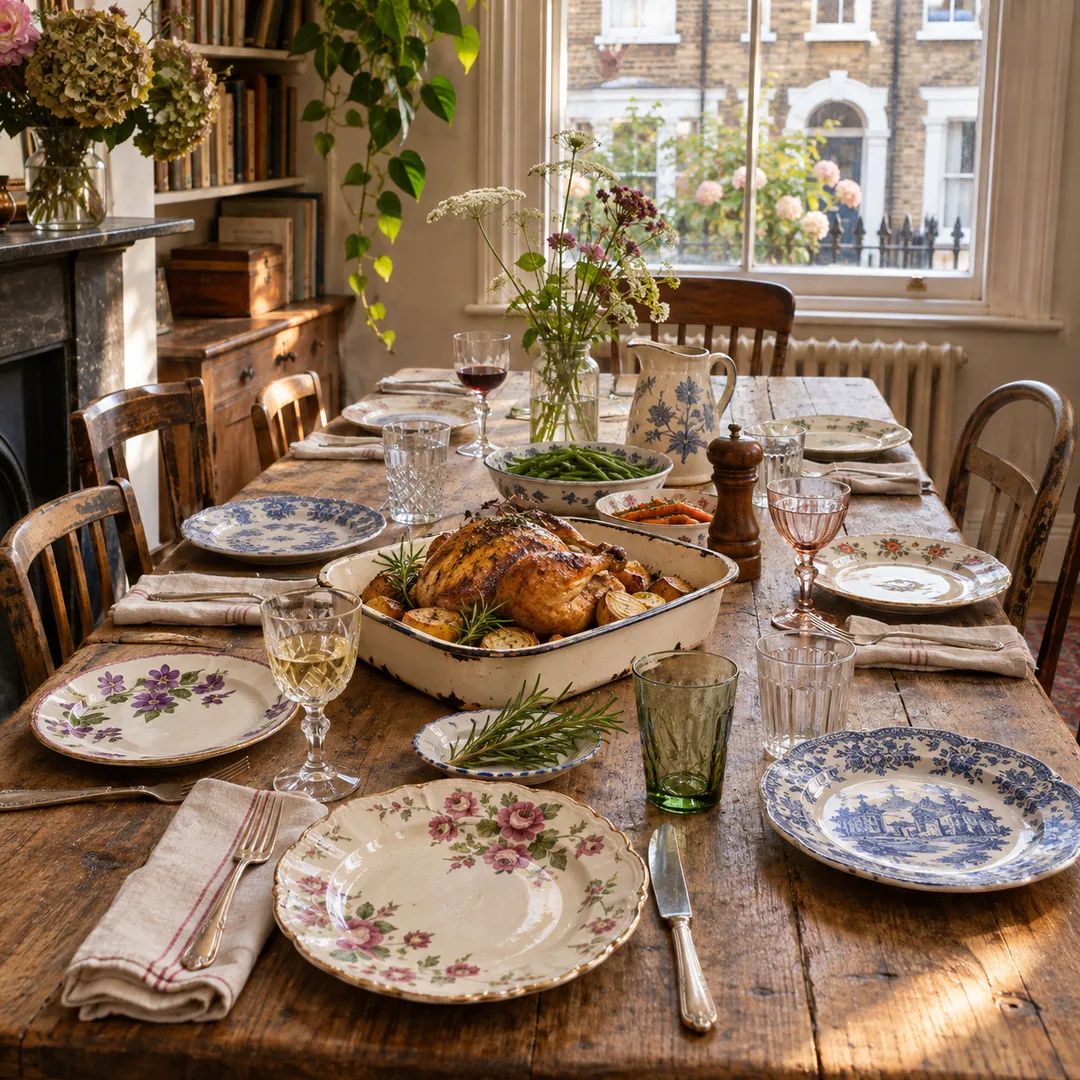
Once the plates are under way, hunt for the pieces that make a table feel generous: a large oval platter, a lidded enamel dish, a gravy boat or a heavy water jug. These are often the cheapest items on a secondhand shelf because few people need them, and they make the biggest impression when they arrive full of food.
Glasses can follow the same thread or break from it entirely. A row of odd green tumblers looks lovely next to blue-rimmed plates, and pressed glass picks up candlelight beautifully. Check glass rims for small chips as carefully as you check china.
Packing Fragile Finds for the Walk
Bring a sturdy bag with a flat base, a few sheets of newspaper or tea towels and some cardboard. Wrap each plate individually and stack them vertically, like files in a drawer, rather than flat on top of each other; upright plates survive bumps far better. Glasses travel best rolled in a towel with the rim facing down.
If the stack gets heavy, split the load across two bags so you can carry them evenly. It is better to return for a second visit than to drop a carefully chosen collection on the pavement.
Asking Sellers About a Plate's Past
Secondhand dealers and charity volunteers often know a little about the china passing through their hands. Ask whether a stack came from one house, whether there are matching cups in the back, or what the pattern is called. Sometimes a seller will point you to a box of pieces that has not reached the shelves yet.
Those snippets become part of the meal. Telling a guest that their plate once belonged to a family who lived near the river, or that the serving dish turned up in a box of kitchen odds and ends, gives the table a quiet history. Write a few notes on your phone as you go so the stories survive until lunch.
Walking the Haul Along the Thames
Before heading home, walk down to the river. The Thames path between Hammersmith and Chiswick passes old riverside terraces, rowing clubs and pubs, and the stretch along Upper Mall and Lower Mall is one of the calmest walks in West London. Find a bench, unwrap one plate and picture it on your table with the food you plan to cook.
That moment of calm helps you decide whether the collection is complete or whether you need one more trip. Watching the rowers glide past is a good reminder that the best things come together slowly.
Planning the Next Round With Karpo APP
A mismatched set rarely comes together in one afternoon. When you need more pieces, open Karpo APP and describe what you are hunting, for example vintage tableware or secondhand homeware shops near the river, along with the area you want to explore. Karpo can suggest nearby places and help you plan a simple route, so your next browse goes straight to the shelves that matter.
Practical Notes for a Host's Browse
Go early in the day when stock is freshest, and leave a gap between the browse and the lunch you are hosting so there is time to wash everything thoroughly. Bring a list of how many guests you expect, plus two extra plates for the inevitable surprise visitor. Keep the receipts or a note of each find in case you want to tell guests the story.
When the day finally arrives and the table is laid, step back and look. The odd plates, the borrowed-looking glasses and the enamel dish in the middle will feel like a celebration in themselves, gathered on a few slow mornings in Hammersmith.
Ask Karpo for more information.
Keep reading
- Brixton Vintage Thrift Shop Finder: South London Retro Gems
 Notting Hill Vintage Thrift Shop Finder: Preloved Rails
 Soho Vintage Thrift Shop Finder: West End Designer Archives