 Brixton Vintage Thrift Shop Finder: South London Retro Gems
Hidden Gems & Odd Finds
Hackney Flea Market Browsing Guide: Furnish a First Flat
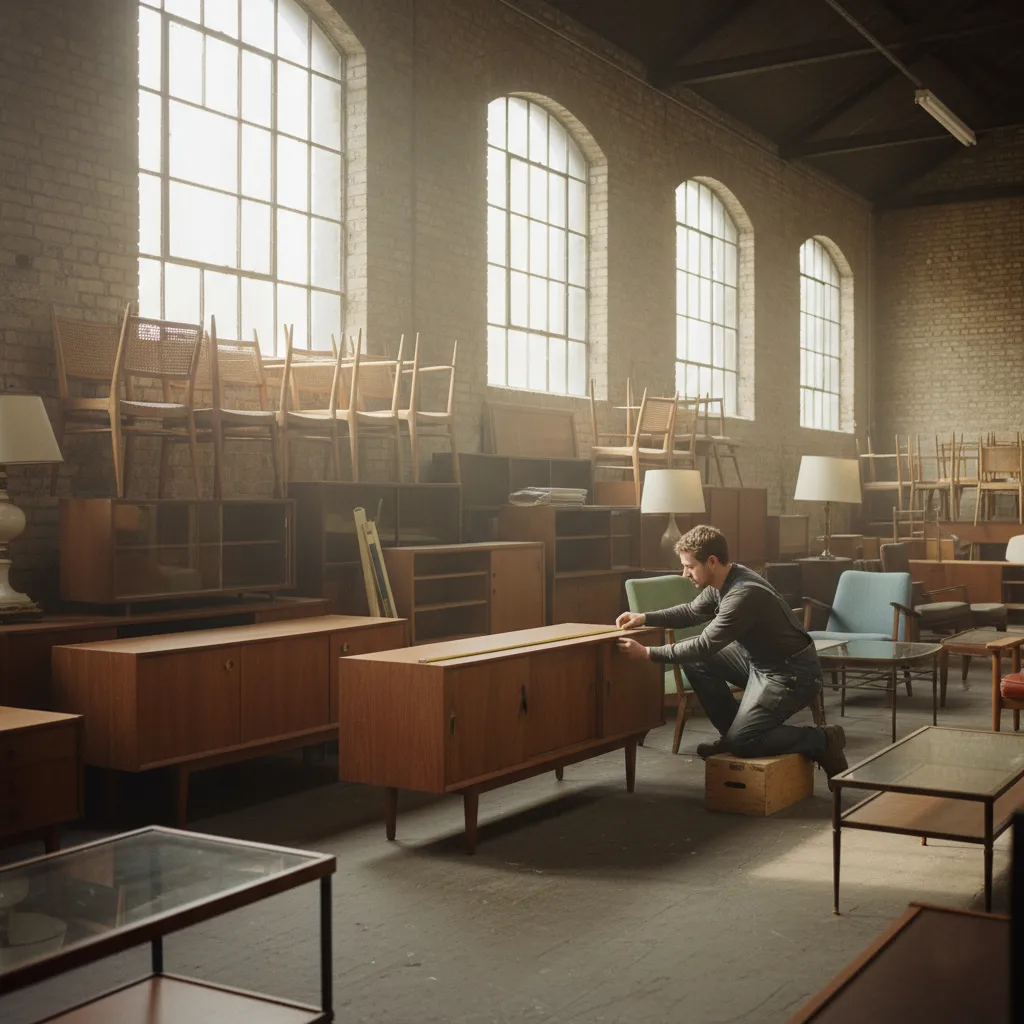
Hackney's warehouse sales and market stalls suit anyone furnishing a first flat, as long as you measure the doorway first and plan how a chair gets home.
Hackney is where a lot of Londoners furnish their first flat, and the way to browse its flea market scene is with a tape measure in your pocket. Between the converted warehouses of Hackney Wick, the stalls around Broadway Market and the reclaim yards tucked under railway lines, the borough has more second-hand sideboards and bentwood chairs than almost anywhere in the city. This flea market browsing guide is built around one question: will it fit, and how will it get home?
Why Hackney Became a Furniture Hunting Ground
Hackney's industrial past left behind huge buildings, and many of them now hold furniture dealers, upcyclers and maker studios. When the factories and printworks moved out, artists moved in, and with them came a taste for salvaged school chairs, teak dining sets and old shop fittings. That culture has stuck around even as the area has changed, and it shows in the way people here decorate.
What it means for you is choice. In a single day you can see mid-century pieces lovingly restored next to rough reclaimed timber that still needs sanding. The style leans practical and a little worn, which is perfect if you want a flat that looks lived in rather than ordered from one catalogue. It is also a place where sellers expect people to come back, so relationships matter.
Measure Before You Fall in Love
The most common mistake new renters make is buying a beautiful sideboard that cannot get up the stairs. Before you head out, measure the width of your front door, the narrowest point of the staircase and any tight corner on the landing. Write those numbers in your phone notes and keep a small tape measure in your bag. Dealers in Hackney are used to people measuring, so nobody will think it odd.
Also measure the actual spaces in the flat. The alcove beside the chimney breast in an old terraced house is rarely a standard width, and a bookshelf that is two centimetres too wide is worse than no bookshelf at all. Photos of each room help too. Showing a dealer a picture of your living room is often the quickest way to get honest advice about what will work.

Warehouse Yards First, Market Stalls Second
Start with the warehouse dealers around Hackney Wick, where big pieces live. Walk through slowly and treat the first lap as research. Note the sofas, tables and chests you like, along with what condition they are in and whether they have been restored. Restored pieces cost more but save you weekends of work. Unrestored ones are a gamble that pays off only if you have the patience and space to sand and oil.
Then move toward the market stalls around Broadway Market and London Fields for the smaller things that make a flat feel finished. Lamps, mirrors, framed prints, plant pots and odd chairs turn up on stall tables and in nearby shops. These are easy to carry and a good way to see whether your style holds together before you commit to the bigger pieces you noted earlier.
How to Inspect a Second-Hand Piece
Open every drawer and push it back in. A drawer that sticks or drops on its runners will annoy you every day. Rock tables and chairs gently to check for wobbles in the joints, and look underneath for woodworm holes, which show as tiny round pinpricks. Sniff soft furniture too. A damp or smoky smell in a sofa or armchair can be very hard to get rid of.
Ask the dealer what they know about the piece. Many will tell you where it came from, whether it was a house clearance, a closing school or an old office, and that story often explains the wear. If a piece has been painted, ask what is underneath. Some lovely old oak and pine has disappeared under thick paint and can be stripped back with time.
Getting It Home Along the Canal and Beyond
The question every first-time buyer forgets is transport. Many warehouse dealers can arrange delivery or point you to a local man-with-a-van they trust, so ask before you pay. For smaller pieces, a walk along the Regent's Canal towpath with a chair on your shoulder is practically a Hackney rite of passage, but plan the route and remember that bikes and runners share the path.
If you are using a hire van or asking a friend with a car, buy all the big pieces on the same day so you only need one trip. Bring blankets and some rope or straps so nothing slides around. Taking a chair on the overground at a quiet time is possible, but a wardrobe is not, so be realistic about what you can carry yourself.
Who You Meet in the Yards
You will share the warehouses with a recognisable crowd. There are couples arguing gently about whether a sofa is too big, interior stylists picking props for photo shoots, restaurant owners looking for mismatched chairs and makers hunting old timber for their own projects. Dealers themselves are often makers too, and many of them will happily talk about how they restored a piece.
The unspoken rule is to ask before sitting. Many dealers are fine with you trying a chair or sofa, but some pieces are fragile or freshly oiled. Another rule is to be clear if you are just looking. Dealers appreciate honesty, and if you say you are furnishing a flat and coming back, they will often remember you and point you toward the right piece next time.
What to Skip and When to Walk Away
Skip mattresses and heavily upholstered pieces from unknown sources. Cleaning them properly is expensive, and you cannot see what is inside. An old sofa with a sound frame can be reupholstered, but that is a project for a second flat, not a first one. Also skip trend pieces that every stall seems to carry. If ten dealers have the same rattan chair, you will see it in every friend's flat too.
Walk away from any seller who will not let you look properly or who pushes you to decide on the spot. Good dealers in Hackney are confident in their stock and happy for you to think. If you are torn, take a photo, sleep on it and come back. Losing a piece to another buyer stings less than living with the wrong one.
Plan B and Practical Notes
If the big warehouses feel overwhelming or the weather turns, smaller second-hand shops on Mare Street and around Dalston carry homewares and occasional furniture under cover. Charity furniture shops are worth a look too, especially for basic pieces like bedside tables. Before setting out, use the Karpo APP to see which second-hand furniture shops and markets sit near your route so you can link them on foot.
Wear comfortable shoes and clothes you do not mind getting dusty, because warehouses can be cold and grubby. Bring a fully charged phone for photos of pieces and price notes, and a bottle of water. Most importantly, give yourself more than one day. Furnishing a flat from Hackney's flea markets is a slow, enjoyable project, and the best pieces tend to find you on the second or third visit.
Ask Karpo for more information.
Keep reading
- Brixton Vintage Thrift Shop Finder: South London Retro Gems
 Notting Hill Vintage Thrift Shop Finder: Preloved Rails
 Soho Vintage Thrift Shop Finder: West End Designer Archives