 Brixton Vintage Thrift Shop Finder: South London Retro Gems
Hidden Gems & Odd Finds
Fitzrovia Flea Market Browsing Guide: Furnish a First Flat
Furnishing a first London flat? Browse Fitzrovia with a tape measure and a floor plan, hunt a lamp, a chair and a mirror, and skip anything you can't carry.
The first week in a small London rental often looks the same: a mattress, a suitcase used as a bedside table and one bare bulb that makes every evening feel like a waiting room. Fitzrovia is a good place to fix that slowly. The streets between Tottenham Court Road and Great Portland Street were once full of cabinet makers, upholsterers and furniture showrooms, and that trade left a habit behind: secondhand furniture, lamps and household objects still surface here in charity shops, dealers' corners and the odd pop-up sale. This guide treats flea browsing as a way to furnish one room with three good objects rather than a van load of maybes.
A Neighbourhood Built on Furniture
For much of the nineteenth century, this part of London worked with wood. Workshops behind the shopfronts turned out chairs, wardrobes and cabinets for the furniture stores along Tottenham Court Road, and craftspeople lived in the narrow terraces nearby. Walk through Fitzrovia today and you can still read that history in the deep ground-floor windows and the wide doorways built for carrying furniture in and out.
That background is useful when you browse. It reminds you to look at joints, drawer runners and the back of a piece, the places where a maker either took care or cut corners. A plain chair with tight joints will outlast a striking one that wobbles. Thinking like a furniture trader for an afternoon turns the hunt from impulse shopping into judgement.
Draw the Room Before You Leave Home
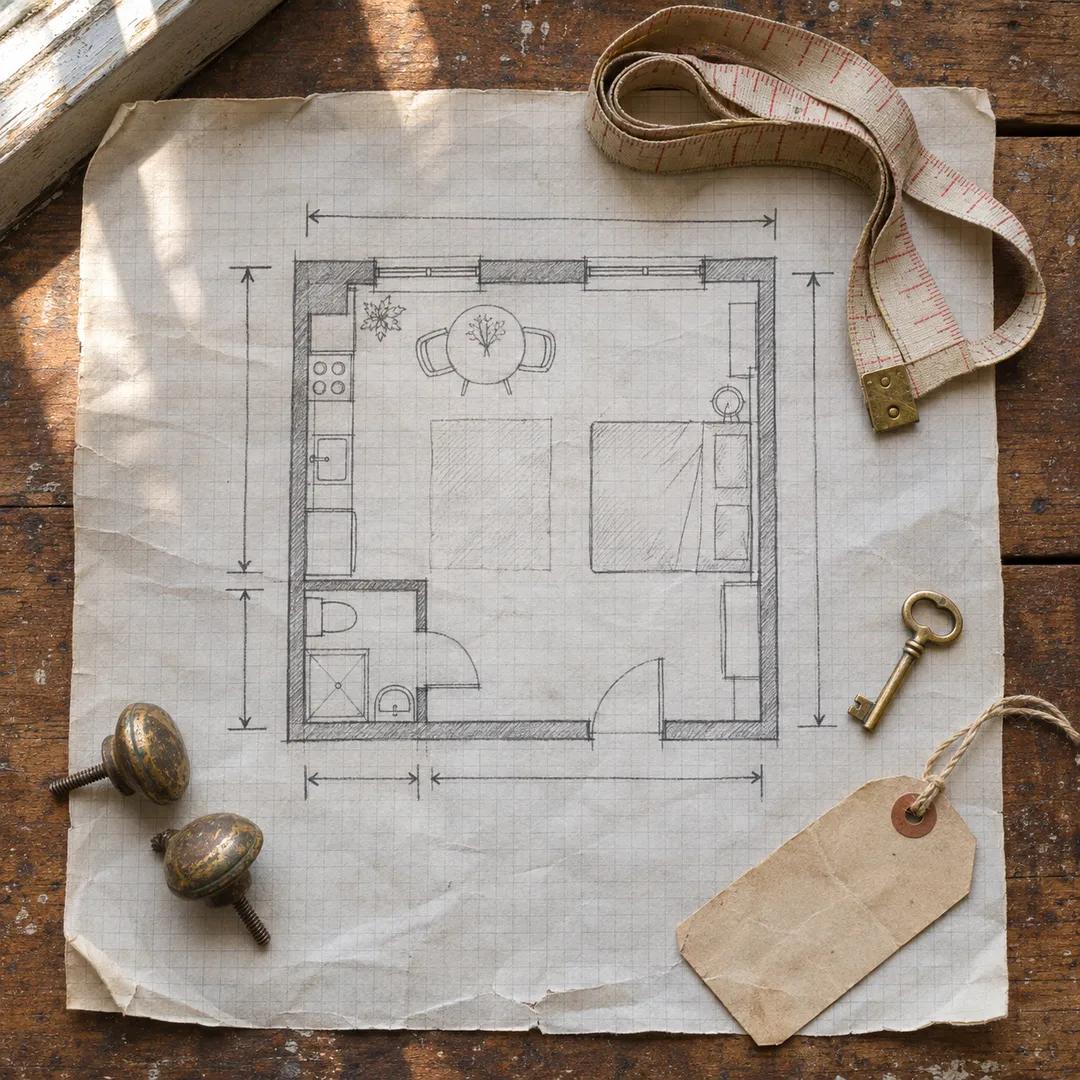
The single most useful thing you can carry is a floor plan. It does not need to be neat: a sheet of paper with the walls, the window, the radiator and the door swing marked is enough. Add the height of the window sill and the width of the gap beside the bed. Most first-flat mistakes are not about taste; they are about a chair that blocks a door or a shelf that hides a socket.
Bring a tape measure, too, and photograph the plan so it lives on your phone if the paper gets damp. With those two things, a browse becomes a series of quick yes or no answers. Does it fit the gap? Does it clear the radiator? Can it go up a narrow staircase? Anything that fails one of those questions can be admired and left behind without regret.
The Three-Object Brief
Give the outing a short brief: one light, one seat and one reflective surface. A lamp changes a rented room more than any other object, because it replaces the overhead bulb with a pool of warm light where you actually sit. Look for desk lamps with weighted bases, small table lamps with fabric shades and anglepoise-style designs whose springs still hold their position.
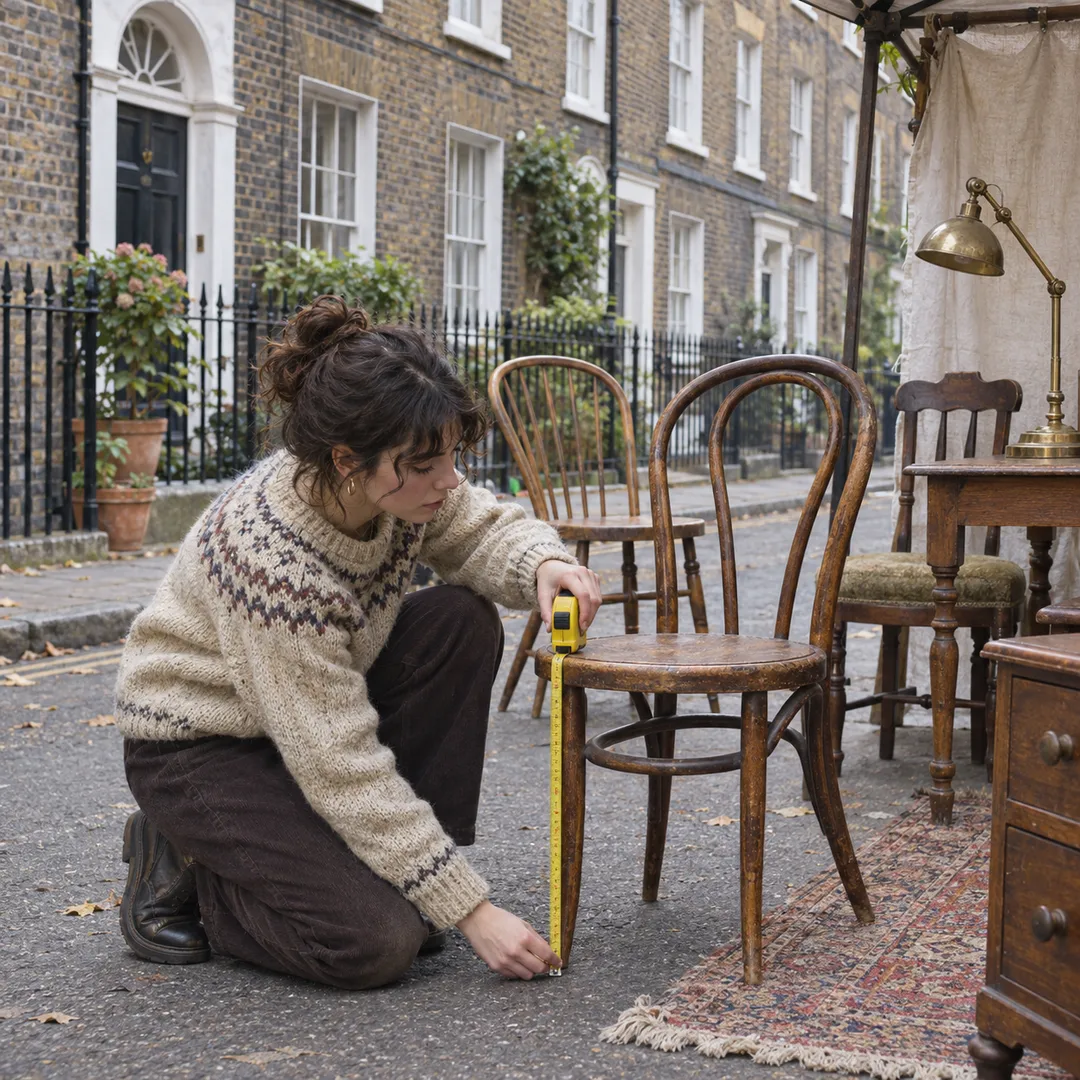
The seat can be modest. A bentwood chair, a folding wooden chair or a sturdy stool gives a guest somewhere to sit and doubles as a bedside table. Press down on the seat and rock it gently from side to side before you fall for the colour.
The mirror is the quiet trick. Hung opposite a window, even a small framed mirror bounces daylight back into a north-facing room. Check that the silvering has not spotted badly and that the hanging wire or hooks on the back are secure.
Reading Wear Like a Trader
Old objects tell you how they were used. Brass that is dull around the switch means a lamp that was switched on every night, which is a good sign. Fresh paint over an old chair can hide repairs, so look underneath where paint rarely reaches. Drawers should slide without sticking, and a cabinet should stand level on a flat floor.
Electrical items deserve an extra moment. Look at the flex for cracks or taped joins and ask the seller whether a lamp has been rewired. If it has not, treat it as a project and plan to have it checked by an electrician before it goes near a bedside. A beautiful shade can also be swapped onto a newer base, so the shade alone can be a find.
Talking to Sellers Without Haggling Hard
Many sellers in this part of London know their stock well and enjoy a good question more than a hard bargain. Ask where a piece came from, what it was originally used for, or whether they have the matching item in the back. Those conversations sometimes lead to a better object than the one on display.
If you are buying more than one thing, it is reasonable to ask whether they can do something for the pair. Keep the tone friendly and be ready to walk on politely. The aim is a fair exchange and a story you can repeat when a guest asks about the lamp.
Carrying It Home Without a Van
Most first flats are furnished on foot or by bus, so think about carrying before you pay. A small chair can travel upside down over a shoulder, a mirror needs a blanket or a large tote with cardboard on both faces, and a lamp should be split into base and shade before the journey. Bring a couple of bungee cords and an old towel in your bag.
If the object is bigger than you can manage, ask whether the seller can hold it for a short time while you fetch a friend, and agree the plan clearly. Otherwise, let it go. A piece you cannot get through the front door is not a bargain at any price.
Pausing in Fitzroy Square
Halfway through, walk to Fitzroy Square. Its Georgian terraces are a useful reference point: tall windows, painted railings, plain proportions. Sit for a few minutes and look at your shortlist photos against that calm backdrop. A lamp that looked charming in a crowded corner may look fussy once you picture it in a small white room.
Charlotte Street and the lanes around it make an easy loop back toward the busier roads, with plenty of cafés where you can lay out the floor plan and do the measuring again with a cup of tea.
Using Karpo APP to Plan the Next Hunt
One browse rarely finishes a flat. When you are ready for the next round, open Karpo APP and describe what you still need, such as a small bookshelf or a rug for a narrow hallway, along with the area you want to search. Karpo can suggest nearby secondhand and vintage spots to explore and help you shape a route around them, so the next trip starts with a plan rather than a scroll.
Practical Notes for a First-Flat Browse
Go early in the day while you still have energy for careful decisions, and set a firm limit on the number of objects you will carry. Pack a tape measure, the floor plan, a towel, a couple of cords and a fabric bag. Keep receipts or a note of what you paid in case you need to explain a purchase to a flatmate.
Before you leave, take one photograph of everything you bought together. In a few months, when the room has filled up, that picture will remind you that it started with a lamp, a chair and a mirror found on a single walk through Fitzrovia.
Ask Karpo for more information.
Keep reading
- Brixton Vintage Thrift Shop Finder: South London Retro Gems
 Notting Hill Vintage Thrift Shop Finder: Preloved Rails
 Soho Vintage Thrift Shop Finder: West End Designer Archives