 Waterloo Cozy Board Game Cafe Finder in South London
Weekend Plans

London Family Outing Planner for Two Hours Spent Indoors
Use a two-hour London window for an indoor family activity with a clear beginning and finish, comparing travel, participation and time to settle in.
Two free hours between family commitments can disappear into travel, queuing and deciding what to do. A London family outing planner for that gap needs a firm definition of the window: leaving your starting point and reaching your next commitment both count. Indoors, the aim is a satisfying activity that the children can enter quickly and leave without losing its whole purpose. Compare how an experience works for your household before comparing how exciting its description sounds.
Is the two-hour limit really two hours inside?
If you have a fixed appointment afterwards, put that destination at the end of the plan. Allow for the journey there before allocating time to an activity. The attractive ninety-minute session might already consume too much of the available gap once coats, arrival and departure are included. Use your family's normal pace to estimate those transitions. A suggestion fits the window only when the complete sequence fits, including any time needed to collect bags or find the exit.
For an illustrative London afternoon, picture two school-age siblings who finish an errand with an adult and have a short gap before meeting another family member. The starting neighbourhood and meeting point matter more than the citywide reputation of an attraction. Write both into the request. This creates a compact search area shaped by the rest of your day. It also prevents a well-known destination from becoming an automatic answer when a smaller nearby activity would use the time better.
Compare making, looking and moving
A making activity gives children something to do with their hands and can offer a natural finish when the object is complete. The relevant questions concern setup, materials, supervision and whether the work can leave with you. A project that requires collection on another day creates an additional commitment. That might suit a local family, but it deserves a place in the decision rather than appearing as a surprise after the activity has begun.
A looking activity can be flexible when each object or display offers a small independent experience. Choose a focus the children can understand: finding three surprising shapes, discussing one picture or noticing how something was built. A moving activity has a different attraction, particularly for children who have spent the morning sitting. Its practical questions include clothing, changing arrangements and any age or height restrictions. These are comparison criteria for actual candidates, not assumptions that every indoor venue meets.
Look for the moment when participation begins
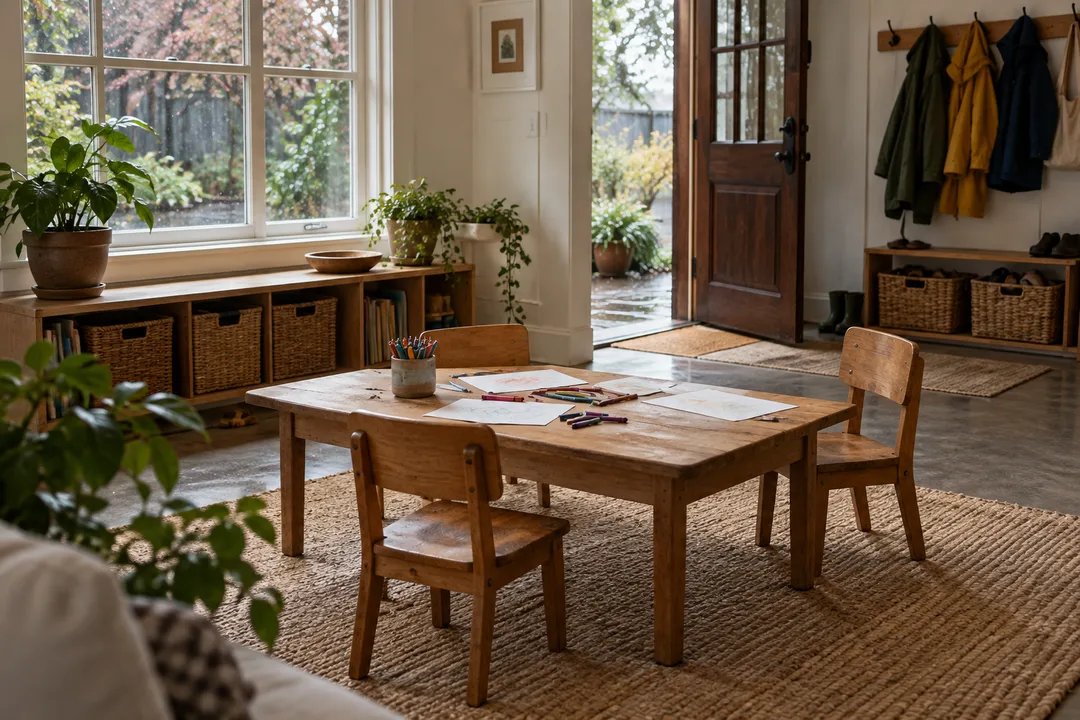
The useful measure is the time before your children can become involved. A workshop with a long introduction and a quick final task offers a different balance from a space where they can start exploring soon after arrival. Neither format is inherently wrong. Choose the one that suits their attention and the limited time you have. When reading a session description, distinguish time spent listening, waiting, choosing equipment and actually doing the activity together.
Ask each child what would make the visit feel worthwhile. One may want to bring something home, while another wants to solve a challenge with the adult. You do not have to satisfy both through separate bookings. A shared activity can include different roles, such as designer and builder, reader and observer, or person who chooses and person who explains. Look for participation that includes both siblings without asking the older one to act as a substitute instructor.
Use the indoor brief as a comparison tool
In the Karpo APP, begin with the limits you already know. A possible request is: “We have two hours in London between an errand and a family meeting. Our children enjoy hands-on activities and dislike long introductions. We want indoor ideas close to our route, with enough time to arrive, take part and leave calmly. Please focus on a few suitable possibilities.” Replace the general locations with your own neighbourhoods and give the ages of the children.
Karpo's public site describes a conversational starting point based on mood and schedule. Keep the request within that scope: explain what your family wants and ask for ideas. Do not treat the conversation as a completed booking or as evidence that a particular session admits your children. A recommendation is useful because it gives you something concrete to evaluate. The activity's published conditions and your own timing determine whether that possibility becomes the plan.
Give each candidate a clear reason to survive
Compare a small number of possibilities using the same questions. How much of the gap remains after travel? Can both children take part meaningfully? Does the activity have a natural endpoint? What must the adult organise? A candidate that performs well on those questions deserves attention even if its promotional photographs look less dramatic. For a short family visit, ease of participation can contribute more enjoyment than scale or novelty.
Use a simple ranking rather than a complicated score. Label a possibility “fits comfortably,” “fits only if everything runs smoothly” or “too much for this gap.” Be honest about which category it belongs in. The middle category may still be worthwhile on a flexible day, but it becomes fragile when another appointment cannot move. Remove the weakest candidate early. Keeping five nearly suitable choices alive often leaves the adult making the same decision repeatedly without learning anything new.
A beginning and an ending the children can see
Explain the visit as a short story with a finish. You are going to make one thing, explore one area or try one kind of challenge, then meet the other family member. This is easier to understand than an unspecified promise of “some fun indoors.” It also gives the adult a way to manage time without constantly referring to the clock. The agreed activity provides a reason to begin and a recognisable point at which leaving makes sense.
Allow a little closure within the visit. Children may want to show what they made, describe a favourite detail or choose one thing to remember. Save that moment instead of filling every available minute with another task. An indoor outing can feel rushed even when the journey fits perfectly if everyone is hurried out just as they become proud of what they have done. The final few minutes belong to the experience as much as the opening ones do.
What if the first idea falls through?
An indoor backup should remain close to the original route and ask less of the family. Avoid replacing a missed session with a more complicated cross-city journey simply because the afternoon now feels unfinished. A quiet shared game, browsing something together or having a comfortable seated pause can still make the gap enjoyable. Choose the alternative according to your household's interests, without suggesting that any particular facility is available unless its details support that choice.
Practical notes before you set off
Carry only the equipment that supports the selected activity and the next part of your day. Tell another adult where the family will meet, decide who holds any tickets and keep your arrival instructions together. If you purchase a timed session, use the terms shown during that purchase rather than an example itinerary. End the planning process with one chosen activity and a simple fallback. Two hours can then become a complete small outing, with enough room left for the commitment that follows.
Ask Karpo for more information.
Keep reading
- Waterloo Cozy Board Game Cafe Finder in South London
 Shoreditch Cozy Board Game Cafe Finder in East London
 Brixton Cozy Board Game Cafe Finder for Warm London Days