 Waterloo Cozy Board Game Cafe Finder in South London
Weekend Plans

London Family Outing Planner for Three Generations Together
Bring grandparents and children into one London outing with fewer changes of location, useful resting points and shared decisions about the day.
When grandparents and children spend a day together, their different preferences can become the pleasure of the outing. One person notices a building's details while another wants room to move. A London family outing planner can start with those differences instead of trying to average them into a generic family activity. The practical challenge is to create a shared experience with little unnecessary travel, comfortable pauses and clear choices about who joins each part.
Ask everyone before choosing the destination
Begin with a short conversation away from the pressure of departure. Ask the older adults what they would enjoy seeing or doing, and how they prefer to spend the time between activities. Ask the children what kind of involvement appeals to them. Someone may want to tell stories about a familiar area, another might like drawing and a child may simply want an adult to play a game. These answers can reveal common ground that a list of attractions would miss.
Separate preference from necessity. A person who enjoys sitting with a view is describing a preference, while someone who needs regular seated rests is describing a practical requirement. Neither should have to defend that need once the group arrives. Use the words each person chooses for their own comfort and mobility. Age alone does not describe walking capacity, attention or enthusiasm. Avoid assigning every grandparent the same role or assuming every child wants the most energetic available option.
Count changes of location, not just distance
Repeatedly standing, collecting belongings and finding the next entrance can make an apparently compact outing tiring. A route with several nearby stops still asks the family to restart several times. Consider whether one setting could support looking around, conversation and a rest. Reducing those transitions may create more time together than shortening a single walk. The goal is a workable rhythm, judged by the people attending rather than by the number of pins on a map.
For a London example, choose a starting neighbourhood that is convenient for the family members who have the least flexible journey. Establish a meeting place that everyone understands, then make the first activity easy to reach from it. An outing does not need to showcase the whole city to feel worthwhile. A familiar area can become interesting through a grandparent's memories or a child's questions. That local focus also makes it easier to understand the journey home before the group sets off.
Give the pause something to contribute
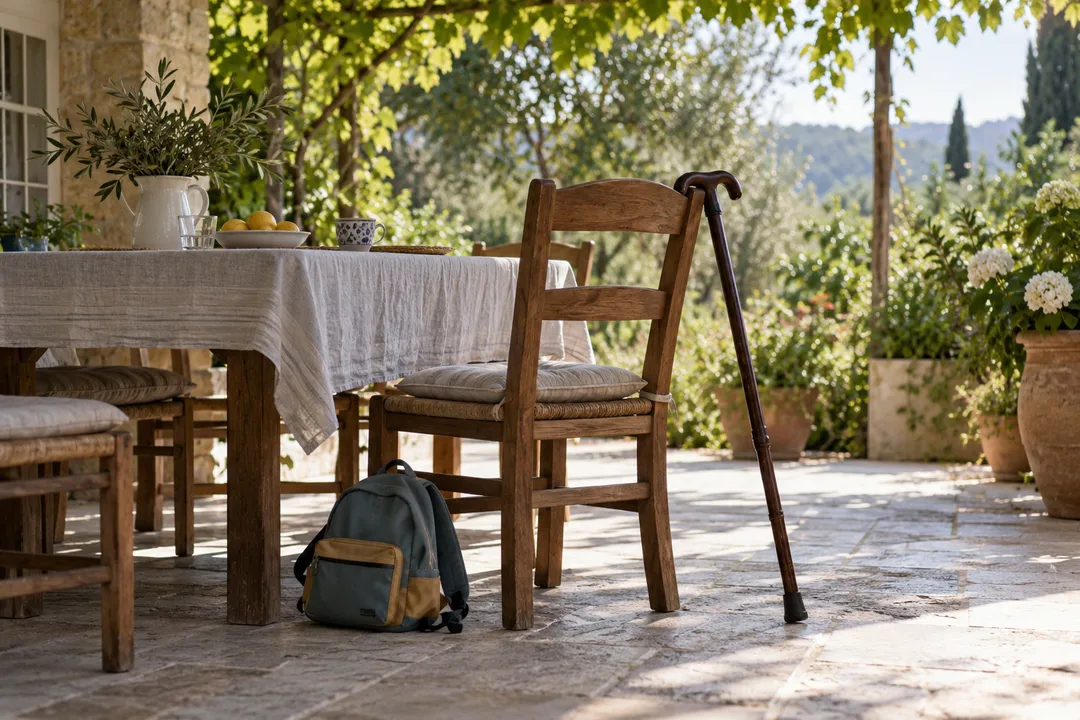
A rest can be an active part of the visit. Invite someone to bring a photograph, describe a childhood game or choose an object for the children to sketch. These suggestions do not require a performance from the older adults. Offer them as options, with equal permission to enjoy quiet company. A seated pause becomes more satisfying when it has its own appeal and does not feel like a delay before the supposedly important next destination.
Choose the kind of seating your group actually needs. A low wall may suit one person and be unusable for another. A backed chair, shelter or space beside a bench can matter more than the general presence of “places to rest.” Attach these requirements to the shortlist, and distinguish documented facilities from assumptions. If a candidate depends on seating that has no supporting detail, it has an unresolved practical question. Describing that gap accurately is more useful than calling the whole outing easy.
Let a small group move without fragmenting the day
Some families enjoy a brief split, with one adult and a child exploring a nearby feature while others stay seated. Plan that only when the adults involved are comfortable with it. Agree on the place to reunite and the point at which the small group returns. Avoid making a grandparent the automatic keeper of bags or the permanent seated supervisor. Everyone should have the opportunity to choose the part they enjoy, including the energetic section when it suits them.
A shared object can reconnect the group afterwards. The explorers might bring back a drawing, describe a detail they noticed or pose a question for the others. That gives the separate few minutes a place in the common story. If the setting makes a brief split awkward, keep the group together and choose a quieter activity instead. The outing should support conversation, not require constant coordination between adults searching for one another across an unfamiliar place.
Put the trade-offs into your Karpo request
The Karpo APP is a place to describe the kind of city experience you want. Its public introduction presents mood and schedule as starting points. For this scenario, make the social and practical priorities explicit: “We are three generations planning a London afternoon. We want one area, few changes of location and chances to sit together. The children like drawing and short explorations. Please suggest ideas that leave room for conversation.” Add your starting neighbourhood and the actual mobility requirements the group has agreed to share.
State which constraint wins when an attractive option introduces more travel. You might accept a smaller selection of activities in return for a simpler journey, or choose a shorter visit to keep everyone in the same place. Those are useful preferences to communicate. They are different from asking an assistant to guarantee a quiet seat or a functioning lift. Keep suggestions, facility evidence and any purchased booking as separate parts of the planning decision.
Choose the return while everyone has energy
The return can be planned around different households without forcing everyone to leave at the same moment. If the children will continue with a parent, the grandparents' departure should still be an easy and complete ending to their part of the day. Work out who accompanies whom, where any belongings change hands and how the group says goodbye. Do this in advance so the final moments are not dominated by hurried transport decisions.
Keep the last shared activity small enough to finish gracefully. It might be choosing a favourite sketch or sitting together for a final conversation. Resist adding a destination because the group appears to have spare time on paper. Spare energy can be used for enjoying the current moment. A satisfying afternoon is one people want to repeat, and that may mean returning while everyone still feels comfortable rather than exhausting every available hour.
Practical notes for three generations
Write one brief itinerary in ordinary language, with the meeting point, main activity, resting arrangement and departure plan. Send the same version to the adults so nobody is following an earlier suggestion. Ask before sharing any personal care information more widely than necessary. Let each adult keep responsibility for their own essential items, with agreed assistance where wanted. A clear plan can respect independence while still making it easy for the family to support one another.
Afterwards, ask each generation for one thing they would keep. You may learn that a child valued hearing a story more than seeing a particular object, or that an older relative wanted a little more time to explore. Use those observations to shape the next outing. A London family outing planner works well when it protects the relationship at the centre of the day: people spending time together, with enough comfort and choice to enjoy one another's company.
Ask Karpo for more information.
Keep reading
- Waterloo Cozy Board Game Cafe Finder in South London
 Shoreditch Cozy Board Game Cafe Finder in East London
 Brixton Cozy Board Game Cafe Finder for Warm London Days