 Shoreditch Comic Shop Crawl Planner: Murals to Manga
Hidden Gems & Odd Finds

Walthamstow Etching Paper Supply Picker: 3 Carrying Choices
Compare etching paper for a Walthamstow outing with carrying comfort, shared projects and thoughtful presentation in mind before choosing your next sheet.
Paper has to travel before it becomes a print someone keeps. For a Walthamstow etching paper supply picker, start with the journey from a browsing outing to a worktable, then onward to a friend or shared project. A lovely sheet that will not fit your folder creates an immediate problem. Build the decision around scale, handling and the feeling of the finished object, with room to enjoy the neighbourhood while choosing your own nearby stops.
Begin at the receiving end
Imagine the person who will hold the finished etching. Will they lift it from a portfolio, unwrap it at a table or place it beside other small works? This thought changes how you judge size and weight. A substantial sheet may feel generous, while a modest format can invite closer attention. Neither is automatically more thoughtful. The material should suit the image and the way the recipient will encounter it, rather than simply looking impressive when first laid flat.
Write a simple purpose for the print before browsing. You might be making a small gift, an exchange with another maker or a first trial for a group project. Include the scale of the image and the protective materials you can realistically use. This keeps practical decisions connected to the gesture behind the work. You are choosing paper for a particular relationship between maker, image and viewer, which is a more useful brief than wanting something special.
Let carrying comfort shape the format
Measure your folder or take it with you empty. Consider whether it supports the whole sheet without corners projecting into the bag. A paper decision becomes easier when you know the largest format you can carry comfortably through the rest of the day. If a larger sheet appeals, think through suitable protection before purchasing it. Do not let the prospect of an elegant edition obscure the ordinary work of getting the material home without bending its edges.
Think about storage as well as the outing. A sheet can be manageable in a supplier's spacious display and awkward on your own crowded table. Consider where it will rest before printing and where the finished proofs will remain protected afterward. The size you can keep well may produce a more satisfying project than a larger one that spends weeks waiting for enough space. Choosing a comfortable format is an artistic decision with practical benefits.
Notice the scale of Walthamstow
Walthamstow offers a lively backdrop for looking at objects in relation to people and streets. On a walk of your own making, notice how a small detail holds attention beside a larger facade, or how a compact display gathers colour without becoming crowded. Use those impressions to think about the scale of your etching. A small image can carry a generous feeling when its border and paper are chosen with the same care as its marks.
If a quieter village-like stretch or a green pause suits your day, choose it independently and let the pace change. Put the material notes aside briefly. Look at a single shape and imagine how much blank space it would need on a page. This exercise can reveal whether you are choosing a large sheet for the image or merely responding to the pleasure of its size. Keep samples enclosed while you make these observations in a separate notebook.
Compare how the sheet meets the hand
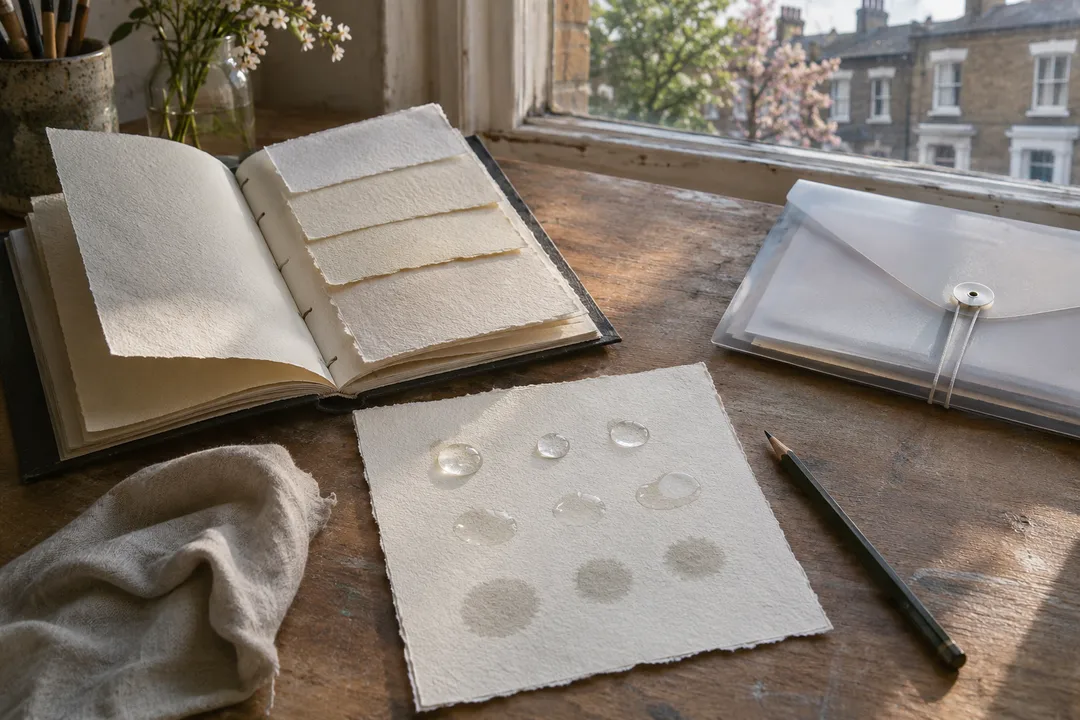
Ask permission to handle a sample and support it gently. Think about the finished print being lifted and turned, not just the unprinted surface being touched. Does the candidate feel comfortable at the size you intend? Does its flexibility suit the presentation you have in mind? Your response is a useful starting point, while an actual printing trial will answer different questions. Keep these observations separate so touch does not become an unsupported guarantee of print quality.
Compare colour with a reference that belongs to the project. A warm sheet may make the gift feel intimate to you, while a brighter one could suit a crisp, graphic plate. Explain the impression in ordinary terms and allow a companion to disagree. Different eyes can make the choice clearer. If you both notice the paper before the image, consider whether that is the effect you want or a distraction from a composition that already has enough character.
Make a shared project fair to everyone
When choosing materials for a group, discuss essential requirements before browsing. One maker may need a surface for fine lines while another values a sheet that feels comfortable in a small portfolio. Agree on what must remain consistent and what can vary. This conversation avoids treating one person's preferred texture as the default for everyone. A shared edition becomes more coherent when its material choices are understood, even when the images themselves have very different moods.
If samples or trial sheets are obtained, keep each material's identifying details with it. Use a clear note rather than trusting a group conversation to survive in memory. At the later printing session, compare the results together after they are dry. Discuss what worked for each plate and whether a common paper still makes sense. A practical disagreement resolved through a small trial is more constructive than a confident decision based only on the appearance of an untouched sheet.
Discover nearby possibilities with Karpo APP
Ask Karpo APP to recommend nearby art material places around Walthamstow. Consider the suggestions in relation to the outing you want, then make your own choices about where to go and how to travel. A compact project brief can stay in your notebook: manageable format, suitable handling and a presentation that fits the person receiving the print. Those priorities are yours to apply while browsing, regardless of how many recommendations catch your interest.
Leave room for a companion's interests when you arrange the day. Someone who does not make prints might enjoy choosing a colour relationship, studying packaging or drawing a tiny object that could become a future plate. Share those observations during a pause you select. The material decision can remain focused without occupying every conversation. An enjoyable outing gives the project a wider set of associations, which may become part of why you remember and finish the print.
Practical notes for giving the work a future
Pack a clean support, keep loose objects away from paper edges and limit the purchase to what you can protect. Before printing, follow the guidance relevant to the material and your process. Record the result of a trial before committing the full project to an untested sheet. Consider the finished object's support and wrapping early enough that presentation does not become an improvised afterthought once the image is complete and ready to leave your hands.
End by imagining the same receiving moment that started the brief. The paper should carry the image comfortably, give the viewer room to look and make the object easy to handle with care. If the candidate does that in a real trial, it has earned its place. A Walthamstow material outing can then lead to something modest and complete: a print made with attention, protected sensibly and ready for another person to enjoy.
Ask Karpo for more information.
Keep reading
- Shoreditch Comic Shop Crawl Planner: Murals to Manga
 Bermondsey Comic Shop Crawl Planner: Zines Under the Arches
 Clapham Comic Shop Crawl Planner: Charity Shelves and Common