 Camden Korean BBQ Group Dinner Picker: Lockside Feasts
Restaurants
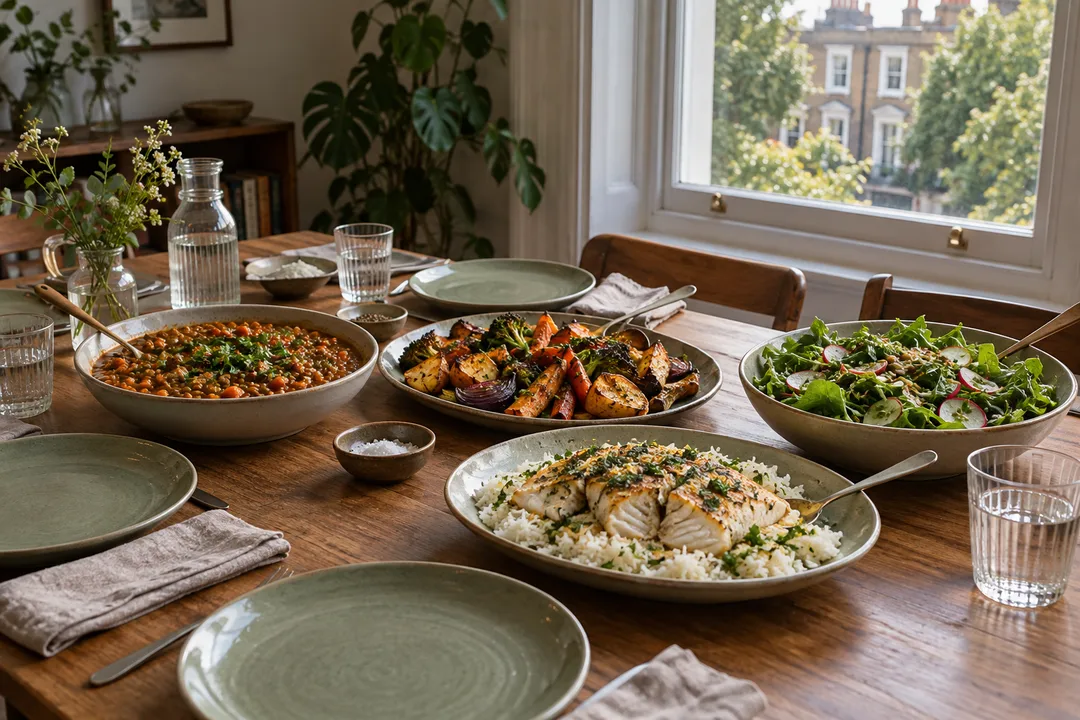
London Dinner Shortlist Builder: Meals for Mixed Diets
Build a London dinner shortlist for mixed diets by comparing complete meals, individual orders and shared travel needs before choosing a table together.
Four friends agree on dinner in London, then discover that they mean four different meals. One eats vegan food, another avoids dairy, a third wants fish, and the last is tired of sharing plates. A dinner shortlist builder becomes useful at this point: it gives the search a clear brief before anyone argues about restaurants. Start in Karpo APP with the people, the meeting area and the meals each person needs. The aim is a small set of candidates that everyone can assess without reopening the whole conversation.
Describe a meal each person would enjoy
Write the needs as separate lines before naming cuisines. “Vegan main that feels like a full dinner” tells you more than “some vegetarian options.” Someone who avoids dairy might still eat fish, while a vegetarian friend might welcome cheese. Those differences affect the possible menu. Ask each diner what would count as a satisfying order, including whether sides alone would leave them hungry. This keeps the person with the narrowest choice from becoming an afterthought once everybody else has found something appealing.
Separate food preferences from medical requirements. A dislike of cream and a milk allergy need different conversations with the restaurant. You can describe the planning requirement without sharing a friend's medical history in a group discussion. For an allergy, the restaurant needs to address ingredients and preparation directly with the diner. A recommendation or a menu label cannot establish how a particular kitchen will handle that meal. Keep that discussion attached to the candidate rather than assuming a broad cuisine description answers it.
Give London a meeting boundary
Pick an area people can reach, then decide how far beyond it you would travel. An illustrative brief could put the meeting in Bloomsbury because that suits your existing plans. Someone arriving from work and someone already near home might accept different journeys. Name approximate starting areas and any limit on walking. Exact home addresses add little to an early shortlist. The useful information is whether the proposed dinner creates a reasonable evening for every person, including the journey afterwards.
Location can also reduce the food problem. Keeping two candidates in one meeting area gives you a practical alternative if the first choice cannot accommodate an essential requirement. Comparing places on opposite sides of the city creates a second round of travel negotiations. Ask for a primary area and one adjacent alternative, rather than a citywide ranking. This is a request you can put into a conversation with Karpo; it does not require a special map filter or an automatic travel calculation.
Look for complete orders rather than menu keywords
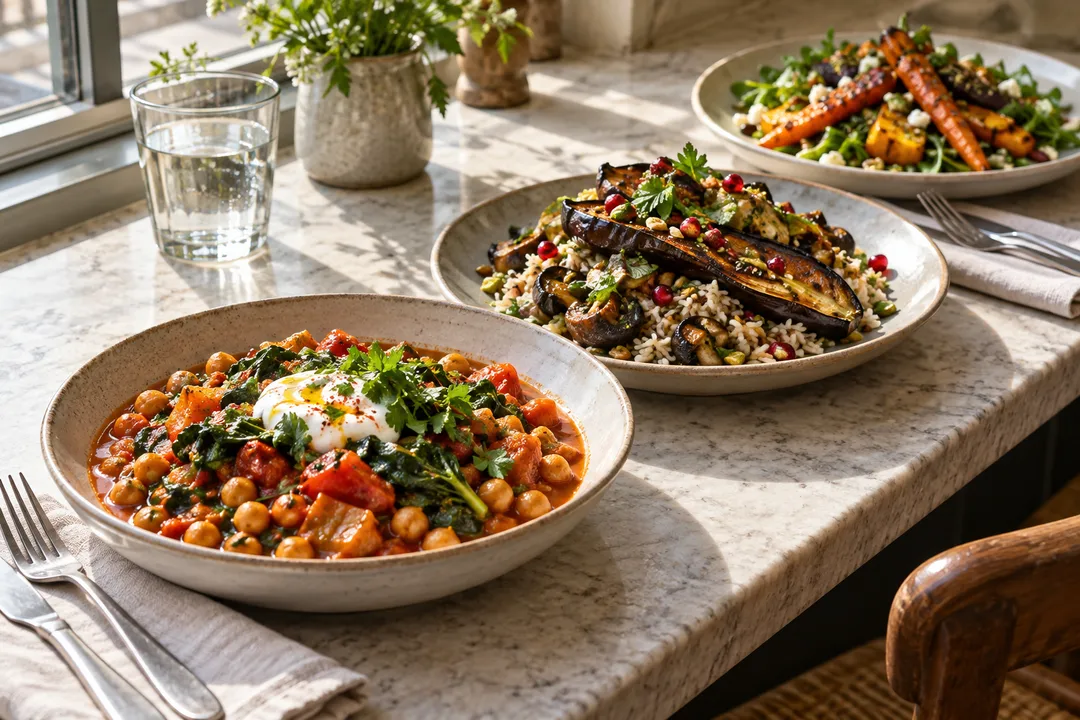
For each candidate, describe one plausible main meal for every diner using the information available. A plate of roast vegetables could be a substantial main or a small accompaniment. A rice dish might include stock that matters to someone at the table. Read the actual dish description before counting it as a match. Where the description leaves a question, record that question in plain language. An attractive photograph should not close a gap in the menu evidence.
Individual ordering can make a mixed table easier to organise. A shared feast asks everyone to negotiate the same dishes, portions and spending. Separate mains let people choose independently while still eating together. Sharing remains an option if the group wants it, but state that choice before searching. A restaurant built around one set menu poses a different decision from a place offering individual orders. Avoid treating “lots of dishes” as equivalent to “a suitable dinner for each person.”
Put the important differences into one request
Try a brief like this: “We are four adults planning dinner around Bloomsbury in London. One needs a vegan main, one avoids dairy, and the others eat fish and vegetables. We prefer individual orders and a seated meal where we can talk. Suggest three candidates, explain the menu evidence for each person, and list unanswered food questions separately.” This is example wording to adapt, rather than a claim that any named restaurant can meet those requirements tonight.
Ask for a comparison that preserves uncertainty. Useful headings are the vegan meal, the dairy-free possibility, the ordering format and the remaining question. If a candidate has strong evidence for three diners but little for the fourth, the gap should stay visible. A single overall score could hide it. You can review the returned suggestions yourself and ask Karpo to narrow the discussion around the requirement that is proving hardest to satisfy. Keep the original essentials in that follow-up.
Decide what would remove a candidate
Agree on exclusions before the group becomes attached to a particular room. Perhaps a compulsory shared menu would make the evening awkward, or perhaps one person needs a proper chair rather than a high stool. These are different from preferences about décor. If the shortlist contains a place that fails an essential condition, remove it. Changing the condition after seeing an attractive option can put quiet pressure on the person whose needs caused the exclusion in the first place.
Avoid asking the most restricted diner to approve the whole search. Give them the relevant food information and a specific question. Other people can handle travel, budget and the final message to the group. Spreading that work matters: everyone benefits from dinner being arranged, and one person should not have to become the unpaid organiser because they eat differently. A good comparison makes the responsibilities smaller and clearer, with one person collecting each missing piece of information.
Keep the final conversation small
Present two finalists with one reason to choose each. For instance, one might offer clearer individual meal choices while another better suits the agreed meeting area. Use those as comparison dimensions, without inventing dishes or claiming a restaurant has capacity. Ask the group to choose between the actual tradeoffs. Sending ten links encourages another round of searching, while sending only your favourite can conceal the compromises. Two finalists leave enough choice for the group to recognise itself in the decision.
If a required food question remains unanswered, make that the next action before arranging the table. The wording should be concrete: “Can this dish be prepared without milk, and how is the preparation handled?” Direct the question to the restaurant and let the affected diner decide whether the response is adequate. Suggestions in Karpo APP help frame the search; the restaurant's answer and any booking acknowledgement are separate pieces of the evening. Record which stage you have reached.
Practical Notes for the shared table
Before sending the final plan, write down the chosen candidate, the date, the number of diners and the agreed ordering format. Include an alternative only if it serves a specific purpose. A nearby walk can remain optional so that rain, fatigue or an early departure does not undermine dinner. Give people a clear meeting instruction once the place has been selected. There is no need to build an entire London itinerary around a meal whose main success is that everyone can enjoy it.
Open Karpo APP when the dietary differences are still easy to describe, rather than after the group has argued over a long list. Bring the same brief back if a candidate falls away and change only the detail that caused the problem. You finish with a usable shortlist when each diner has a credible meal, the journeys feel acceptable, and the remaining restaurant questions have an owner. That is enough structure to move from different appetites to one shared table.
Ask Karpo for more information.
Keep reading
- Camden Korean BBQ Group Dinner Picker: Lockside Feasts
 Holborn Korean BBQ Group Dinner Picker: Midtown Feasts
 Covent Garden Korean BBQ Group Dinner Picker: Shared Tables