 Notting Hill Budget Lunch Route Planner: Golborne Road Cafes
Restaurants
Chinatown Dim Sum Brunch Picker for Homesick Hong Kongers
Missing Sunday yum cha back home? Use this Chinatown dim sum brunch picker to choose a room, keep tea etiquette alive and gather friends around a round table.
For anyone who grew up in Hong Kong, Sunday yum cha is less a meal than a weekly appointment with family, gossip and endless pots of tea. In London it is easy to let that habit slip, but Chinatown still offers the sound and smell of a proper Cantonese morning. This dim sum brunch picker is for homesick Hong Kongers and their friends who want to rebuild that Sunday ritual, choose a room that feels right and pass the tradition on to people who have never sat at a round table.
Why Yum Cha Feels Like Home
Yum cha literally means drinking tea, and the food was originally there to keep the tea company. In Hong Kong families gather in noisy dining halls, grandparents claim their favourite tables and children learn early which baskets disappear first. The meal stretches across a long morning, and nobody is in a hurry to leave once the conversation starts.
That slow pace is what many people miss in London, where weekend brunch often means a short table slot and a quick bill. A good Chinatown dim sum room lets you settle in, refill the pot and talk about home in Cantonese without anyone glancing at the clock. Finding a room with that feeling is the main goal of this picker.
Choosing a Room by Its Sound
Walk along Gerrard Street and the lanes around it and you will notice that each dining room has its own character. Some are bright and modern with tidy menus and quieter tables. Others are larger, louder halls with round tables for big families, staff calling across the room and a buzz that feels much closer to a Sunday in Mong Kok.
If homesickness is the reason for the outing, pick the louder kind. Listen at the door for Cantonese conversations, look for multi-generation families and check whether tables are being shared around a lazy Susan. These small signs usually point to a room where regulars feel comfortable, and where your own group will feel part of the crowd rather than visitors.
Tea First, Then Everything Else
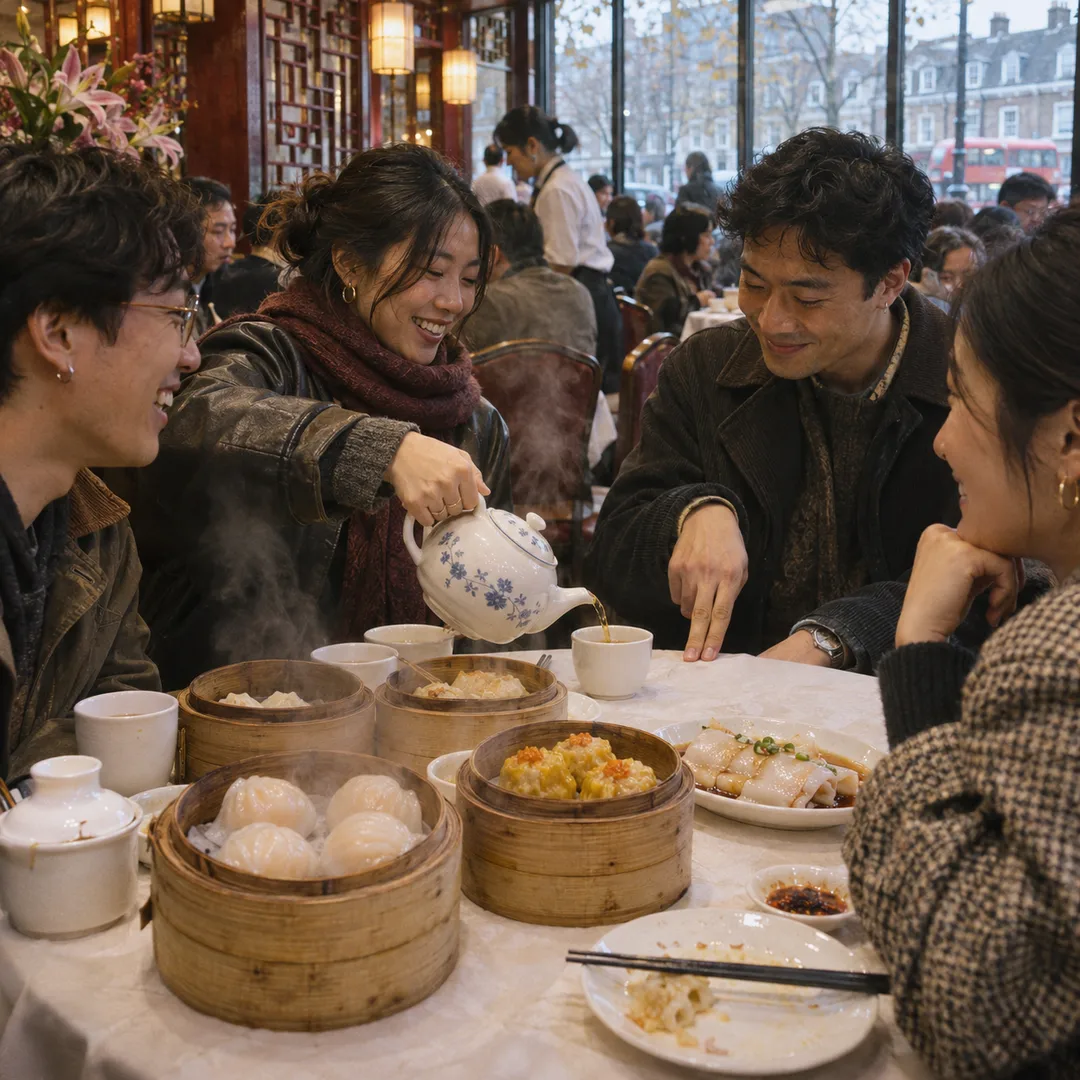
Start by choosing the tea before anyone opens the menu. Pu-erh is the classic match for richer dim sum because it cuts through fried and fatty dishes. Jasmine is lighter and fragrant, and many friends new to yum cha find it easier to enjoy. Tieguanyin sits somewhere in between, and some groups order two pots so everyone can compare.
Pour for others before yourself, starting with the eldest person at the table. When someone fills your cup, tap two or three fingers lightly on the table to say thanks. The custom is often linked to an old story about an emperor travelling in disguise, and explaining it to London friends is a lovely way to start the morning. When the pot is empty, leave the lid tilted or resting on the rim and staff will know to refill it.
Ordering Like a Sunday Regular
Most rooms in Chinatown use an order sheet rather than trolleys, so one person usually takes the pencil while everyone calls out favourites. Begin with the steamed classics such as har gow, siu mai and cheung fun, then add baked char siu buns, turnip cake and something fried for crunch. Order in rounds rather than all at once so the table never feels crowded and the food arrives hot.
Save room for comfort dishes that remind you of home, such as lo mai gai wrapped in lotus leaf, steamed spare ribs with black beans or chicken feet in a deep red sauce. Finish with custard tarts or mango pudding. If a dish arrives different from the version you remember, treat it as a conversation starter rather than a disappointment, since London kitchens have their own long history.
Bringing London Friends Into the Ritual
Part of rebuilding the habit is sharing it. Invite a colleague or flatmate who has only tried dim sum from a supermarket freezer and let them sit next to you. Talk them through the order sheet, show them the finger tap and let them try one familiar dish and one adventurous one, so they leave with both comfort and a story.
Teaching chopstick tricks, explaining why the turnip cake has crispy edges and translating the names on the sheet into Cantonese can make you feel more at home than any single dish. Many Hong Kongers in London say that their friends now ask for yum cha before they do, which turns a homesick tradition into a shared one.
Timing a Relaxed Sunday Brunch
Chinatown fills up quickly on weekends, especially from late morning onwards when families and visitors arrive together. If you want a round table and an unhurried meal, aim to be among the early arrivals, or plan a later sitting once the first wave has eased. Larger groups should call ahead where possible, since round tables are limited.
An early start also leaves time for the rest of the day. You can eat, wander the supermarkets for snacks and sauces you cannot find elsewhere, and still have the afternoon free. Arriving hungry but not starving helps too, because ordering in rounds is easier when nobody is rushing to fill the table with everything at once.
A Walk Through Chinatown After the Tea
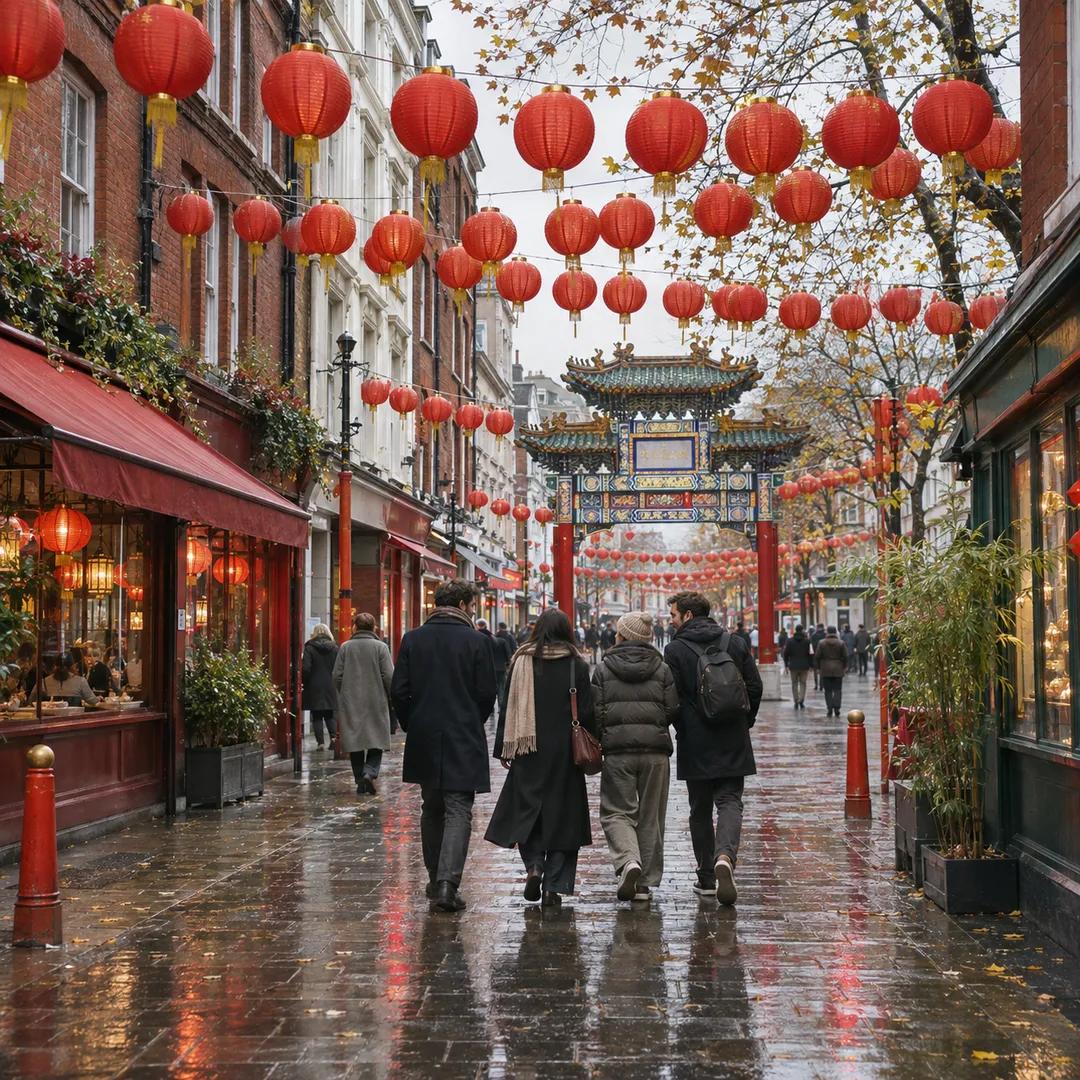
Once the last custard tart is gone, take a slow loop through the neighbourhood. The gateways on Gerrard Street and Wardour Street make good photo stops, and the lanterns overhead look especially warm on a grey London morning. Newport Court and the small streets nearby are full of bakeries, herbal shops and grocers worth browsing.
From there it is a short walk to Leicester Square and on to Trafalgar Square, where you can sit by the fountains and let the meal settle. If anyone still has room, pick up a box of egg tarts or a pineapple bun for later. Families often bring back treats for relatives who could not join, which is another habit carried over from home.
Keeping the Sunday Habit Going
The easiest way to make yum cha a weekly habit is to keep it simple. Agree on a regular time, rotate who picks the room and keep a running list of favourite dishes from each one. Over time the group will develop its own preferences, from the place with the best cheung fun to the one where the staff remember your tea order.
It also helps to invite one new person each month, whether a recent arrival from Hong Kong or a London friend who keeps asking about it. The table grows, the stories multiply and Sunday mornings in Chinatown begin to feel less like an escape from homesickness and more like a part of your London life.
Picking Your Table With Karpo APP
Open Karpo APP and describe the brunch you have in mind, for example a group of six, Cantonese-style dim sum in Chinatown and a room that feels like a Sunday back in Hong Kong. Karpo can suggest dim sum spots that match the mood, along with nearby bakeries and a short walk to finish the morning.
You can also ask Karpo for ideas when the group changes, such as a quieter room for a smaller catch-up or a place that suits friends trying dim sum for the first time. Save your favourite plans, share them with the group chat and keep the Sunday ritual going for as long as London is home.
Ask Karpo for more information.
Keep reading
- Notting Hill Budget Lunch Route Planner: Golborne Road Cafes
 Camden Budget Lunch Route Planner: Lock or Drummond Street
 Brixton Budget Lunch Route Planner: Covered Arcades When Wet