 Brixton Vintage Thrift Shop Finder: South London Retro Gems
Hidden Gems & Odd Finds
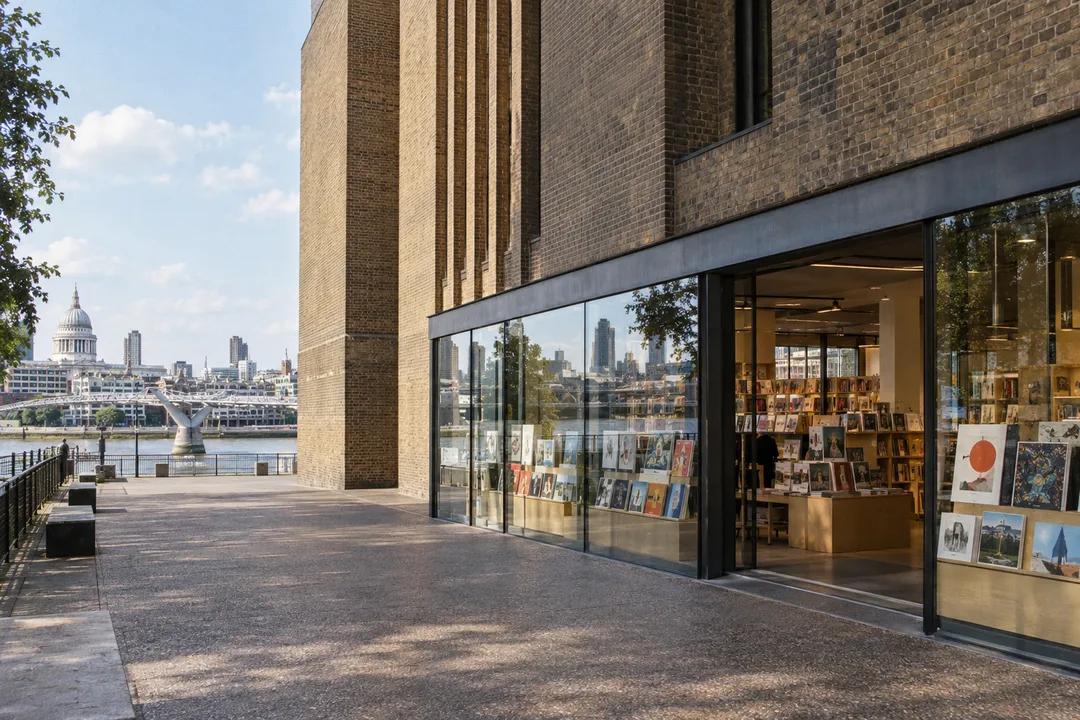
Tate Modern Bankside Design Bookstore: Riverside Art
Tate Modern bookshop at Bankside opens Sunday to Thursday from 10am to 6pm and Friday to Saturday to 9pm, stocking visual arts and design books in London.
Overlooking the tidal waters of the River Thames on the Bankside embankment, Tate Modern's expansive bookshop network serves as one of the world's most influential repositories of modern art, architecture, and visual theory. Housed within the former Bankside Power Station designed by Sir Giles Gilbert Scott—and masterfully transformed in 2000 by Swiss architects Herzog & de Meuron—the institution pairs immense industrial heritage with contemporary artistic discovery. Operating from multiple dedicated concourses across the complex at Bankside, the main Terrace Shop and Turbine Hall bookstore present an unmatched design bookstore experience, stocking extensive monographs, graphic arts treatises, and international critical literature that span global spatial culture.
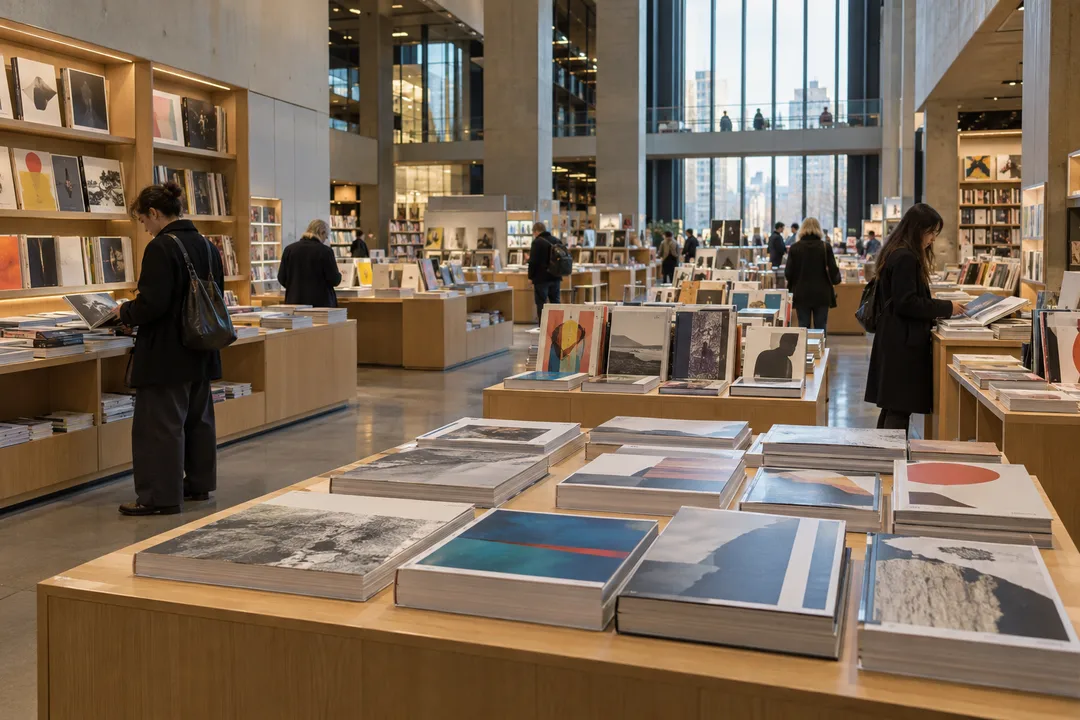
Exhibition Publishing and Global Visual Culture
The curatorial standard of Tate Modern's publishing collection reflects the institution's global authority. Rather than generic retail stock, the shelves prioritize rigorous scholarly documentation, artist monographs, and structural theory. Visitors will encounter landmark exhibition volumes such as the definitive Lee Miller hardback retrospective priced at £45, alongside accessible theoretical primers like Artists Series: Georgia O'Keeffe at £10 and creative monographs like Meet the Artist: David Hockney for £7.99. Major survey publications like Frida: The Making of an Icon are presented at £25, offering readers direct insight into international visual practice.
Architectural and spatial design sections are particularly comprehensive, reflecting Tate Modern's own architectural significance. Readers can explore detailed monographs on industrial adaptive reuse, brutalist urbanism, civic infrastructure, and contemporary landscape ecology. The bookshop also curates specialized holdings in typography, experimental editorial layout, museum scenography, and the socio-political impact of public space design, making it an essential destination for practicing designers and academic researchers alike.
Independent publishers from across Europe, Latin America, and Asia feature prominently alongside Tate's own celebrated publishing imprint. Rare artist books, limited-run exhibition portfolios, and bilingual design journals provide collectors with scarce editions that explore the boundaries between print media and installation art.
Dedicated tables showcase emerging visual talents, featuring self-published photography zines, Risograph prints, and boundary-pushing typography manuals. This commitment to grassroots print innovation ensures that browsing through the shop remains an active discovery of contemporary creative movements.
Scholars of twentieth-century modernism will also appreciate the extensive backlist dedicated to constructivism, De Stijl, the Bauhaus workshops, and abstract expressionism. These comprehensive volumes reproduce original working sketches, manifestos, and historical exhibition layouts with exceptional fidelity, allowing readers to trace the evolutionary arc of modern visual ideas.
Industrial Architecture and Concourse Browsing
The experience of exploring the bookshops at Tate Modern is inseparable from the sublime industrial architecture of Bankside Power Station. Stepping off the Turbine Hall ramp into the subterranean bookstore reveals soaring concrete pillars, untreated steel accents, and generous display tables illuminated by crisp gallery lighting. Higher up on Level 1 of the Blavatnik Building, the Terrace Shop offers sweeping glass vistas across the River Thames toward St Paul's Cathedral.
The retail environment balances institutional scale with thoughtful browsing spaces. Broad concourses allow visitors to navigate freely without crowding, while dedicated reading counters permit quiet examination of large-format folios and delicate paper bindings. Staff members possess deep familiarity with modern art movements and design history, offering expert recommendations on specialized monographs or exhibition literature.
All payment transactions across the bookshops are completely digital and card-based. Durable canvas tote bags and protective wrapping are provided to ensure that heavy exhibition folios remain pristine during your return journey across London.
Because the bookshop displays are distributed thoughtfully across distinct building levels, each space possesses its own distinctive character. The Turbine Hall Shop focuses heavily on major exhibition titles, posters, and accessible surveys, whereas the Terrace Shop on Level 1 offers a quieter haven for specialized architectural folios, critical theory anthologies, and imported design periodicals.
Operating Timetable and Bankside Schedule
Planning an afternoon of book browsing at Bankside is made easy by consistent opening hours throughout the year. The bookshop spaces at Tate Modern at Bankside open Sunday through Thursday from 10:00 am to 6:00 pm, and open Friday through Saturday from 10:00 am to 9:00 pm.
Visiting on Friday or Saturday evening offers a relaxed atmosphere, when the main Turbine Hall empties of daytime tour groups and the bookshop remains open until 9:00 pm under soft evening lighting. Midweek mornings between 10:00 am and 12:00 noon provide the quietest setting for serious academic research and uninterrupted book reading.
Because access to the bookshops and general collection galleries is entirely free, visitors can drop in freely without booking advance exhibition tickets.
Bankside Riverbank Promenade and Architectural Sights
Stepping outside Tate Modern brings you directly onto the pedestrianized Bankside promenade, offering one of the most culturally dense walking routes in London. Stroll directly across the Millennium Bridge, the iconic pedestrian suspension bridge designed by Foster and Partners and Sir Anthony Caro, which aligns symmetrically with the majestic dome of St Paul's Cathedral on the northern bank.
Walking eastwards along the riverbank path leads past Shakespeare's Globe Theatre, a faithful oak-and-thatch reconstruction of the sixteenth-century open-air playhouse. Continuing past the historic Anchor pub brings you toward Borough Market and Southwark Cathedral, creating a comprehensive journey through centuries of London architectural and culinary history.
Transport Links and Practical Visit Tips
Tate Modern is easily accessible via multiple transport options across central London. Blackfriars station on the District and Circle lines and National Rail network is an eight-minute walk across the Blackfriars rail bridge. Southwark station on the Jubilee line sits approximately ten minutes to the south, while London Bridge station on the Northern and Jubilee lines is a fifteen-minute stroll along Bankside.
Travelers can also take advantage of river transit via the Tate to Tate boat service connecting Bankside Pier with Millbank Pier beside Tate Britain every thirty minutes. Secure electronic lockers are available to rent on Level 0 of the Blavatnik Building for stowing heavy personal bags while you browse the galleries and book stacks.
With its unmatched international inventory, dramatic power station architecture, and riverside setting, the bookshop at Tate Modern stands as a vital touchstone for contemporary visual and spatial design culture in London.
Ask Karpo for more information.
Keep reading
- Brixton Vintage Thrift Shop Finder: South London Retro Gems
 Notting Hill Vintage Thrift Shop Finder: Preloved Rails
 Soho Vintage Thrift Shop Finder: West End Designer Archives