 Waterloo Cozy Board Game Cafe Finder in South London
Weekend Plans
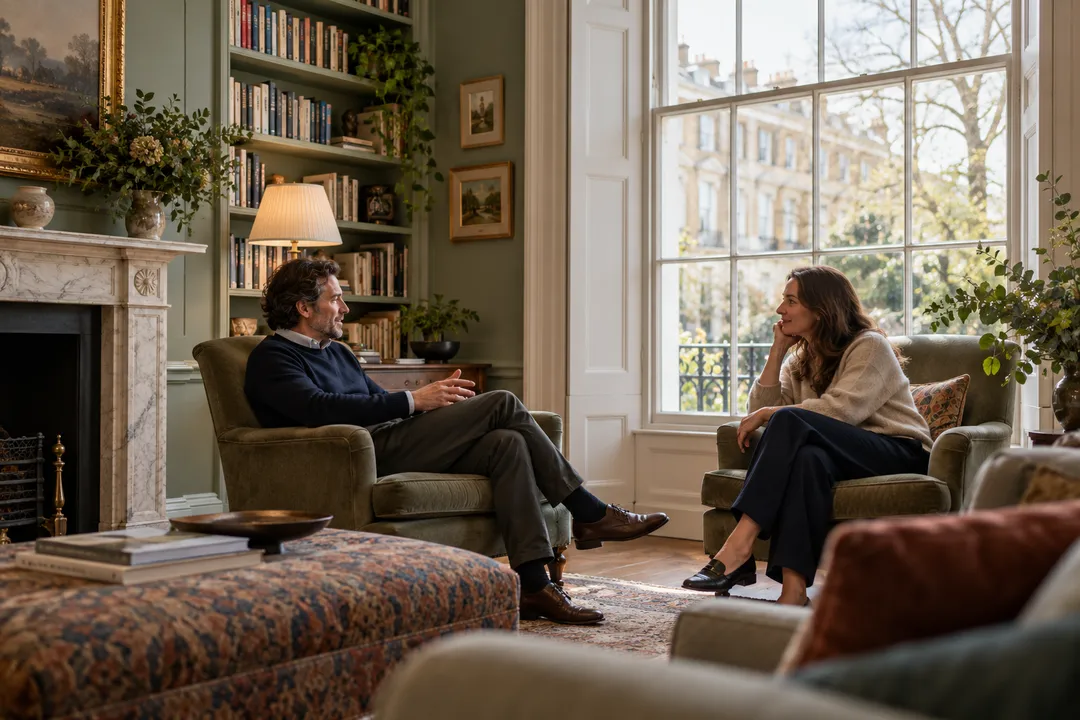
London Date Night Itinerary Planner: Talk More After Work
A quiet London date needs seating, comfortable conversation, and fewer changes of scene, with an easy departure when either person has run out of social energy.
For a date built around conversation, choose the conditions for listening before choosing the entertainment. A London date night itinerary planner request can describe comfortable seating, a modest journey, and no need to compete with a performance. “Quiet” alone is too vague. One person might mean a room without music, while another simply wants to avoid a crowded standing bar. Tell the Karpo APP which version matters to you and what would make the evening uncomfortable. The recommendations you request should leave room for two people to hear each other, finish a thought, and decide whether to keep talking.

Describe the kind of quiet you need
Start with the experience rather than an assumed sound level. You might want somewhere seated for an extended conversation, a meal without a timed entertainment component, or an outdoor section where passing noise is less distracting than a busy room. If hearing, fatigue, or sensory sensitivity affects the choice, say what accommodation is essential. There is no reason to disclose a diagnosis to describe a practical need. A useful brief could be: “We want to speak without raising our voices and prefer a table rather than a counter. Please prioritise places whose descriptions support that setting.” It is clearer than asking for a hidden gem.
Descriptions and photographs cannot promise the sound level you will encounter. A room can feel different with a private group, a busy service, or a nearby table celebrating. Treat ambience as a reason to shortlist, rather than a guaranteed condition. Decide how you would respond if the setting feels wrong on arrival. You can choose another candidate before committing to an order, or shorten that part and spend more time elsewhere. Do not start the evening by asking someone to tolerate precisely the situation they said would be difficult. A considerate plan leaves that preference intact even when the original choice needs changing.
Give the conversation an approachable beginning
After a demanding day, “tell me everything” can feel like another assignment. A small shared observation gives the evening somewhere gentler to begin. You might discuss an unusual object seen on the way, compare two things you enjoyed recently, or bring a question each person actually wants to answer. These are optional conversation ideas, not obligations or a script. A date does not need a performance review of the relationship. If one person arrives tired, allow ordinary silence and food before expecting a deep discussion. The planning choice that helps most may be giving the beginning less structure and fewer demands.
The physical arrangement can matter too. A bench, two armchairs, a narrow counter, and a conventional dining table encourage different kinds of interaction. Ask for a setting compatible with the way you want to sit together, then consider the information available for each candidate. If the only seating detail is unknown, avoid making a specific promise in the invitation. Say that you are aiming for a calm meal and share the selected place once decided. Overdescribing an atmosphere can turn an ordinary change of table into a disappointment. The reliable part of the invitation is your intention to make time for each other.
A meal can be the whole activity
For this kind of evening, skip entertainment that repeatedly interrupts the reason you went out. A demanding tasting sequence, a competitive game, or a performance may be excellent on a different date and distracting here. Choose the meal according to appetite and dietary needs, with ordering simple enough that neither person spends the opening studying a complicated choice. Explain any preference for familiar food in your request. Familiarity is useful when it reduces decision fatigue. There is no requirement to introduce a new cuisine every time you want an interesting night. The conversation can supply the novelty while the meal provides somewhere comfortable to have it.
If there is a difficult subject you intend to discuss, consider whether a public evening out is the appropriate setting. A restaurant can offer a neutral place to talk, but it does not provide privacy, unlimited time, or a comfortable exit from every kind of conversation. Agree beforehand if the discussion is the purpose of the meeting. Avoid surprising a partner with a serious agenda under an invitation that sounded purely recreational. The city planner can help with the setting and the journey. It cannot establish consent for the conversation itself, and a thoughtful venue choice cannot replace saying what you need from the meeting.
Remove the unnecessary second journey
Two people may want a little movement after sitting, but the next destination does not have to be a separate neighbourhood. Ask for a short optional outdoor section near the chosen meal and convenient for departure. You can also finish where you are. The evening loses its calm if the closing act becomes a race to another reservation. Keep the practical route subordinate to the conversation. If neither person wants to stop talking, that is a reason to leave the ending flexible, not a reason to add an ambitious sightseeing circuit that prevents you from hearing each other along busy pavements.
A simple worked scenario is a couple meeting after work with one person especially tired. They agree to eat together and decide about walking afterwards. Their planning request prioritises a manageable meeting area and seating, and avoids activities with a required start time. Once they choose a business, any reservation is made through its booking channel and the actual details are shared directly. There is no assumed guarantee of a particular table or noise level. At the end of the meal, both people can choose to leave without making the date feel shortened. The flexible ending is part of the original design.
Practical Notes for leaving on a good note
State your departure constraint before settling into the evening, especially when the two return journeys differ. That allows the conversation to end naturally instead of being interrupted by a sudden transport calculation. Carry the destination and any booking reference outside the planning conversation so they are easy to find. Tell your date if you are running late with an ordinary direct message. Do not assume that an itinerary suggestion sends updates to anyone else. The assistant helps develop ideas, while communication between the people attending still needs to happen through the channel they normally use and both expect to receive.
Leave some things to talk about next time. A quiet date succeeds when each person feels heard, even if the conversation was ordinary and the route contained very little. Afterward, recall which conditions helped: arriving without hurry, sitting comfortably, avoiding an extra deadline, or choosing a meal that required little discussion. Use those observations in the next planning request. They are more actionable than simply asking again for somewhere romantic. You will be describing the actual pattern that worked for you as a pair, and the next shortlist can be built around that experience rather than around a photograph of someone else's ideal evening.
Ask Karpo for more information.
Keep reading
- Waterloo Cozy Board Game Cafe Finder in South London
 Shoreditch Cozy Board Game Cafe Finder in East London
 Brixton Cozy Board Game Cafe Finder for Warm London Days