 Waterloo Cozy Board Game Cafe Finder in South London
Weekend Plans
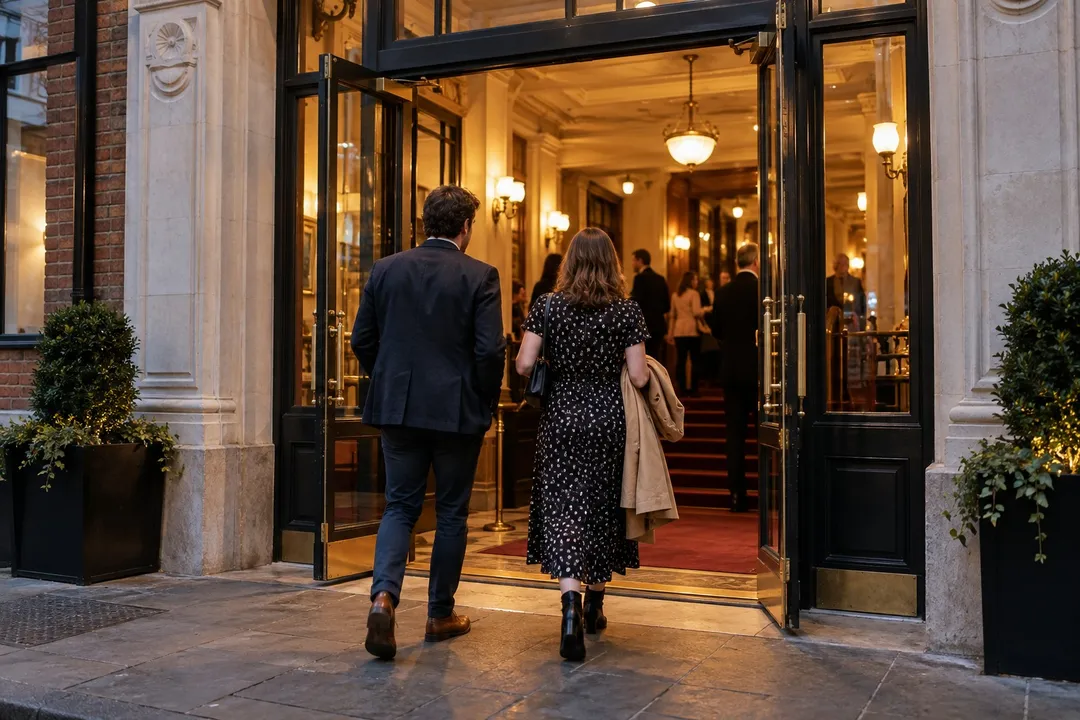
London Date Night Itinerary Planner: Art Before Dinner
Plan a London arts date around a confirmed event, dinner and a realistic meeting time. Compare two sequences and keep booking checks separate from ideas.
An arts date in London has two clocks: the time printed on a ticket and the time two people need to enjoy each other's company. A date night itinerary planner becomes useful when those clocks agree. Start with the performance or exhibition you actually want, then work outward to meeting, food and the journey home. This is a method for building a request and judging the suggestions, rather than a list of events available tonight. It works whether you already hold tickets or are still choosing the evening's main experience.

Decide what the art should do
A play can give you something to discuss afterwards, while a small exhibition might let you talk throughout. Those are different dates even if both begin in the same district. Ask your partner whether they want to watch quietly, move through a space together or have a conversation prompted by what they see. Include unfamiliarity honestly: someone can be curious about contemporary dance without wanting a challenging three-hour introduction. Your first decision is the kind of attention you want to share. That makes the subsequent shortlist more useful than simply requesting something romantic.
Separate a ticket from an idea
Put the anchor into one of three categories: purchased, available to investigate or purely aspirational. Only the first belongs in a fixed timetable. For a purchased ticket, copy the date, venue, start and arrival instructions from the confirmation. For an unbooked event, retain the official listing alongside your notes until you have checked it. A planner's recommendation does not establish availability or admission. If one partner is excited about a particular show, say whether the date should move to another evening when that show cannot be booked. Otherwise an assistant may solve the wrong problem beautifully.
Keep the area smaller than the ambition
South Bank, the West End and East London can each be starting points for research. Naming all three does not make them sensible consecutive stops. Choose the area around the confirmed anchor, then set your own maximum acceptable transfer. Express that limit as a preference for a short walk or one simple connection, and inspect actual directions separately. If the attraction has several entrances, use the one specified by the organiser when arranging the meeting. The aim is to avoid turning the hour before a performance into a cross-city test of punctuality.
Write a request with a usable answer
Try this in Karpo APP: "We have tickets for an arts event in London. Our confirmed arrival time is in the notes below. Suggest two ways to spend the surrounding evening: dinner beforehand or a light meal afterwards. Keep each option in one area and leave enough space to reach the venue without rushing." Add your ticket details, spending ceiling, food restrictions and walking preferences. Karpo's published workflow accepts mood, budget, neighbourhood and company as inputs for recommendations. The example is a planning request; the quality of its answer still depends on checking the proposed places and connections.
Make food fit the performance
A dinner before the curtain needs a different rhythm from supper after it. In the first case, look for a format whose ordering and payment you can comfortably complete before your departure deadline. In the second, verify that the kitchen will still serve when you expect to arrive. Do not confuse a venue's closing time with its last food order. If a full meal makes the schedule brittle, consider a substantial earlier meal and a smaller shared stop afterwards. Ask both people which version sounds enjoyable, rather than assuming that an elaborate dinner is automatically the more thoughtful choice.
Work back from the arrival requirement
Use the organiser's arrival instruction as the fixed point. Subtract the journey you have checked, then add a margin you are personally comfortable with. Those are your planning estimates, not a promise that transport will run to time. Write down when you must leave the food stop and what you will drop if you are late. A gallery visit that remains optional can disappear without affecting the ticket. A prepaid meal with an incompatible cancellation rule cannot. This backward exercise often reveals that the nicest evening has one fewer stop than the first draft.
Compare the gaps between the stops
Read each suggested evening as a sequence of transitions. Where will you wait if one person arrives early? Does the meal leave a comfortable stretch before admission? Is there somewhere to talk after an absorbing performance without immediately joining another queue? Ask for a revision when an option fills every gap with another attraction. Useful breathing room need not be allocated to a named business. It can simply be permission to arrive together, sit for a while or decide that you have already done enough. Judge the proposal by its weakest transition, as well as its most exciting event.
Agree on what happens after the art
Some people want to discuss every scene immediately; others need a quiet journey before talking. Make that preference part of the date. You might each remember one detail and bring it up over food, or decide that no analysis is required. If the event runs later than expected, the conversation can happen another day. Avoid making a second booking essential to proving that the night went well. An optional final drink or dessert should remain optional in the shared notes, with neither person having to negotiate an excuse at the door.
Reserve only what needs protecting
Once you choose a sequence, use the organiser or venue's booking channel for the parts that require it. Read the actual admission, cancellation and late-arrival terms before paying. Save the confirmations separately from the assistant's suggestions. If dinner is flexible but the performance is fixed, make that distinction visible to both people. Karpo's FAQ describes saving, sharing and comparing picks; those functions can support the conversation, while the confirmation provides the evidence of a reservation. Check the date on each confirmation, especially when a performance offers several sessions on the same day.
Keep an alternative that preserves the purpose
A useful fallback keeps the reason you wanted an arts date. If a show is unavailable, another experience in the chosen area may still offer something to discover together. If you already hold tickets, the fallback might concern dinner or travel instead of the event itself. Decide which change needs agreement before making it: switching restaurants may be easy, switching an intimate exhibition for a loud concert may not. Write one sentence explaining the alternative's tradeoff. That prevents a list of unrelated attractions from masquerading as a coherent backup plan.
Leave with a shared evening brief
The finished result can fit in a short note: the confirmed cultural anchor, meeting arrangement, chosen food order, departure deadline, optional ending and booking status of each part. Put the unresolved questions beneath that note instead of hiding them inside a confident schedule. Before leaving, both people should be able to explain the plan without reopening a long chat. Use Karpo APP to compare the two versions if that helps you decide, then keep the one you actually agreed on. The result is an evening organised around shared attention, with enough space left to respond to what you see.
Ask Karpo for more information.
Keep reading
- Waterloo Cozy Board Game Cafe Finder in South London
 Shoreditch Cozy Board Game Cafe Finder in East London
 Brixton Cozy Board Game Cafe Finder for Warm London Days