 Brixton Vintage Thrift Shop Finder: South London Retro Gems
Hidden Gems & Odd Finds

London Craft Class Shortlist: Go Solo or Meet People
Choose a London craft class for quiet focus or easy conversation, comparing the teaching format, seating and shared tasks before you plan your outing.
Do you want to lose yourself in a careful piece of making, or have an easy reason to sit beside new people? Those are different afternoons. A London craft class shortlist becomes much more useful when it reflects the amount of conversation you actually want. Going alone does not automatically mean seeking company, and booking with friends does not mean wanting a party. Decide what kind of attention would make the outing feel good, then compare the way each workshop is organised.
Picture the moment you arrive
Imagine entering a room before the teaching begins. Would you like a named place with materials laid out, an informal table where people choose seats, or a tutor who introduces everyone? There is no universally friendlier arrangement. A little structure can ease the first few minutes for one person, while another would rather start quietly and let conversation happen later. Add your preference to the brief instead of leaving the word social to carry all that meaning.
Notice whether your concern is meeting strangers or not knowing what to do. These can feel similar before a booking. Someone comfortable talking to people may still want an explicit explanation of the first task. Someone who prefers silence may enjoy a group once their hands are occupied. Describing the moment that feels awkward helps you identify what information you need from an organiser, rather than rejecting a format because of a vague impression.
Distinguish shared space from shared work
People can sit around the same table while completing entirely separate projects. That arrangement offers proximity without requiring much interaction. A collaborative project asks participants to negotiate colours, share decisions or work on a joint outcome. Neither format guarantees a particular atmosphere. When you read a listing, look for the actual task and how participants take part. If the description only says group workshop, you do not yet know whether conversation is central or incidental.
For a low pressure first visit, consider whether you would welcome a simple reason to speak, such as passing a material basket or comparing a technique. For a gathering of established friends, ask whether the project leaves time to talk without missing demonstrations. A session can be enjoyable while demanding concentration. Choosing it for a long catch-up may create competing expectations, so be honest about whether making or talking is the main reason for getting together.
Give quiet concentration a fair chance
A focused class need not feel isolating. Being in a room where others are learning can provide company even when conversation is limited. If that appeals, prioritise a clear teaching sequence, personal workspace and a project that interests you. Avoid assuming that a private lesson is the only route to a quieter experience. The relevant information is how the session runs, what interaction is expected and whether participants can work independently between demonstrations.
Ask about background music or room arrangements if those details affect your ability to concentrate. Do not infer sound levels from a still photograph or an empty studio image. Explain your practical need, such as hearing instructions clearly or avoiding an activity centred on introductions. The organiser can answer about that session. You can then decide whether the answer fits, without labelling an entire type of craft as inherently peaceful or an entire neighbourhood as noisy.
Define what you mean by sociable
Wanting to meet people might mean enjoying a brief chat with a neighbour, joining a repeated course or spending an afternoon on a shared task. These outcomes require different formats. A single workshop cannot promise friendship, and a busy room is not evidence that participants will interact. Look for described features such as introductions, paired exercises or a group discussion. Record the feature itself rather than converting it into a prediction about the people attending.
If you are bringing a friend, decide how much the two of you want to do together. Sitting nearby and making separate objects is different from producing one shared piece. Ask whether adjacent places can be arranged when that matters to your booking. Avoid buying separate tickets on the assumption that any seating request will be possible. A clear answer about the arrangement is more useful than hoping the tutor can reorganise a full room on arrival.
Use photographs without reading minds
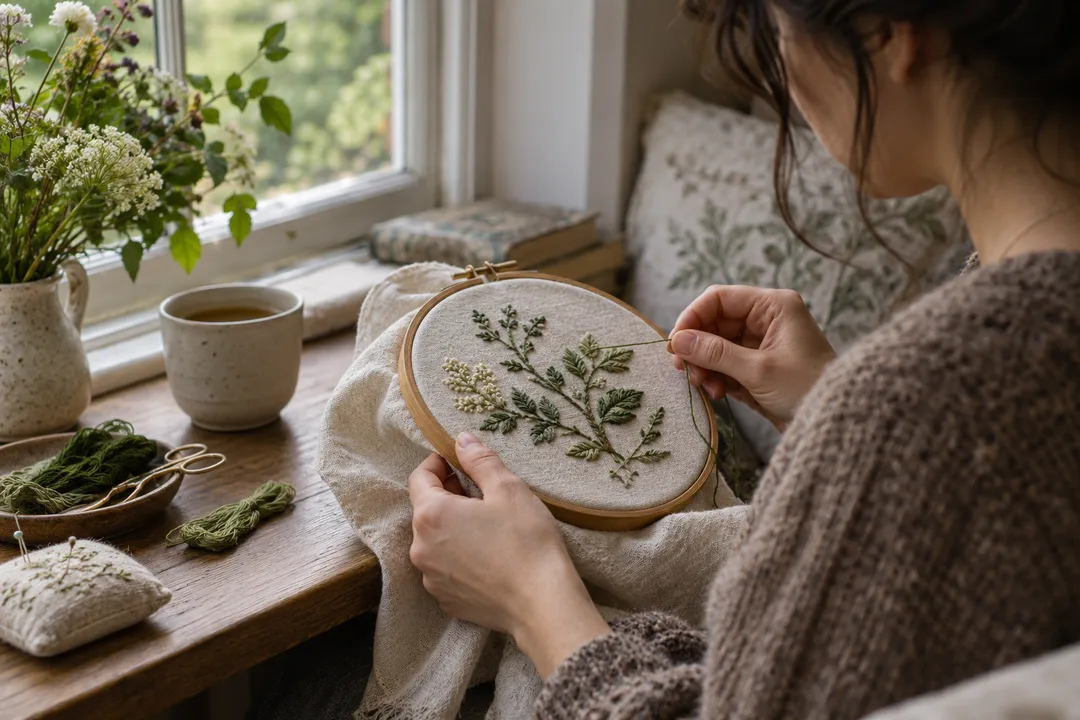
Images can show the shape of a table, the scale of a project and the way materials are presented. They cannot establish whether every participant came alone or whether an organiser regularly runs that layout. Treat them as prompts for questions. A picture of a large communal bench might make you ask how much elbow room each person has. A close-up of detailed embroidery might make you ask how much quiet attention the project needs.
Be equally careful with reviews. One person's welcoming evening is evidence of their experience, not a promise about your own. Look for specific observations that relate to your priorities, such as whether the teacher explained a step again. Avoid turning a reviewer’s personality into a requirement that you must match. You can enjoy an activity differently from the person who wrote about it, especially when your purpose is rest rather than meeting a new circle of friends.
Write a request that captures your mood
In Karpo APP, describe the kind of company you want as plainly as the craft itself. Try a request such as: “I am planning a London workshop by myself. I would like gentle conversation while making an individual project, without games or a presentation at the end. Help me compare formats and identify the questions I should ask.” Your starting district, timing and spending limit can narrow the practical search without replacing those social preferences.
If you already have several links, ask for a comparison focused on participation: individual work, collaboration, teaching interruptions and seating. Keep any unanswered point visible. A recommendation is an invitation to investigate a fit, not evidence that a particular group of people will attend. You still choose whether the session feels right and complete any booking with the provider. The aim is a more thoughtful decision, rather than a forecast of your social life.
Practical Notes for a comfortable outing
Give yourself an arrival plan that does not depend on being instantly outgoing. Know how to find the entrance from the provider's directions, keep the booking details accessible and leave enough time to settle. If you hope to talk, a simple question about what the other person is making gives you a natural starting point. If you would rather focus, following your own project is also a perfectly reasonable way to participate in a class.
Keep one option for your present mood and another for a different day. The quiet class may be right after a demanding working week, while a collaborative session may suit a weekend when you have more energy for introductions. You do not need to commit to being a solo maker or a social crafter forever. A good shortlist leaves room for both, and your next conversation in Karpo APP can start with what you learned about yourself this time.
Ask Karpo for more information.
Keep reading
- Brixton Vintage Thrift Shop Finder: South London Retro Gems
 Notting Hill Vintage Thrift Shop Finder: Preloved Rails
 Soho Vintage Thrift Shop Finder: West End Designer Archives