 Richmond Park Sunset Viewing Planner: Deer Meadow Horizons
Weekend Plans
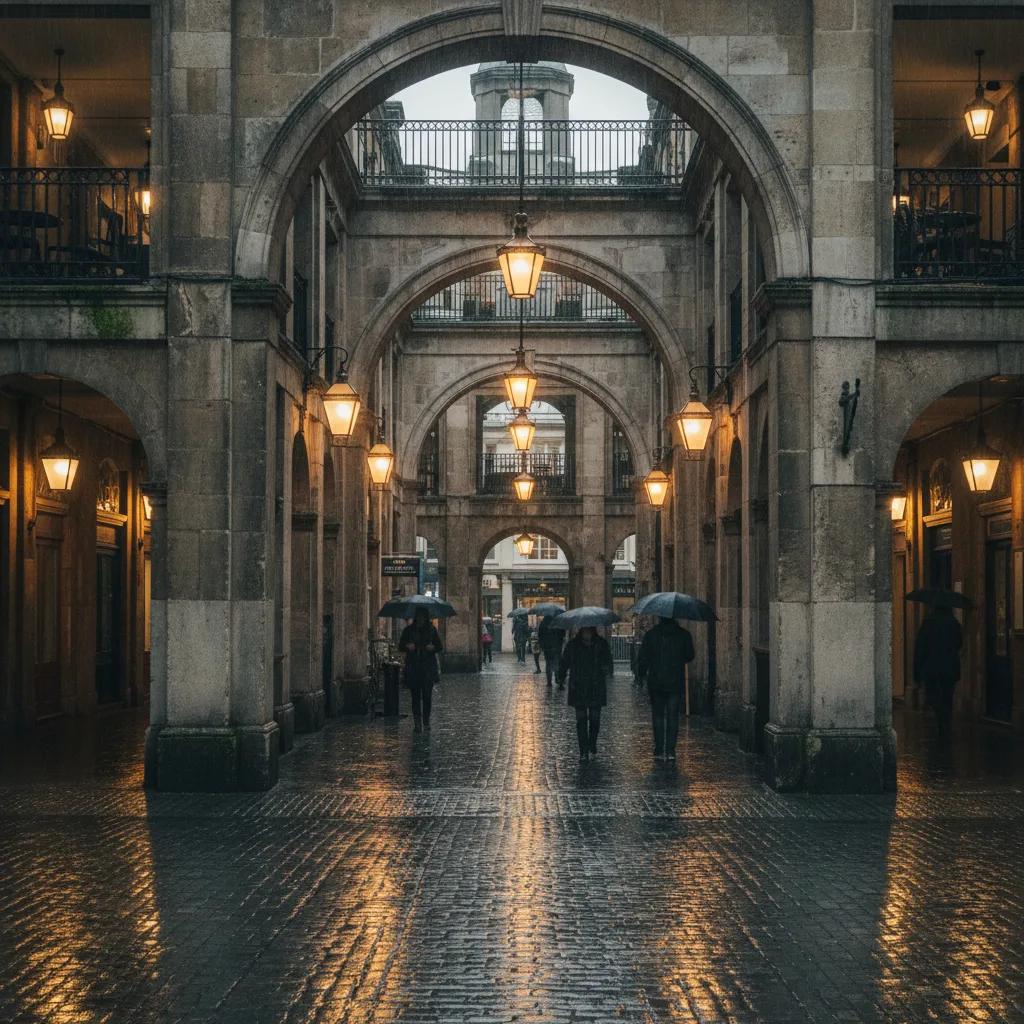
Covent Garden Cozy Rainy Day Retreat Finder: Piazza Arcades
Explore sheltered stone arcades and historic covered havens in London Covent Garden during wet weather using local planning guides on Karpo APP.
When relentless North Atlantic squalls sweep across central London, Covent Garden's historic stone piazza transforms into a glistening landscape of polished granite setts and dripping neoclassical cornices. Navigating the West End during a torrential downpour often sends crowds scurrying into congested Underground corridors, yet seasoned walkers know that this theater district contains an interconnected web of architecturally grand, fully sheltered sanctuaries. From nineteenth-century covered market halls to soaring glass conservatory atriums, taking refuge here turns an afternoon of inclement weather into an atmospheric cultural journey.
Sheltered Colonnades of Fowler's Apple Market
Charles Fowler's magnificent neoclassical market hall, commissioned by the Duke of Bedford in 1830, stands at the absolute center of Covent Garden's rainy-day geography. Known as the Apple Market, this enduring stone and iron edifice features a continuous Tuscan stone colonnade and twin glass-vaulted market roofs that shield visitors completely from driving rainfall. Beneath the central vaulted iron trusses, independent craftspeople, bespoke leather artisans, and heritage silversmiths display handmade wares along dry central flagstones, allowing visitors to browse unhurried while raindrops patter rhythmically against the antique glass panes above.
Sheltered beneath the peripheral arches of the Apple Market, heated cafe tables and perimeter benches provide a comfortable vantage point for watching the rain wash over the pedestrian square. Unlike exposed commercial streets nearby, the deep porticos deflect gusts of wind, creating a microclimate where the aroma of freshly roasted espresso and warm baked cinnamon pastries hangs in the damp air. Stepping from one sheltered stall to another requires no umbrella, making it one of the most practical historic spaces in London for whiling away an afternoon storm.
Artisan silversmiths, antiquarian print merchants, and British watchmakers maintain stalls throughout the covered arcade, presenting intricate curiosities that invite close inspection. Conversing with long-standing stallholders about antique pocket watches or hand-turned wooden pens offers an intimate human connection that modern department stores rarely provide. Because the market hall was designed to handle horse-drawn cart traffic in the nineteenth century, its generous central avenues feel spacious even when neighboring streets become bottlenecked with sodden umbrella-carrying commuters.
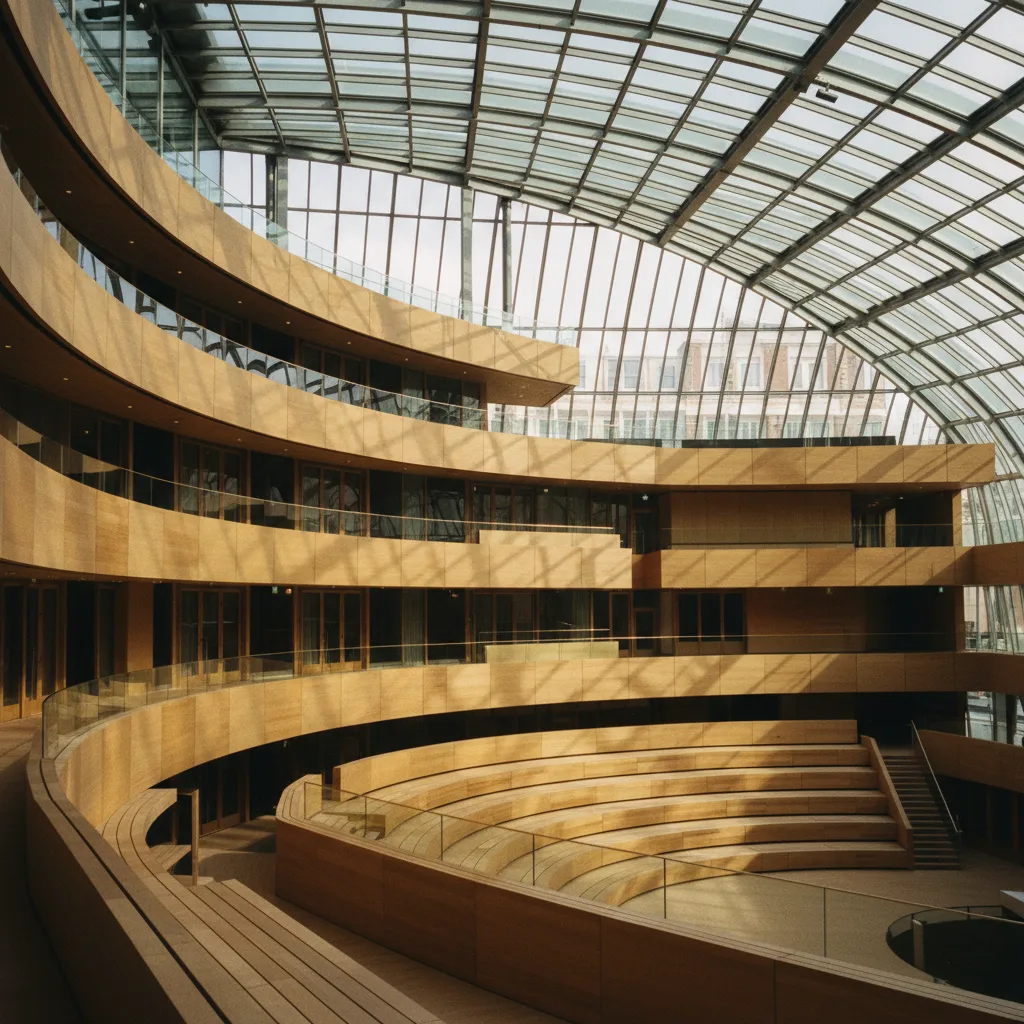
Continuing toward Bow Street along the northeastern fringe of the piazza, visitors can step directly into the soaring glass conservatory of the Royal Opera House without stepping through rain puddles. The historic Floral Hall, originally designed in 1858 by architect E.M. Barry and now celebrated as the Paul Hamlyn Hall, offers free daytime public access to its monumental wrought-iron and glass barrel-vaulted concourse. Entering this sunlit, climate-controlled atrium immediately insulates travelers from exterior gloom, welcoming them into a luminous sanctuary filled with comfortable seating.
Glass Atriums of the Royal Opera House
Vast barrel-vaulted iron arches suspend delicate glass canopies dozens of feet above the polished terrazzo floor, creating an expansive indoor space that feels like a Victorian botanical garden. The adjoining Linbury Concourse features public seating, clean acoustic design, and open reading lounges where students and arts enthusiasts consult literature while waiting out sudden cloudbursts. With free public exhibitions, architecture models, and gentle ambient music echoing through the vast space, the opera house represents London's finest civic indoor refuge during harsh winter storms.
Slipping down toward St Martin's Lane via covered alleyways brings travelers to Cecil Court, London's legendary pedestrian thoroughfare dedicated to rare antiquarian literature and vintage prints. Developed in the late seventeenth century, this narrow pedestrian lane features continuous projecting Victorian shopfront cornices that create a sheltered walking corridor along both sides of the flagstone pavement. Even during heavy rainfall, pedestrians can casually gaze into illuminated bay windows showcasing illuminated manuscripts, early twentieth-century first editions, and antique maritime charts.
Antiquarian shopfronts like Watkins Books, originally established in 1893 by John Watkins on nearby Charing Cross Road before moving to Cecil Court, welcome drenched explorers into wood-paneled interiors smelling of aged rag paper and beeswax. Browsing floor-to-ceiling wooden bookshelves dedicated to ancient philosophy, London topographical history, and rare esoteric volumes provides an immersive intellectual escape from stormy weather. The gentle ticking of brass pendulum clocks and the muffled sound of footsteps outside heighten the cozy, time-capsule atmosphere that defines this historic lane.
Antiquarian Book Havens Along Cecil Court
At the southeastern corner of the central piazza, the London Transport Museum occupies the grand Victorian flower market hall built in 1871 by William Rogers. While accessing the ticketed museum galleries requires admission, the sprawling ground-floor foyer, heritage transport bookstore, and museum cafe are completely open to the public without requiring a ticket. Drenched visitors can shake off damp coats, settle into upholstered seating beneath preserved iron girders, and explore thousands of historic transport posters, regional transit books, and graphic design monographs.
Under the dramatic iron arches of the former flower market, the museum foyer maintains an energizing yet comfortable atmosphere where vintage red enamel signage and mid-century moquette fabric patterns catch the eye. Sitting with a steaming cup of tea near the floor-to-ceiling glass entrance allows you to observe the rain cascading off the piazza's classical pediments while remaining entirely dry and warm. The museum bookshop is particularly renowned for its collection of London transit histories, offering hours of engaging reading on stormy afternoons.
Covered Culture at the Transport Museum
Inigo Jones's classical St Paul's Church, affectionately known throughout Britain as the Actors' Church, completes the piazza's collection of historic rain sanctuaries. Consecrated in 1633, this austere classical church features a monumental stone Tuscan portico overlooking the western edge of the square, providing deep shelter from driving western squalls. Stepping through the heavy timber oak doors reveals a serene, cavernous interior lined with memorial tablets commemorating centuries of West End theatrical figures, from Charlie Chaplin to Vivien Leigh.
Sheltered within the quiet nave of St Paul's, the soft patter of rain against clear stained-glass windows creates a contemplative environment far removed from the city's frantic commercial tempo. Wooden pews, polished brass candlesticks, and a secluded courtyard garden surrounded by brick walls offer a peaceful retreat where one can read, reflect, or simply dry off in warmth. Combining a visit here with stops at the Apple Market and the Royal Opera House creates a cohesive, entirely sheltered afternoon circuit across WC2.
Conversational Rainy Day Planning With Karpo APP
Navigating West End geography during unpredictable autumn showers is greatly simplified when utilizing the thoughtful neighborhood guidance of Karpo APP. Acting as a knowledgeable conversational city companion, Karpo APP helps you discover quiet historic covered arcades, public museum concourses, and tucked-away bookshops based on your immediate location. Rather than consulting fragmented transit maps or struggling with wet smartphone screens in the wind, you can ask Karpo APP for nearby indoor havens that offer genuine architectural charm and comfortable public seating.
Through Karpo APP, exploring Covent Garden during rainy spells becomes an effortless cultural pleasure instead of a logistical challenge. The conversational assistant provides context on local architectural landmarks, opening times for public courtyards, and scenic covered walkways that connect neighboring quarters like Seven Dials and Charing Cross. Whether you need a warm fireside corner, an uncrowded gallery atrium, or a heritage book alcove, let Karpo APP enrich your rainy London wanderings with authentic local recommendations.
Ask Karpo for more information.
Keep reading
- Richmond Park Sunset Viewing Planner: Deer Meadow Horizons
 South Bank Sunset Viewing Planner: Thames Riverside Walks
 Parliament Hill Sunset Viewing Planner: London Heath Vistas