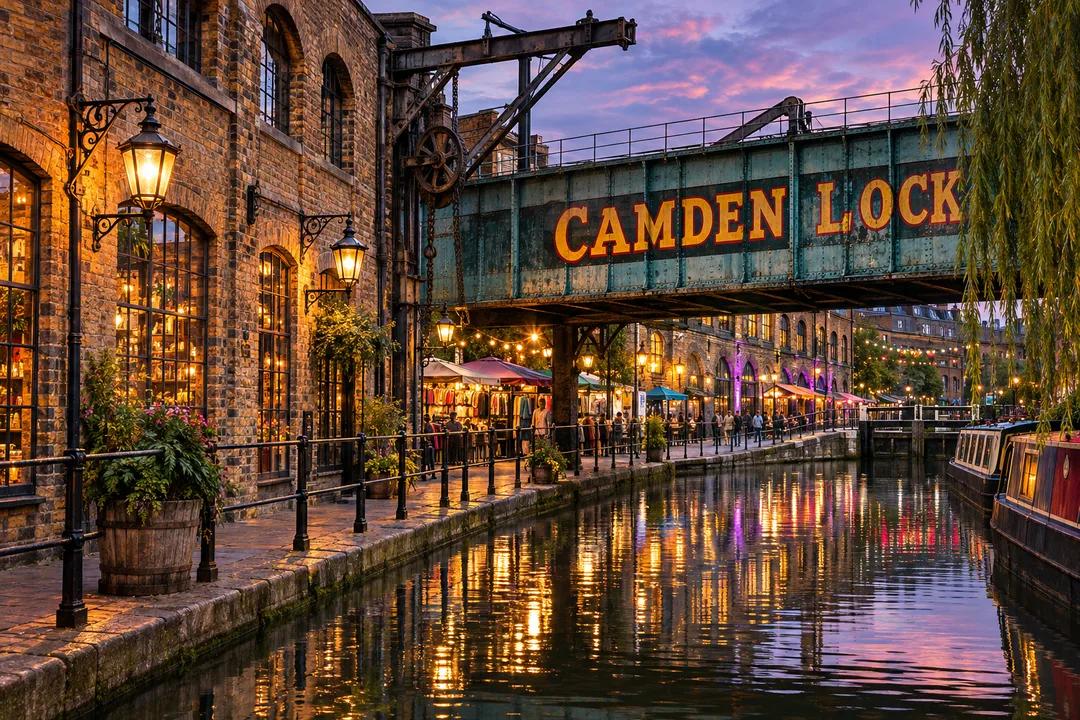
 Camden Korean BBQ Group Dinner Picker: Lockside Feasts
Restaurants
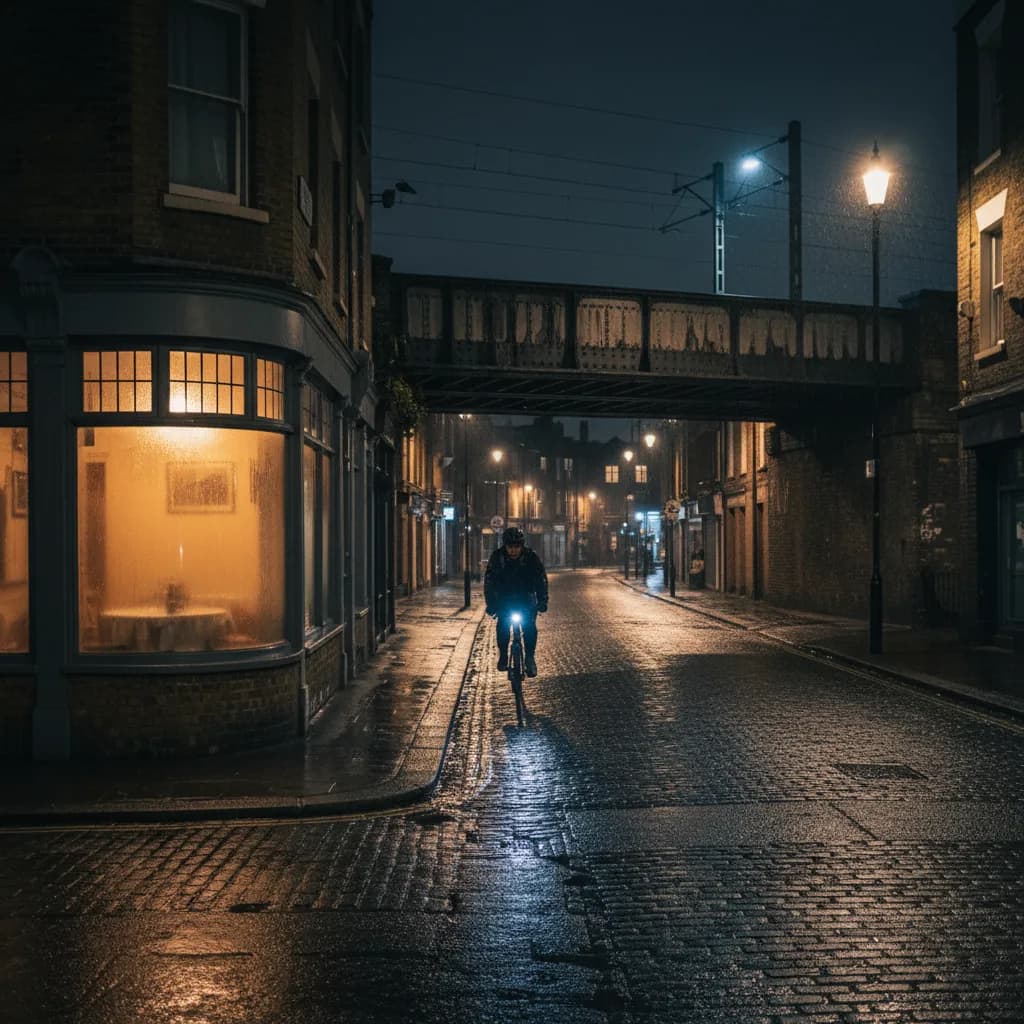
South Bank Cozy Indoor Bistro Finder for Rainy River Nights
On wet nights the South Bank riverside is exposed, so the snug bistros sit a street inland on The Cut and Lower Marsh, close to the theatres and cinema.
The Thames path between Westminster Bridge and Blackfriars is one of London's great walks, but on a wet November night it is an open wind tunnel with almost nowhere warm to sit. The cozy indoor bistros of the South Bank are not on the river at all. They sit one street inland, along The Cut beside the Old Vic and Young Vic, on Lower Marsh behind Waterloo station, and in the small streets between Southwark and Blackfriars Road. This finder plan starts from the venue you are leaving, because on the South Bank almost every evening begins or ends at a theatre, cinema or concert hall.
Leaving the National Theatre or BFI Southbank
The National Theatre and BFI Southbank sit side by side around Waterloo Bridge, and both empty out in a rush when a performance or screening ends. The riverside directly outside is the least cozy place to eat on a cold night: big terraces, glass frontages and a constant stream of people heading for the bridge. Instead, walk south through the passage beside the theatre toward Waterloo, and within five minutes you reach Waterloo Road and The Cut.
If the screening ended late, the honest advice is to choose warmth over distance. A small room on The Cut, steamy windows and all, will feel far more welcoming than a riverside restaurant with its patio heaters on full. And if you are leaving the National on a weekday with an early start the next morning, eating near Waterloo station keeps the journey home to a few minutes.
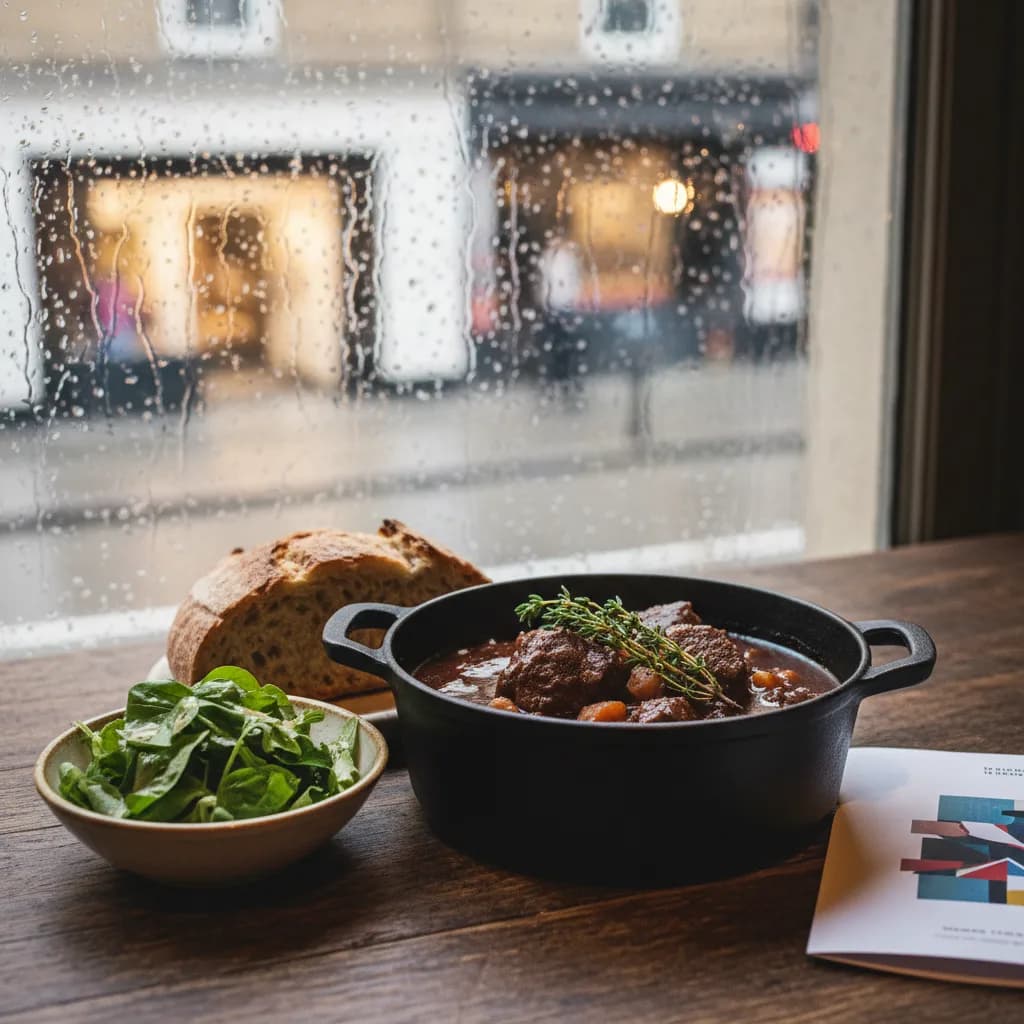
Leaving the Royal Festival Hall or Hayward Gallery
The Royal Festival Hall, built for the Festival of Britain in 1951, is itself one of the warmest public spaces on the river, with open foyers where people read, work and meet on rainy days. Before a concert, a drink in the foyer is a perfectly cozy start. Afterwards, though, the building becomes busy as audiences pour out together.
From here, Lower Marsh is the closest pocket of small dining rooms. Walk under the railway behind Waterloo station, through the Leake Street tunnel with its ever-changing graffiti if you want a short detour, and you come out near a narrow street with independent shops and cafes. Lower Marsh has a long history as a market street, and its scale feels closer to a village high street than to the concrete river frontage a few hundred metres away.
Leaving the Old Vic or Young Vic
Theatregoers at the Old Vic and Young Vic have the easiest decision on the South Bank. The Cut is right outside, and the small rooms along it and in the streets toward Southwark station are built around exactly this audience. Before the show, plan to arrive with at least an hour in hand, because tables near the theatres turn quickly and everyone in them shares the same curtain time.
After the show, walk ten minutes east toward Southwark Street and the edge of Bankside if The Cut is full. The streets between Blackfriars Road and Borough are quieter late at night, with dining rooms tucked into older warehouse buildings that feel well away from the theatre crowd. That direction also brings you close to London Bridge for a late train.
Before or After Tate Modern
Tate Modern draws huge crowds through the day, and the cafes inside the building fill quickly at lunchtime. The cozy alternative is to walk five minutes inland to the Bankside back streets, where office-day kitchens slow down after six and the atmosphere becomes calmer. On a weeknight after the museum closes, a dinner in one of these back streets can feel surprisingly quiet, with the office crowd gone and the river walkers still out by the water.
If you find yourself heading west instead, OXO Tower Wharf and Gabriel's Wharf sit on the river between Blackfriars and Waterloo Bridge. They are lively in summer but exposed in bad weather, so treat them as a stroll rather than a destination when it is raining.
What Makes a South Bank Room Feel Cozy
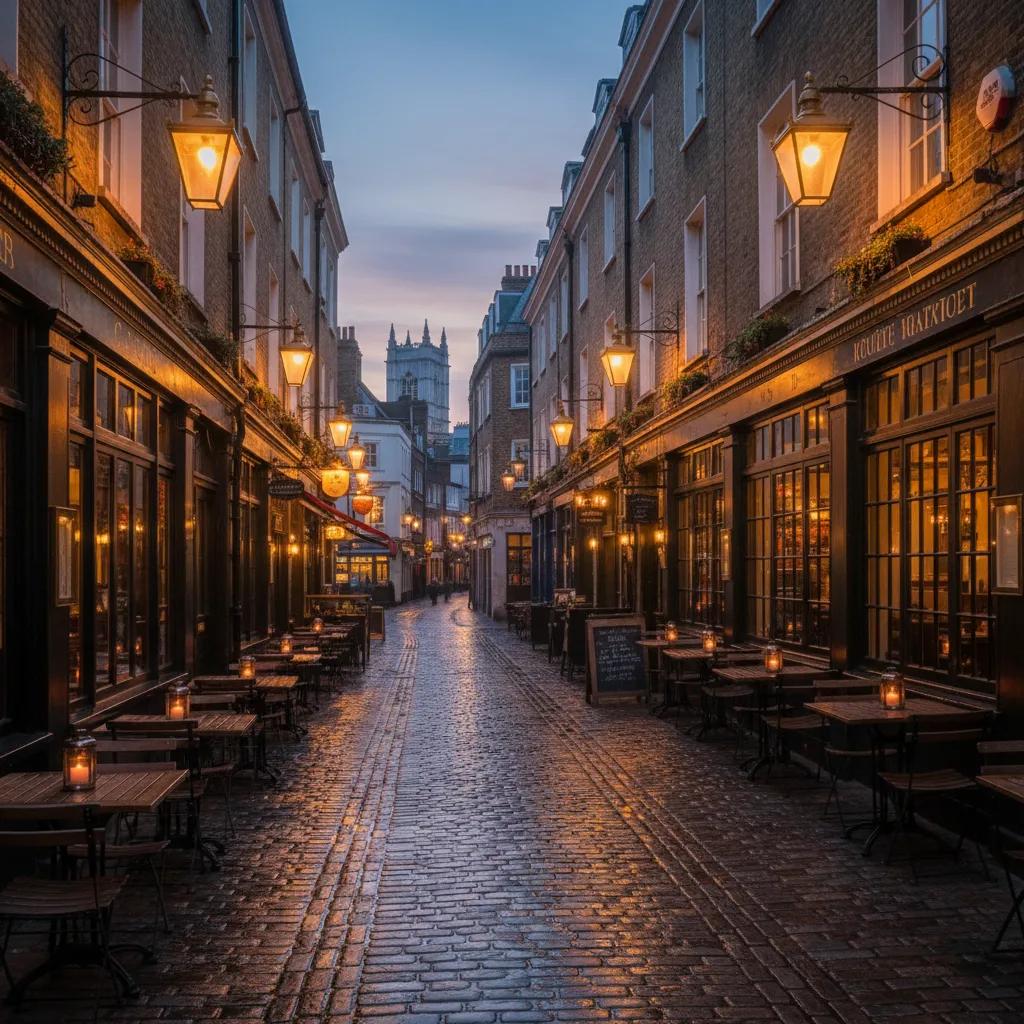
Because much of the South Bank was rebuilt after the war, many new restaurants occupy large glass-fronted ground floors in modern blocks. Those rooms can be cold and loud even when the food is good. The snug ones tend to be in the older terraces of The Cut and Lower Marsh, or in railway arches under the viaducts leading into Waterloo and London Bridge, where brick vaults hold the warmth.
From the pavement, look for a door that opens into a small lobby or curtain rather than straight onto the tables, and for tables spaced so that you are not sharing every conversation. A room with a few booths along one wall is a good sign for a long, slow dinner. A single long counter facing the window works well for one or two people, but less so for a group of four or more.
Using Karpo for a South Bank Evening
Give Karpo the venue you are visiting, the start or finish time, and the kind of room you want, whether that is a quiet two-top, a counter seat for one, or a table for a group of friends. Through the Karpo APP, it will suggest a few dining rooms around Waterloo, The Cut and Bankside that fit those constraints, which you can share with the people you are meeting.
Karpo helps you compare and decide, not reserve. Any booking happens directly with the restaurant, so if you have a fixed curtain time, sort out the table in advance through the restaurant's own channel. The aim is to arrive at Waterloo knowing exactly which side street you are heading for, not to discover the riverside restaurants are full while the rain gets heavier.
Practical Notes for the South Bank
Waterloo is the main hub, served by the Northern, Bakerloo, Jubilee and Waterloo and City lines as well as national rail. Southwark on the Jubilee line is closest to The Cut's eastern end, and Embankment across the river connects via the Golden Jubilee Bridges, footbridges alongside the Hungerford railway bridge. On a windy night, those bridges are exposed, so allow a few minutes more than you think.
Wear proper waterproof shoes. The riverside walk is lovely in sunshine but collects puddles in heavy rain, and the walk from the river to The Cut crosses busy junctions near Waterloo. If you have a pram, a wheelchair or heavy bags, check step-free routes on the TfL journey planner before you set out, because the area mixes raised walkways, stairs and busy crossings around the station.
Ask Karpo for more information.
Keep reading
- Camden Korean BBQ Group Dinner Picker: Lockside Feasts
 Holborn Korean BBQ Group Dinner Picker: Midtown Feasts
 Covent Garden Korean BBQ Group Dinner Picker: Shared Tables