 Greenwich Gelato Shop Crawl: Market Cobbles to Park Hilltop
Coffee & Dessert
Bloomsbury Cozy Cafe Work Spot Finder for Manuscript Edits
Editing a novel or long report on paper? Bloomsbury's quiet cafes and garden squares suit a slow day with a red pen. Here is how to pace it, chapter by chapter.
There is a particular kind of work that a laptop makes harder: reading your own long draft and deciding what to cut. Novelists, academics and anyone revising a long report often find they edit better on paper, with a pen in hand and the screen switched off. Bloomsbury, the London district most associated with writers, publishers and scholars, is a natural home for that kind of day, and this cozy cafe work spot finder is built around it.
Why Editing Wants a Different Room
Writing a first draft and editing it are different activities, and they suit different places. Drafting often goes well in a lively cafe, where background noise keeps you typing. Editing needs a calmer room, because you are holding a whole structure in your head and asking hard questions of every page. A loud espresso machine or a table of friends laughing two feet away will pull you out of that state quickly.
So for a manuscript day, look for smaller cafes on side streets rather than the busy rooms near the big museums. Bloomsbury has plenty of both. The streets around the British Museum fill with visitors, especially in school holidays, while a few minutes' walk north or east brings you to quieter terraces where a cafe might have only a handful of tables and a steady murmur instead of a roar.
A Neighbourhood Built for Reading
Part of the pleasure of editing here is the company of ghosts. In the early twentieth century Virginia Woolf, her sister Vanessa Bell, John Maynard Keynes and their friends lived around Gordon Square and gave their name to the Bloomsbury Group. The university, the British Museum and generations of publishers have kept the area full of people who read for a living, and that history seems to settle on the streets.
You do not need to be a literary pilgrim to feel it. The garden squares, the Georgian terraces with their tall windows and the many bookshops create an atmosphere that makes slow, careful work feel normal. Walking past the blue plaques between sessions reminds you that plenty of famous writers also spent long afternoons crossing things out and starting again.
Printing the Draft and Packing the Bag
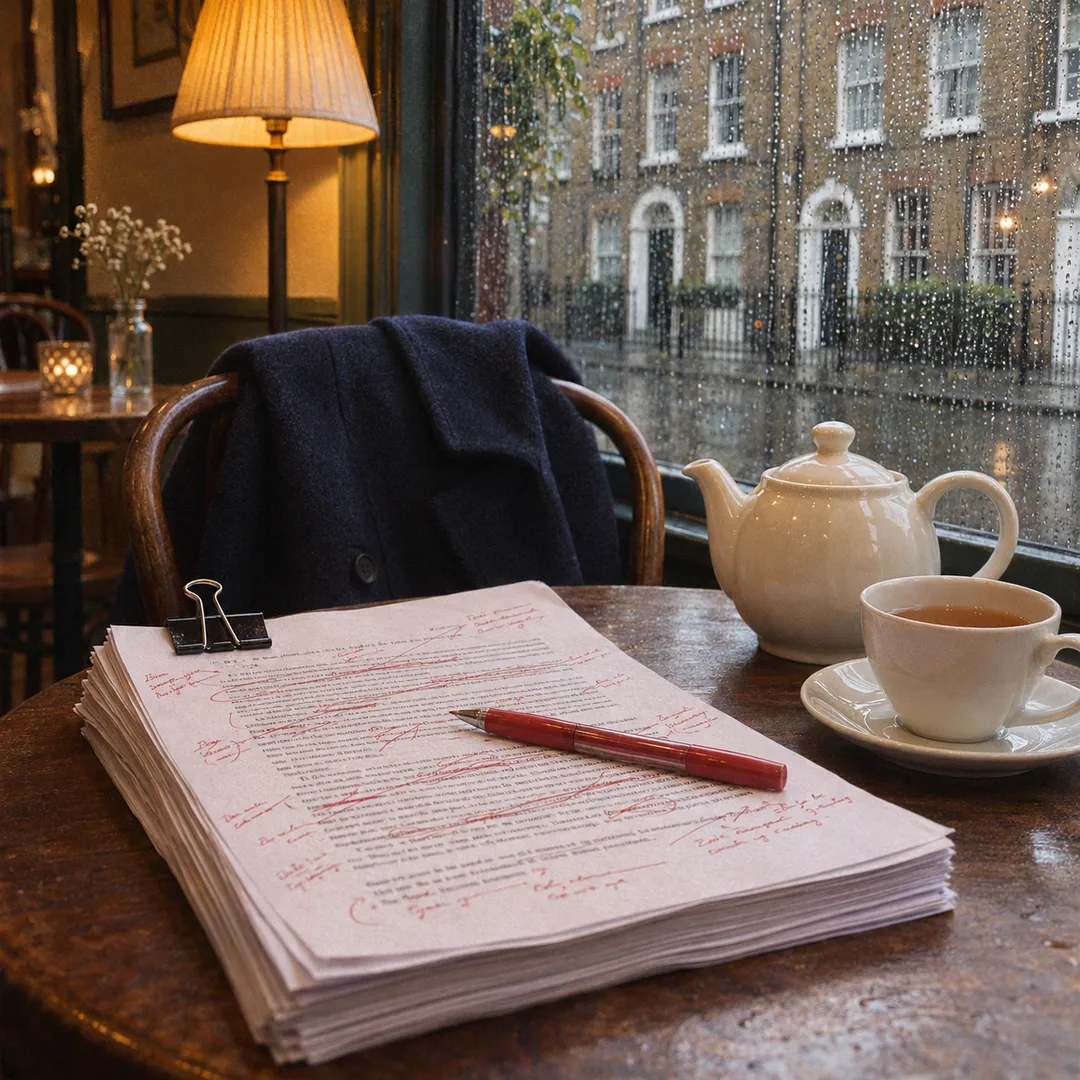
Print the manuscript before you leave home, double spaced with wide margins so there is room for notes. Clip it into chapters or sections rather than carrying one huge loose pile, which tends to slide off small tables. Bring two colours of pen, one for cuts and corrections and another for questions you will answer later, plus a few sticky tabs to flag pages that need structural changes.
Leave the laptop at home if you can. Without a screen there is nothing to check, nothing to answer and nowhere to hide from the pages in front of you. A phone set to silent and tucked in a coat pocket is enough. If you must bring a laptop for later typing, keep it in the bag until the paper work is genuinely done.
One Chapter Per Cafe
A helpful structure for a long editing day is to move. Take one or two chapters to the first cafe, finish them, then pack up and walk to a second room for the next section. Changing location gives you a natural pause, helps your body after a long sit and stops any one cafe from feeling that you have taken root. It also gives each chunk of the manuscript a fresh set of eyes.
Keep a running list on the back page of anything that affects the whole draft: a character whose name changes, a timeline problem, a theme that appears too late. Those notes become the to-do list for your next typing session. By the end of the day you will have marked-up pages and a clear map of what the next draft needs.
Garden Squares Between Sessions
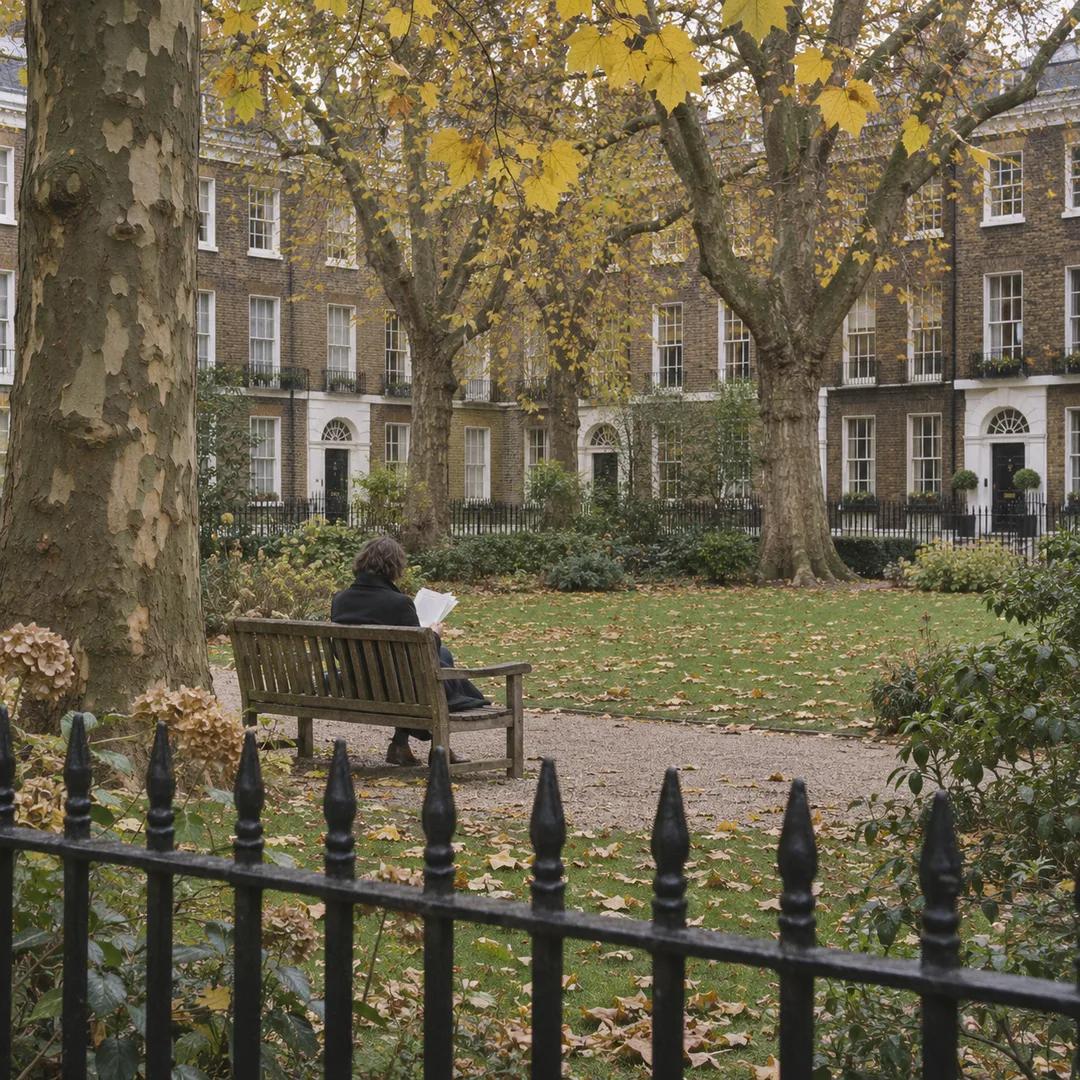
Bloomsbury's squares are its great breathing spaces. Russell Square is the largest and busiest, with a fountain and a cafe kiosk in the gardens. Gordon Square is smaller and quieter, a favourite of students and readers. Bedford Square, with its uniform terraces, is one of the finest surviving Georgian squares in London, although its central garden is private, so admire it from the railings.
On a dry day, take one chapter into a square and read it on a bench. Hearing your sentences in your head in the open air is surprisingly revealing, and clunky lines jump out when you are away from the cafe table. On a wet day, walk through the squares anyway on the way to the next cafe and let the rain clear your head.
Using the Karpo APP to Shortlist Quiet Rooms
It is hard to know from outside whether a cafe will be calm enough for editing. The Karpo APP lets you ask in plain language for something like a small, quiet cafe in Bloomsbury suited to reading and writing on paper, away from the museum crowds, with a second option a short walk away. Karpo can suggest rooms that match, compare their atmosphere and help you chain them into a walking route.
Karpo cannot promise how busy a room will be when you arrive, so save a few options before you set out. If the first cafe is full of a tour group, walk on to the next without losing your rhythm. Over time you will build a private list of the rooms where your editing goes well.
Lamb's Conduit Street and the Eastern Edge
On the eastern side of Bloomsbury, Lamb's Conduit Street is a narrow, mostly pedestrian strip of independent shops, a pub and places to eat, popular with people who work nearby. It makes a pleasant lunchtime stop and a change of scene from the squares. Nearby Doughty Street is home to the Charles Dickens Museum, in a house where Dickens lived as a young writer.
Further north, Coram's Fields is a park reserved for children and the adults accompanying them, so do not wander in alone. Instead, carry on to the small streets around Marchmont Street, which feel more like a neighbourhood than a district, with launderettes, grocers and cafes used by locals and students rather than visitors.
Turning Marked Pages Into the Next Draft
Finish the day before you are exhausted. Editing is tiring, and the last chapter of a long day rarely gets your sharpest attention. When you feel your concentration slipping, stop, put the pages in order, and write a short paragraph at the top of the stack describing the biggest change you want to make next time. That paragraph is a gift to your future self.
On the walk to Russell Square or Euston, let your mind drift back over the draft. Some of the neatest solutions arrive when you have stopped looking for them. Back at your desk another day, the marked pages turn into a cleaner, sharper manuscript, and you will remember which Bloomsbury table you were sitting at when the hardest cut finally made sense.
Ask Karpo for more information.
Keep reading
- Greenwich Gelato Shop Crawl: Market Cobbles to Park Hilltop
 Hackney Gelato Shop Crawl: Small-Batch Arch and Park Route
 Islington Gelato Shop Crawl: Sunday Canal and Passage Walk