 Richmond Pantomime Evening Planner: Green Walk to Curtain
Weekend Plans
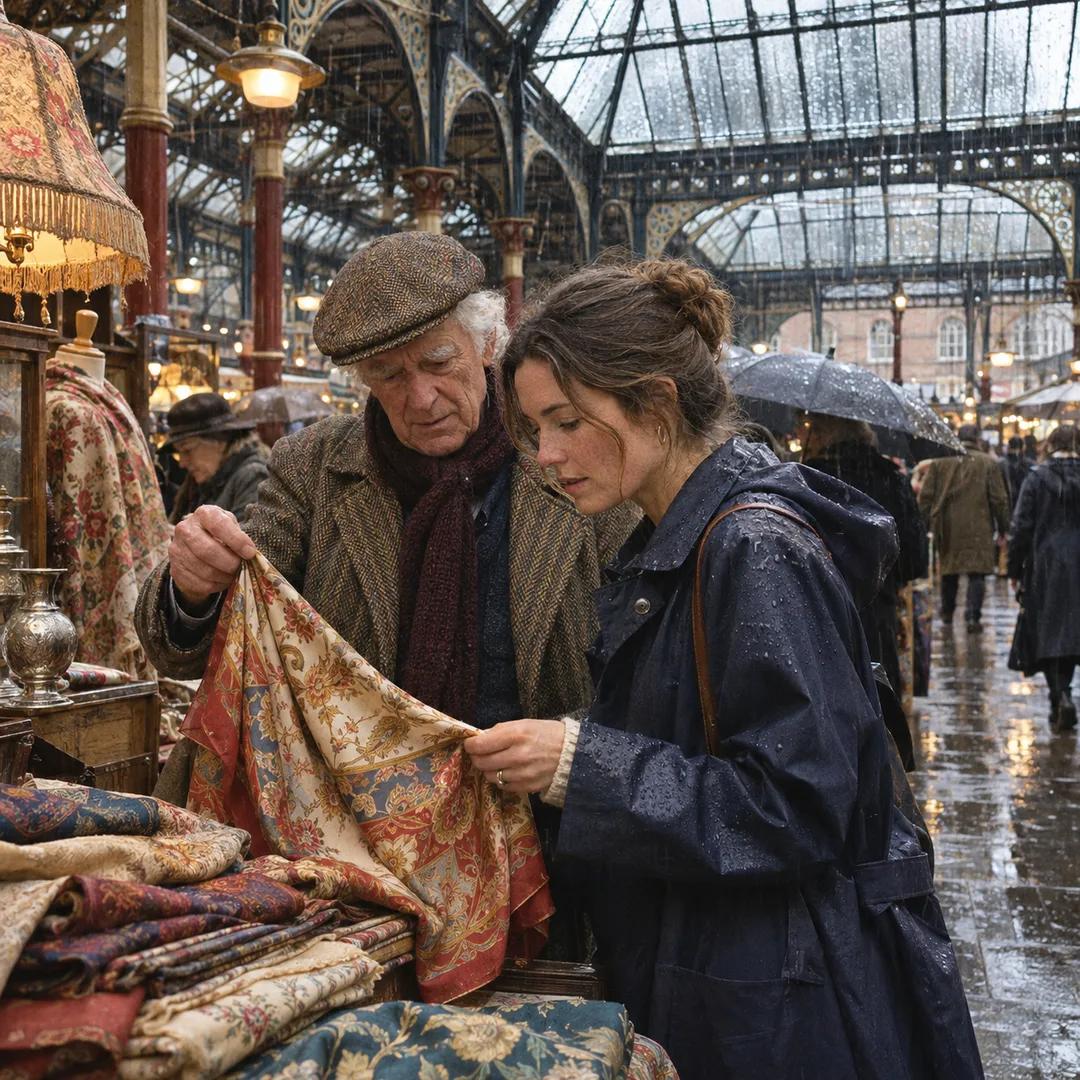
Spitalfields Covered Market Rainy Day Browse for Ancestry
Chasing Huguenot weaver roots? Shelter in Old Spitalfields Market, browse with history in mind, then take short wet walks past the old silk weavers' houses.
Some families carry a story for generations without ever testing it: a French-sounding surname, a great-grandmother who said we were weavers, a vague link to east London. Spitalfields is where many of those stories begin. Refugee silk weavers settled here more than three centuries ago, and their tall houses still line the nearby streets. On a wet day, the old market hall gives you a dry base to start from. This covered market rainy day browse is for the family historian who wants to stand where their ancestors may have stood, and to do it without getting soaked.
Why Spitalfields Is the Place to Start
In the late seventeenth century, thousands of French Protestants, known as Huguenots, fled persecution and many of them settled just outside the City walls. Spitalfields became the centre of their silk weaving trade. The neighbourhood later welcomed Irish, Jewish and Bangladeshi communities in turn, and each left its own mark. For a family historian, that layering is the whole point: you are reading streets that have been rewritten many times without ever being erased.
Old Spitalfields Market sits at the heart of all this. Its Victorian hall, once a busy wholesale market for fruit and vegetables, now shelters stalls selling vintage clothing, crafts, prints and food. When the rain sets in, it is the natural place to gather your thoughts, compare family notes and plan which nearby streets you will brave between showers.
Browsing With Your Ancestors in Mind
Give the browse a theme. Look out for textile stalls, vintage silk scarves, old patterned fabrics and prints of historic London. You are not hunting for a family heirloom, but handling fabric while thinking about the people who wove it brings the story closer. Ask a vintage trader about the oldest piece on their table, and you may hear a small history lesson of your own.
Keep an eye out for print and map sellers too. A reproduction map of east London in an earlier century can help you picture the fields and lanes that surrounded the weavers' houses. If your family has a specific street name passed down, spend a few minutes looking for it. Even if you do not buy anything, you will leave the hall with a clearer picture of the neighbourhood's shape.
Christ Church and the Weavers' Streets
Step out from the market and the white stone spire of Christ Church Spitalfields rises right in front of you. It was designed by Nicholas Hawksmoor in the early eighteenth century, when the Huguenot community was thriving. Whatever your own beliefs, standing beneath it with a family story in your head is a moving moment. If the rain is heavy, admire it from the shelter of the market edge and wait for a lull.
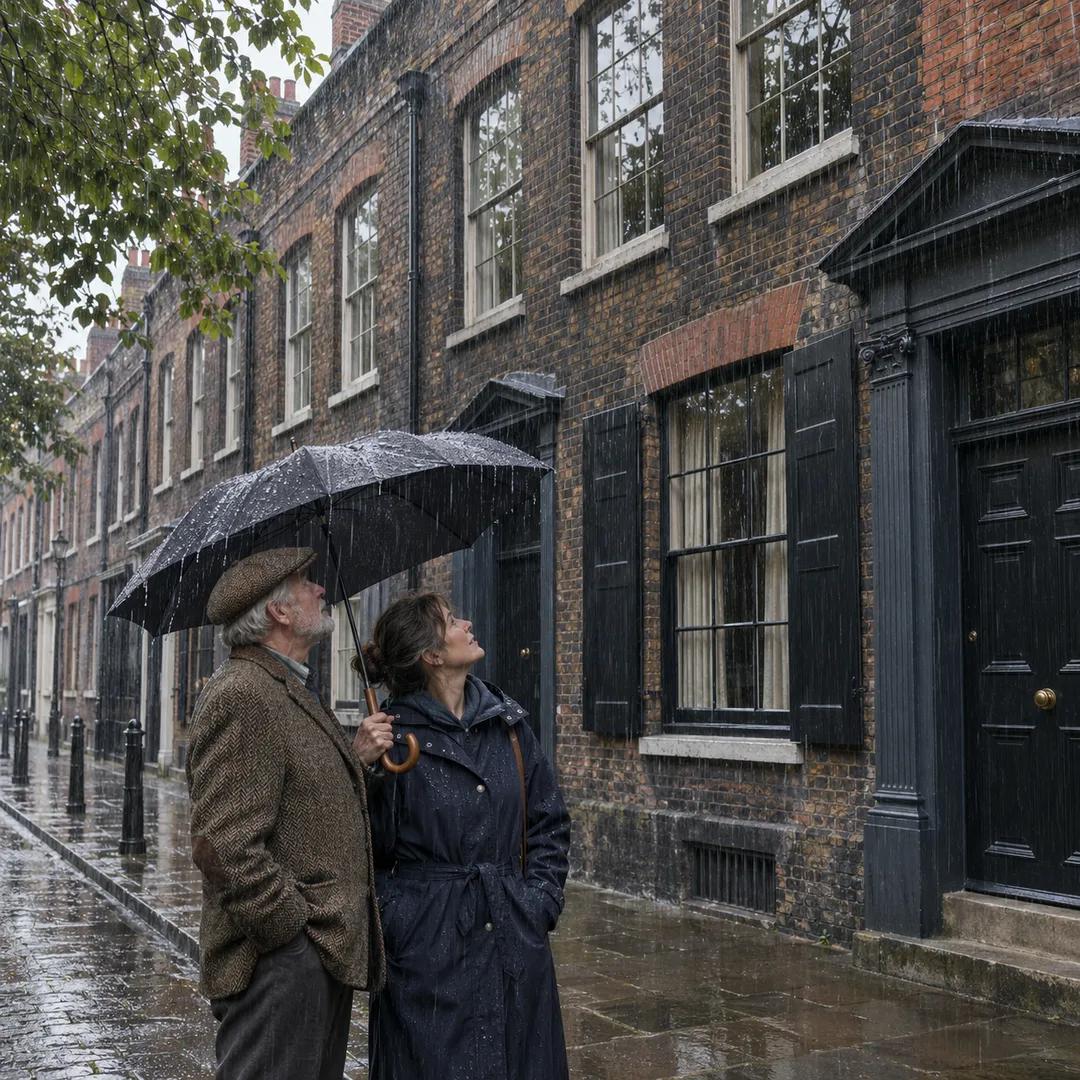
When the sky eases, walk the short stretch of Fournier Street beside the church. Many of its Georgian houses have wide windows on their upper floors, designed to let in as much light as possible for the weavers working at their looms. Look up rather than straight ahead. Princelet Street and Wilkes Street nearby share the same character. Walk slowly, because this is a residential neighbourhood, and keep conversations low as you pass front doors.
A Building That Tells the Whole Story
Where Fournier Street meets Brick Lane stands a building that sums up Spitalfields better than any museum. It was built as a Huguenot chapel in the 1740s, later became a synagogue, and has been a mosque since the 1970s. Three faiths, three waves of newcomers, one set of walls. For a family historian, it is a reminder that your ancestors were part of a long chain of people who arrived here seeking safety and work.
Pause on the corner and take in the scene: the sundial on the old facade, the bustle of Brick Lane, the rain on the pavement. Share whatever family details you have with your companion, whether it is a name, a trade or just a feeling. These small conversations, held in the right place, are often what turns research into a real sense of belonging.
Bringing a Relative Along
Family history trips work best with two generations. An older relative brings memories and names, while a younger one brings energy and a phone full of photos. Agree beforehand on a gentle pace and plenty of sheltered pauses. The market hall makes a perfect base for this, with seating nearby, warm food and a roof to retreat under whenever the weather turns.
Take turns choosing what to look at next. One of you might be drawn to the old houses, the other to the textile stalls. Both are part of the story. Ask the older relative to describe any family stories as you walk, and quietly record a few voice memos. Years from now, those clips of a parent or grandparent talking about weavers in the rain may be the most treasured part of your research.
When the Rain Will Not Stop
If the weather refuses to break, stay in and around the market and let the browse stretch. Sit with a hot drink, spread out any family papers you brought, and sketch a simple family tree on a napkin. Talk through the gaps: missing dates, uncertain names, places mentioned only once. You will be surprised how much clearer the next steps feel in a place so tied to the story.
You can also plan a return visit focused on archives rather than streets. The weavers' neighbourhood will still be there on a dry day, and walking it with fresh questions can be even richer. A rainy first trip is a good way to get your bearings, spot the streets that matter to you, and decide where to dig deeper. Write down the street names that stirred something in your relative, because those reactions are clues too.
Planning Your Next Roots Trip With the Karpo APP
Family history days are easier with a good plan. Open the Karpo APP and describe what you want, for example a covered market in east London close to the old Huguenot weavers' streets where an older parent can rest out of the rain, and use the suggestions as a shortlist to explore. You can ask follow-up questions about atmosphere, quiet corners and which nearby streets suit a slow walk.
After each visit, save the spots that meant something and add a note about what you discovered or felt there. Over time those notes become part of your family story too, a record of the day you finally stood beneath Christ Church in the rain and felt the old tale come alive.
Ask Karpo for more information.
Keep reading
- Richmond Pantomime Evening Planner: Green Walk to Curtain
 Hackney Pantomime Evening Planner: Arch Slices to Curtain
 Wimbledon Pantomime Evening Planner: Broadway to Curtain