 Fitzrovia Solo Dining Finder: Central Counter Stools
Restaurants
Greenwich Cornish Pasty Lunch Picker for a Winter Dog Walk
Walking a dog around Greenwich on a cold day? This cornish pasty lunch picker shows how to choose a warming pasty and eat it with a view over Greenwich Park.
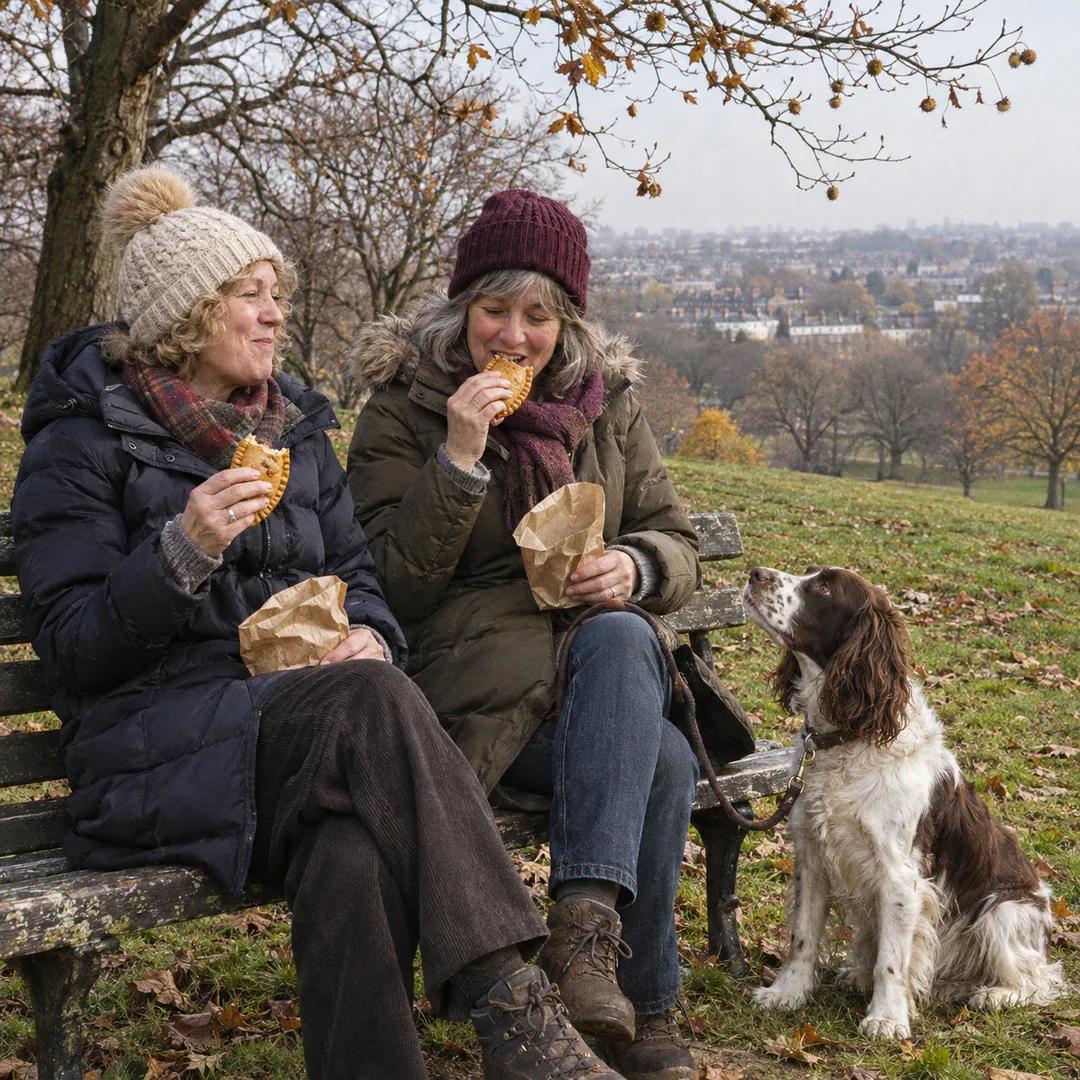
Every winter, old friends Carol and Denise meet for a long walk with Carol's springer spaniel, Biscuit, and every year they argue about lunch. Denise wants a warm cafe; Carol needs somewhere that welcomes a damp, enthusiastic dog. This year they settled it in Greenwich, buying hot pasties and carrying them up the hill in Greenwich Park. This cornish pasty lunch picker follows their route, explains how they chose and shares the habits that make a dog-friendly pasty lunch work on a cold London day.
Starting Under the River
The friends began on the north bank at Island Gardens, then walked under the Thames through the Greenwich foot tunnel, which opened in 1902 so workers from south of the river could reach the docks. The tiled tunnel is cool and echoing, and Biscuit treated it as the most exciting corridor in London. Dogs are welcome on a short lead, and the walk takes only a few minutes before you climb back up into daylight.
Emerging beside the Cutty Sark, the old tea clipper preserved in dry dock, is a satisfying moment on any walk. The ship's masts and rigging rise above the riverside, and the sharp breeze off the water reminded both women why they had wanted something hot. Denise said that by this point a pasty was no longer a lunch option but a medical necessity.
Why a Pasty Beats a Cafe on a Dog Walk
A dog changes how you plan lunch. Not every cafe welcomes dogs inside, and tables outside are cold and often full. A pasty solves the problem neatly: it is hot, filling and eaten with your hands, so you can keep a lead in one hand and lunch in the other. Carol likes that she never has to tie Biscuit to a lamp post and leave him whining while she queues for food.
The pasty was built for exactly this kind of outdoor life. Cornish miners carried pasties underground as a complete meal that stayed warm and needed no plate, and fishermen and farm workers did the same. On a frosty day, a fresh pasty held inside its paper bag warms your hands for the first few minutes, which Denise considers its most underrated feature. Carol simply calls it the best glove she has ever owned.

Choosing a Pasty Around Greenwich
Greenwich has bakeries, cafes and a covered market close to the river, and pasties turn up in several of them. Carol looks first at the crust: a deep golden glaze, a firm crimp along one side and no soft, pale patches. She also prefers places where pasties come out of the oven in batches, because a hot one keeps its heat during the climb up the hill. A pasty that has been sitting under lights tends to cool fast and go soggy.
Lift the bag before you pay; a good pasty feels heavy, packed with beef, potato, swede and onion in the traditional style, or cheese and vegetables if you prefer. Denise chose the traditional filling, while Carol picked a vegetable pasty. Remember that the Cornish pasty name is protected for pasties made in Cornwall to the traditional recipe, so many good London bakers simply sell a traditional or handmade pasty instead.
Climbing the Hill in Greenwich Park
With pasties tucked inside their coats, the friends walked through the gates of Greenwich Park, the oldest of London's enclosed Royal Parks, first fenced in 1433 as a hunting ground. The path up towards the Royal Observatory is steep but short, and the reward at the top is one of the widest views in the city, stretching across the elegant buildings of the old Royal Naval College, the Queen's House and the river towards the towers of east London.
They found a bench near the top, sat Biscuit at their feet and unwrapped lunch. The Prime Meridian runs through the observatory grounds just behind, and Denise joked that she was eating her pasty with one foot in each half of the world. The winter light was low and golden, the grass crunched with frost in shady corners and the pasties were still pleasantly hot after the climb.
Eating With a Dog at Your Feet
Biscuit knows exactly what a paper bag means, so lunch needed a little strategy. Keep the lead short and looped around your wrist, sit on a bench rather than the grass so the dog cannot simply walk into your lap, and keep crumbs out of reach. Onion is harmful to dogs, and a traditional pasty contains plenty of it, so resist the urge to share. Carol brought dog biscuits so Biscuit had his own lunch.
Respect the park, too. Some areas of Greenwich Park ask for dogs to stay on a lead, particularly near the flower gardens, the deer enclosure and children's play areas. Pick up after your dog and take your paper bags with you. Squirrels around the hilltop are bold, so keep an eye on your pasty as well as your dog.
A Gentle Loop Back to the River
After lunch, the friends walked a gentle loop through the park, passing ancient sweet chestnut trees with deeply twisted trunks and the wide avenues that lead towards Blackheath. Biscuit chased leaves in the open areas where dogs can run more freely, and Carol let him off the lead only where other walkers were doing the same. Walking downhill after a pasty is far easier than walking up, and the views keep shifting as the path winds through the trees.
Back by the river, the covered market offered a last browse and a hot drink before heading home. If you prefer a longer walk, the Thames Path runs east and west from Greenwich along the water, with benches every so often. Plan to leave the park well before dusk in winter, as the gates close early in the darker months and the hilltop gets cold quickly once the sun goes.
Planning Your Own Greenwich Pasty Walk
The Karpo APP can help you plan a walk like this. Tell it you will be in Greenwich with a dog, want a hot pasty for lunch and prefer to eat outdoors with a view, and it can suggest pasty and bakery stops near the river and dog-friendly places to sit. Mention if anyone in the group is vegetarian, and the shortlist will reflect it.
Share the plan before you set off, so nobody spends the walk arguing about where to stop. Carol and Denise have already agreed to repeat the route next winter, with one change: two pasties each, because the first one disappeared far too quickly. Biscuit, for his part, slept the whole journey home.
Ask Karpo for more information.
Keep reading
- Fitzrovia Solo Dining Finder: Central Counter Stools
 Notting Hill Solo Dining Finder: West End Corner Cafes
 Islington Solo Dining Finder: Upper Street Bistro Stools