 Shoreditch Comic Shop Crawl Planner: Murals to Manga
Hidden Gems & Odd Finds
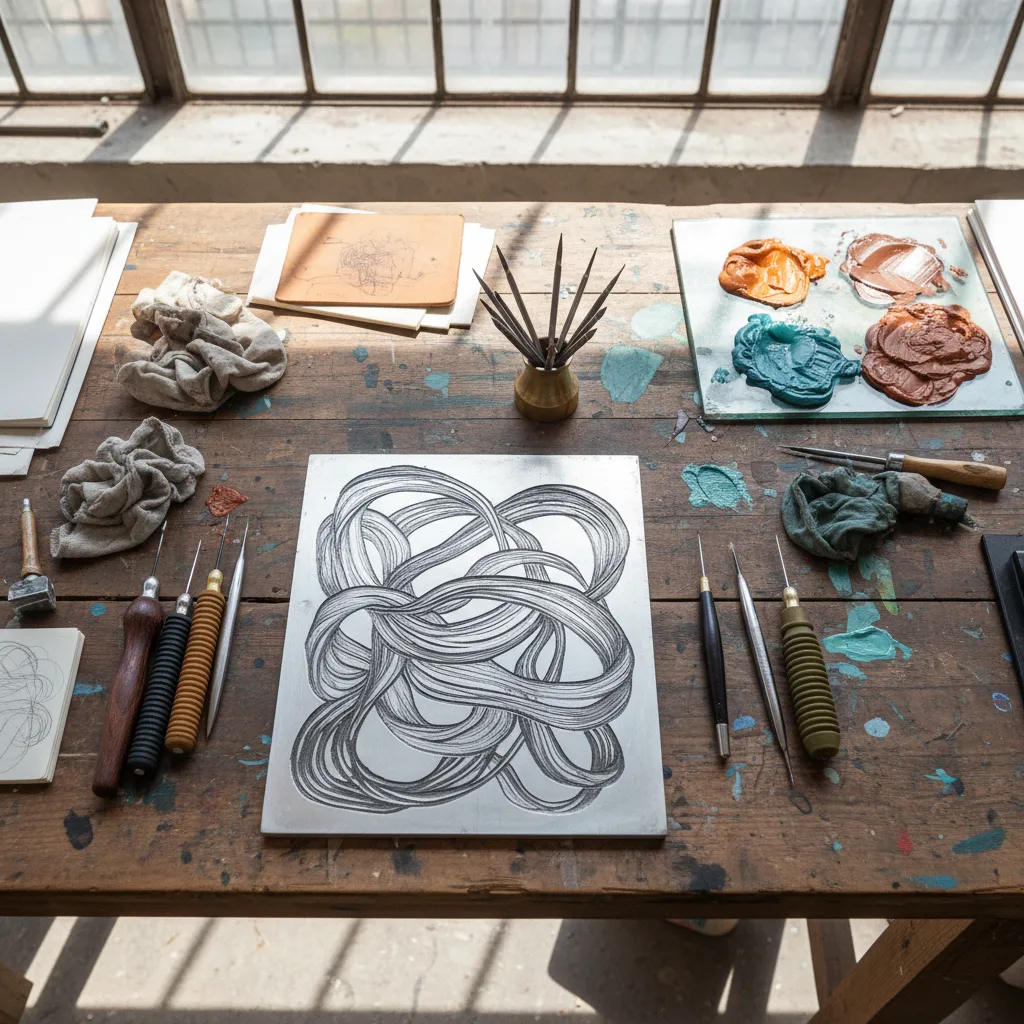
Peckham Copperplate Etching Needle Picker: Grip and Holders
In Peckham's busy arches and art school corners, a needle's handle, weight and holder shape how freely bold drypoint lines travel across a plate.
Ask experienced printmakers what changed their linework most and many will talk about the handle, not the point. This copperplate etching needle picker for Peckham focuses on grip, weight and holders, because the way a needle sits in your hand decides whether long, confident lines come easily or end in a cramped wrist. Peckham's art-school energy, railway arches and open common give the search a lively backdrop.
The handle as part of the drawing
A needle is held for hours at a time, often at a low angle, with steady pressure. Small differences in diameter, length and weight add up. A thin handle gives fingertip precision but encourages a tight pinch. A thicker handle spreads pressure across the fingers and suits longer sessions. A long handle rests against the web of the hand and acts as a counterweight, while a short one gives a more direct, pencil-like feel.
In drypoint, where every line depends on pressure, grip becomes even more important. Pushing harder through a thin, slippery handle quickly becomes tiring and shaky. In etching through ground, where pressure is light, a slimmer handle can feel elegant and responsive.
Wood, metal and resin handles
Wooden handles are warm, light and grippy, and many printmakers like the way they soften slightly with use. Turned wood often has a gentle taper that guides the fingers into a consistent position. Metal handles are heavier and cooler; that weight can help carry a drypoint line, letting the tool do part of the work, though a heavy handle can feel unwieldy for fine etching.
Resin and plastic handles vary widely. Some have textured sections for grip, others are smooth and can slip if your hands are warm. Whatever the material, notice whether the surface stays secure when you press firmly at a shallow angle.
Pin vices and interchangeable points
A pin vice, sometimes called a pin chuck, is a small holder with jaws that clamp a separate point. It lets you use different needles, shaped steel points or even sewing needles in one handle. This is a practical way to try tip shapes without buying several complete tools, and it makes replacing a worn point simple.
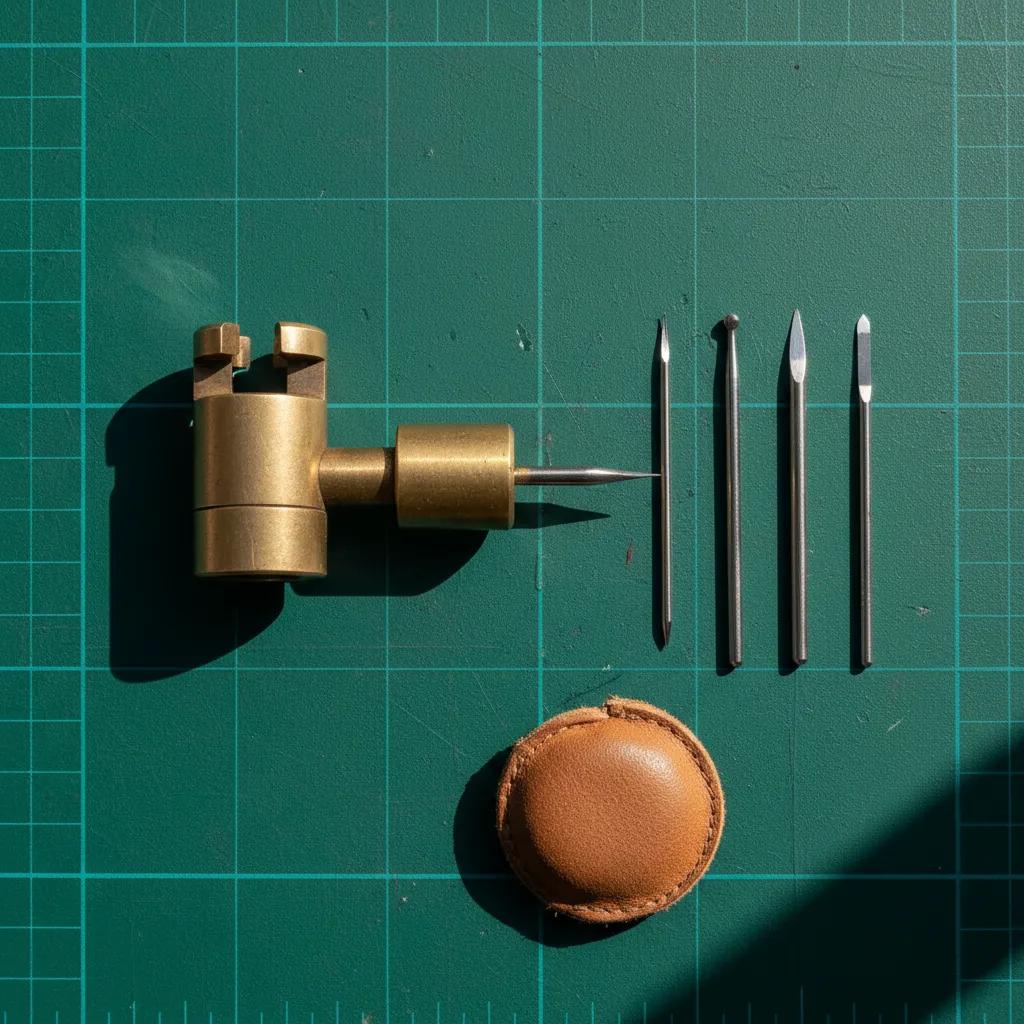
The weakness of a pin vice is that a loose collet can allow the point to slip back under pressure, especially in drypoint. Tighten firmly and check alignment before each session. Some printmakers wrap the barrel with tape or a rubber sleeve to make it more comfortable and less likely to roll off the table.
Grips for bold, large-scale lines
Peckham's murals, shop fronts and street scenes invite big, graphic images, and many printmakers working at that scale use larger plates and bolder lines. For this, consider a thicker or padded handle that lets you draw from the shoulder and elbow rather than just the fingers. Long, sweeping drypoint lines feel more controlled when the hand is relaxed.
Try holding the needle further back from the tip for long strokes and closer for detail. A handle with enough length to allow both positions gives flexibility. If you mostly make small, intricate plates, a slimmer handle may be more comfortable, but bold work generally rewards a fuller grip.
Peckham's mix of art and everyday life
Peckham combines a strong arts presence with markets, food stalls and busy high streets. The railway arches and converted buildings host studios and creative spaces, and the area's mix of cultures shows up in colour, pattern and signage everywhere. It is a stimulating place to gather motifs for future plates.
For a calmer moment, Peckham Rye Park and the common offer open grass, trees and benches where you can sketch, sort ideas and decide which line style you want before choosing tools. A drawing session there is also a good test of whether your hand prefers a light or firm grip.
Testing comfort in a few minutes
When you can handle tools, try a simple routine. Hold the needle at the low angle you would use on a plate and mime a long line from left to right, then a short curved hatch. Notice where your fingers want to sit and whether the handle rolls or stays put. Then press firmly for a few seconds and see whether the grip feels secure or slippery.
Repeat the same gestures with a second tool of a different weight. Comparing two handles directly is far more revealing than judging one on its own, because the contrast shows which qualities your hand actually notices, whether that is warmth, balance or the way the barrel sits against your middle finger.
Check the join between handle and point as well. On a fixed tool, there should be no wobble. On a pin vice, tighten and test that the point does not retract under pressure.
Small upgrades worth considering
Before replacing a tool, think about simple tweaks. A rubber pencil grip slid over a slim handle can transform comfort. A few turns of cloth tape add thickness and texture. A cork pushed onto the tip protects the point and prevents injuries when reaching into a bag.
If you find yourself pressing too hard, a slightly heavier handle may help, letting weight assist the line. If your hand tires quickly, a lighter, thicker handle often works better. Small adjustments like these tune a tool to you without spending much.
Care for grips and holders
Wipe handles to remove ink, ground and oil, which can make them slippery. Wooden handles benefit from an occasional rub with a little oil or wax. For pin vices, keep the collet clean and check that the threads turn smoothly. Storing tools in a roll keeps tips safe and handles from knocking together.
Discovering nearby spots with Karpo APP
Karpo APP can suggest nearby art supply shops, print studios and creative spaces around Peckham when you ask. Pick the suggestions that interest you, and decide for yourself the order you visit them and how you get around.
Takeaways for bold Peckham linework
Think of the handle as part of the drawing: choose thickness, length and weight to suit long, bold lines, consider a pin vice for flexible points, and test comfort at a low angle with firm pressure. Small grip upgrades can make a big difference. Peckham's vivid streets and open common give you plenty of material and space to find a needle that lets your lines move freely.
Ask Karpo for more information.
Keep reading
- Shoreditch Comic Shop Crawl Planner: Murals to Manga
 Bermondsey Comic Shop Crawl Planner: Zines Under the Arches
 Clapham Comic Shop Crawl Planner: Charity Shelves and Common