 Shoreditch Comic Shop Crawl Planner: Murals to Manga
Hidden Gems & Odd Finds

Islington Copperplate Etching Needle Picker: Burr or Ground
Islington's slow terraces suit a careful choice between a needle that scratches copper and one that only slips through wax, so compare tips before choosing.
The first decision in this copperplate etching needle picker is not about brand or price; it is about whether the needle will touch metal or only the ground that covers it. A drypoint needle digs straight into copper and throws up a ragged burr that holds ink, while an etching needle glides through a thin acid-resistant ground and lets the mordant do the cutting later. Islington, with its Georgian squares, antique arcades off Upper Street and calm canal stretches, is a good place to think that difference through before committing to a tool.
Two jobs that look alike on the bench
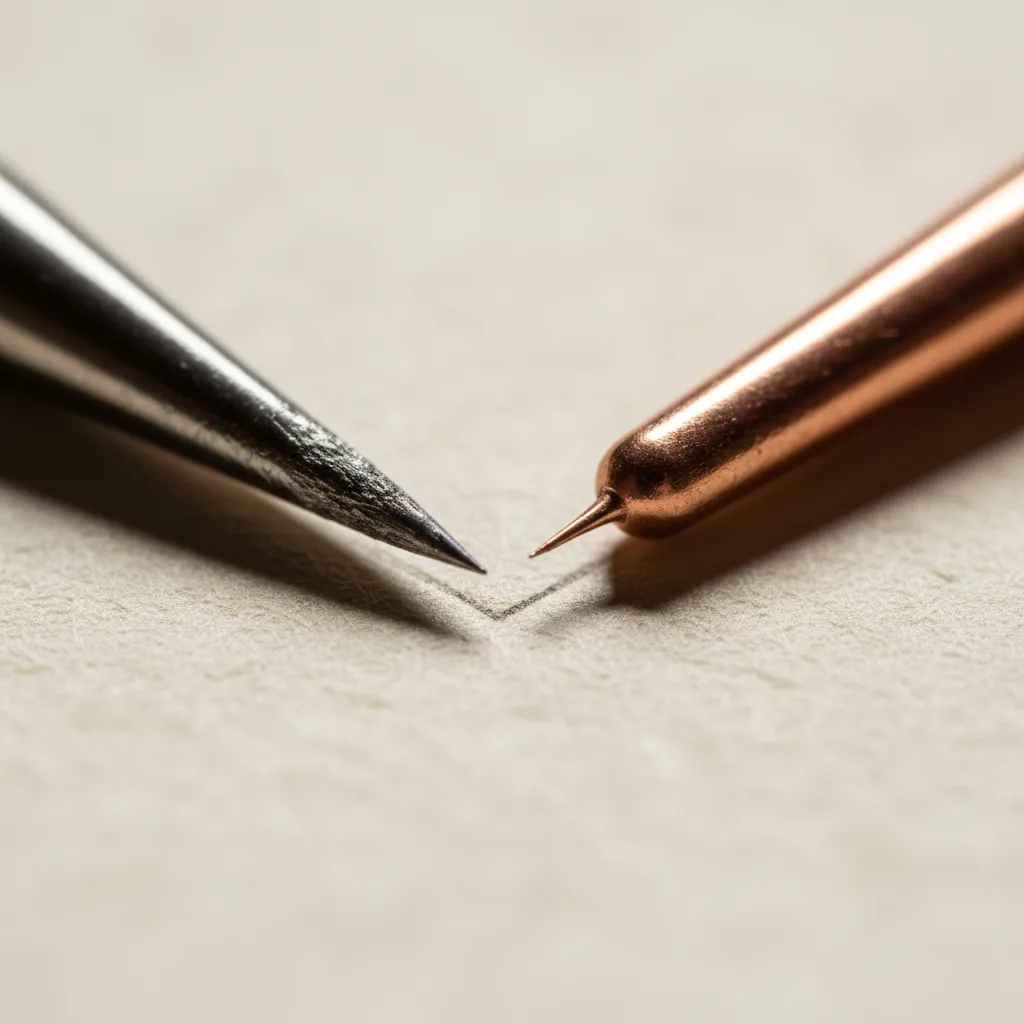
Laid side by side, a drypoint needle and an etching needle can seem almost identical: a slim handle and a pointed steel or carbide tip. The work they do is completely different. Drypoint is direct. Every line is carved by hand pressure, and the burr pushed up on each side of the groove gives the printed line its soft, velvety edge. Etching is indirect. The needle only needs to expose bare metal through a coat of hard or soft ground, so it should move with almost no resistance.
That difference changes what makes a good tip. A drypoint point needs strength and a keen, hard edge so it can bite repeatedly without rounding over. An etching point wants smoothness more than sharpness, because a point that is too keen can snag the ground or scratch the plate itself, leaving unwanted marks that print faintly.
Reading a tip profile by eye
Look at the needle from the side. A long, slender taper produces a fine line and responds to slight changes in angle, which suits delicate hatching. A shorter, stubbier cone is sturdier and resists bending under heavy drypoint pressure, but makes a slightly broader groove. Some etching needles finish in a small rounded ball rather than a true point, which slides through the ground at any angle and avoids catching.
For drypoint, many printmakers favour a tapered conical point or a faceted point with distinct edges, because the facets help the tip cut rather than plough. For etching, a gently rounded or polished point is often more comfortable, especially for long, flowing lines where the hand changes direction constantly. Turning the tool slowly in a good light shows whether the tip is truly centred or slightly off-axis, which affects how evenly it draws.
Matching the needle to the line you imagine
Before choosing, picture the kind of image you want on the plate. Fine architectural studies, such as the brick terraces and iron railings that line Islington's squares, rely on even, controlled lines. A smooth etching needle through hard ground gives that crisp regularity, with line depth decided by how long the plate sits in the bath.
Expressive portraits, foliage or weather scenes often benefit from drypoint, where pressure produces thick and thin lines in a single stroke and the burr adds a rich, dark halo. A sharp, strong drypoint point lets you shift from a whisper to a deep scratch without changing tools. Many printmakers keep one of each, using drypoint to strengthen a finished etched plate with a few accents.
How Islington's pace helps the decision
Islington rewards slow browsing. Upper Street carries a steady flow of bookshops, galleries and cafes, while the side passages near the antique dealers suit people who like turning small metal objects over in their hands. Old engravings, framed maps and printed ephemera turn up in that kind of setting, and studying them is a free lesson in what each line type looks like on paper.
Spend time with a magnifier, if you carry one, looking at how etched lines end in clean, blunt tips while drypoint lines fade with a soft fuzz. That visual memory makes comparing needles much easier. A pause by the Regent's Canal with a sketchbook is a calm way to test whether your drawing hand leans toward steady hatching or bolder, pressure-driven marks.
A short hands-on comparison
If a shop or studio lets you handle tools, try three quick checks. First, hold the needle as you would a pencil and notice the balance; a tool that is too front-heavy tires the wrist during long sessions. Second, look closely at the tip under good light for burrs, nicks or a bent point. Third, if a scrap of plastic or a practice plate is offered, draw a short line with light and then heavy pressure and see how the groove changes.
An etching needle should feel almost frictionless on a waxed test surface. A drypoint needle should bite immediately on metal or acrylic and stay put rather than skating. If a tool skates on a test plate, it will skate on copper too, and the resulting lines will be shallow and broken.
Where to spend and where to save
An honest view: a solid drypoint needle is worth choosing carefully, because a soft tip rounds quickly on copper and produces weak burr. Hardened steel or carbide tips hold an edge longer and are a sensible priority for anyone expecting to pull more than a few plates. Diamond-tipped drypoint tools exist as well and stay sharp for a very long time, though many printmakers manage well with a good steel or carbide point.
For etching, there is less reason to chase hardness. A simple, well-polished needle often performs as well as a specialist one, since it only needs to open the ground. Some people even shape their own etching points from a sturdy sewing needle in a pin vice, which is an inexpensive way to test which taper suits your hand.
Caring for tips between plates
Both tools last longer with gentle care. Store needles with a cork or cap on the point so they do not knock against other tools in a bag. A fine sharpening stone, used at the right angle with a little oil, refreshes a drypoint tip before it dulls completely. Rolling the needle as you stroke it along the stone keeps the cone even.
Etching needles benefit from occasional polishing rather than aggressive sharpening, so they stay smooth. Wipe ground residue off the tip after each session, because hardened wax can build up and blur your lines. Keeping a dedicated cloth with your tools makes this an easy habit.
Finding nearby suggestions with Karpo APP
Karpo APP can suggest nearby art supply shops, printmaking studios and craft spaces around Islington when you ask it. Those suggestions are a starting point; you choose which ones sound useful, in what order you look at them and how you travel between them.
A quick summary for Islington printmakers
Decide first whether you will draw through ground or into bare copper. Pick a strong, faceted or conical point for drypoint and a smooth, rounded point for etching, test balance and bite in hand, and keep tips protected and polished. Islington's unhurried streets suit that kind of careful choice, and a two-needle kit gives you room to explore both techniques on the same plate.
Ask Karpo for more information.
Keep reading
- Shoreditch Comic Shop Crawl Planner: Murals to Manga
 Bermondsey Comic Shop Crawl Planner: Zines Under the Arches
 Clapham Comic Shop Crawl Planner: Charity Shelves and Common