 Shoreditch Comic Shop Crawl Planner: Murals to Manga
Hidden Gems & Odd Finds
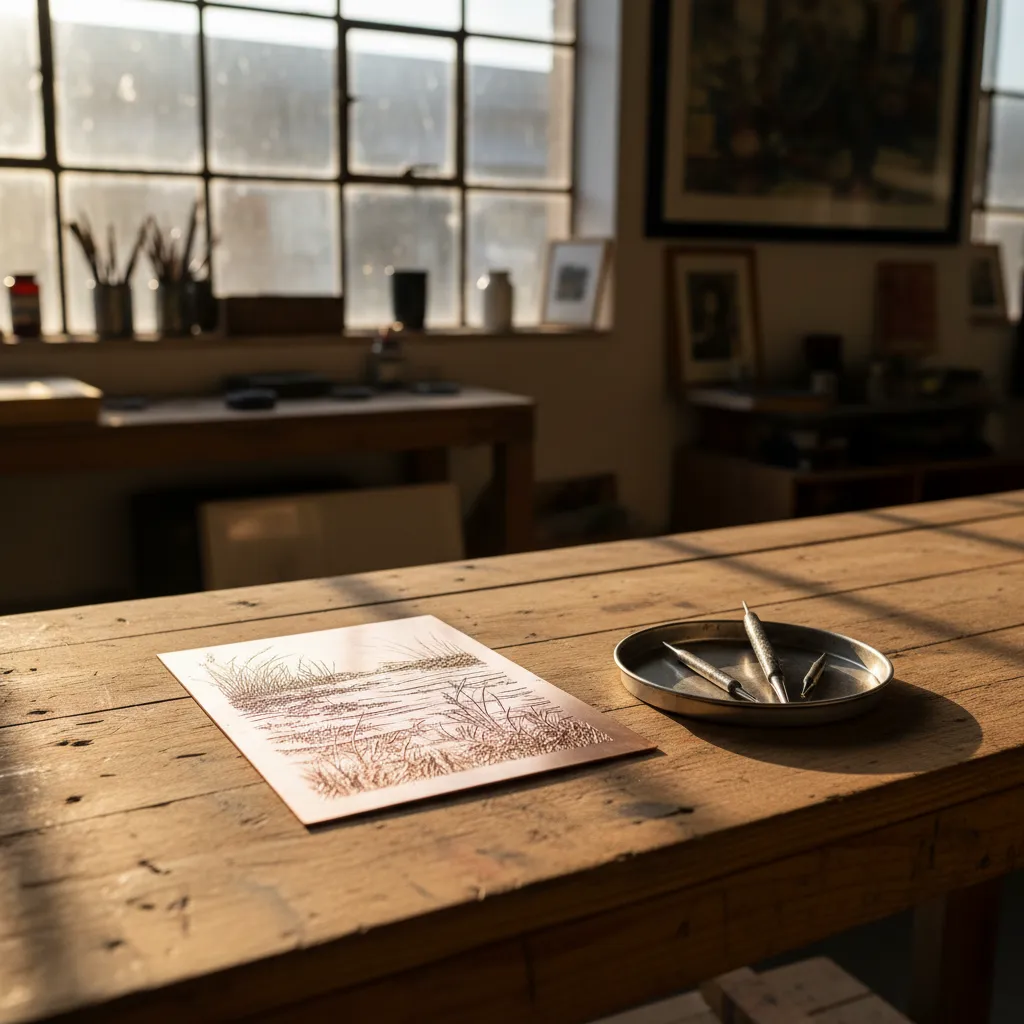
Hackney Copperplate Etching Needle Picker: Steel or Carbide
Along Hackney's canal edges and converted workshops, the metal at the very tip of a needle decides how long a drypoint line stays sharp and dark.
Most first etching kits hide the most important detail in the smallest place: the material at the point of the needle. This copperplate etching needle picker for Hackney starts there, because a tip of ordinary steel, hardened carbide or industrial diamond behaves very differently once it meets copper. The neighbourhood, with its canal towpaths, railway arches and old light-industrial buildings now full of studios, has a hands-on, workshop feel that makes this kind of material thinking feel natural.
Why tip material matters more than handle design
A drypoint needle works by force. It must cut a groove into bare metal and lift a burr along each side, and it repeats that action thousands of times across a plate. The tip that does this is under constant wear. A soft point rounds over, and a rounded point no longer cuts cleanly; it pushes metal aside unevenly and the burr becomes thin and patchy, which shows as weak grey lines in the print.
An etching needle has an easier life. It only needs to open a layer of hard or soft ground so that acid can reach the metal. Here, a smooth, even point matters more than extreme hardness. Understanding this split helps you decide where to put your attention when comparing tools.
Plain steel points
Hardened steel is the traditional material for etching needles and many drypoint tools. Good steel takes a fine, polished point and can be resharpened on a stone many times, which makes it forgiving for beginners who are still learning what tip shape they prefer. For etching through ground, a steel needle is often all anyone needs.
For drypoint on copper, steel has a limit. Copper is relatively soft, yet repeated cutting still wears a steel point over a session or two. Expect to touch up the tip regularly if you work large, densely hatched plates. That is not a flaw so much as a rhythm: sharpening becomes part of the drawing process.
Carbide tips
Tungsten carbide is much harder than tool steel, so a carbide point holds its edge for far longer in drypoint. Many printmakers who work directly into copper or zinc choose carbide for that reason. The trade-off is that carbide is more brittle; a hard knock on a concrete floor can chip the tip, and resharpening needs a finer, harder abrasive such as a diamond plate.
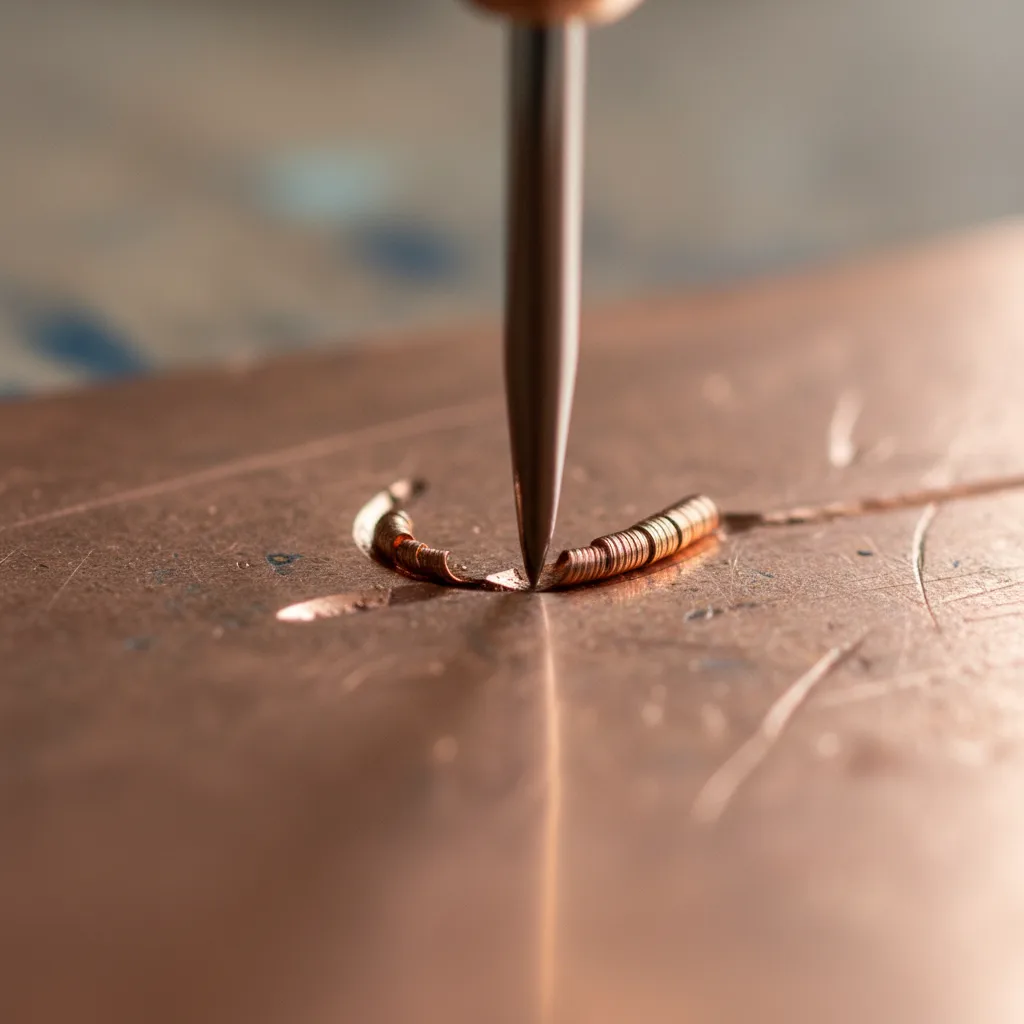
In the hand, a carbide needle usually feels similar to steel, but the line it produces stays consistent across a long session. If your plates are large or you like dense cross-hatching, that consistency is worth considering.
Diamond-tipped drypoint tools
Some drypoint tools carry a tiny piece of diamond set into the end. Diamond is extremely hard and can cut into metal and rigid plastics with very little pressure, giving crisp lines and lively burr. Because the tip barely wears, it suits people who want to concentrate on drawing rather than sharpening.
There are caveats. Diamond points are often fixed shapes, so you cannot easily reshape the taper, and they tend to cost more than steel or carbide. They also cut so easily that heavy-handed beginners can dig deeper than intended. Trying one with light pressure first is wise.
Matching tip material to your plate and image
A useful way to choose is to start from the image. Soft, atmospheric drypoints of canal water, reeds and towpath trees need rich burr and variable line weight, which favours a hard, sharp point such as carbide or diamond. Precise etched studies of warehouse windows, brickwork and arch details, drawn through hard ground, work beautifully with a well-polished steel needle.
Plate choice matters too. On acrylic or other rigid plastics used for practice drypoints, almost any sharp tip will cut, so a steel needle is a cheap way to learn. On copper, harder tips repay the investment. On zinc, which is slightly harder and coarser, a sturdy carbide point is often more comfortable.
How Hackney's workshop mood shapes a browsing day
Hackney has a long history of making things, and that spirit carries on in its studio buildings and arch workshops. Walking along the canal between them, you pass boatyards, cafes and open doors where people are busy with wood, metal and print. It is a setting that encourages practical questions: how heavy is this tool, what is the tip made of, how would I sharpen it.
Weekend markets and busy cafes give the area a sociable side, so many visitors combine craft browsing with food and a long towpath walk. If a quieter mood helps you think, the marshes and parks at the edge of the borough offer open space to sketch and test ideas before choosing.
Simple checks before you choose
Whatever material you consider, look at the tip under strong light. It should be centred on the shaft, free of chips and smoothly tapered. Ask yourself whether you are happy to sharpen regularly; if so, steel is a flexible choice. If you would rather draw for hours without stopping, carbide or diamond makes more sense.
Hold the tool as you would while drawing and notice whether the handle is long enough to rest in the crook of your hand. A needle that feels unbalanced will tempt you to press harder, which is exactly what fine drypoint work should avoid.
Keeping each tip in working order
Protect every point with a cap or cork when not in use, and keep needles in a roll rather than loose in a box. Steel needles sharpen well on a fine oilstone with a rolling motion. Carbide and diamond tips need a diamond plate for any reshaping, and many printmakers simply leave diamond points alone apart from gentle cleaning.
After each session, wipe away metal dust and ground residue. Small habits like this keep lines clean and stop burr fragments from scratching later plates.
Nearby suggestions through Karpo APP
When you ask, Karpo APP can suggest nearby art supply shops, printmaking studios and craft spaces around Hackney. You decide which of those suggestions to look into, the order that suits you and how you get between them.
Key points for choosing in Hackney
Use steel for smooth etching through ground and for learning, carbide for long-lasting drypoint on copper or zinc, and diamond if you want minimal sharpening and light-pressure cutting. Check tips for centring and chips, choose a balanced handle, and protect points between sessions. Hackney's workshop atmosphere makes it easy to ask practical questions and choose a needle that suits the way you actually draw.
Ask Karpo for more information.
Keep reading
- Shoreditch Comic Shop Crawl Planner: Murals to Manga
 Bermondsey Comic Shop Crawl Planner: Zines Under the Arches
 Clapham Comic Shop Crawl Planner: Charity Shelves and Common