 Shoreditch Comic Shop Crawl Planner: Murals to Manga
Hidden Gems & Odd Finds
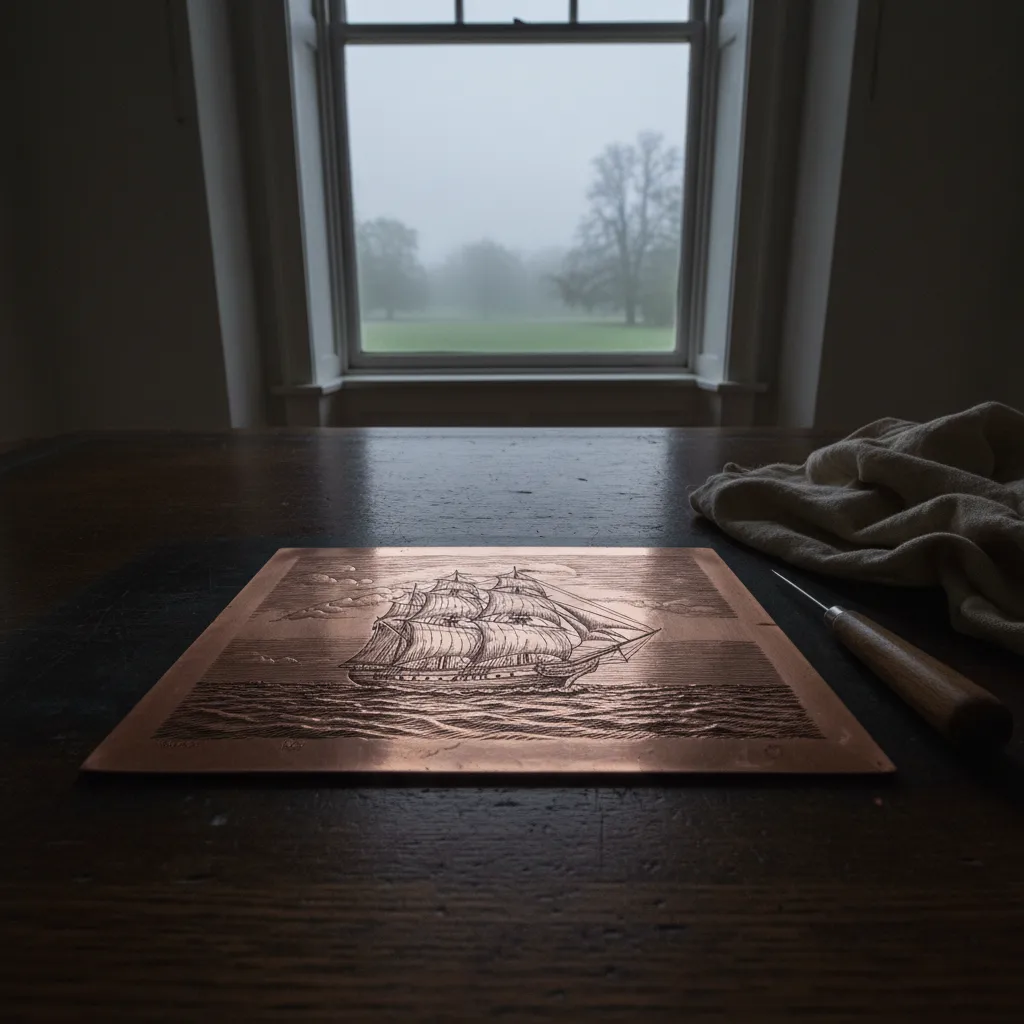
Greenwich Copperplate Etching Needle Picker: Sharp Cones
Greenwich's river light and old maritime prints reward fine, even hatching, which depends on how a needle's cone is shaped and kept sharp over many plates.
A needle rarely stays the shape it was when you first unwrapped it. With use, points round off, bend slightly or develop tiny burrs, and the line they draw changes long before the tool looks worn. This copperplate etching needle picker for Greenwich is built around that reality: choose a needle whose cone you can understand, keep sharp and reshape. Greenwich, with its riverside views, sloping park and long tradition of maritime imagery, makes a fitting place to think about precise, patient linework.
What the cone actually controls
The working end of most needles is a cone. Its angle, how steeply the sides taper to the point, determines both line width and strength. A long, narrow cone draws a very fine line and flexes slightly under pressure, ideal for delicate hatching in etching. A shorter, wider cone is stiffer and resists breaking, which suits drypoint, where the tip must force its way into metal.
Between those extremes, most general-purpose needles sit at a moderate taper. When comparing tools, look at the profile against a light background. A cone that curves gently into the point behaves differently from one with straight sides, and a point that ends abruptly will produce a sharper-edged line than one that blends smoothly.
Drypoint and etching need different edges
For drypoint, many printmakers like a point with a little bite, either a crisp cone or a few flat facets that act as cutting edges. These edges lift a cleaner burr on copper. If the point is polished too smoothly, it may slide and scratch shallowly instead of cutting.
For etching through hard ground, the aim is the opposite. A slightly rounded, polished tip moves through wax without dragging and avoids scoring the plate underneath. Soft-ground work, where texture is pressed rather than drawn, relies even less on point sharpness. Knowing which technique you will use most tells you how aggressively to sharpen.
Choosing a stone and an angle
A fine oilstone or waterstone is the usual tool for refreshing a steel needle. Hold the needle at a low angle to the stone, matching the existing cone, and roll it between your fingers as you draw it along the surface. That rolling motion keeps the cone round and centred. Short, light strokes are safer than long, heavy ones, which can flatten one side.

For carbide points, a diamond plate is needed, because ordinary stones barely touch the material. Diamond-tipped drypoint tools are generally left as they are. Some printmakers finish a sharpened point on a leather strop or fine abrasive paper to remove microscopic burrs, especially for etching needles where smoothness matters.
Testing sharpness without guesswork
A simple test is to rest the point lightly on a fingernail at a shallow angle. A sharp drypoint point catches immediately; a dull one slides. Be careful, of course, and use only very light pressure. On a practice plate of copper or rigid plastic, draw a short line: clean, continuous burr shows a healthy tip, while broken or ragged lines suggest dullness or a chipped point.
For etching needles, draw lightly through a waxed scrap or grounded test plate. The line should open cleanly with no flaking at the edges. If the ground lifts in chips, the point may be too sharp or slightly hooked.
Greenwich imagery and line discipline
Greenwich is closely associated with ships, seafaring history and astronomy, and many classic prints of the river show the kind of disciplined hatching that a well-kept needle makes possible. Water surfaces, rigging and sky gradients rely on many parallel lines of consistent weight, and a point that changes shape mid-session makes those tones uneven.
The park's slopes and viewpoints offer wide panoramas over the river and the city beyond. Sketching there is a good way to work out how much fine hatching a future plate will need, which in turn tells you whether a fine etching cone or a sturdier drypoint point should be your priority.
Browsing at Greenwich's gentle pace
Greenwich combines market stalls, independent shops and cafes with open green space and riverside walks. That mix suits a relaxed day where tool choice sits alongside looking, sketching and resting. Covered market areas help on wet days, and the riverside path is a calm place to think once you have narrowed down options.
Many visitors come for the historic buildings and views, so weekends can be busy. If you prefer quiet browsing, weekday mornings tend to feel calmer, leaving time to handle tools and ask questions without rushing.
Simple maintenance routine
Keep sharpening light and frequent rather than heavy and rare. A few rolling strokes on a stone at the start of each session often keep a drypoint point in good condition. Clean the needle after use to remove metal dust, ink and ground residue. Store each tool with a cork or cap on the tip and in a roll so points never knock together.
Watch for bending. Fine etching needles can develop a slight curve if dropped; gently straightening or replacing them is better than working with a crooked point, which drags unevenly through ground.
When to reshape and when to replace
Over time, sharpening shortens the cone. If a needle becomes too stubby for fine work, you can lengthen the taper with patient strokes, or keep it as a dedicated bold-line tool. A chipped carbide point may need significant regrinding. A replaceable point in a pin vice can be swapped quickly, which is useful if you prefer not to spend long at the stone.
Nearby suggestions using Karpo APP
Karpo APP can suggest nearby art supply shops, printmaking studios and craft spaces around Greenwich when you ask. You choose which of those suggestions matter to you, the order you take them in and how you get from one to the next.
Summary for Greenwich etchers
Understand the cone before you choose, favour a crisp edge for drypoint and a smooth one for etching, sharpen lightly with a rolling motion on a suitable stone, and test sharpness on a practice plate. Protect tips and watch for bends. Greenwich's maritime heritage and open views reward patient, even lines, and a well-kept needle makes that discipline far easier.
Ask Karpo for more information.
Keep reading
- Shoreditch Comic Shop Crawl Planner: Murals to Manga
 Bermondsey Comic Shop Crawl Planner: Zines Under the Arches
 Clapham Comic Shop Crawl Planner: Charity Shelves and Common