 Richmond Park Sunset Viewing Planner: Deer Meadow Horizons
Weekend Plans
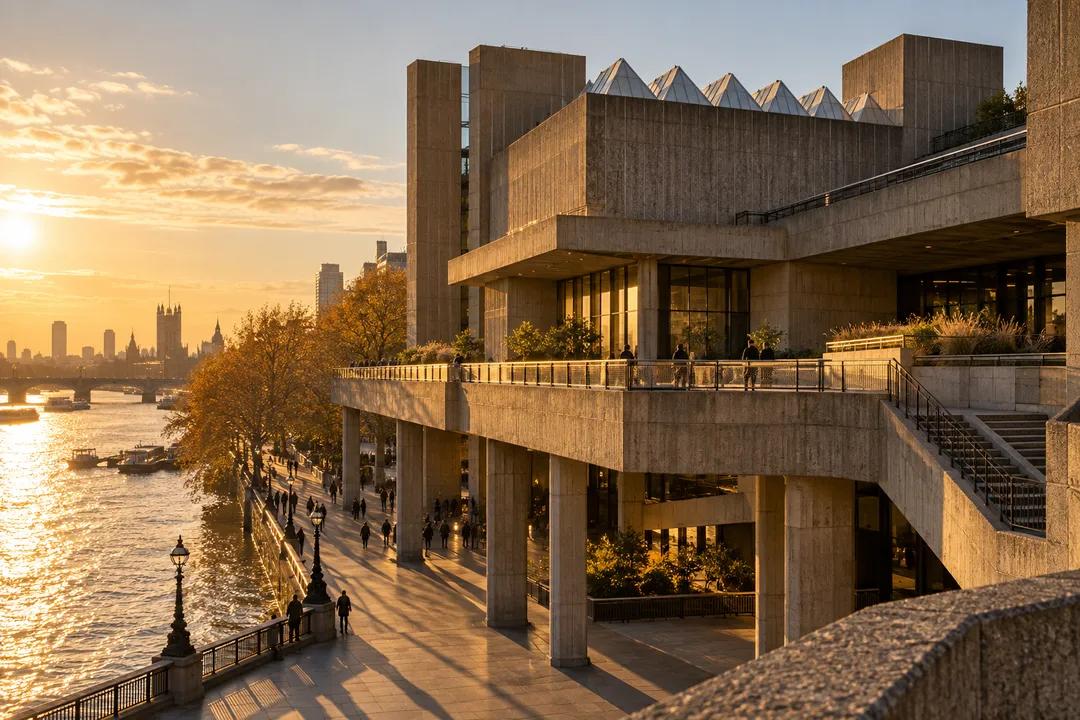
Hayward Gallery Contemporary Art Space: 24 Nov Reopening
Hayward Gallery at Southbank Centre reopens on 24 November 2026 for its winter season. Plan your visit for Tuesday to Sunday contemporary art above the Thames.
Rising with muscular concrete authority above the Thames embankment, Hayward Gallery represents one of Britain's most daring and influential contemporary art spaces. Anchored within the world-famous Southbank Centre complex on Belvedere Road, London SE1 8XX, this architectural powerhouse presents ambitious exhibitions that challenge how we perceive modern visual culture. The gallery is currently closed while teams complete installation for the upcoming winter programme, with public doors scheduled to reopen on 24 November 2026. With its dramatic board-marked concrete facades, open-air sculpture decks, and angular concrete forms, Hayward Gallery offers an unmissable urban contrast to London's classical museums. Stepping into its cavernous, column-free galleries delivers an exhilarating sensory jolt, immersing guests in room-scale installations, kinetic experiments, and monumental sculptures created by the world's most inventive contemporary minds. The surrounding complex buzzes with street performers, design students, and theatregoers, establishing a lively urban context where contemporary creativity feels immediate, accessible, and deeply woven into London's daily rhythm.
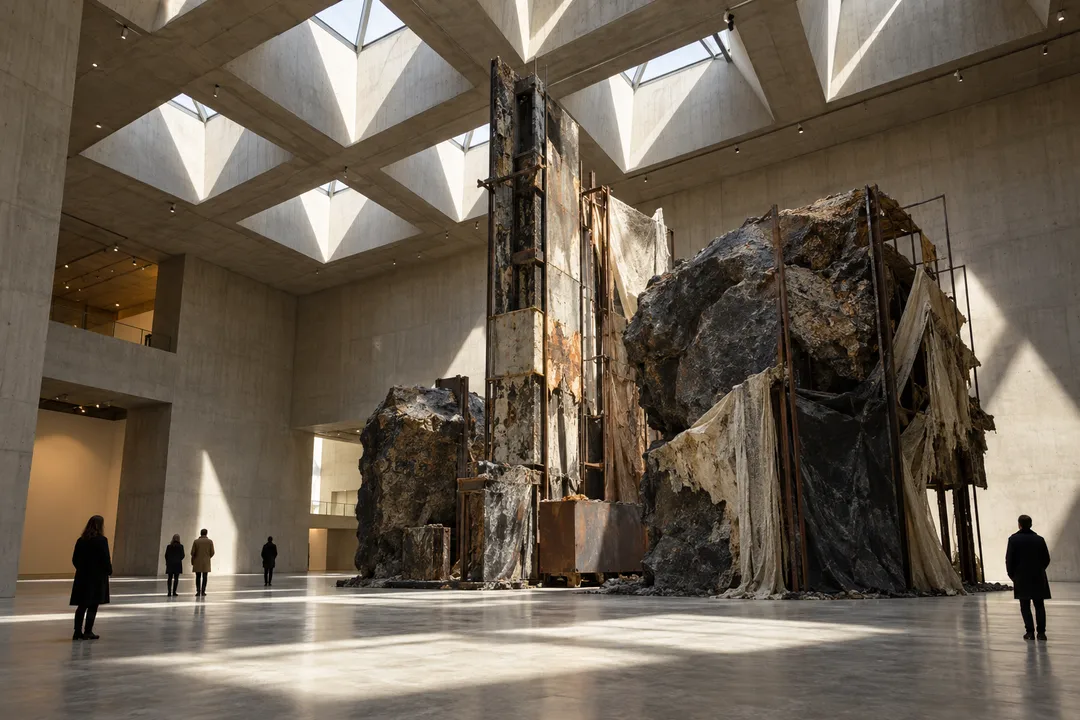
Brutalist Heritage and Bold Architectural Vision
Hayward Gallery opened its heavy wooden doors to the public in July 1968, inaugurated by Queen Elizabeth II during a transformative era for British civic architecture. Designed by a gifted team of young architects within the Greater London Council Department of Architecture—including Norman Engleback, Ron Herron, and Warren Chalk—the building embodied the fearless ideals of Brutalism. Named in honour of Sir Isaac Hayward, the influential former leader of the London County Council, the structure deliberately eschewed decorative historicism in favour of raw poured concrete, timber-grained textural imprints, and interlocking geometric volumes. A comprehensive two-year refurbishment completed by architect Feilden Clegg Bradley Studios in 2018 renewed the building's exhibition infrastructure while preserving its raw concrete character and original brutalist intent. The architecture purposefully rejects conventional decorative finishes, inviting the public to appreciate raw materials, bold structural geometry, and honest functional design as integral elements of the contemporary aesthetic encounter.
Navigating Cavernous Halls and Outdoor Sculpture Decks
The interior journey through Hayward Gallery is arranged across two expansive split-level gallery floors and three elevated outdoor sculpture courts overlooking Waterloo and the Thames. The lower galleries feature vast ceiling heights and massive reinforced walls engineered to bear heavy kinetic machinery, complex projection chambers, and dense sculptural environments that would overwhelm conventional museum spaces. Ascending the sculptural cast-concrete staircase brings visitors to the upper galleries, where soaring ceiling volumes create flexible environments for delicate spatial installations and ambient soundscapes. Stepping outside onto the exterior sculpture terraces reveals panoramic views across the river toward St Paul's Cathedral and Somerset House, offering a dramatic outdoor dialogue between cutting-edge three-dimensional art and London's evolving historic skyline. The concrete outdoor terraces also serve as contemplative viewing platforms where visitors can pause between intense indoor installations, taking in the brisk river breeze and observing the dynamic movement of commuter boats on the Thames.
Exhibition Reopening and Scheduled Viewing Hours
Unlike government-funded national museums with permanent historic collections, Hayward Gallery operates as a non-collecting commissioning space presenting temporary, curatorially driven contemporary exhibitions. While the building is currently closed for exhibition changeovers, it officially reopens to visitors on 24 November 2026 for its headline winter exhibition season. Admission to headline contemporary presentations is individually ticketed, with Southbank Centre members receiving free entry privileges and advance online booking recommended for all visitors. Upon reopening from 24 November 2026, standard public visiting hours run Tuesday to Friday 10am to 6pm, Saturday 10am to 8pm, and Sunday 10am to 6pm, while remaining closed on Monday for curatorial resets. Booking advance tickets online via southbankcentre.co.uk is essential for opening weeks and peak weekend slots. Visiting during Saturday late hours between 6pm and 8pm offers a quieter, delightfully atmospheric experience when dusk falls over the river and exhibition rooms take on an intimate, reflective resonance.
Art Bookshops and Riverside Culinary Pauses
A visit to Hayward Gallery extends naturally into the vibrant retail and dining landscape of the Southbank Centre estate. Immediately beside the exhibition exit, the dedicated Hayward Gallery Shop stands out as a prime destination for design-conscious art lovers, stocking exhibition posters, signed artist editions, design homeware, and curated monographs on contemporary theory and Brutalist architecture. When hunger strikes, visitors can descend to the ground level to enjoy specialty flat whites and sandwiches at the Hayward Cafe, or take a seat at nearby riverside restaurants including Lasdun and Skylon, which celebrate modern British dining against floor-to-ceiling glass river views. The adjoining Queen Elizabeth Hall foyer also hosts welcoming seating areas where visitors can read exhibition guides in unhurried comfort. Outside the venue, pop-up weekend food markets along Belvedere Road offer diverse regional fare, creating a festive culinary backdrop for post-exhibition debriefs.
South Bank Cultural Walks Along the River Thames
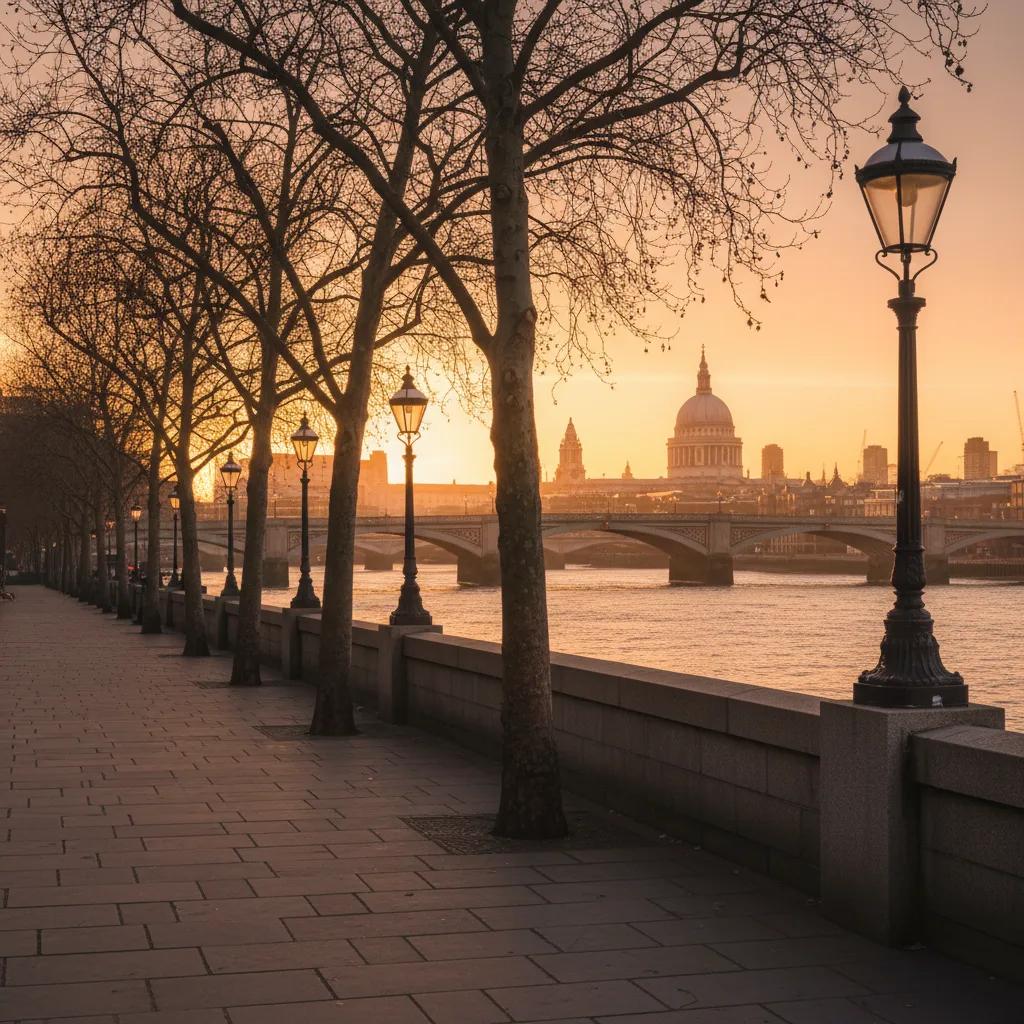
The gallery's prime position on the South Bank makes it the centerpiece of London's most energetic pedestrian cultural corridor. Stepping out onto the elevated walkway system connects you directly to the Royal Festival Hall and the National Theatre on Upper Ground, famous for its world-class theatrical productions and open foyer music sessions. Strolling eastward along Queen's Walk leads past the vibrant skateboarders under the Southbank arches toward Tate Modern at 53 Bankside and Shakespeare's Globe. Heading westward brings you past the London Eye and the landscaped riverside gardens of Jubilee Gardens toward the Westminster Bridge crossing, providing continuous riverside vistas, historic street buskers, and open-air second-hand bookstalls sheltered beneath Waterloo Bridge. Walking this South Bank stretch during twilight is particularly magical, as ambient riverside lampposts cast warm reflections across the water while the brutalist concrete facades take on deep dramatic shadows.
Essential Logistics for Future Visits
Reaching Hayward Gallery is exceptionally easy thanks to Waterloo station, situated a short walk away with comprehensive National Rail, Underground, and bus connections. Embankment station on the northern bank of the Thames is equally convenient, accessed via the picturesque Hungerford pedestrian bridges offering postcard views of Parliament. The entire gallery complex is fully accessible, featuring level entranceways, smooth passenger lifts connecting all levels, accessible facilities on site, and cloakroom space handling coats and small day bags during regular exhibition hours. You can map out your complete South Bank cultural afternoon and check seasonal performance listings directly on the Karpo APP before you depart.
Ask Karpo for more information.
Keep reading
- Richmond Park Sunset Viewing Planner: Deer Meadow Horizons
 South Bank Sunset Viewing Planner: Thames Riverside Walks
 Parliament Hill Sunset Viewing Planner: London Heath Vistas