 Brixton Vintage Thrift Shop Finder: South London Retro Gems
Hidden Gems & Odd Finds
Soho Consignment Shop Crawl Planner for Preloved Menswear
Plan a Soho consignment crawl for preloved menswear: read tailoring and knitwear, check fit like a tailor and finish with a Golden Square break before buying.
Soho has dressed London men for a very long time. Tailors, shirtmakers and shoemakers have worked in and around its narrow streets for generations, and that history quietly shapes the secondhand clothing that turns up here today. Consigned jackets, good knitwear and well-made shoes cycle through the area's resale shops, often barely worn. This consignment shop crawl planner is for anyone who wants to build a sharper wardrobe without buying everything new. It covers how to plan the afternoon, how to judge tailoring and shoes on the spot and how to turn a near fit into a perfect one.
Why Soho Is Good Ground for Secondhand Menswear
Soho's clothing culture runs deep. Savile Row is just across Regent Street, the old garment trade once filled the streets to the north and a steady stream of creative workers has always needed to look good on a modest budget. All of that means the area's resale rails see a lot of properly made menswear, from structured wool jackets to cashmere jumpers that someone outgrew rather than wore out.
The consignment shops here tend to be small and opinionated. Many are run by people who care about cut and cloth, so the stock is edited rather than dumped. That is a gift for a beginner, because someone has already filtered out most of the tired pieces. Your job is to find the ones that fit your shoulders and your life.
Soho is also compact. You can walk from one end to the other in fifteen minutes, which makes it easy to compare a jacket in one shop with a similar one a few streets away. Few neighbourhoods let you do that much careful comparison in a single afternoon.
Plan the Wardrobe Gap Before the Crawl
Before you head out, open your wardrobe and look for the gap. Perhaps you have shirts and trousers but no jacket that works with jeans, or a good coat but nothing warm to wear under it. Write down one main target and one backup. A focused list keeps you from coming home with a fourth navy jumper.
Take a few measurements of clothes you already love. Lay your best-fitting jacket flat and measure across the shoulders and from the collar to the hem. Do the same with a favourite jumper. Those numbers travel with you on your phone and save a lot of guessing, especially when a vintage label size has nothing to do with modern sizing.
Wear the right base layer for trying things on. A plain shirt and the shoes you would normally wear with your target piece let you judge proportions properly. Trying a tailored jacket over a bulky hoodie tells you very little.
Reading Tailoring Like a Tailor Would
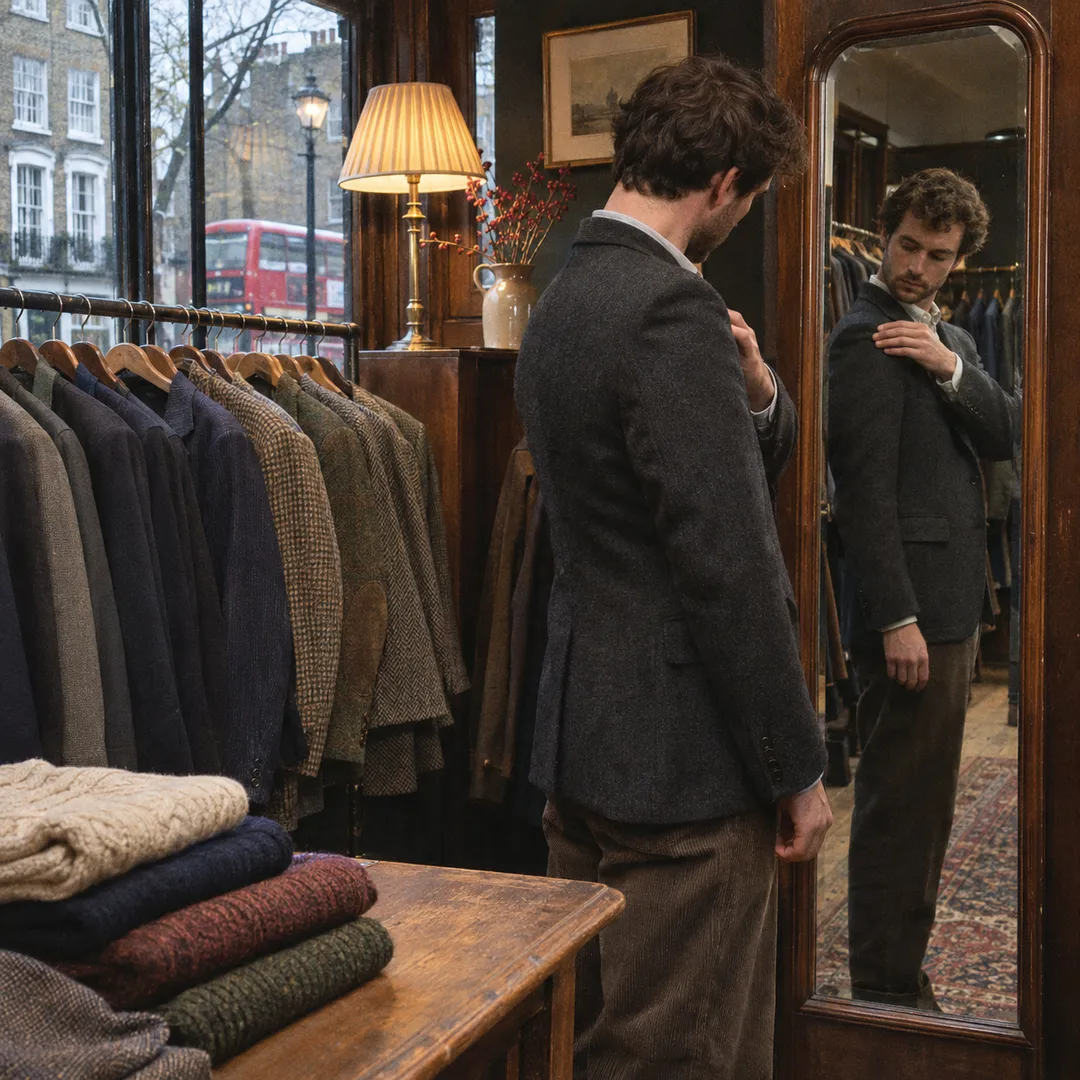
Shoulders come first, because they are the hardest and most costly thing to alter. Put the jacket on and look at where the shoulder seam sits. It should end roughly where your own shoulder ends, with no dent below it and no fabric hanging over. If the shoulders are right, almost everything else can be adjusted.
Next, look at the sleeves and the length. Sleeves can usually be shortened and sometimes lengthened if there is extra cloth folded inside, so turn the cuff over and look. Jacket length is much harder to change, so make sure it covers your seat comfortably. Then button it and check that the front lies flat without pulling into an X shape around the button.
Finally, inspect the cloth. Hold it to the light near a window and look for thin patches at the elbows, shine on the seat of trousers and tiny moth holes in wool. Check the lining for tears and the pockets for loose stitching. A jacket in good order with a small lining repair needed can still be a fine buy.
Shoes, Knitwear and the Small Finds
Consigned shoes are one of the great secondhand bargains if you know what to check. Look at the soles first: a well-made leather shoe can be resoled many times, so worn soles are not a deal breaker. The uppers matter more. Deep cracks across the toe crease cannot be fixed, while light creasing and scuffs will polish out with a little care.
Knitwear rewards a gentle hand. Hold a jumper up and look through it at the light for thin areas, especially at the elbows and cuffs. Pilling can be combed away, but stretched necklines rarely recover. Natural fibres like lambswool and cashmere often look better after a careful wash, so a slightly tired piece may still be worth taking home.
Keep an eye on the small finds too. Ties, scarves, braces and pocket squares often sit in a basket near the till, and they are an easy way to bring something with a story into your daily outfits without a big decision.
Routing the Afternoon Through Soho
Start near Carnaby and the lanes to its east, then work across towards Berwick Street and the older streets beyond. Make the first shop a looking stop, where you try on two or three things simply to remind your body how good tailoring should feel. Take a photo of anything promising in the mirror so you can compare later.
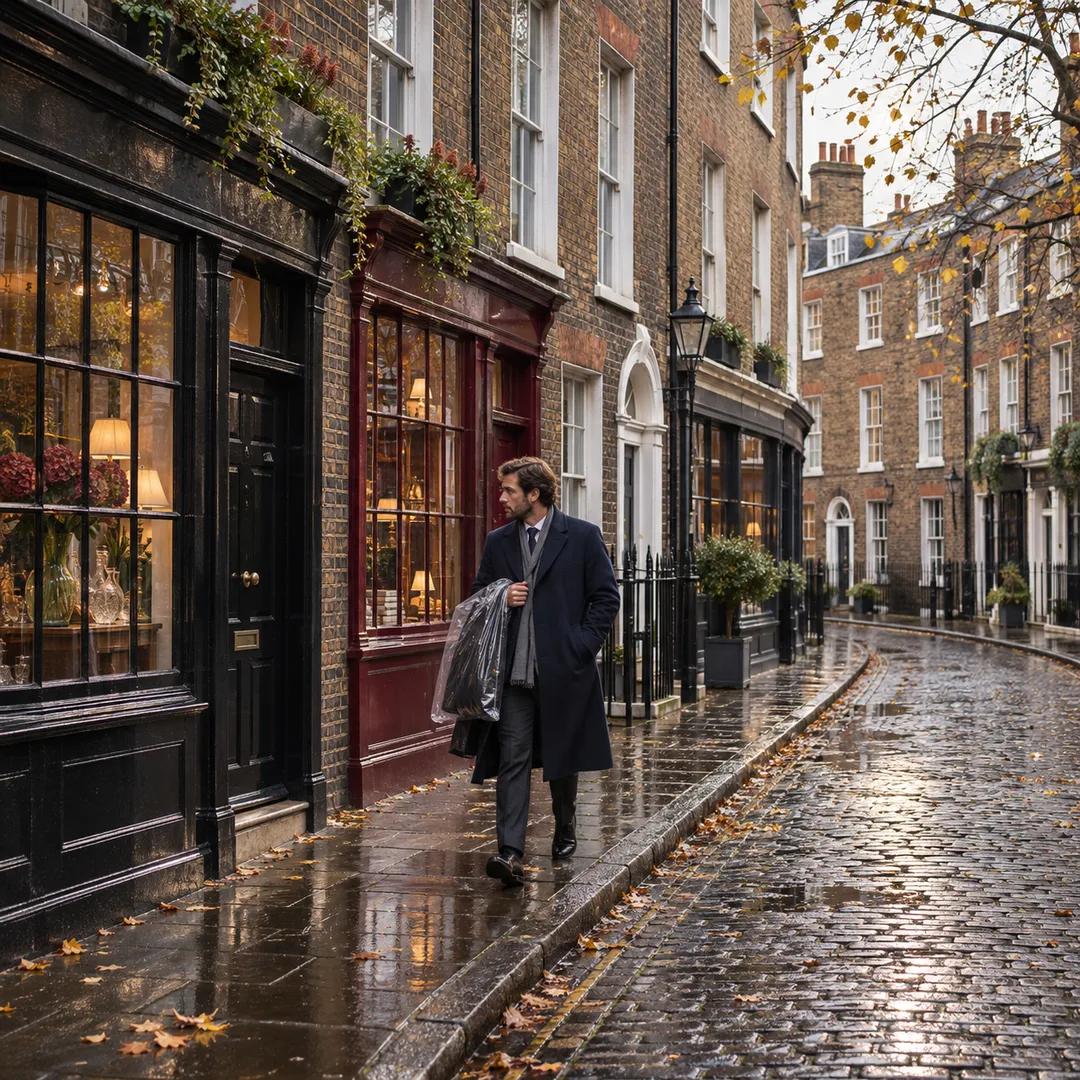
Between shops, use the backstreets rather than the main roads. Soho's side lanes are where the old character survives, with Georgian doorways, tiny workshops and record shops tucked between restaurants. A short wander between stops clears your head and stops the crawl from feeling like a chore.
When a piece keeps nagging at you, ask the shop to hold it and walk to Golden Square. The quiet garden, framed by handsome buildings, is the right place to sit for ten minutes and look at your photos side by side. If the jacket still wins, go back for it.
Making a Near Fit Perfect
Most secondhand menswear needs a small adjustment, and that is part of the plan rather than a failure. Soho and the streets around it still have alteration tailors who take in waists, shorten sleeves and nip trouser hems. Ask the shop you bought from who they would recommend; staff usually know which local tailor handles which jobs well.
When you hand a piece over for alterations, wear the shoes and shirt you plan to wear with it and stand naturally while the tailor pins. Ask them what they would change and what they would leave alone. A good tailor will sometimes talk you out of an adjustment, which is a sign you are in the right hands.
Once the piece comes back, care for it like something you plan to keep for years. Use a proper hanger, brush wool after wearing and let shoes rest a day between wears. Treat it well and one day it may go back into a Soho consignment shop for the next person, which is exactly how the best rails here keep filling up.
Ask Karpo for more information.
Keep reading
- Brixton Vintage Thrift Shop Finder: South London Retro Gems
 Notting Hill Vintage Thrift Shop Finder: Preloved Rails
 Soho Vintage Thrift Shop Finder: West End Designer Archives