 Brixton Vintage Thrift Shop Finder: South London Retro Gems
Hidden Gems & Odd Finds
Notting Hill Consignment Shop Crawl Planner for Sellers
Plan a Notting Hill consignment crawl as a seller: edit your wardrobe, match each piece to the right shop, then browse Portobello Road with a lighter load.
Most consignment guides are written for buyers, but every good resale rail starts with someone deciding to let go. Notting Hill is one of the best places in London to be that person. The area's resale boutiques see a steady flow of quality clothing from nearby homes, and their buyers know what sells. This consignment shop crawl planner is built for sellers: the people with a wardrobe full of good pieces they no longer wear. It covers how to edit and prepare what you own, how to choose which shop gets which piece and how to turn the day into a pleasant wander once your bags are empty.
Why Sell Through Consignment in Notting Hill
Consignment means a shop displays and sells your piece, then shares the proceeds with you once it finds a buyer. You hand over the hassle of photos, listings, messages and postage, and in return the shop takes its share. For good clothes that deserve a careful second owner, it is often the calmest route.
Notting Hill suits sellers because its resale boutiques know their audience well. Customers here come looking for good coats, classic knitwear, designer pieces and well-made shoes, and the shops edit their rails to match. That means a piece that would sit unnoticed on a busy marketplace app can find the right buyer quickly in a shop that already attracts people looking for exactly that kind of thing.
The neighbourhood also makes the day pleasant. Between drop-offs you walk past pastel terraces, garden squares and the long ribbon of Portobello Road. Turning a chore into an outing makes it much more likely you will actually clear that wardrobe.
Edit the Wardrobe With a Buyer's Eye
Start at home a few days before the crawl. Pull out everything you have not worn in a year and lay it on the bed. Be honest about which pieces are good enough for someone else to choose, and which are simply tired. Consignment shops want items in excellent condition, with no stains, no missing buttons and no stretched seams.
Look at your pile the way a shop buyer would. Classic pieces from respected labels, good fabrics like wool, cashmere, silk and leather, and anything that matches the current season will be welcome. Very worn basics, fast fashion and heavily dated trends are usually better suited to a charity shop or a clothes swap, and that is fine.
Group what remains into three piles: likely winners, maybes and charity. Bring the winners and maybes on the crawl, and drop the charity pile at a local donation point on the way so you are not carrying it all day.
Prepare Each Piece So It Sells
Presentation makes a real difference. Wash or dry clean anything that needs it, steam out creases and remove lint with a roller. Sew on loose buttons and polish shoes and leather bags. Small efforts like these can be the difference between a buyer accepting a piece and handing it back.
Gather the extras that came with each item. Dust bags, spare buttons, original boxes and receipts all reassure the shop and the eventual buyer. If you know roughly when and where you bought something, jot that down on a slip of paper and tuck it in a pocket, because shops value a clear story.
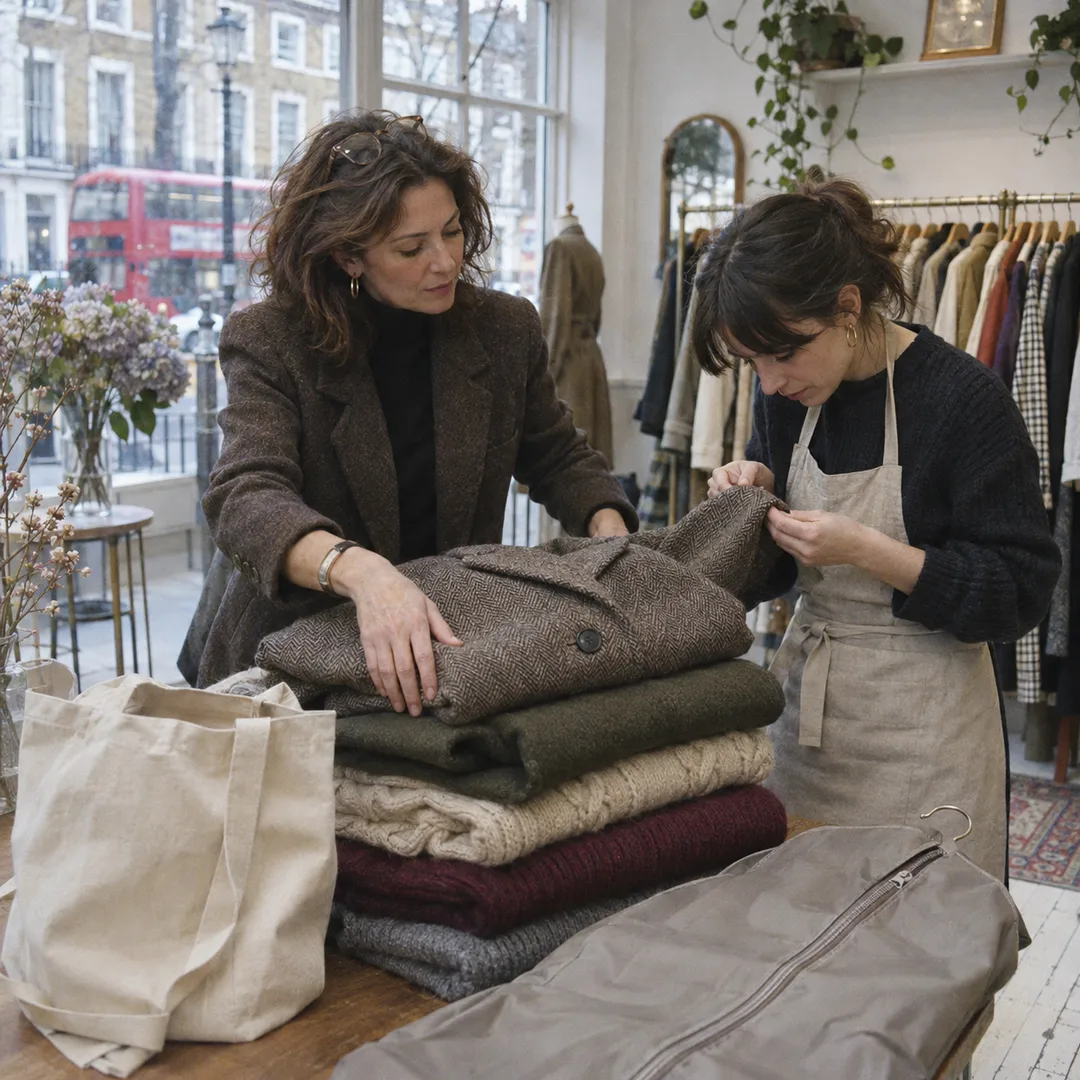
Fold or hang everything neatly for the journey. A garment bag for jackets and coats and a sturdy tote for knitwear and shoes keep pieces looking fresh when you lay them on the counter. Arriving organised also tells the shop you are a seller worth hearing from again.

Match Each Piece to the Right Shop
Not every consignment shop wants the same things. Some focus on designer womenswear, others on classic everyday labels, others on menswear, children's clothes or accessories. Before you set off, look at each shop's website or social pages and read their consignment guidelines. Most explain what they accept, how often they take in new stock and whether you need an appointment.
Plan your route so the shop that suits your best pieces comes first. Bring those items in while you are fresh, then visit the next shop with what remains. If a buyer turns something down, ask politely what would make it a better fit, or whether another shop nearby might want it. Staff in the area often know each other's specialities.
Read the agreement before you sign. Ask how long each piece stays on the rail, what happens if it does not sell, whether prices drop over time and how and when you are paid. Take a photo of the list of items you leave so you have your own record.
A Gentle Route Through the Neighbourhood
Begin near Notting Hill Gate and walk north along the quieter streets around Ledbury Road and Westbourne Grove, where many of the boutique-style shops sit. These streets are lovely in late autumn, with plane trees dropping leaves on the pavements and window displays already changing for the cold months.
Once your best pieces are placed, drift towards Portobello Road. If it is market day the street fills with antiques, food stalls and vintage rails; on a weekday it is calmer and easier to explore. Either way, browsing here now feels different, because you understand what happens behind the counter and why some pieces carry the prices they do.
For a break, follow the side streets to one of the garden squares or walk up towards Golborne Road for a coffee and a pastry under the Trellick Tower skyline. Sitting down with an empty tote and a lighter mind is the best part of a selling day.
After the Crawl: Following Up Without Fuss
Put a reminder in your calendar for the end of each consignment period. That is when you will want to check what sold, collect what did not and decide whether unsold pieces go to another shop, a charity or back into your wardrobe. A quick message or visit keeps things clear for you and for the shop.
Pay attention to what sold quickly and what lingered. That pattern teaches you a lot about what Notting Hill buyers want, and it can change how you shop in future. Many people find that after one round of consigning they buy fewer, better pieces, knowing they can pass them on later.
Finally, enjoy the space you created. A lighter wardrobe makes getting dressed easier, and knowing your favourite old coat now belongs to someone who will wear it every day is a quietly satisfying feeling. Notting Hill's resale rails depend on sellers like you, and they reward the ones who come prepared.
Ask Karpo for more information.
Keep reading
- Brixton Vintage Thrift Shop Finder: South London Retro Gems
 Notting Hill Vintage Thrift Shop Finder: Preloved Rails
 Soho Vintage Thrift Shop Finder: West End Designer Archives