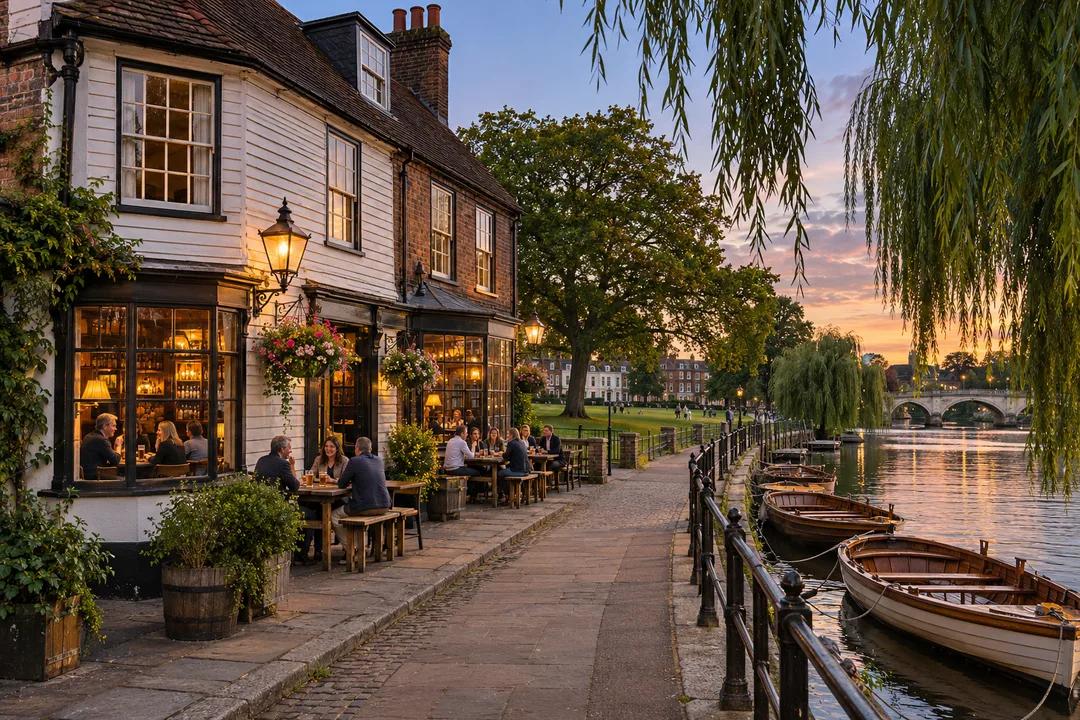
 Richmond Hot Toddy Pub Night Picker: Green & Towpath
Bars & Nights Out

Soho Comedy Club Night Picker for Second-Language Visitors
Soho comedy is easiest to enjoy in a second language at a mixed bill with short sets and clear storytellers. Pick the room by format, not by the poster.
You have lived in London for three months, your English is good enough for meetings and supermarket small talk, and a friend has suggested a comedy night in Soho. Part of you is excited and part of you is quietly afraid of the moment the whole room laughs and you are still translating the setup. That fear is normal, and it is also very solvable. Comedy in a second language is not about vocabulary, it is about picking the right kind of night. Soho has rooms for every type of show, and some of them are far kinder to a new ear than others. This picker is about choosing that room on purpose.
Why Format Matters More Than the Headliner
The single biggest choice is not which comedian, it is which format. A mixed bill, where four or five acts each do a short set with a compere in between, is the friendliest place to start. If one comic speaks too fast or leans on British references you do not know yet, the next one arrives in a few minutes with a completely different style. You are never stuck with one voice for an hour, and that rhythm gives your brain small breaks to catch up.
A full solo hour is the opposite experience. It can be brilliant, but it usually builds on callbacks, which means a joke in the last ten minutes depends on a detail from the first five. Miss that early detail and the ending lands for everyone except you. Save solo hours for your second or third outing, once you know how London comics pace a story. Work-in-progress shows sit in the middle and are fun, but they are messier and more stop-start by design.
Listening for Storytellers Instead of One-Liner Machines
Comics broadly split into two types. One-liner comics fire short jokes built on wordplay, puns and double meanings, and those are the hardest to follow in a second language because the whole joke lives inside one word. Storytellers, on the other hand, build a scene: a bad flat viewing, a family wedding, a terrible job interview. Even if you miss a phrase, the picture stays clear and the laugh comes from the situation, which travels across languages much better.
When you look at a line-up, read the short descriptions of each act and look for words like stories, anecdotes, character or observational. Those comics tend to speak at a steadier pace and repeat key ideas. Watching a few minutes of a comic online before you go is also a good habit. You learn their accent and speed in advance, so on the night your ear is already tuned to them and the first laugh does not catch you off guard.
Choosing a Seat That Helps You Hear
Soho comedy rooms are often small basements with low ceilings, and the sound can be uneven at the back near the bar. Sit in the second or third row, roughly in the middle, where the voice comes straight from the speaker and you can see the comic's face. Facial expression carries a lot of the meaning in comedy, and lip movement quietly helps you with fast words and unfamiliar accents that would otherwise blur together.
The front row is a different decision. Comperes love to chat with the people closest to the stage, asking where they are from and what they do. For some newcomers that is the best part of the night, a chance to say where you grew up and get a warm laugh. For others it is stressful. If you would rather watch than take part, take the second row, smile, and you will usually be left in peace.
Turning Your Accent Into Part of the Fun
If a compere does ask you where you are from, the honest answer is almost always the best one. Say your city, say how long you have been in London, and let them run with it. London comedy crowds are mixed and international, and comics are used to people from everywhere. The joke is rarely at your expense. It is usually about London itself, the rain, the rent, the Tube, and you get to be the friendly outsider who sees it clearly.
It also helps to bring one friend who has lived here longer. Not to translate during the show, which annoys everyone around you, but to talk it over afterwards. The walk out of the basement and the first drink after are where you fill in gaps: what was that word, who was that politician, why did everyone groan at that place name. Those conversations teach you more British English in one evening than a month of podcasts.
A Short Walk Through Soho Before Doors
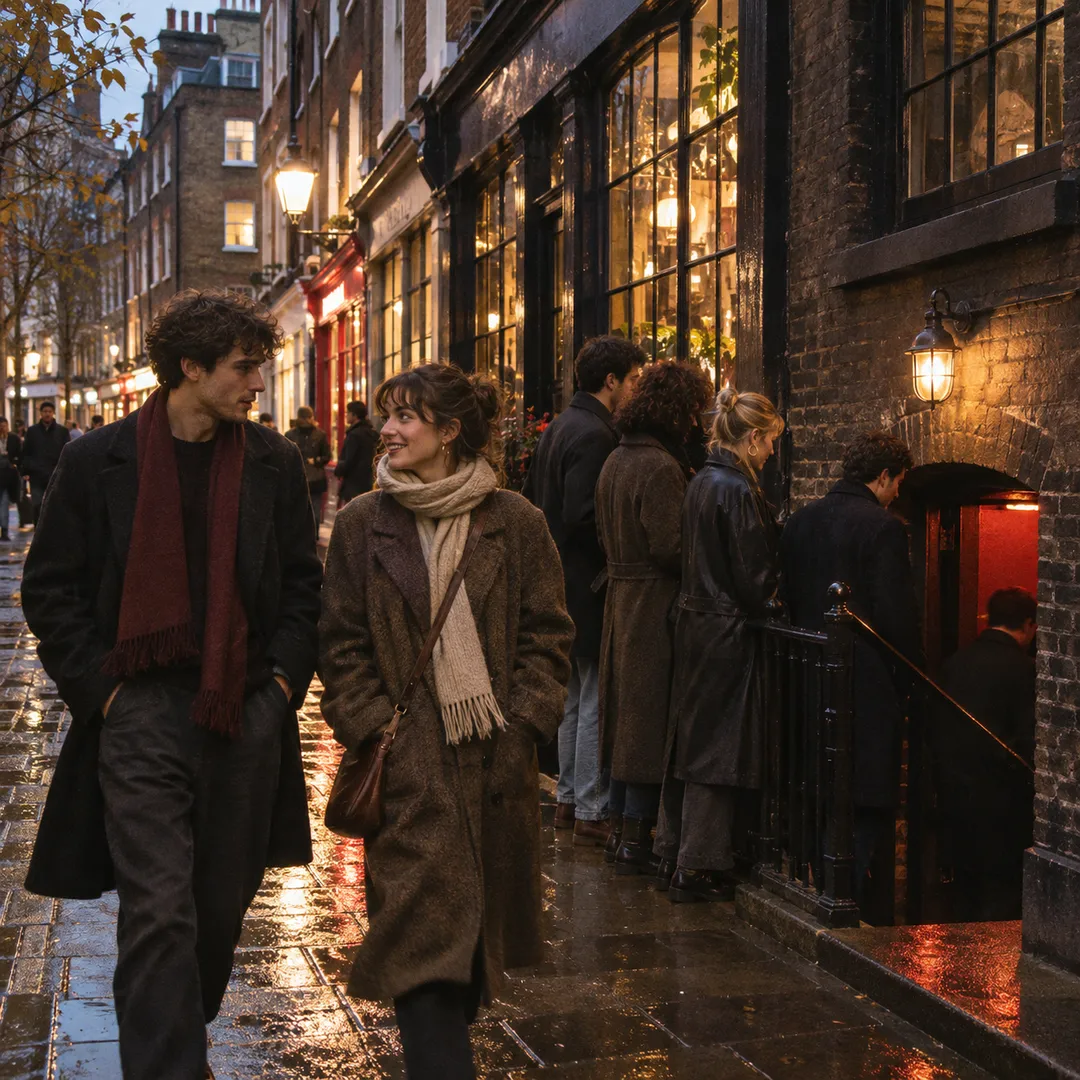
Arrive early and give yourself time to walk. Soho Square is a calm starting point, a small green space with benches where you can sit for a few minutes and let the day fall away. From there the narrow streets lead past theatres, bookshops and tiny bars, and on a November evening the shop windows glow against the damp pavement. Walking slowly before the show puts you in a relaxed mood, and a relaxed listener catches far more jokes.
Eat lightly beforehand. A heavy dinner and a warm basement are a sleepy combination, and you want your attention sharp. Many people grab something simple in Chinatown on the southern edge of Soho or a quick bowl of noodles nearby, then walk to the venue. Leave your big coat folded on your lap rather than in a heap on the floor, because basements fill up quickly and space gets tight once the room is full.
Using Karpo APP to Narrow Tonight's Options
On any given evening there might be several comedy nights within a few minutes' walk of each other, and the listings do not always explain the format clearly. Karpo APP is useful here as a first filter. Tell it you are in Soho, that you want a mixed bill with storytellers, and that English is your second language, and ask it to suggest comedy nights nearby that fit. You get a shortlist to compare rather than a wall of posters.
From there, take two or three options and look at the acts yourself. Ask Karpo APP follow-up questions like which night has shorter sets, or which one suits a first-time comedy audience, and decide with your friend. The point is not to hand the choice over, it is to cut the time spent scrolling so you can spend it walking through Soho instead. Pick, go, and keep the evening simple.
What to Do When a Joke Goes Over Your Head
Some jokes will pass you by, and that is fine. Native speakers miss jokes too, especially ones built on very local references or quick wordplay. Do not freeze or look worried. Just smile, wait a moment, and the next line will arrive. Comedians move fast, and a missed joke is gone in seconds. Many second-language listeners find that after the first twenty minutes their ear adjusts and the laughs start landing on time.
Keep a small mental list of phrases you did not catch, and ask about them later. Over a few nights out you will notice the same British expressions coming back again and again, and each time you understand one, it feels like unlocking a door. That progress is half the pleasure. Your first Soho comedy night does not need to be perfect. It needs to be the right room, a good seat and an open mind, and the laughter will follow.
Ask Karpo for more information.
Keep reading
- Richmond Hot Toddy Pub Night Picker: Green & Towpath
 Clerkenwell Hot Toddy Pub Night Picker: Georgian Squares
 Covent Garden Hot Toddy Pub Night Picker After Theatre