 Islington Dive Bar Night Picker: Essex Road and Quiz Nights
Bars & Nights Out
Brixton Comedy Club Night Picker for New Open Mic Comics
Brixton is a good place to scout open mic comedy before your first spot. Watch a few nights from the crowd, learn each room's feel, then pick where to start.
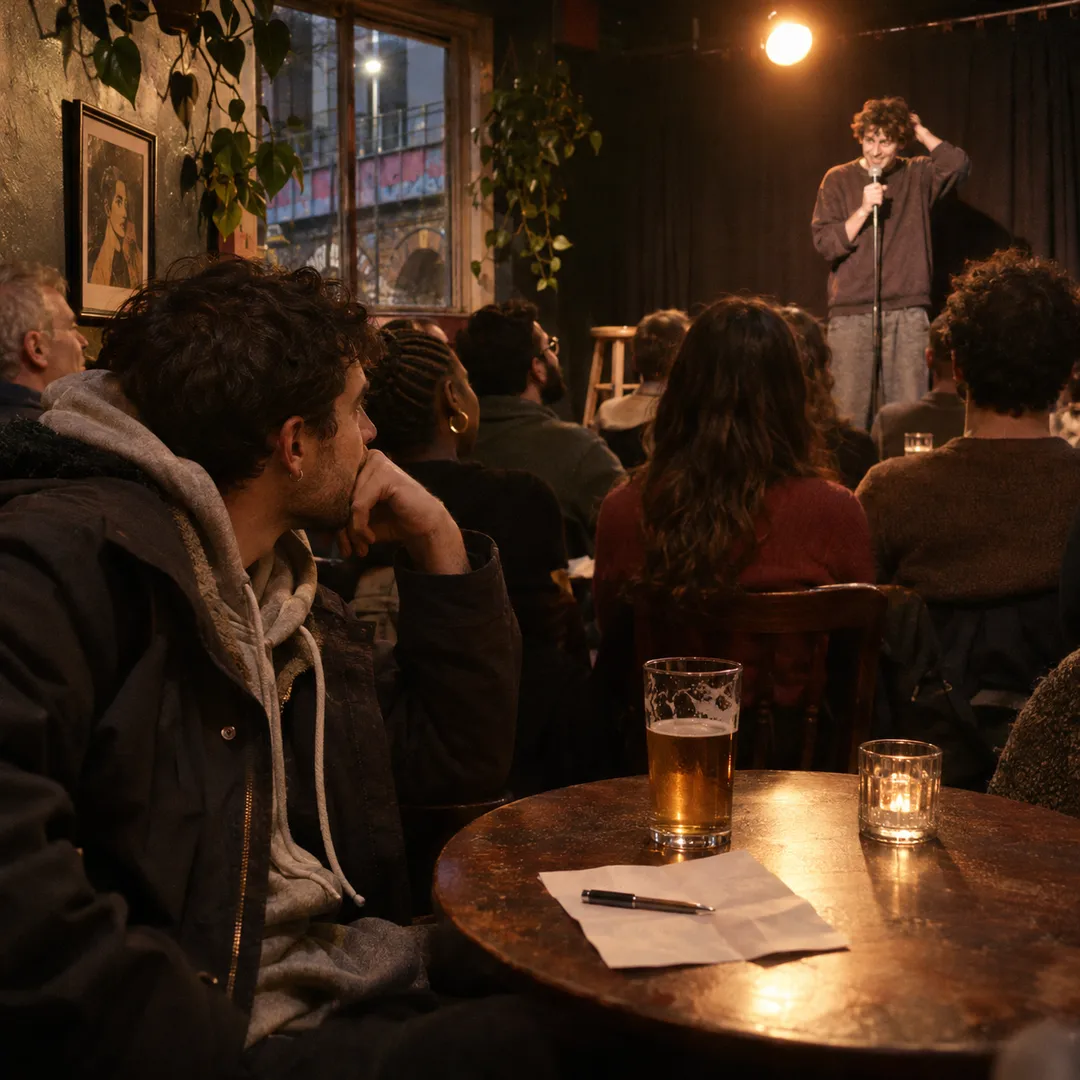
Every comic started in the audience. Before the first nervous five minutes at an open mic, there is a quieter stage most people skip: sitting in the crowd, watching other beginners, and learning how different rooms feel. Brixton is a great part of London to do that. It has a lively, creative, mixed crowd, and a scene of small nights where new comics test themselves alongside more experienced acts. If you have jokes in your head and a vague plan to try stand-up one day, this picker helps you choose which Brixton nights to watch first, and what to look for while you are there.
Why You Should Watch Before You Perform
It is tempting to sign up for the first open mic you find and simply go for it. Some people do, and it works. But most new comics who keep going say the same thing: watching first made a big difference. You learn how long five minutes really feels, how comperes introduce acts, how the light hits the stage, and how an audience reacts to nerves. All of that makes your own first spot far less frightening.
Watching also teaches you about rooms. No two open mic nights feel quite the same. Some crowds are mostly other comics waiting for their turn, quietly supportive but rarely laughing hard. Others draw locals out for a cheap night who laugh freely and heckle a little. Knowing which room is which helps you choose where to make your debut, because a warm first experience is often the difference between trying again and giving up.
Three Kinds of Night to Scout in Brixton
Start with a pure open mic, where most acts are beginners. These nights show you what a first set looks like, rough edges included, and they are reassuring because you will see plenty of people who are no more polished than you. Notice who handles silence well, who rushes, and who connects with the room. Those small differences are the lessons that matter most before your own turn.
Then watch a mixed night, where a few experienced comics share the bill with newer acts. The contrast is useful. You will see how a confident comic opens, pauses and closes, and how they recover from a joke that does not land. Finally, if you can, catch a more established showcase. Watching skilled comics up close sets a standard, and it reminds you why you wanted to try this in the first place.
What to Notice From the Audience
Treat each night as quiet research. Keep a few notes on your phone after the show, not during it. How did the compere get the crowd warmed up? Which opening lines worked, and which made the room tense? How did the best acts deal with a heckle or a phone going off? Did anyone go over their time, and how did the room react? Those notes become your own personal guide to performing.
Pay attention to the audience as much as the stage. Where do people sit? When do they laugh most freely, early in the night or after the interval? Some rooms warm up slowly and reward the acts in the second half. Others are lively from the start but tire by the end. If you can, notice where in the running order you would want to perform, because that choice can shape your first spot.

Being a Good Audience Member at Open Mics
Open mic nights rely on audiences who are patient and kind. Laugh when something is funny, and give everyone a fair chance, especially the obvious first-timers. A nervous beginner who gets a warm reaction is far more likely to come back and improve. One day it will be you on that stage, and you will appreciate a room that gives you the same patience.
Avoid chatting during sets and keep your phone away. Comics notice glowing screens and whispered conversations, and both make small rooms feel colder. If you get talking to performers afterwards, be generous and specific. Telling a nervous comic which joke made you laugh means a lot more than a vague well done. Many friendships in comedy start this way, and getting known as a supportive face in the crowd helps when you take your first spot.
Using Karpo APP to Plan Your Scouting Nights
Open mic and new-act nights can be scattered across listings and social posts, which makes them harder to keep track of than big shows. Karpo APP can help you build a scouting plan. Tell it you are in Brixton, that you want to watch open mic and new-act comedy nights before trying stand-up yourself, and ask it to suggest nights nearby. You get a shortlist to work through instead of starting from scratch.
Ask follow-up questions to shape your plan, such as which nights are mostly beginners and which mix in experienced acts. Aim to see three different rooms over a few weeks. That variety tells you far more than going to the same night again and again. When you finally feel ready to perform, you will already know which room felt friendliest, and you can sign up for a spot with confidence.
An Evening Around Brixton Village and Windrush Square
Brixton is a lovely place to spend the hours before a show. Brixton Village and Market Row, the covered market arcades, are full of small food counters from many cuisines, and they come alive in the evening with a relaxed, friendly buzz. Grab something to eat there and wander slowly. Overhearing conversations and watching people is good training for observational comedy, and the arcades give you plenty of material.
Windrush Square, at the heart of Brixton, is a natural meeting point and a reminder of the area's rich Caribbean history. Electric Avenue nearby has its own famous story and a busy market feel by day. On a quieter evening, Brockwell Park to the south is a peaceful place for an early walk to clear your head. When the night is done, Brixton station is close by for the Tube home, which makes late scouting nights easy.
Turning Scouting Into Your First Spot
After a few nights in the audience, you will notice a shift. Instead of thinking you could never do that, you start thinking you would open differently, or that you know which room you would choose. That is the moment to start writing properly. Shape your five minutes around one or two stories you know well, practise them out loud at home, and time yourself carefully so you do not run over.
When you are ready, pick the Brixton room that felt friendliest and sign up for a spot. Bring a friend who will laugh honestly, arrive early, and watch the acts before you to settle your nerves. Whatever happens, it will be easier than it would have been without those scouting nights. You will know the room, you will know the rhythm, and you will know that every comic in that crowd once stood exactly where you are standing.
Ask Karpo for more information.
Keep reading
- Islington Dive Bar Night Picker: Essex Road and Quiz Nights
 Peckham Dive Bar Night Picker: Rye Lane Rooms and Rooftops
 Shoreditch Dive Bar Night Picker: Basements and Jukeboxes