 Brixton Christmas Light Up Walk Planner: Rainy Arcades
Free Things to Do
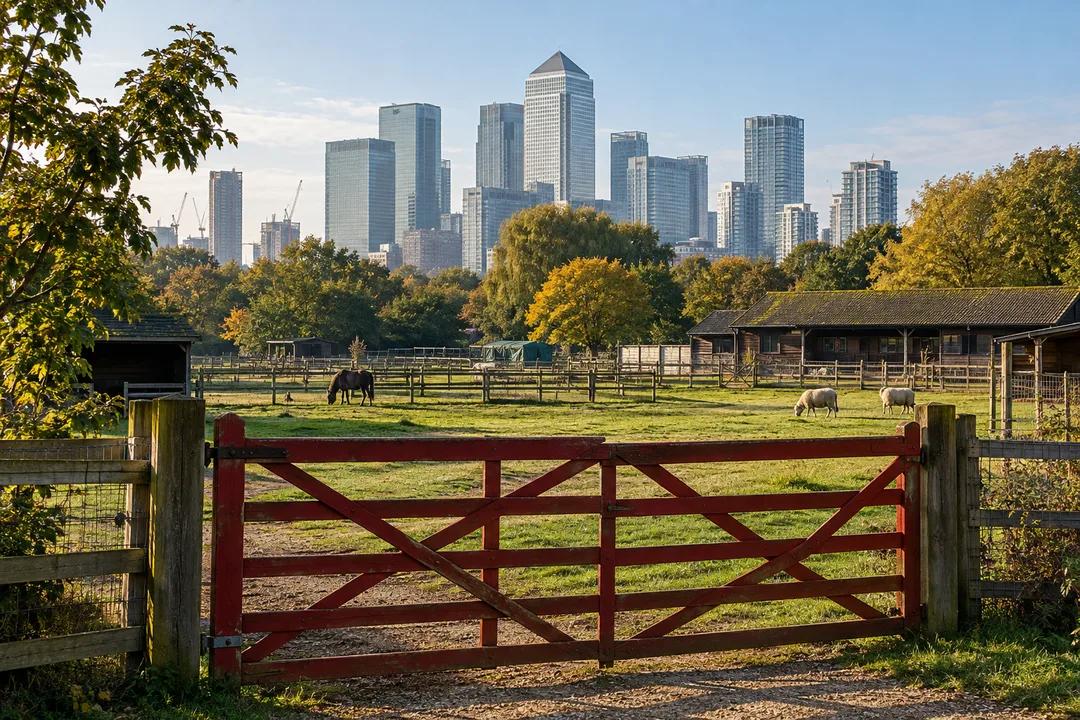
Mudchute City Farm: Free Animals Beside Canary Wharf
Mudchute Park and Farm on Pier Street is free daily in the Isle of Dogs, with 32 acres, rare breeds and a 3pm move indoors. Plan a skyline walk around the farm.
Mudchute opens every day from 9am–4pm at Pier Street, Isle of Dogs, London E14 3HP. The park is free, its 32 acres hold more than 100 animals, and the farm’s own timetable brings animals indoors from 3pm. If you arrive before lunch, you get the widest circuit and the best chance to see the rare-breed pens before the afternoon wind-down.

Start With The Outer Fields
Mudchute is a real working farm rather than a petting-zoo room. Its website describes one of the largest inner-city farms in Europe and a Rare Breed Survival Trust approved conservation farm park. Dexter cattle, pigs, sheep, goats, donkeys, llamas, poultry and an aviary are spread between outer enclosures and the main courtyard. The open acreage matters: you can watch a flock move across grass, then turn back toward the dense towers of Canary Wharf without leaving London’s Zone 2 fabric.
The association says the site began as derelict spoil from Millwall Dock dredging. In the 1970s, a proposal for a high-rise estate prompted an Island-wide campaign. Local people protected the land, formed the Mudchute Association in 1977, planted trees and introduced farm animals. That history changes the visit: the park is a community-held landscape, and donations keep admission free rather than a commercial attraction charging at the gate.
Visit Before The Animals Go In
The useful timing detail is on the official opening page: the farm runs 9am–4pm, but animals start going in from 3pm. Go between 9:30 and noon for a full animal circuit, quieter paths and enough daylight for the outer fields. A later visit still works for the park and courtyard, but it is the wrong window if your priority is seeing every enclosure. The park itself runs from dawn to dusk.
The smaller-animal Pets Corner has its own schedule: it is closed during school holidays, then opens Tuesday 9:30am–3:30pm, Wednesday 12:30pm–3:30pm, Thursday 9:30am–3:30pm, Friday 11:30am–3:30pm, and Saturday–Sunday 9:30am–4pm. That is a better plan for a weekday goat-focused visit than assuming every area follows the main farm hours.
Mudchute Kitchen Cafe and Practical Rules
The Mudchute Kitchen café is open Tuesday to Sunday, 10am–4pm, and every day during school holidays and bank holidays. The café gives you a warm reset without turning the farm into a restaurant itinerary. Bring shoes that can handle mud, keep to the public paths and treat the animals as working livestock. The official farm page notes that most animals go to bed around 3pm in winter and 4pm in summer, so avoid promising children a late-afternoon close-up.
Mudchute’s address is Pier Street, Isle of Dogs, London E14 3HP. The main courtyard is closed Mondays except during school holidays, while the farm itself remains on its daily schedule. If you need toilets or the café, plan around that courtyard closure rather than treating Monday as a normal full-service day.
Walk From Mudchute To The Docklands
After the animals, use the park as the first half of a docklands walk. Leave the farm toward Millwall Dock, then follow the water with the Canary Wharf towers as a changing backdrop. The route gives the farm’s origin story physical context: this green space exists because dock spoil, development plans and local organising all left visible layers. Keep the walk short if you have children in tow; the farm itself is the main event, not a race to a distant landmark.
Mudchute works best for families, photographers, animal-curious adults and anyone who wants a free outdoor reset with a genuine conservation angle. Skip a rushed 3:30pm arrival if the animals are your reason for searching “city farm near me.” Choose the morning, start in the outer fields, return through the courtyard, and let the café or dock walk close the visit. Karpo APP can help turn the farm stop into a timed Isle of Dogs route.
A Full Loop For Families
Families get more from Mudchute when the visit has a beginning, middle and end. Start with the outer fields, pause at the rare-breed pens, then return to the courtyard before the animals settle. The route is easy to shorten if a child loses interest, but the 32-acre setting also rewards adults who want a proper walk. Leave room for the farm’s paths, because tractors, staff and school groups need the working space.
Rare Breeds In A Tower District
The rare-breed focus is the farm’s strongest editorial detail. Mudchute says its animals tell the story of British farms and where food comes from, especially for children who know food only from shops. A Dexter cow, a goat, a donkey or a heritage poultry breed becomes a practical lesson. Ask children to notice horns, coats, feathers and the different ways animals use the enclosures instead of treating every pen as the same photo stop.
A Free Visit With A Working Budget
There is no admission fee, but the association’s history page makes the funding model clear: donations keep the park and farm free all year. A visitor can support the place through the café, shop, an animal adoption or a simple donation. That is more useful than inventing a ticket price. Budget for a café stop if wanted, then give what fits your day and leave the farm in good condition for the next family.
When To Choose The Park
The dawn-to-dusk park is a separate asset from the 9am–4pm farm. If you arrive after the animal areas close, the green space and dockland views still make a worthwhile walk. If the animals are non-negotiable, choose morning. That honest split prevents disappointment and keeps the farm’s own timetable at the centre of the plan.
Rain, Mud And Footwear
Rain changes Mudchute from a neat family stroll into a working-farm experience. Wear shoes that can handle wet grass and do not bring a pushchair you cannot lift over uneven ground. The café gives you a warm pause, while the park’s open areas need patience in bad weather. The reward is that a grey day makes the towers, fields and animal shelters feel especially distinct.
The Right Reason To Go
Choose Mudchute for scale, conservation and the local story behind a free farm. Skip it only when you cannot arrive before the animal wind-down. The best version is simple: 9:30 arrival, outer fields, courtyard and café, then a short Millwall Dock walk. It is a real London day rather than a quick photo with a single animal.
A Better Pace For Young Visitors
A Better Pace For Young Visitors. The farm’s scale lets a family divide attention without losing the plot. One adult can read the rare-breed information while another watches the animals, then everyone can regroup at the courtyard. Keep snacks to the designated café or eating areas, wash hands before eating and leave the barriers exactly as you found them. That rhythm feels slower than a city attraction, but it is why the visit remains comfortable for regulars and staff. Mudchute’s conservation status gives the animal list a reason. Rare breeds are not decorative props; they are part of a living record of British farming. Notice the differences between a Dexter, a heritage chicken and a common farm animal, and the visit becomes more memorable. Children can draw a coat pattern or count feathers without needing a paid worksheet.
Finish Before The Wind Down
Finish Before The Wind Down. Use the farm’s 3pm animal wind-down as a firm planning line. If the group wants the park after the animals, that is easy: the park stays open dawn to dusk. If the group wants every pen, make the last hour a return to the courtyard rather than a first arrival. Mudchute rewards an early start and a calm finish. Rain changes the farm into a working-farm experience, so wear shoes that can handle wet grass and do not bring a pushchair you cannot lift over uneven ground. The café gives you a warm pause, while the open areas need patience in bad weather.
A Practical Closing Note
The clearest way to read Mudchute is as both park and farm. The park offers free open space; the farm supplies animal care, education and a conservation collection. Give yourself enough time for both roles. Walk slowly, pause at one rare breed, read the history panel and support the café or donation box if it suits your day. The farm’s address and phone are on its official page, and its opening timetable is unusually clear, so a little planning prevents the common mistake of arriving after the animals have gone indoors.
Ask Karpo for more information.
Keep reading
- Brixton Christmas Light Up Walk Planner: Rainy Arcades
 Hackney Christmas Light Up Walk Planner: Canal Boats
 Islington Christmas Light Up Walk Planner: Square Dates