 Richmond Hot Toddy Pub Night Picker: Green & Towpath
Bars & Nights Out
Hackney Cider Pub Night Picker for Home Cider Makers
Made a first batch at home? This Hackney cider pub night picker turns a night out into research: tasting order, questions to ask and a canal walk between.
The allotment pressing club in Hackney filled eleven demijohns this autumn, and nobody in it knew whether the juice would turn into good cider. Marcus, who started the club, decided the answer was homework. One evening after pressing day he led five members on a slow tour of the neighbourhood's cider pubs, not to get merry but to taste what professional makers do and ask how. This cider pub night picker is their route and their method, for anyone who has started making cider at home and wants to learn by drinking carefully.
Treat the Night as a Tasting, Not a Session
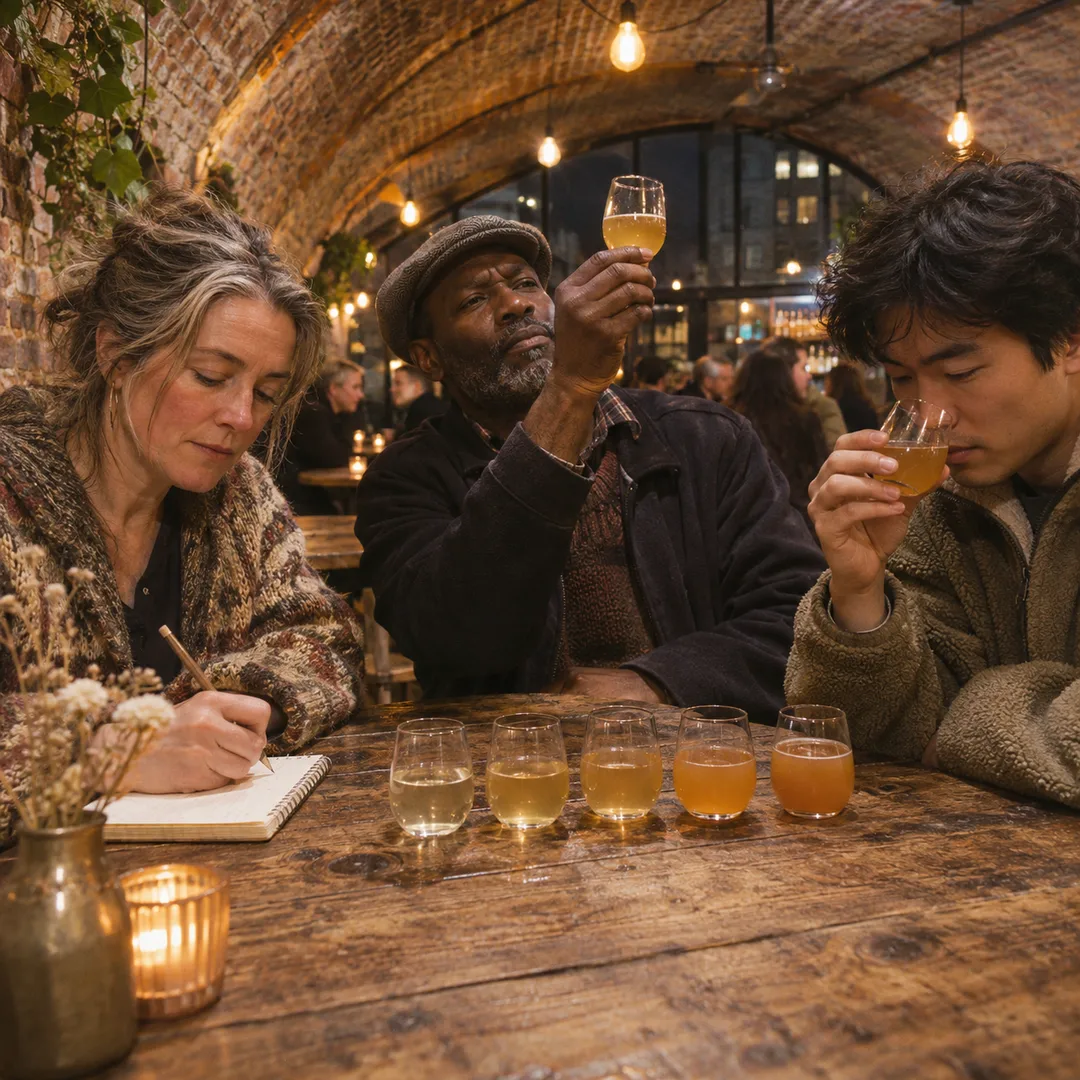
Marcus set one rule at the start: halves only, and nobody orders the same cider as anyone else at the table. That way six people can try six ciders at each stop and pass glasses around. Everyone carried a small pad to write down what they noticed, from colour and cloudiness to how dry the finish felt. It looked a bit serious to the regulars, but bartenders loved it.
The point was to build a vocabulary. Most home makers can tell if a batch tastes bad, but struggle to say why. By comparing a dry farmhouse cider with a sparkling modern one, the group learned to name tannin, acidity and sweetness separately. Marcus says that one evening taught the club more than a month of reading forum posts about yeast and sulphites.
Starting Under the Railway Arches
Hackney has a long line of brick railway arches that have been turned into breweries, bars and workshops, and some of them pour serious cider. The group started in one with a long chalkboard of boxed ciders and a staff member who visits orchards in person. They arrived early in the evening, before the after-work crowd, so the bartender had time to explain where each cider came from.
Ask the questions you actually need answers to. The club asked whether the maker used wild yeast or a cultured one, how long the cider sat before bottling, and whether anything was added for sweetness. Not every bartender will know, but in cider-focused places someone usually does. One answer, about letting cider rest over winter before tasting, changed the club's whole plan for their demijohns.
A Canal Walk to Reset the Palate
Between the first and second stops, the club walked along the Regent's Canal toward Broadway Market. The towpath passes moored boats, old warehouses turned into flats, and the edge of London Fields, where people play table tennis under the trees. In the dark, the walk takes about twenty minutes at an easy pace, which is enough to clear the taste of the last cider.
This step matters more than it sounds. After three or four halves, everything starts to taste the same, and the group's notes get vague. Fresh air and a glass of water from a bottle in someone's bag made the second round of tasting far sharper. If the weather turns, cut through the market street instead, where shop awnings keep most of the rain off.
What to Order at the Second Pub
The second stop was an old corner pub near the park, with a smaller cider list but one or two unusual bottles in the fridge. Here the group focused on contrasts: a keeved cider, made by a slow traditional method that leaves natural sweetness, next to a bone-dry one; a perry next to an apple cider from the same county. Comparing pairs, Marcus said, is easier than judging one glass alone.
Honest advice from the night: skip the big-brand ciders on the main taps, even if they are cheaper and easier. They are made for consistency and do not teach a home maker much. And do not bother with ice in the glass, which the regulars will notice and the bartender will quietly regret. Ask for cellar-temperature cider so the aromas come through.
Bringing Your Own Cider Into the Conversation
One member brought a small sealed bottle of last year's home cider and asked the bartender, politely, whether they would try a sip after closing their till. Not every pub will say yes, and you should never open your own drink in a licensed pub. But this bartender took the bottle home and sent a message the next week with a few kind comments and one blunt note about too much sulphur smell.
That kind of feedback is worth a lot. If you want honest opinions, offer a bottle to take away rather than open, keep it small, and accept whatever comes back. Some cider pubs host occasional meet-ups for home makers or apple days in autumn, which are easier places to swap samples and talk about pressing technique.
Ending in Victoria Park Village
The last stop was in Victoria Park Village, the small parade of shops and pubs on the edge of the park, where the streets feel more like a market town than inner London. By now the club had tasted a dozen ciders between them, and the final half was more about relaxing than taking notes. The pub had a fire, which helped.
Plan B if your group runs out of steam early: skip the third pub and walk straight through the park toward home. Victoria Park at night is closed in places, so stay on lit roads around the edge rather than cutting across. Several members walked back past Hackney Downs, still arguing about whether their own cider should be dry or medium.
Using Karpo APP to Build the Route
Marcus planned the route in the Karpo APP the day before, asking for Hackney pubs and bars with a strong cider list that a small group could walk between. Karpo suggested a handful of places, from arch bars to traditional corners, and gave a feel for each one. He then asked which were likely to be calmer early in the evening, and used the answers to set the order.
Karpo does not reserve tables or watch how full a pub is in real time, so the group still arrived ready to move on if a place was packed. But having a shortlist meant the night ran smoothly. Instead of debating where to go next on a cold pavement, Marcus just pointed at the next name on his phone and the club followed.
What the Club Changed Afterwards
A week later the club met at the allotment to taste their own juice, now gently fermenting. They used the same notes and the same vocabulary, and for the first time could talk about what they wanted the cider to become. Two demijohns would be left to go fully dry, two would be tried as perry blends, and the rest would rest until spring.
If you make cider at home, a careful night in the pubs is one of the most useful things you can do. Taste in pairs, write things down, ask the bartender real questions and walk between stops. You will come home with a clearer idea of what good cider tastes like, and probably a few new friends who care about apples as much as you do.
Ask Karpo for more information.
Keep reading
- Richmond Hot Toddy Pub Night Picker: Green & Towpath
 Clerkenwell Hot Toddy Pub Night Picker: Georgian Squares
 Covent Garden Hot Toddy Pub Night Picker After Theatre