 Brixton Vintage Thrift Shop Finder: South London Retro Gems
Hidden Gems & Odd Finds
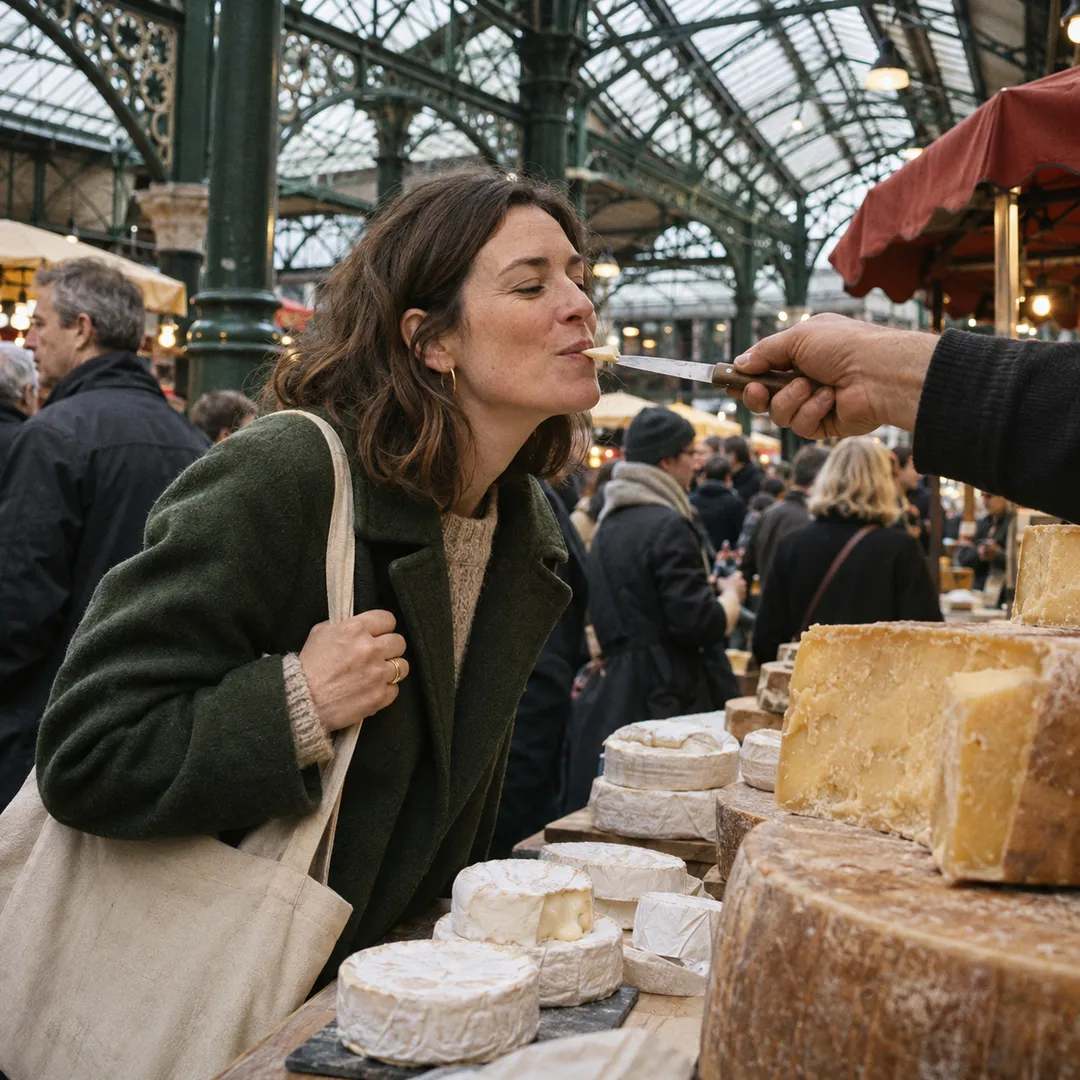
Borough Cheese Shop Crawl Planner for a Dinner Party Board
Hosting a dinner party? A Borough cheese shop crawl helps you taste, pick and carry home a balanced board, from soft and fresh to aged, washed rind and blue.
Maya hosts six friends for dinner on the first Saturday of every month, and the cheese course used to be the part she rushed: a supermarket wedge, some crackers, done. Then she started doing a Borough cheese shop crawl on the morning of each dinner, tasting her way along the market counters before deciding anything. The board got better, the shopping got calmer, and her guests now ask what she found before they ask what is for dessert.
Decide the Shape of the Board Before You Taste
Maya walks in with a plan of five slots, not five names. One fresh or soft cheese, one bloomy rind, one firm cow's milk cheese with some age, one washed rind or goat cheese for character, and one blue to finish. Having slots rather than a shopping list lets her follow whatever tastes good that week, while still landing on a board that moves from mild to strong instead of five versions of the same cheddar.
She also notes who is coming. A friend who is pregnant changes the soft cheese choice, so she asks counter staff for pasteurised options in that slot. Someone who dislikes blue still gets a full plate if the firm and soft slots are generous. Writing the slots in a notes app takes two minutes and saves her from buying on impulse at the first counter, which is the classic mistake in a market this tempting.
Quantity is easier than people think. For a cheese course after a full dinner, a thumb-length piece of each cheese per person is plenty, and leftovers keep well for lunch. If cheese is the main event, as on her summer evenings, she doubles that. Telling the cheesemonger how many guests and whether cheese follows a main course is the quickest way to get honest cuts rather than oversized wedges.
How Maya Moves Through Borough Market
She arrives early, when the walkways are still wide enough to stop at a counter without blocking a queue behind her. Borough on a Saturday fills fast with visitors photographing the produce, and mid-morning the cheese counters can be three deep. Coming before the rush means the staff have time to talk, and a cheese crawl only works if you can ask questions and taste slowly rather than pointing at the nearest wheel.
Her route is a loop rather than a line. She does one slow lap of the whole market without buying, tasting at each counter and noting which cheese impressed her for each slot. On the second lap she buys, starting with the hard cheeses that travel well and ending with the soft and blue ones, so the most delicate pieces spend the least time swinging in her bag while she wanders between stalls.
Tasting etiquette is simple. Ask for a taste of what interests you rather than working through every wheel, say what you liked or did not, and let the cheesemonger steer you. Phrases like milder than this, more savoury, or something that goes with pears get far better results than asking for the strongest cheese they have. If a counter is busy, she moves on and comes back later rather than holding up a queue.
Questions That Earn You Better Cheese
The best conversation Maya ever had at a cheese counter started with a simple question: what is tasting especially good this week? Cheese changes with the season and with each batch, and the people cutting it all day know which wheels are at their peak. That one question often leads to a farmhouse cheese she would never have chosen from a label, which is the whole point of shopping in person.
She also asks how to serve each piece. Some cheeses want an hour out of the fridge before guests sit down, others are fine after half that. Cheesemongers will tell you which rind to eat and which to trim, whether a soft cheese should be cut from the centre outwards, and what to pair with it. She jots the advice down and repeats it to her guests, which makes the board feel like a story rather than a plate.
One honest note: skip the vacuum-packed gift boxes aimed at tourists. They are convenient, but you lose the reason to come, which is a freshly cut piece chosen after tasting. If a counter only sells pre-wrapped wedges and nobody can tell you about them, that is the counter to pass by on a crawl built around conversation and taste.

A Riverside Pause Between Laps
Between the tasting lap and the buying lap, Maya takes a short break outside the market so her palate resets. The churchyard garden beside Southwark Cathedral is her favourite spot, a small green pocket where market crowds thin out and you can sit with a coffee. The cathedral itself has stood in some form on this site for centuries, and its stone tower gives the whole corner a calmer feel than the stalls next door.
On drier mornings she walks a few minutes west along Clink Street, a narrow lane under tall warehouse walls that once held the riverside prison which gave English slang its word for jail. The lane opens onto the Thames path toward Bankside, where you can look across the water at St Paul's dome. A short loop here is enough to clear the taste of washed rinds before heading back in to buy.
If it is raining, as it often is in a London autumn, she stays under cover instead and pauses at the edge of the market with a hot drink, watching the traders. The point is not sightseeing but a pause between tasting and deciding. Rushing straight from tasting into buying is how a board ends up with three strong cheeses and nothing gentle for the guest who prefers mild flavours.
Carrying It Home and Building the Board
Cheese travels better than people fear, but a few habits help. Maya brings an insulated bag and a cool pack on warm days, asks for each cheese to be wrapped in paper rather than cling film, and keeps soft and blue pieces on top. At home she stores everything in the salad drawer of the fridge, still in its paper, and takes the cheeses out about an hour before serving.
She lays out the board in the same order she shopped: the fresh cheese at twelve o'clock, then clockwise to the blue. Each cheese gets its own knife, so the blue does not travel into the goat cheese. Plain oatcakes or water biscuits, a sliced pear, a spoon of quince paste and a few walnuts are all she adds. Too many extras make it harder to taste the cheeses she worked to choose.
Guests are told to start at twelve and move clockwise, which turns a cheese course into a small tasting. Maya passes on whatever the cheesemongers told her that morning, which is usually a better story than anything she could invent. Leftover pieces get rewrapped in their original paper and saved for toasties on Sunday, which her flatmate considers the real reason she hosts at all.
When Borough Is Too Busy
Some Saturdays the market is simply too crowded for a calm crawl, especially near Christmas. On those days Maya does her tasting on a weekday lunch break instead, when the counters are quieter, and buys hard cheeses then. Soft cheeses she leaves until the day of the dinner, picking them up from a neighbourhood cheese shop closer to home so they are at their best when served.
If you are planning a crawl in a different part of London, or want a second shop near your own flat, open the Karpo APP and ask for cheese shops near you. Use it to sketch a short route around your own area, then apply the same habits: plan five slots, taste before buying, ask what is good this week, and keep the soft cheeses for last so they reach your table in good shape.
Ask Karpo for more information.
Keep reading
- Brixton Vintage Thrift Shop Finder: South London Retro Gems
 Notting Hill Vintage Thrift Shop Finder: Preloved Rails
 Soho Vintage Thrift Shop Finder: West End Designer Archives