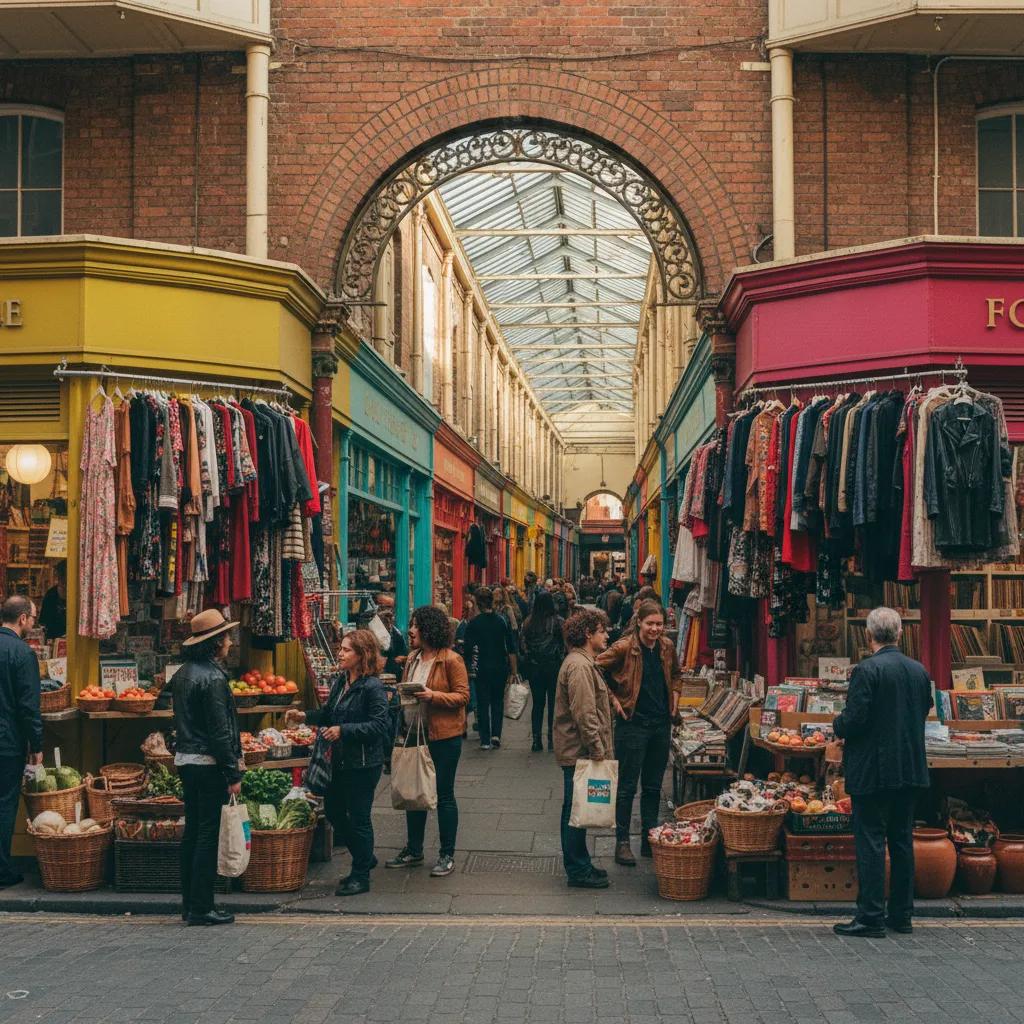
 Brixton Vintage Thrift Shop Finder: South London Retro Gems
Hidden Gems & Odd Finds
Bermondsey Cheese Shop Crawl Planner for Winter Fondue
Hosting a winter fondue night? A Bermondsey cheese shop crawl helps you pick cheeses that melt well, mixing alpine styles with British farmhouse wheels.
Lukas grew up near Fribourg and works nights on a ward at a south London hospital. Every December he invites the people from his shift to a fondue night, and every year someone asks where he finds the cheese. His answer is a Bermondsey cheese shop crawl on a Saturday morning after his last night shift, walking from the railway arches to Bermondsey Street and choosing cheeses that melt properly.
The Melting Rules Lukas Grew Up With
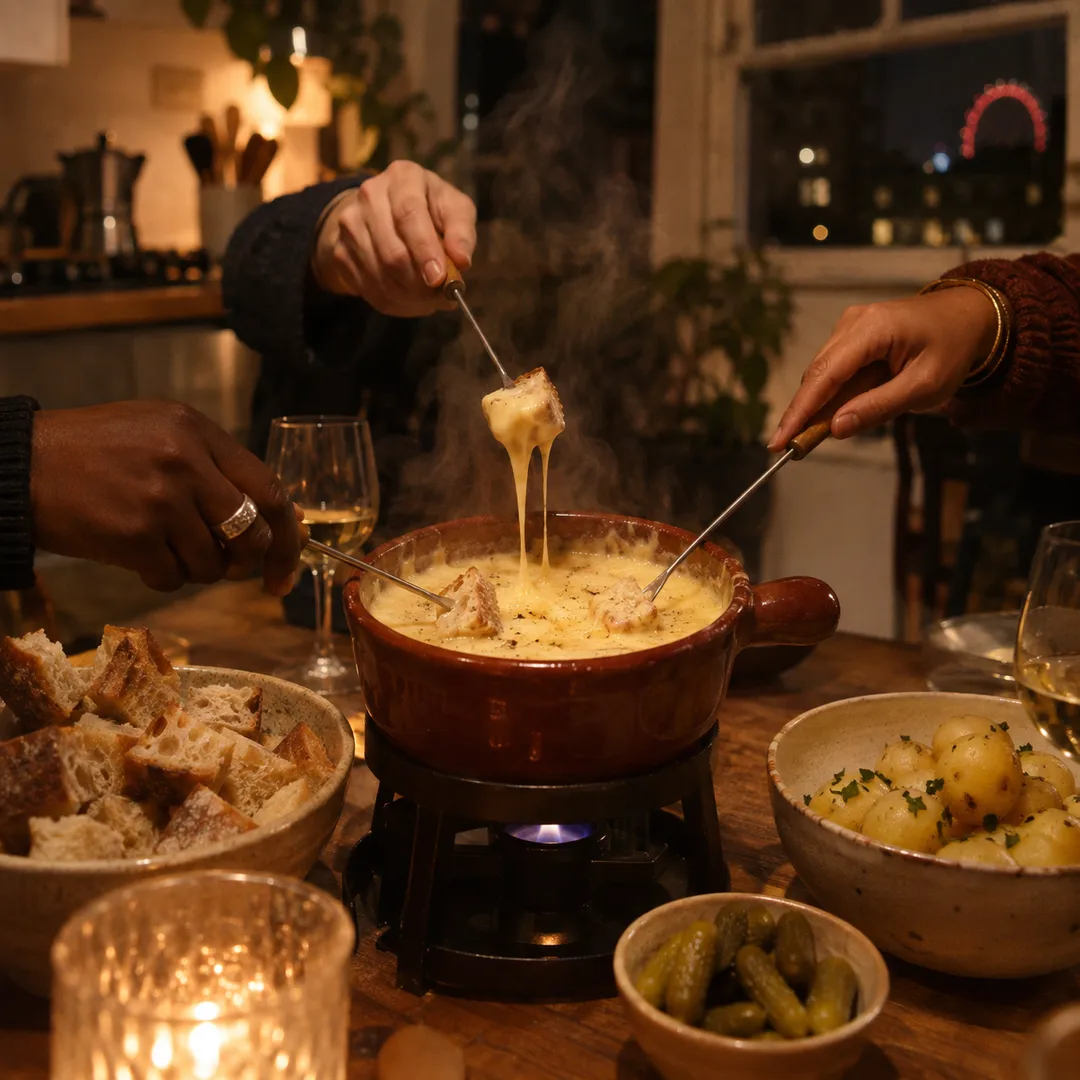
Fondue is less about one magic cheese and more about a blend. The classic mix from his part of Switzerland uses a firm, nutty alpine cheese for depth and a softer, creamier one for smoothness, melted with white wine and a little cornflour so it does not split. Raclette is simpler: one good melting cheese, heated until the cut face bubbles, then scraped over potatoes. Both reward cheeses with good moisture and a supple texture.
What does not work is anything very dry and crumbly, which turns grainy and oily in the pot, or anything very young and rubbery, which goes stringy. Lukas explains this to every cheesemonger he meets, and they usually light up, because a fondue order is a fun puzzle. He asks them to steer him toward alpine styles and to suggest one British cheese that might surprise him in the blend.
That British wildcard has become his favourite part of the night. Some British farmhouse cheeses with an alpine style melt beautifully and bring a sweeter, grassier flavour than the Swiss originals. Others look promising but separate in the pot, so he tests a small piece at home first. His colleagues now vote each year on whether the British addition beat the Swiss classic, and the result is always argued about.
Starting Under the Railway Arches
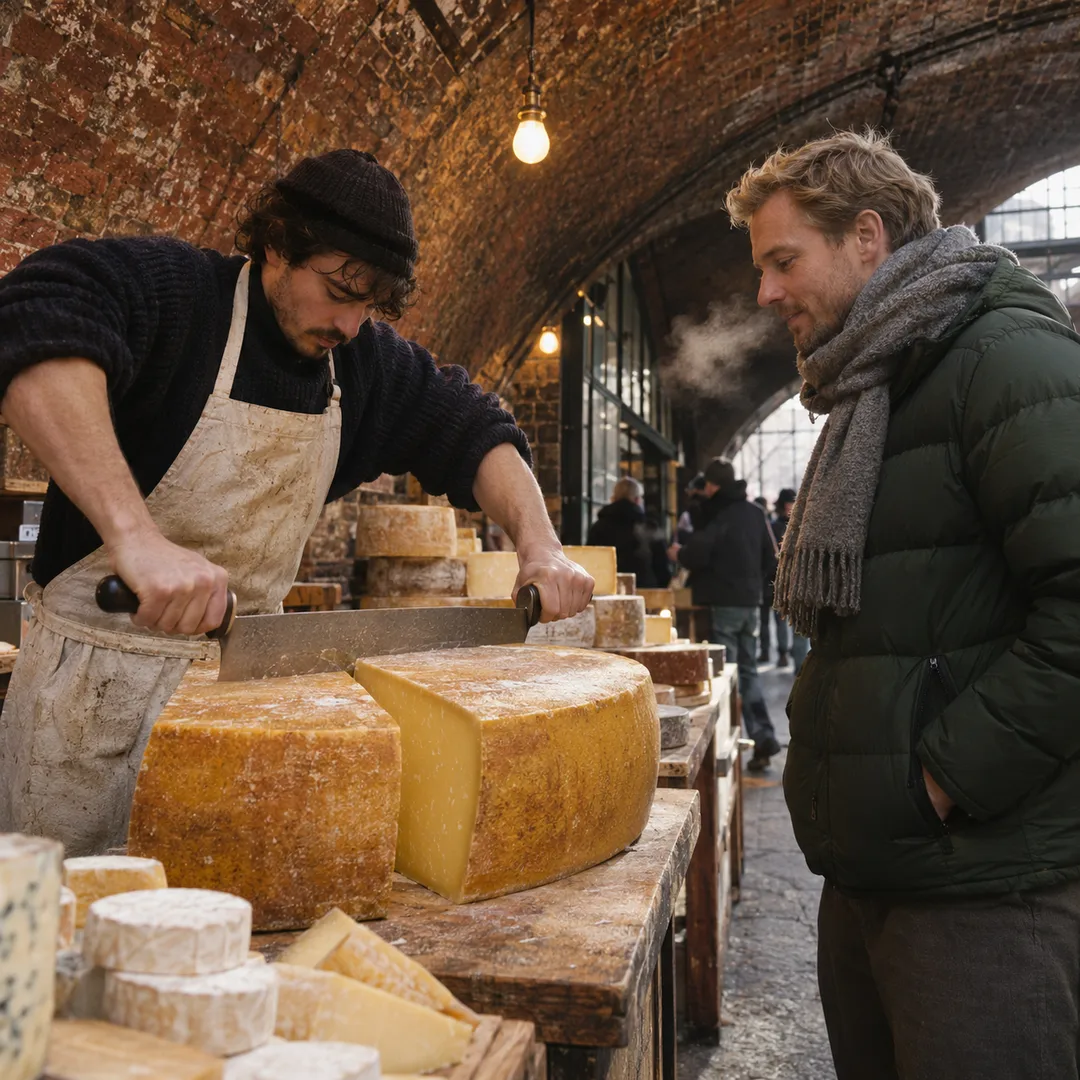
Bermondsey's railway arches are the heart of the crawl. The viaduct carrying trains into London Bridge was built on thousands of brick arches, and over time many were let to small food producers, maturing rooms and traders. On weekend mornings the lanes around the arches near Maltby Street and Druid Street fill with stalls, and some arches open as counters where you can taste and buy straight from the people who mature the cheese.
Lukas likes the arches because cheese suits them. The brick vaults stay cool and steady, which is why some have been used for ageing wheels, and standing inside one in winter feels close to a mountain cellar. He goes early, before the brunch crowd, when cheesemongers have time to cut tastes from several wheels and talk about which batch is melting well this season.
On the walk between arches he picks up the other fondue essentials: a crusty loaf to cube, small waxy potatoes and a jar of cornichons. Buying everything on one route means the bread and cheese come home together, which matters because fondue bread should be a day old and slightly dry, so it holds onto the fork. He buys the loaf on Saturday for a Sunday night fondue.
Bermondsey Street and the Leather Market
From the arches he walks south to Bermondsey Street, a long narrow road of converted warehouses, galleries and small food shops. The area was once the centre of London's leather trade, and the old Leather Market building with its large courtyard still stands as a reminder of the tanneries that filled these streets. Walking past it with a bag of cheese is a reminder that this neighbourhood has always been about making things by hand.
Bermondsey Street is where Lukas picks up a second opinion. A neighbourhood deli or cheese counter here might have a different alpine wheel or a washed rind he did not see in the arches. He tastes the two candidates for the creamy half of the blend side by side and picks the one with the cleaner, milkier flavour. If both are good, he takes a little of each and calls it a house blend.
One honest note from Lukas: skip pre-grated fondue mixes, even good-looking ones. They often contain anti-caking powder that changes the texture, and you lose the chance to taste what you are melting. Freshly cut wedges grated at home take ten minutes and give a smoother pot. The extra effort is the whole point of doing a crawl instead of grabbing a packet at the supermarket on the way home.
A Cold Walk to Shad Thames
With the shopping done, Lukas walks north to Shad Thames, the cobbled lane between tall warehouses where iron bridges cross overhead from building to building. These were once wharves storing tea, coffee and spices, and the old names are still painted on some walls. On a cold bright morning the lane is quiet, and it leads straight out to the river with Tower Bridge right beside you.
He stands by the river for a few minutes before heading home to sleep off the night shift. It is a good spot to check the shopping list, make sure the soft cheese is on top of the bag, and send the group chat a photo of the bridge to remind everyone about Sunday. In rain he skips the river and walks back under the arches, which keep most of the route dry.
Hosting the Night Itself
Lukas grates the cheese an hour before guests arrive and lets it come up to room temperature, which helps it melt evenly. He rubs the pot with a cut clove of garlic, warms the wine, adds the cheese a handful at a time and stirs in a figure of eight until smooth. For anyone avoiding alcohol, he makes a second small pot with stock and a squeeze of lemon instead of wine.
Fondue manners are part of the fun. Swiss tradition says that whoever loses their bread in the pot pays a forfeit, usually a round of drinks or a song. His colleagues have turned this into a ward legend, with a running tally of who has lost the most cubes. At the end, the crisp layer of cheese at the bottom of the pot is scraped out and shared, and in his family it is the best bite of the evening.
Planning Your Own Melting Cheese Crawl
You do not need to be Swiss to plan this. Decide whether you want fondue or raclette, tell each cheesemonger what you are making and how many people are coming, and ask which of their cheeses melt well this season. Taste before buying, keep the bread and potatoes on the same route, and leave room in your bag for one British wildcard to test against the classics.
If you live outside Bermondsey and want a closer counter for top-up shopping, open the Karpo APP and ask for cheese shops near you. It is a simple way to find a nearby stop for the midweek raclette when the first fondue has convinced everyone to do it again, which in Lukas's experience happens about a week later.
Ask Karpo for more information.
Keep reading
- Brixton Vintage Thrift Shop Finder: South London Retro Gems
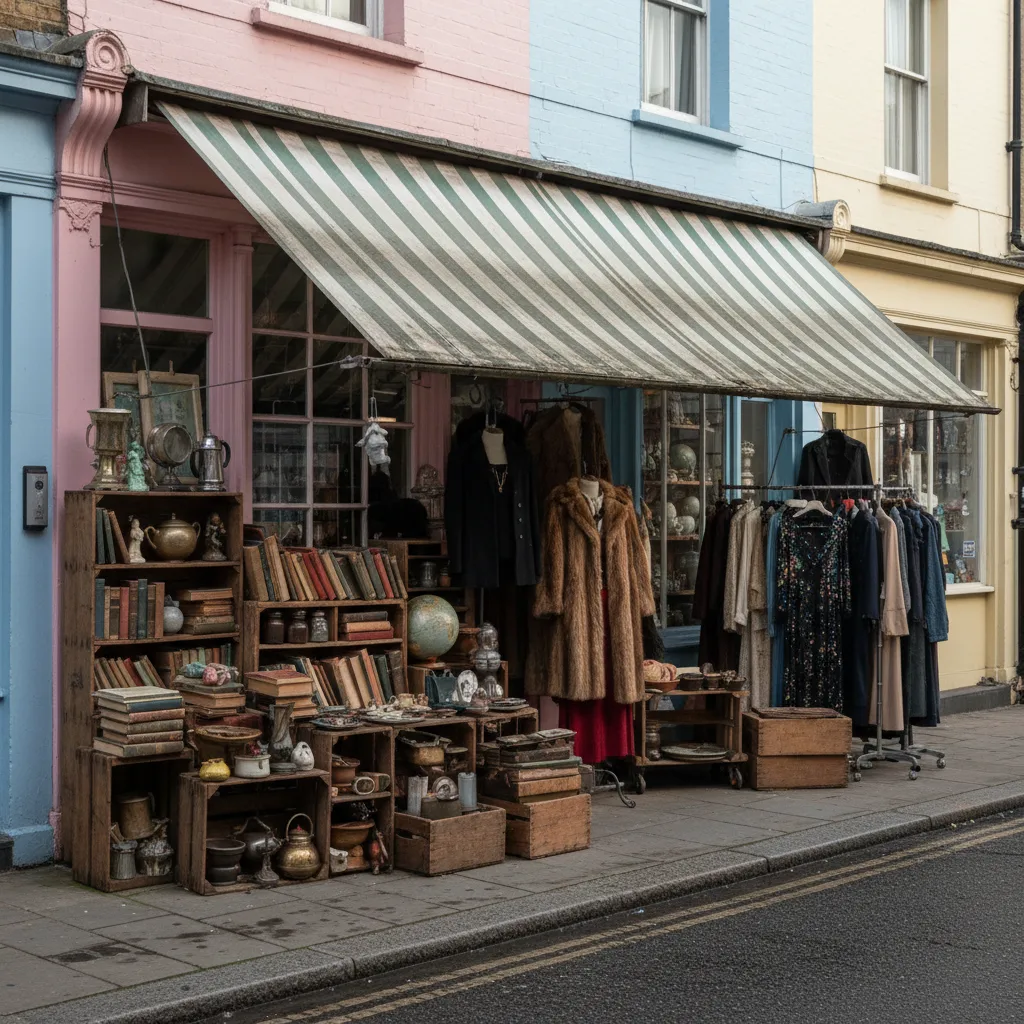 Notting Hill Vintage Thrift Shop Finder: Preloved Rails
 Soho Vintage Thrift Shop Finder: West End Designer Archives