 Richmond Park Sunset Viewing Planner: Deer Meadow Horizons
Weekend Plans
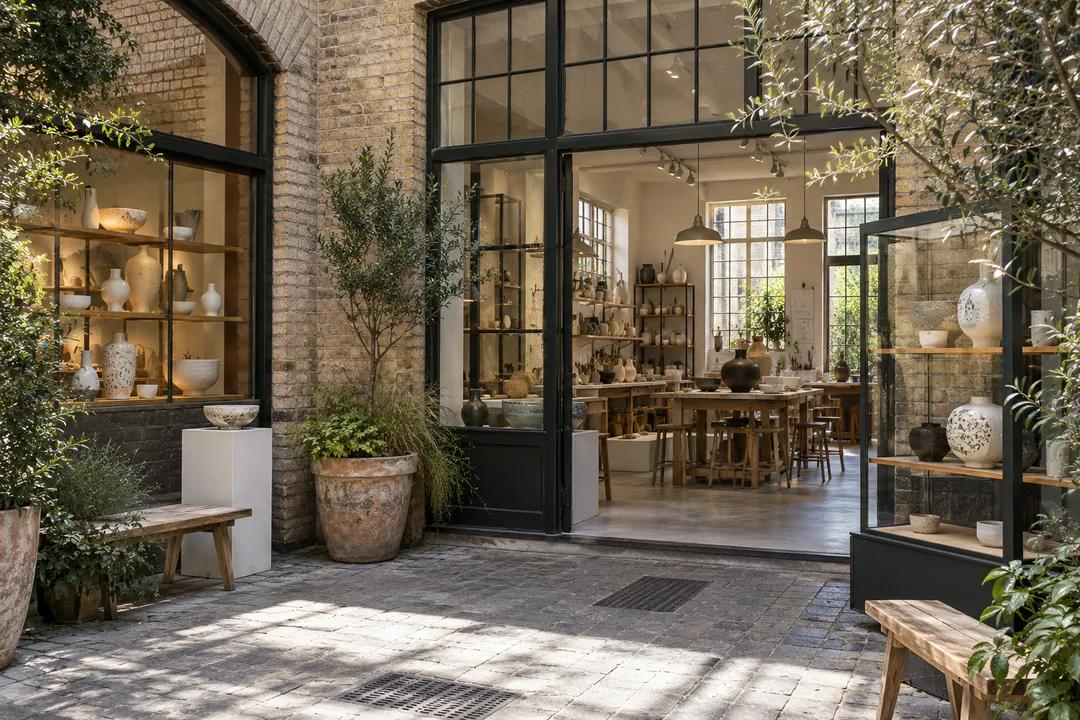
Studio Pottery London Ceramic Craft Studio: 14-Wheel Classes
Studio Pottery London at 29 Eccleston Place, London SW1W 9NF is a light-filled Victoria workshop with 14 classroom wheels, a kiln and glazing room, member space and one-to-one mentoring. It opens Tuesday–Thursday 9:30am–10pm, Friday 9:30am–8pm and weekends 10am–8pm.
Studio Pottery London is at 29 Eccleston Place, London SW1W 9NF, in the heart of Victoria’s Eccleston Yards. The studio describes itself as light-filled and spacious, designed for absolute beginners and experienced potters. That makes the address more than a map pin: it sets up a quieter kind of ceramic craft studio visit, with room to learn, pause and look at work. Arrive through the courtyard and allow a few minutes to find the studio door rather than assuming the nearest retail entrance is correct.

Fourteen Classroom Wheels, Not a Crowded Drop-In
The classroom has 14 wheels, a detail that explains the studio’s emphasis on intimate classes. The member area is separate and the central space includes a library, kitchenette and facilities for talks and workshops. In practice, that layout gives a beginner a defined workstation while still leaving room to observe other makers. Ask where your class begins, keep tools within your station and use the shared area for conversation once the wheel is stopped.
The Studio’s Learning Ladder
Studio Pottery London lists taster classes, private classes, foundation classes, pottery courses, hand-building classes, tile workshops, pottery painting, master classes and kids’ classes. The range lets you choose an entry point instead of forcing every visitor into wheel throwing. A taster is useful for testing the feel of clay, while a foundation or course schedule makes more sense if you want recurring technique. Read the class description for the method; “ceramic craft studio” can mean very different work across the menu.
One-to-One Mentoring in a Resident Potter’s Space
The studio says its resident potter welcomes members and students into a private studio for one-to-one throwing and mentoring sessions. That is a distinctive benefit for a learner who understands the basics but cannot diagnose a recurring problem. Bring one or two pieces, explain the step where the form changes, and ask for a correction you can practise alone. Mentoring works best when it is specific; a broad request to “get better” gives you less to take back to the wheel.
Look at the Vitrines Before You Make
Curated window and vitrine displays show historic and contemporary ceramics, and the studio says pieces are for sale to visitors. Use that display as a visual exercise before class: notice how a rim, foot ring or handle changes the silhouette, then choose one feature to investigate. Do not copy a finished object mechanically. The point is to notice decisions and ask the teacher how a similar effect might be built with your own level of control.
The Kiln and Glazing Room Are Part of the Lesson
At the rear of the workshop, a kiln and glazing room are monitored by an in-house technician. That arrangement makes the post-wheel stages visible rather than mysterious. Ask how long your work needs to dry, where glazing instructions are posted and how finished pieces are collected. A glaze decision should follow the clay body and form, not only the colour in a photograph. Leave enough time after throwing to clean your tools and understand what happens next.
Opening Hours That Suit a Working Week
The studio lists Tuesday through Thursday 9:30am–10pm, Friday 9:30am–8pm, Saturday and Sunday 10am–8pm, and Monday closed. Those hours make an evening class possible without turning the visit into a late-night commute, while weekend blocks suit a longer hand-building session. Use the published hours for arrival planning, but use your booking confirmation for class access. A general opening window does not replace a reserved lesson or a member induction.
A Victoria Route That Keeps Things Unhurried
Eccleston Yards gives you a compact follow-up walk after clay. Browse the courtyard, then head toward Victoria’s garden squares or the station area for a coffee before travelling home. Keep your route short if you have just glazed work or are carrying tools. The studio’s calm central area is also a better place for a post-class conversation than a crowded street: write down what your hands learned while the sequence is still fresh.
When to Choose a Private Class
A private class is worth choosing when you have a defined goal, such as preparing for a foundation course, correcting throwing posture or learning a tile technique. The studio’s own review text highlights one-to-one throwing with Eugene Chung as useful for refining technique, but the transferable lesson is to arrive with a question. If you simply want to experiment, choose a taster or hand-building class; private time works best when the teacher can focus on one problem.
Who Will Feel at Home Here
Studio Pottery London suits a city-dweller who wants a polished workshop without losing the sense of a maker community. The studio provides classroom wheels, member space, a kitchenette, library and technician support, while its displays connect practice to finished ceramics. It may feel too structured for someone seeking a spontaneous drop-in, and the Monday closure matters if that is your only free day. For everyone else, the 14-wheel classroom offers a clear, supportive starting point.
Practical Notes and Contact
The official site lists 29 Eccleston Place, London SW1W 9NF. Opening times are Tuesday–Thursday 9:30am–10pm, Friday 9:30am–8pm and Saturday–Sunday 10am–8pm, with Monday closed. Wear washable clothes, arrive before the class, and ask about the kiln timeline before you leave. Keep the phone number for access questions; the booking email is the better place for class-specific details.
The Victoria Answer
If your search for a ceramic craft studio near me points toward Victoria, Studio Pottery London offers a concrete reason to choose it: 14 classroom wheels, a monitored kiln and glazing room, a resident potter’s private studio and a light-filled community layout. Start with the method that interests you, use the displays to sharpen your eye, and let the workshop’s long opening hours make regular practice possible instead of treating pottery as a one-off souvenir activity. The resident potter, member library and curated ceramic displays make this a workshop for steady practice, not a quick paint-and-take attraction. The studio’s central location also makes scheduling easier for people who work nearby. A Tuesday evening can begin with a short walk from Victoria, while a Sunday session leaves room for a slower courtyard stop afterward. Keep the class as the anchor, and let the surrounding route stay flexible until your hands are clean and your pieces are safely labelled.
Ask Karpo for more information.
Keep reading
- Richmond Park Sunset Viewing Planner: Deer Meadow Horizons
 South Bank Sunset Viewing Planner: Thames Riverside Walks
 Parliament Hill Sunset Viewing Planner: London Heath Vistas