 Brixton Cozy Board Game Cafe Finder for Warm London Days
Weekend Plans

Crown Works Ceramic Craft Studio: £60 Bethnal Mug Class
Crown Works Pottery at 11-12 Crown Works, Bethnal Green, offers a £60 two-hour mug taster with one fired pot included and classes capped at ten students.
Crown Works Pottery sits at 11-12 Crown Works, Temple Street, London E2 6QQ, in an old Victorian mews near Bethnal Green. Its official taster listing gives a clean beginner offer: a two-hour mug handbuilding class costs £60, one pot per attendee is included, and the studio fires and glazes it for you. Classes are capped at ten people. That is the useful answer for a ceramic craft studio search: this is a small, taught workshop with a defined object and a post-class kiln stage, not a walk-in room where you paint a blank ornament. Crown Works opens Monday to Friday 10:00–13:00 and 14:00–17:30, then Saturday and Sunday 9:30–13:00.
A quiet mews with a working history
The studio’s story is less about a polished retail front than about a working teaching environment. Crown Works says it is run by potter Giulietta Hextall in East London, with a warm space full of artists’ work at different stages. The official about page describes two main teaching rooms: one for throwing and one for handbuilding. That division gives the place a useful clarity. You can see that pottery is not one skill with one machine, it is a family of methods that ask for different kinds of attention. The old mews setting adds character, but the real reason to visit is that professional potters teach in a room where making is still visibly happening.
What the £60 mug taster includes
The £60 handbuilding taster is specific enough to plan around. The teacher demonstrates slab-building, then you shape a mug with a handle and your own textures. One pot is included in the fee, and each additional piece kept costs £10 to cover material and firing costs. The official class description also says the maximum is ten people. That is an important scale for a beginner: there is enough company to see other solutions, but not so much that every question has to wait for a turn. Treat the included mug as the brief, not a limit on imagination. Make one object with a comfortable rim, a stable base and a handle you can actually use.
Why ten people is the right number
Crown Works is a good place to decide whether you prefer handbuilding or throwing because the studio teaches both. Its tasters include a two-hour wheel session at £70, while the mug handbuilding option is £60. The distinction is not only about price. Handbuilding lets you build a form through slabs, seams, textures and a handle, throwing asks you to control a spinning mass and respond to pressure. If the idea of a useful mug appeals more than the drama of the wheel, choose the handbuilding taster. If you want to understand centring and pulling walls, book throwing. The studio’s range of weekly, one-day and longer courses means a taster can lead somewhere without forcing that decision on day one.
Choose handbuilding or throwing
The best beginner mug is not the one with the most decoration. Start with a proportion that feels natural in two hands, then spend your creative energy on one or two details: a thumb rest, a drawn line, a soft slab texture or a handle with a deliberate curve. The official class description encourages playful designs and notes that students often make gifts. That is a useful prompt, but remember that a handle is structural, not just visual. Ask how thick it should be, where it joins the body and how much shrinkage to expect. A small, well-considered mug will teach you more than a complicated shape that collapses under its own ambition.
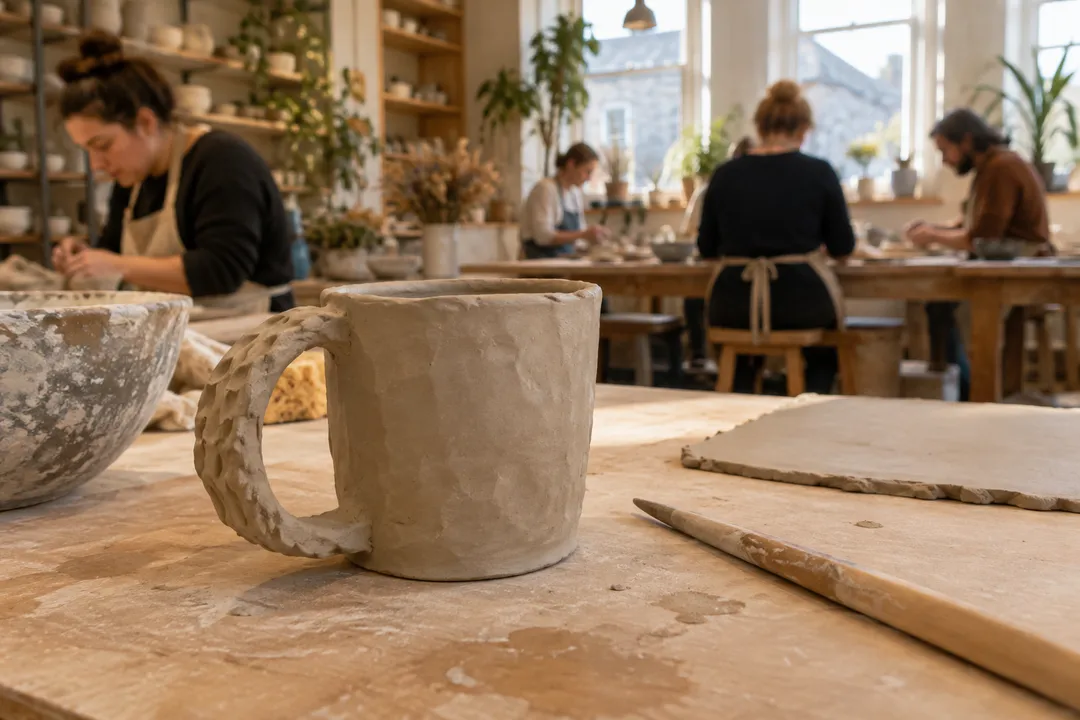
The pot you should actually make
The studio’s regular opening note contains a small but important operational rule: it closes daily from 13:00 to 14:00 for pickups because the team is on its lunch hour. That tells you how to behave in a working pottery. Do not treat the doorway like a museum entrance during the break, and do not arrive at the exact end of a public window expecting a full tour. The contact page also says visitors should press 11 and then the bell key on the silver keypad to the left of the black gate. Save that instruction before you go. A mews studio rewards prepared arrivals, searching for the bell while carrying wet clay is avoidable friction.
The studio’s practical etiquette
After the two hours, the mug leaves your hands but not the story. Crown Works fires and glazes the included pot, and the separate £10 charge applies if you decide to keep additional pieces. That process makes the class a useful lesson in restraint. Choose the one object that deserves the kiln, then let the technicians do their work. The official site does not promise a same-day collection, so keep the firing stage in mind when planning gifts or travel. A fired mug can change in colour, scale and surface, the finished result is evidence of the material process, not a printout of the wet clay. That delayed reveal is part of why this class feels like pottery rather than decoration.
Let the firing be part of the story
Bethnal Green works well as a post-class walk because the studio’s Victorian-mews setting opens onto a neighbourhood with a strong mix of old brick, small workshops and busy main-road movement. Keep the route loose. Walk away from Temple Street, take in the changing textures around Bethnal Green, and stop when your hands have dried and the class has settled. If you are meeting friends, agree on one nearby landmark rather than booking a second timed activity, a two-hour class can run emotionally longer when everyone is absorbed. The most useful visual exercise is to look for handles, rims, patched walls and repeated patterns. Those details translate directly into the next pot.
A Bethnal Green route after class
Before booking, save the address as Crown Works Pottery, 11-12 Crown Works, Temple Street, London E2 6QQ. The official studio page lists regular hours Monday to Friday 10:00–13:00 and 14:00–17:30, and Saturday to Sunday 9:30–13:00. The site publishes Giulietta@crownworkspottery.com rather than a phone number, so use the email for a question about access or collection. The class pages publish dated sessions, including the two-hour mug handbuilding format and the two-hour throwing taster. Wear clothes that can take clay, keep the group size in mind, and leave space in your future calendar for pickup. The door code instruction is worth saving separately from the booking confirmation.
Opening hours and the gate detail
Crown Works is the right choice for someone who wants a tangible first project, close instruction and a studio that feels like a working community. It suits a thoughtful gift, a friend who prefers handbuilding to wheel throwing, or a beginner who wants a small class rather than a crowded event. It is less suitable if you need an object immediately or want to arrive without a booked slot. The £60 price is easy to understand because it includes one fired and glazed mug, the £10 extra-piece fee tells you how the studio handles materials. If you are comparing London ceramic craft studios, Crown Works wins on intimacy and a clear, useful brief.
The honest Crown Works verdict
My honest verdict is to choose the mug taster when you want your first ceramic object to have a job after the class. The Victorian mews, two teaching rooms and ten-person cap create a calm setting, but the strongest detail is the studio’s insistence that making continues through firing and collection. Book the handbuilding route, design one handle carefully, and accept that the kiln gets the final word. Use the Karpo APP to plan a Bethnal Green afternoon around the dated class slot, not around the studio’s general opening hours. Crown Works turns two hours of clay into a small domestic object and a realistic idea of whether you want to keep learning.
Ask Karpo for more information.
Keep reading
- Brixton Cozy Board Game Cafe Finder for Warm London Days
 Islington Cozy Board Game Cafe Finder for Calm London Days
 Hackney Cozy Board Game Cafe Finder for Rainy London Days