 Richmond Park Sunset Viewing Planner: Deer Meadow Horizons
Weekend Plans
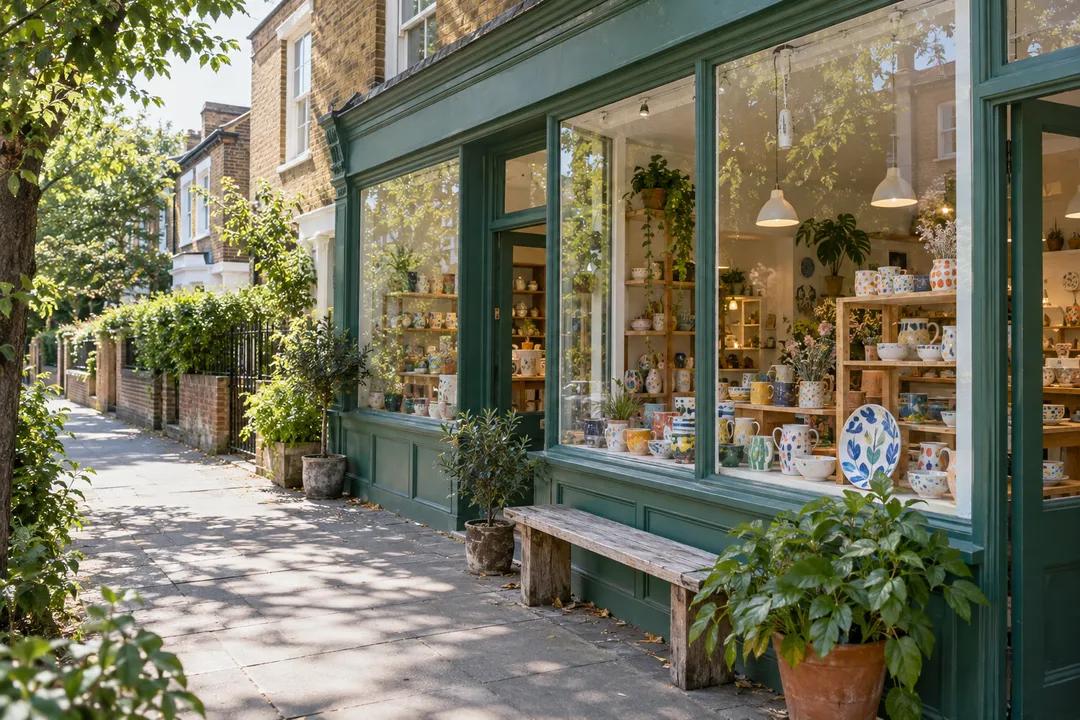
Clay Time Ceramic Craft Studio: Islington Wheel Taster
Clay Time at 168 Blackstock Road is open Wednesday to Sunday for public making, its courses follow separate timetables, so book the class, not the door.
Clay Time Pottery Place C.I.C. is at 168 Blackstock Road, London N5 1HA, with public opening times Wednesday to Friday 12:00–18:00 and Saturday and Sunday 10:00–18:00, Monday and Tuesday are closed. Clay Time’s courses follow their own timetables, so the practical answer is to book the specific workshop rather than assume that public opening hours equal a wheel lesson. The studio offers adult and children’s pottery, wheel throwing, handbuilding, plant-pot workshops and painting of ready-made ceramics. That range makes it a friendly ceramic craft studio for mixed-experience groups, provided everyone chooses the same kind of session before arriving.
A community studio, not a novelty counter
Clay Time describes itself as a not-for-profit community interest company, and that mission shows up in the breadth of the programme. The official about page welcomes adults and children of all ages and skill levels, with staff offering one-to-one assistance. It is a different proposition from a members-only production studio. You can come to learn, make, paint or bring a group, and the same room has to support several kinds of confidence. For a first visit, that makes the studio less intimidating, but it also means you should be clear about your goal. A wheel taster, a handbuilding workshop and a paint-ceramics booking are three different experiences even though all involve clay.
The public hours versus the class timetable
Start with the timetable, not the Instagram image. Clay Time lists Islington beginners’ wheel throwing, improvers’ wheel throwing, one-day throwing courses, an introduction to pottery techniques, wheel-throwing tasters and plant-pot heads. The site also lists Highgate programming at a separate address, so Blackstock Road is not interchangeable with every Clay Time class. If you are new, choose the Islington beginner or taster route, if you already know how to centre clay, an improver or one-day course will make better use of the visit. A group should agree on one format before booking. The studio can host parties and events, but a social booking works best when the activity is chosen deliberately rather than left vague.
Choose your first kind of clay
A wheel taster should give you a first vocabulary: wedge the clay, centre it, open the form, pull the wall and learn what pressure does. Clay Time’s public programme makes that sequence accessible, but the class page—not the general homepage—is where the duration and session details belong. Do not promise yourself a perfect bowl before you have felt the clay move. Use the first attempt to notice how quickly the wall becomes thin, then repeat one manageable form. Ask the teacher whether the class includes firing and collection, because the public site presents several formats with different outcomes. The point of the taster is not to prove talent, it is to learn whether your hands enjoy the feedback.
What the wheel taster should teach
The Friday-evening Plant Pot Heads workshop is a strong alternative for someone who finds the wheel too intense. Clay Time describes it as a two-hour handbuilding workshop for beginners, focused on learning basic handbuilding and making a plant pot. That is a more forgiving brief: slabs and joins give you time to think, and a small pot can show personality through shape, face-like details or texture without requiring perfect centring. Choose it for a first date with clay, a friend who likes design, or a maker who wants an object with a clear home after firing. The honest trade-off is that handbuilding will not teach wheel control, so choose based on the skill you want rather than the photograph you like.

The case for a plant pot
Painting ready-made bisque is another legitimate Clay Time route, but it answers a different search intent. The site says the studio keeps blank pieces such as tiles, cups, plates, animals and other forms that visitors can paint, then fires them in the kiln for collection. That is useful for children, mixed-age groups and anyone who wants colour more than forming technique. It also means you should not describe a painting booking as a wheel class. Ask what the blank piece is, how many coats are expected and when the finished item can be collected. If your group contains both a clay beginner and a confident painter, split the expectations before the session so nobody feels they booked the wrong experience.
Painting is a different promise
The most important arrival rule is simple: public opening hours are not a substitute for a course booking. Clay Time explicitly says course timetables vary from the public hours and that participants receive their own timetable. Save the booking confirmation, check whether the session is at Islington or Highgate, and allow time for the ten-minute walk from Finsbury Park or the five-minute walk from Arsenal listed on the official location page. If a class is full, do not turn up hoping for a spare wheel, choose another date or a public painting option. Bring clothes that can take clay and keep your hands free for tools. A prepared arrival leaves more attention for the making.
How to avoid a wasted arrival
Blackstock Road gives you a compact North London reset after the session. Start with the studio, then walk toward Finsbury Park if you need air and a longer line of sight, or keep to the local streets when you are carrying a damp piece. The route does not need another paid attraction. Notice the details that pottery shares with the neighbourhood—painted signs, tile patterns, brick repairs, plant containers and the way light changes on shopfronts. If you booked an evening workshop, keep the walk short and let the class be the main event. If you came on a Sunday, the public opening window gives you more flexibility, but the booked timetable still controls the activity itself.
A short North London reset
For the Islington studio, use Clay Time Pottery Place C.I.C., 168 Blackstock Road, London N5 1HA. The official public hours are Wednesday to Friday 12:00–18:00 and Saturday and Sunday 10:00–18:00, Monday and Tuesday are closed. Finsbury Park is listed as a ten-minute walk and Arsenal as five minutes, with buses 4, 19 and 236. The studio’s course pages vary in length and content, so read the exact booking description for the wheel taster, one-day course or plant-pot workshop. The key practical distinction is between being allowed through the door and having a place in a class.
Practical details for Blackstock Road
Clay Time suits families, mixed-skill friends, first-time makers who want a welcoming community space, and visitors who prefer choosing among forming and painting rather than committing to one studio identity. It is less suited to someone who wants a quiet professional membership floor or a guaranteed same-day finished pot. The not-for-profit model and broad programme are strengths, but they make the booking details more important. Select Islington, read the class format, and treat the public hours as context. If you are comparing London ceramic craft studios, Clay Time is the flexible, low-pressure option: wheel throwing for technique, handbuilding for an object, and bisque painting for colour.
The honest Clay Time verdict
My honest verdict is that Clay Time works when you want the first step to feel manageable. The Blackstock Road address, clear public hours and broad programme reduce the fear of choosing the wrong kind of pottery, as long as you read the timetable carefully. Book a wheel taster if you want technique, Plant Pot Heads if you want a forgiving handbuilt object, or bisque painting if your group wants colour and a simpler outcome. Use the Karpo APP to plan the route from the correct tube station and keep the class time protected. Clay Time’s best feature is not one signature object, it is giving different makers a sensible way in.
Ask Karpo for more information.
Keep reading
- Richmond Park Sunset Viewing Planner: Deer Meadow Horizons
 South Bank Sunset Viewing Planner: Thames Riverside Walks
 Parliament Hill Sunset Viewing Planner: London Heath Vistas