 Clapham Board Game Night Finder: New to London Meetups
Weekend Plans

City of London Carol Concert Evening Planner: Weekday Routes
Plan a City of London carol concert evening along Bow Lane and Watling Street, pairing Wren guild church choirs with cosy alley wine vaults.
When the trading floors and architectural studios around Bank and Cheapside empty out on a December weekday, the Square Mile undergoes one of London's quietest seasonal transformations. My studio colleagues Dev and Hannah, along with our violinist friend Theo, stepped out of a glass lobby near Poultry into the narrow pedestrian cut of Bow Lane just as guild church bells began ringing across the rooftops. Using a carol concert evening planner tailored to the City of London requires a completely different mindset from weekend West End outings: here, historic Portland-stone Wren churches, medieval guild chapels, and timber-panelled livery sanctuaries host rush-hour and twilight choral services designed for people transitioning straight from desk to pew. Before our group met at the corner of Watling Street, we opened the Karpo APP to sort weekday chamber choir programmes across the Square Mile and pinpoint which tucked-away wine vaults and tavern snugs stay lively once the office towers go dark.
Trading Glass Office Towers for Guild Church Choirs Along Bow Lane
Unlike the sprawling tourist avenues of central Westminster, the City of London packs dozens of compact stone sanctuaries into a tangle of medieval alleys between Cheapside, Cornhill, and Cannon Street. Many of these guild and ward churches were rebuilt with soaring Corinthian columns, gilded plasterwork ceilings, and carved oak organ cases that turn a twenty-voice professional consort into an enveloping acoustic experience. Because weekday services in the Square Mile cater to livery companies, legal chambers, and city workers, the repertoire often leans toward renaissance motets, crisp brass fanfares, and traditional nine-lesson formats that wrap up in time for a relaxed dinner.
Theo pointed out how differently each pocket of the Square Mile feels once dusk settles. Around Bow Lane, Garlickhythe, and College Hill, narrow pedestrian passages block out the rumble of main-road traffic, so you hear the organ prelude spilling through leaded casement windows while you are still half a block away. Further east near Leadenhall Market and Bishopsgate, historic stone churches sit right beside soaring steel arches, creating a dramatic contrast when you step from neon-lit walkways into a nave lit entirely by brass chandeliers and beeswax tapers.
If your group wants a brisk, uplifting singalong with trumpet descants and familiar carol sheets, target the larger parish sanctuaries near Ludgate Hill or Moorgate where city community choirs pack the central aisles. If you prefer meditative candlelight and intricate four-part harmony without crowd noise, filter your evening options in the Karpo APP for smaller guild churches tucked off Aldermanbury, Lombard Street, or Foster Lane, where chamber ensembles perform within arm's reach of the front pews.
Reading Boxed Pew Acoustics Under Timber Ceilings and Wren Domes
Stepping inside a City of London Wren church brings you face to face with seating layouts you rarely encounter elsewhere—most notably high-sided oak box pews, raised wardens' stalls, and three-sided wooden galleries supported by classical pillars. When Dev, Hannah, and I arrived with our work satchels and winter overcoats, those deep boxed enclosures proved ideal for stowing bags neatly beneath the bench without blocking narrow walkways or tripping choristers processing with lanterns.
Acoustically, plaster domes and flat coffered timber roofs behave very differently from high gothic vaulting. Instead of a long, cavernous echo that blurs rapid vocal runs, a Wren interior reflects sound directly off the dark wood wainscoting and clear leaded glass, giving soprano solos and harpsichord continuo remarkable clarity. To get the richest balance between choir voices and the west-gallery organ pipes, choose a bench about two-thirds of the way down the nave rather than sitting directly beneath the organ loft, where pedal notes can overpower the verses.
Skip taking a seat right beside the tall clear-glass south windows or the unlined vestibule screen if a December gale is blowing off the river. Even with historic brass radiators ticking along the walls, glass panes cool the side benches quickly, whereas the inner pews framed by oak panelling stay noticeably toastier. Keep a silk or merino scarf draped over your shoulders, switch laptop bags to silent buckles before the opening bidding prayer, and hold your song-sheet leaflet at chest height so the acoustics carry your voice forward.
Pivoting Into Watling Street Wine Vaults and Leadenhall Arcades
Planning food around a City of London carol service comes down to one crucial neighbourhood rule: weekday kitchens and weekend closures follow the rhythm of the financial district rather than standard residential hours. On a Tuesday, Wednesday, or Thursday evening, brick-vaulted wine cellars along Bow Lane, timbered taverns on Watling Street, and subterranean chop houses near Cornhill buzz with warm post-concert energy. Come Saturday or Sunday night, however, half of those narrow lanes pull their shutters down early, which can strand an unprepared group on an empty pavement.
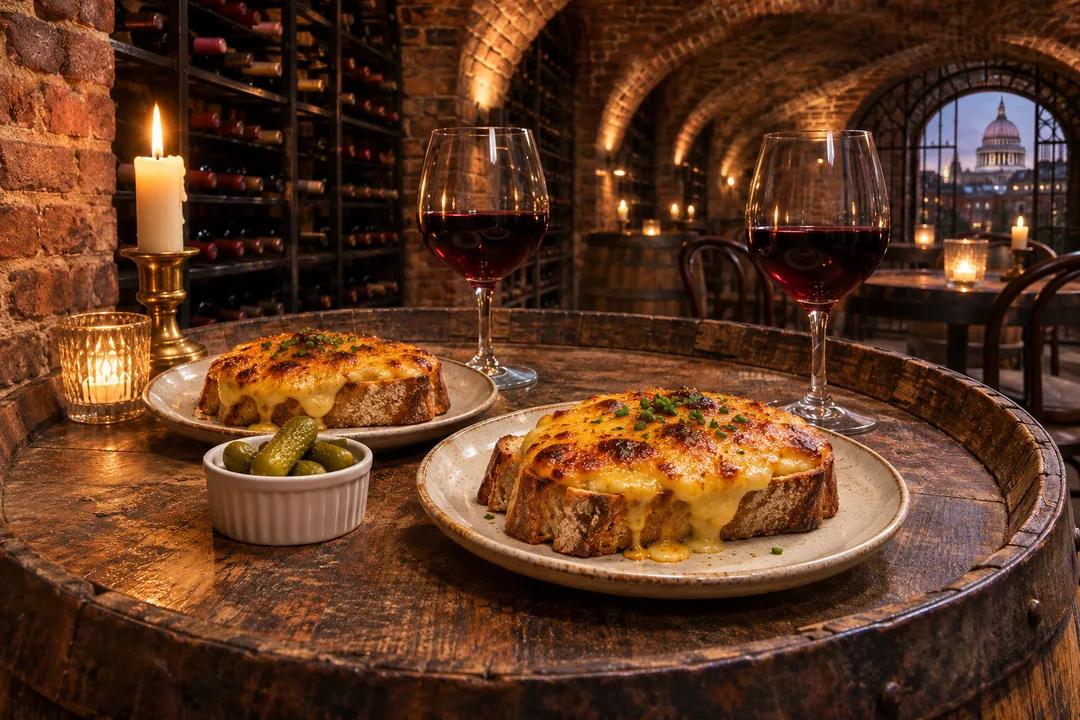
Because our quartet met on a weekday twilight, we headed straight from the church porch into a vaulted brick wine parlour off Watling Street where candle stubs dripped down green bottles and wooden booths held the warmth of the kitchen. Instead of waiting for a slow three-course meal, we ordered plates built for sharing over conversation—bubbling Welsh rarebit on thick sourdough, potted brown shrimp with nutmeg butter, charcuterie boards with pickled walnuts, and a carafe of cellar-temperature Bordeaux. That combination satisfies cold-weather hunger immediately while leaving everyone free to catch an evening train from Cannon Street or Bank.
When you plan a weekend carol outing in the Square Mile, use the Karpo APP before you leave to route your supper toward the lively edges of the district rather than the quiet central alleys. Walking ten minutes east toward the covered Victorian arcades of Leadenhall and the bistros around Liverpool Street, or heading west past Fleet Street toward Blackfriars, guarantees welcoming dining rooms and glowing pub hearths even when the inner banking lanes are asleep.
Tracing a Quiet Lantern Route From Cheapside to the River Walk
After the final blessing and the hum of the organ blower fading into silence, the City of London rewards a slow architectural walk before anyone heads home. Without daytime delivery vans or commuter crowds, the medieval street grid between Cheapside and the Thames feels like an open-air stage set. We buttoned our coats at the church steps, turned down College Hill past carved stone doorways associated with old merchant houses, and followed the gentle downhill slope toward Queenhithe and the riverfront.
Emerging onto the riverside walkway near Millennium Bridge gives you an uninterrupted panorama of St Paul's dome illuminated against the night sky behind you and the shimmering reflection of Bankside across the water. Pausing by the iron river parapet for ten minutes lets the rush-hour tension drop away completely while the chorus of O Come, All Ye Faithful still rings in your ears. From there, colleagues splitting toward different corners of London can easily reach Mansion House, Blackfriars, or Monument without backtracking through busy junctions.
Whether you are organizing a low-key festive outing for studio teammates or meeting a friend after work for polyphony and rarebit, open the Karpo APP to map your Square Mile carol concert evening. By pairing the right Wren guild church acoustic with an open alley wine vault and a tranquil lantern walk to the river, you turn an ordinary winter weeknight into a memorable London ritual.
Ask Karpo for more information.
Keep reading
- Clapham Board Game Night Finder: New to London Meetups
 Marylebone Board Game Night Finder: Baker Street Mysteries
 Notting Hill Board Game Night Finder: Two-Player Rainy Dates