 Brixton Christmas Light Up Walk Planner: Rainy Arcades
Free Things to Do
Little Venice Canal Towpath Walk Planner for Slow Sundays
Plan a Little Venice canal towpath walk for a parent who walks slowly: flat waterside stretches, bench stops by Browning's Pool and a gentle loop to Paddington.
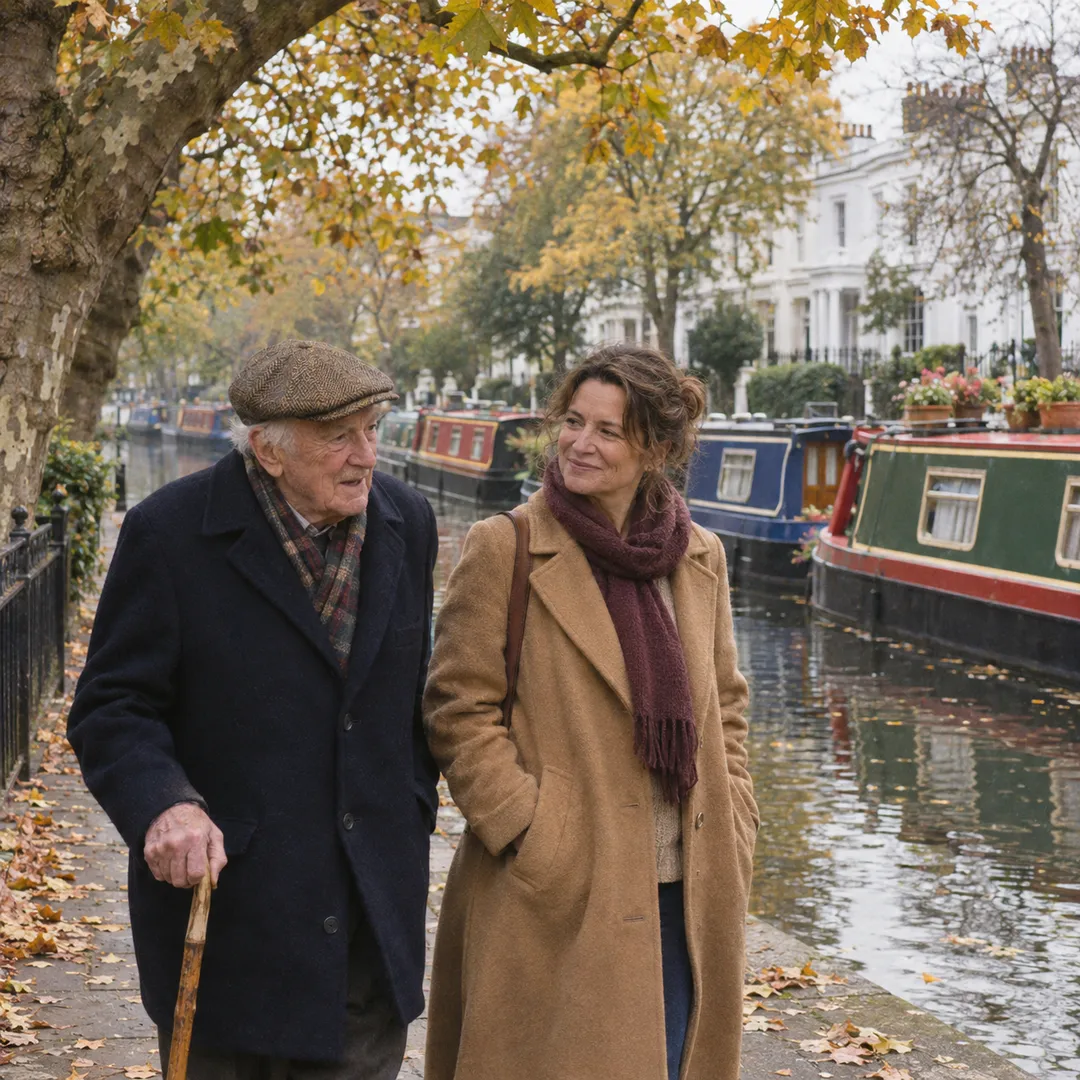
Little Venice is where two of London's quieter waterways meet, and it may be the kindest stretch of canal in the city for someone who no longer walks fast. Picture a daughter planning a Sunday outing for her father, who uses a stick and tires after twenty minutes on his feet. This canal towpath walk planner keeps the route flat, short and full of places to sit, so the morning is about the boats, not the distance.
Why Little Venice Works for a Slow Walk
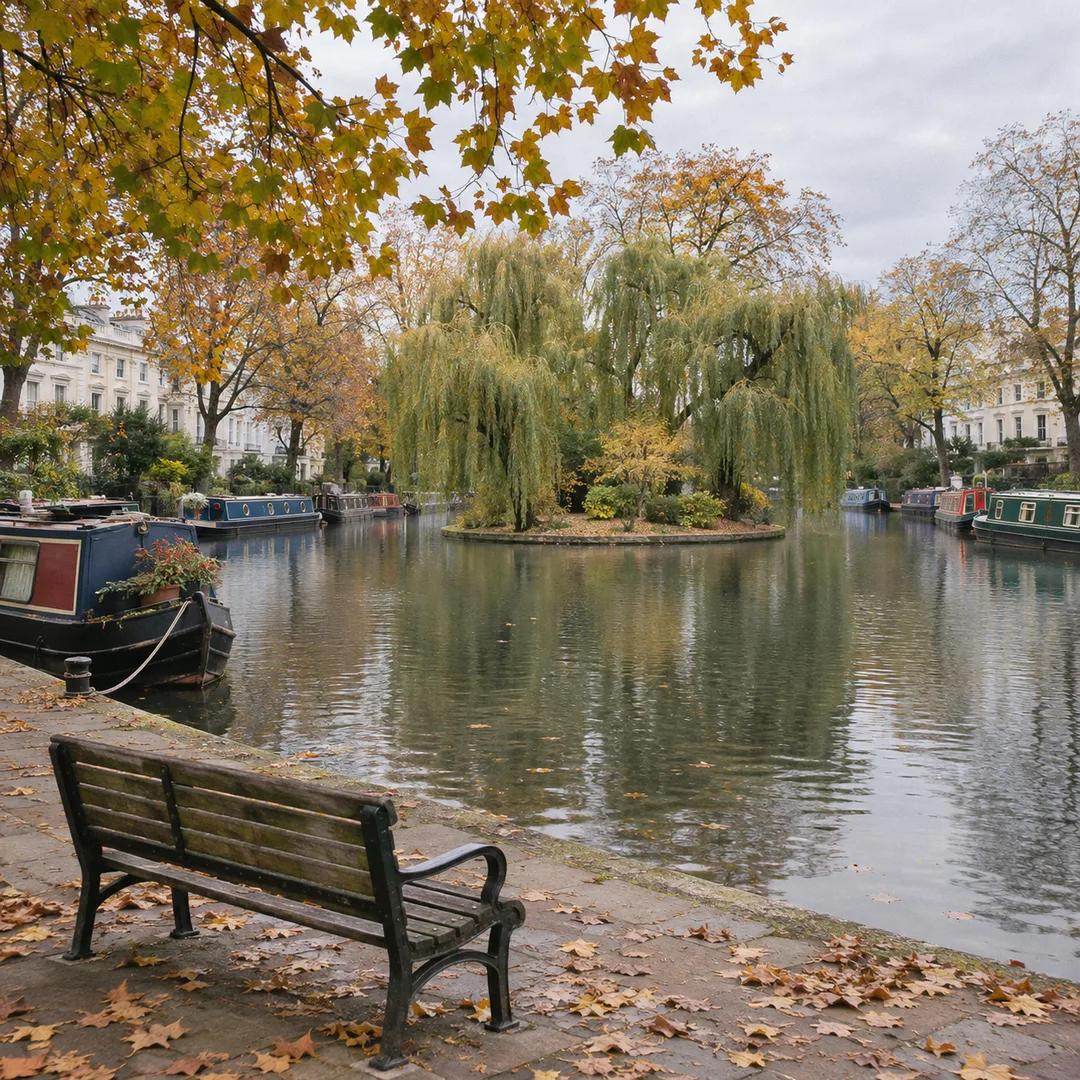
The pool at the heart of Little Venice is wide and calm, framed by white stucco houses, tall plane trees and a small island of willows where water birds nest. Narrowboats are moored along both banks, many of them homes, with plant pots on the roof and wood stoves glowing through small windows in winter. Nothing here asks you to hurry. People sit, watch the water and let their dogs sniff the edges.
For a parent with a stick, the real advantage is the ground. Much of the towpath around the pool and toward Paddington is level, with few steps, and the canal itself sets a natural speed. Boats pass at walking pace or slower. There is always something to look at within a few metres, which makes frequent pauses feel like part of the plan rather than a sign that someone is struggling to keep up.
A Short Story of the Pool
The pool where the two canals join is often called Browning's Pool, after the poet Robert Browning, who lived close by and is said to have loved the view. Some people credit him with the name Little Venice; others say it was Lord Byron, and nobody seems quite sure. Either way, the comparison is affectionate rather than accurate, and local people tend to smile when visitors repeat it.
What is certain is that these waters were once working routes, carrying goods into the city by horse-drawn barge. The towpath you walk on was built for those horses. Telling that story as you go gives an older companion something to picture, and many of them will remember the days when canals were still grimy and half forgotten, long before they became the calm green corridor you see now.
Planning the Route Around Benches
Start at the pool rather than walking toward it from far away. Arriving close by means the first view comes early, while legs are fresh. Find a bench by the water first, settle in for a few minutes and agree on the plan together. Many older walkers prefer to know the full route in advance, including where the next rest will be, so describe it simply before you set off.
From the pool, walk slowly along the towpath on the Rembrandt Gardens side, where a small public garden sits beside the water with benches and flower beds. Sit again here. Then continue gently toward Paddington, pausing at the bridges to watch boats turn. Keep the whole loop to well under an hour of actual walking, and treat every bench as an invitation rather than an obstacle to pass.
Reading the Boats Together
Narrowboats are a gift to slow walkers because each one is a small story. Look at the names painted on the side, often in traditional lettering, and guess why the owners chose them. Notice roses and castles painted on water cans, a style that canal families used for generations. Some boats carry bicycles, firewood and tomato plants on the roof, which tells you someone lives aboard all year.
Make a gentle game of it. Ask your parent to pick a favourite boat on the way out and see whether it still wins on the way back. If an owner is sitting on deck, a friendly nod is usually welcome, but remember these are homes, so avoid peering through windows or leaning on the hulls. A quiet compliment on a well-kept boat often starts a pleasant chat.
The Gentle Loop Toward Paddington
Following the water south-east brings you toward Paddington Basin, where old warehouses have been replaced by offices and new walkways. It is a strong contrast with the soft Victorian edges of Little Venice, and older walkers often enjoy comparing the two. The paths here are wide and smooth, and there are plenty of seats along the waterfront, which keeps the walk easy even as the scenery changes.
Look out for the unusual moving bridges in the basin, designed to curl or fold open so boats can pass. Even when they are still, they make a good talking point. From here, the station is close, which gives you a simple exit if energy runs low. If your parent still feels strong, turn back toward the pool and finish where you started, so the last view of the day is the calm one.
Adapting the Walk for Mobility and Weather
Plan for changes in energy rather than one fixed route. If your parent tires quickly, the walk around the pool alone is enough for a lovely morning, with two or three benches and a long sit by the water. If they feel good, add the Paddington stretch. Decide together at each bench rather than pushing on, and keep a short taxi or bus ride home as an easy option.
Watch the surface after rain. Fallen leaves in autumn can be slippery on stone edges, and the towpath is shared with cyclists and runners, so walk on the inside, away from the water, and keep the stick hand free. Cold mornings call for a warm hat, gloves and a flask of tea. On a bright day, a cap and water matter more than you might expect beside reflective water.
Sharing the Towpath Kindly
Towpaths in London are narrow in places and busy at weekends, which can feel unsettling for a slower walker. Choose an earlier hour on Sunday, when the path belongs mostly to dog walkers and quiet couples. Walk side by side only where the path is wide, and fall into single file where it narrows, letting your parent take the inside line while you walk on the water side.
Cyclists are asked to slow down and ring politely, but not all of them do. A calm word to your parent before a bike passes helps avoid sudden steps. If a bench is taken, ask kindly whether there is room to share; people at Little Venice are usually happy to shuffle along. It is a neighbourhood that values unhurried time, and a gentle approach tends to be returned.
Ending the Morning and Planning the Next One
Finish with a warm drink near the pool, where a few small cafes and a cafe on a boat look over the water. Sit facing the narrowboats and let your parent tell you which part they liked most. Often it is something small, a duck with ducklings, a painted name or a boat that reminded them of an old holiday. That detail is worth remembering for the next outing.
The Karpo APP can help you shape the next walk. Ask it for quiet canal stretches or garden paths in London with benches and short distances, save the ones that feel gentle enough, and keep a list of easy Sunday outings for the two of you. A slow walk planned with care is often the part of the week an older parent talks about most.
Ask Karpo for more information.
Keep reading
- Brixton Christmas Light Up Walk Planner: Rainy Arcades
 Hackney Christmas Light Up Walk Planner: Canal Boats
 Islington Christmas Light Up Walk Planner: Square Dates