 Brixton Christmas Light Up Walk Planner: Rainy Arcades
Free Things to Do
Hackney Wick Canal Towpath Walk Planner for Street Art Fans
Plan a Hackney Wick canal towpath walk for street art: warehouse murals on the Lee, Fish Island studios and a loop along the Hertford Union to Victoria Park.
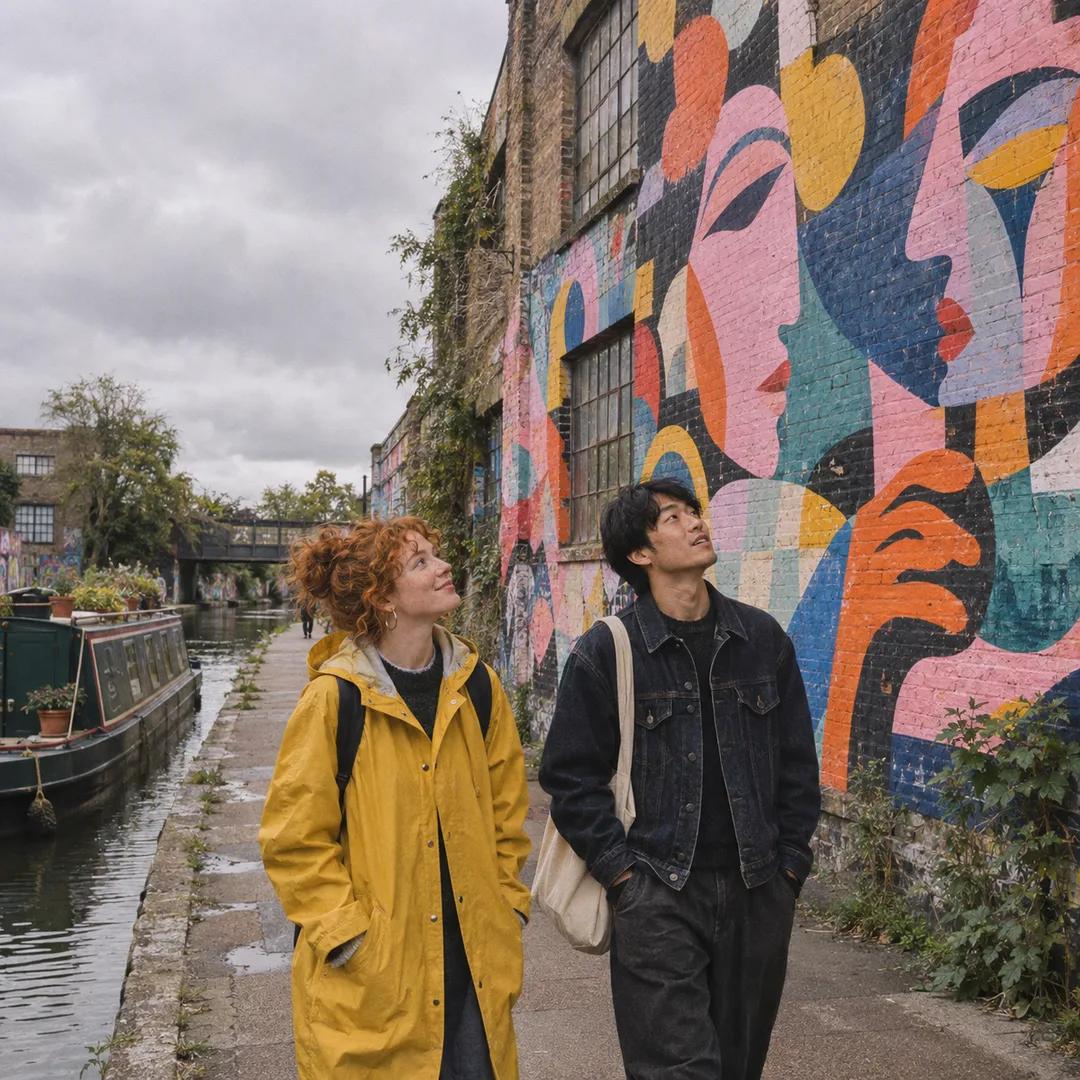
Hackney Wick has long been one of London's great outdoor galleries, and the best way to see it is along the water. Murals cover warehouse walls, studio doors open onto the towpath, and the paint changes so often that no two visits look the same. Picture two friends with a free Saturday and a camera each. This canal towpath walk planner links the River Lee, the old island of workshops and the quiet Hertford Union into one easy afternoon loop.
Why the Wick Belongs to Artists
For decades the old factories and warehouses around Hackney Wick held some of the densest communities of artists in Europe. Cheap, rough spaces became studios, rehearsal rooms and makeshift galleries, and the walls outside became canvases. The area has changed a great deal since then, with new flats and offices rising nearby, but the spirit still shows on every corner that faces the water.
Walking the towpaths here is a way of reading that history. Older pieces fade under new ones, tags overlap careful murals and small paste-ups appear between large commissions. Some walls are painted over within weeks; others are kept for years. Go with an open mind and no checklist. The joy is in noticing what is new since the last time, not in hunting one famous piece.
Starting on the River Lee
Begin by the canalised River Lee, where the navigation runs between Hackney Wick and the Olympic Park. On one bank, warehouse walls rise straight from the towpath, many of them covered in bright murals. On the other, the park opens out with trees, bridges and the great curved roofs of the sports venues. It is a dramatic contrast between rough and polished London.
Walk slowly north or south along the water first, just to get your eyes in. Stand back from the larger walls to see them whole, then come close to look at brushwork, spray layers and tiny details hidden in corners. Take a photo of each wall from the same spot, and you will have a record to compare on future visits as the paint changes.
Fish Island and the Studio Lanes
South of the main street, the patch of land known as Fish Island got its name from streets once named after fish, and it still feels like an island of workshops. Leave the towpath for a short loop through the lanes, where roller doors, workshop yards and studio buildings carry layers of paint. Look for murals on gates as well as walls, because many artists paint the doors they work behind.
On open studio weekends, which happen from time to time, some artists invite the public in. If a door is open with a welcome sign, step in quietly, look around and ask about the work. If doors are closed, respect them. People live and work here, so keep cameras pointed at walls, not windows, and avoid blocking yards where deliveries and vans need to get through.
Photographing Walls With Respect
Street art is meant to be seen, but there are a few manners worth keeping. Credit the artist when you share photos, if a signature or tag is visible. Never add your own marks to someone else's work. When someone is painting, watch from a distance and ask before filming them; many artists are friendly, but some prefer to stay anonymous and may not want faces in photos.
Light on the canal changes the walls a lot. Cloudy days give even colour and are ideal for photographing murals. Low sun in the late afternoon makes some walls glow and others fall into shadow. Bring a wide lens or step back as far as the towpath allows, but always keep an eye on cyclists, and never step backwards toward the water edge without looking first.
Along the Hertford Union to the Park
From the Lee, turn west onto the Hertford Union Canal, a short straight link that runs along the southern edge of Victoria Park. Locals still call it Duckett's Cut after the man who built it. It is much quieter than the Lee, with fewer murals and more trees, and makes a calm second half after the colour and noise of the Wick.
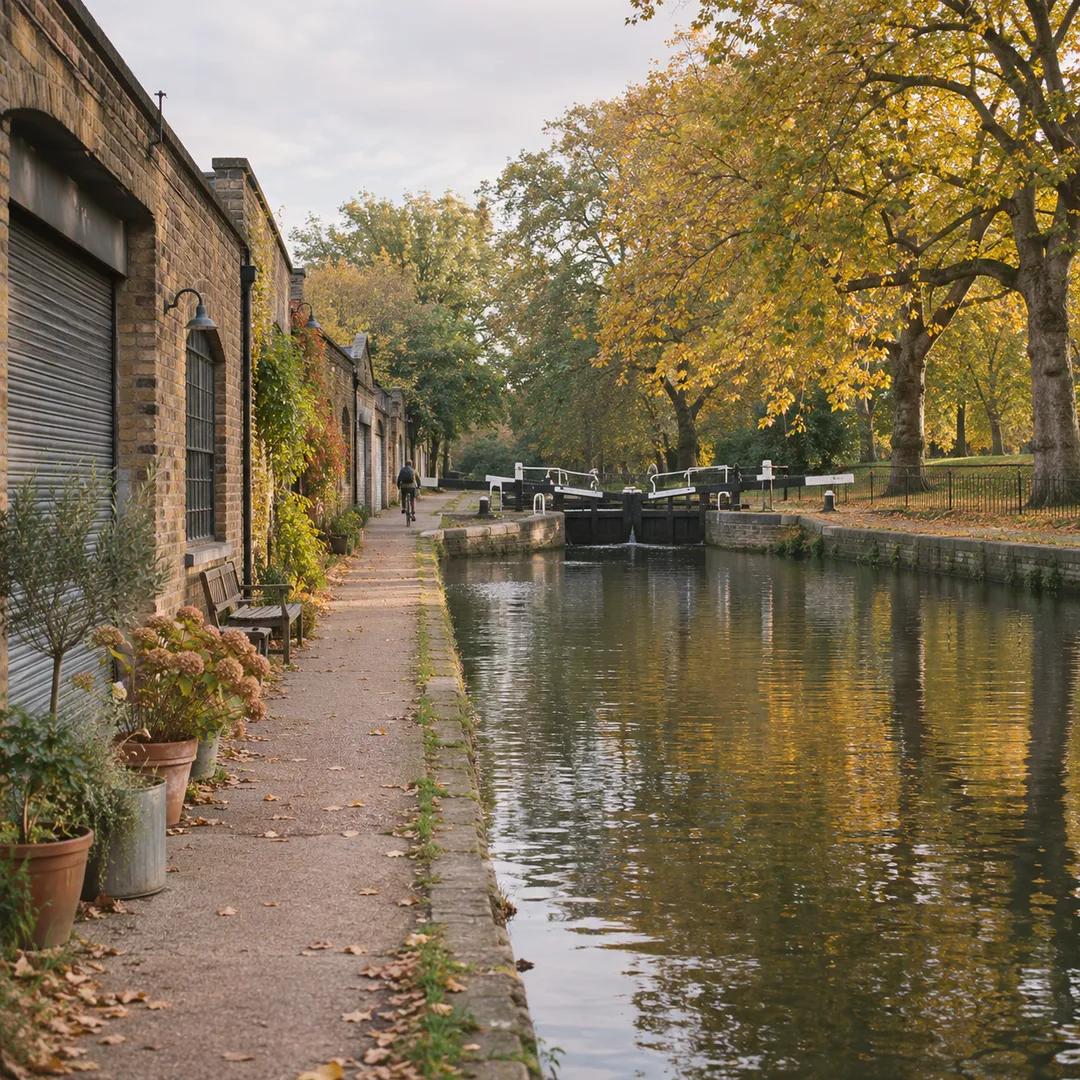
The towpath passes three locks and runs alongside the park railings. Look across at the old drinking fountains, lakes and grand trees, and notice how the mood shifts from industrial to green in only a few minutes. At the end, the canal meets the Regent's Canal near the park's western corner, and you can step into the park for a slow lap and a sit by the lake.
Practical Notes for the Afternoon
Allow two to three hours for the full loop with plenty of stops, or half that if you skip the Fish Island lanes. Comfortable shoes matter, as the path surface varies from smooth paving to rough cobbles. Paint dust and canal damp can stain, so leave favourite light clothes at home. A small backpack is easier than a shoulder bag when you are taking photos.
Saturdays are lively, with bars and food spots filling up on the water. If you prefer calm, start late morning before the evening crowds. Paths can be dark after sunset and some stretches are lonely, so plan to finish your loop while light remains. Keep left on the towpath, walk in single file at bridges and let runners and bikes pass without fuss.
Making the Walk Your Own
A good street art walk becomes a habit. Some friends come back every season and compare photos of the same walls, watching pieces appear and disappear. Others follow a single artist whose style they have learned to recognise. If you sketch, a small pad lets you copy shapes and colours you like, which teaches you far more than a quick photo ever can.
Talk about what you see as you go. Which piece made you stop? Which felt like advertising, and which felt like a message? These small conversations are part of what makes the walk memorable, and they often reveal tastes you did not know you shared. By the time you reach the park, you will have a list of walls to revisit next time.
Planning the Next Loop
Once you know the Wick, try linking it with other canal neighbourhoods. The Regent's Canal heading west toward Broadway Market and beyond has its own murals, studios and markets, and the Lee runs north toward marshes and wild open land. Each stretch has its own character, and the towpath ties them together into a long, free gallery.
The Karpo APP can help you plan those next walks. Ask it for street art stretches, studio areas and calm canal paths across east London, save the ones that catch your eye and build a list of afternoon loops for different moods. It is an easy way to keep discovering new walls without losing the joy of simply wandering by the water.
Ask Karpo for more information.
Keep reading
- Brixton Christmas Light Up Walk Planner: Rainy Arcades
 Hackney Christmas Light Up Walk Planner: Canal Boats
 Islington Christmas Light Up Walk Planner: Square Dates