 Shoreditch Comic Shop Crawl Planner: Murals to Manga
Hidden Gems & Odd Finds
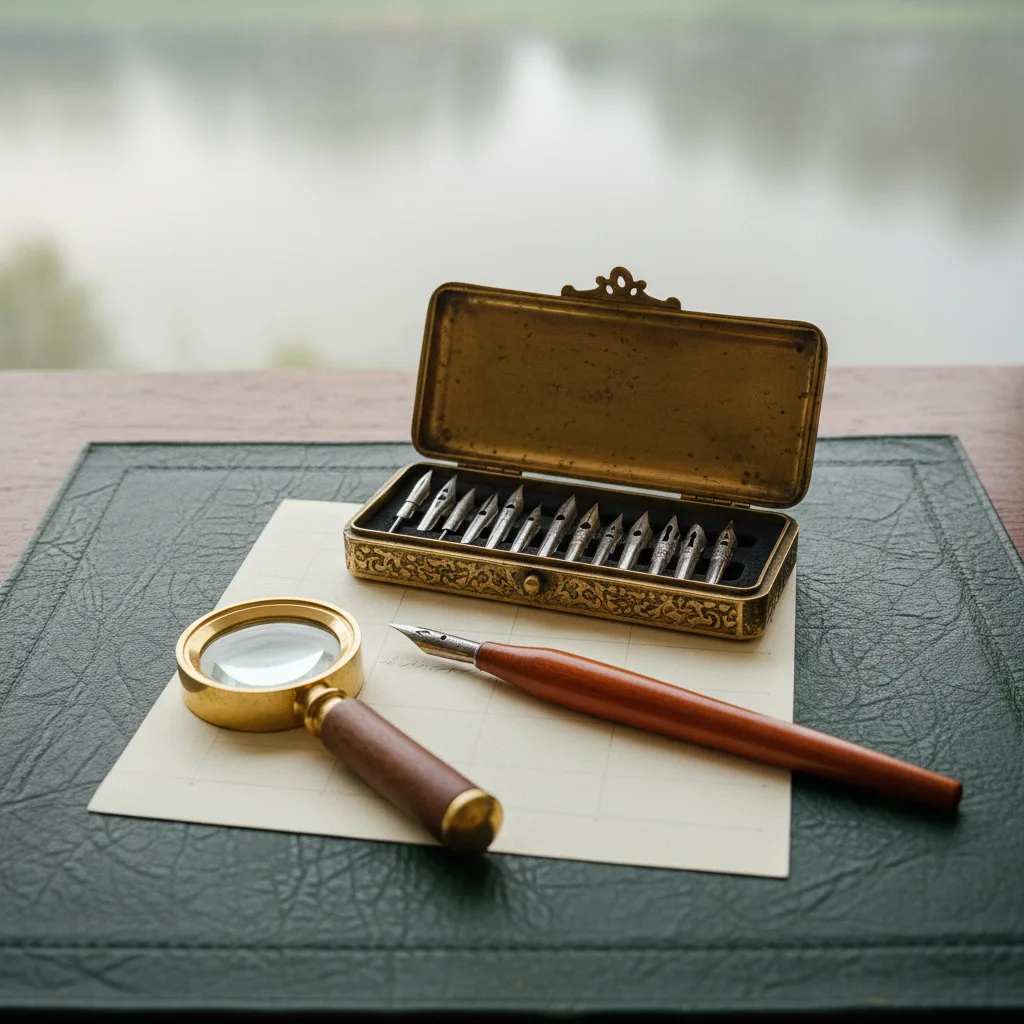
Greenwich Calligraphy Nib Flex Picker: Vintage vs Modern
Choosing between vintage-style and modern dip nibs in Greenwich means checking tine wear, rust and slit alignment before falling for an old box.
Old steel nibs have a reputation for wonderful flex, and some deserve it, but a box of vintage points is only as good as the tines inside it. A calligraphy nib flex picker in Greenwich should come armed with a loupe and a sceptical eye, because a nib that has rusted, bent or worn unevenly will never write the lines its reputation promises. Greenwich, with its covered market, maritime streets and riverside light, attracts people who love old objects, which makes careful judgement all the more useful.
Why vintage nibs attract calligraphers
Many pointed pen writers talk about older nibs with real affection. Some say the steel feels springier, the tines more finely ground, or the flex more responsive than certain modern points. Others simply enjoy using a tool with a sense of history behind it. Those qualities can be real, but they vary hugely from nib to nib, and age alone does not guarantee anything.
The honest way to think about vintage is as a lottery with good odds only if you inspect carefully. A well-preserved older nib can be a joy. A neglected one can be a scratchy disappointment. Your job is to separate the two before deciding, rather than paying for a romantic story.
Modern nibs have real advantages
Modern pointed nibs are easy to replace, consistent from one to the next, and widely discussed by teachers, so you can find guidance on how each one behaves. If you find a modern nib you like, you can keep using that exact model for years. That consistency is valuable when you are building muscle memory and want your practice sheets to be comparable week after week.
For most learners, a dependable modern nib should be the foundation, and vintage nibs the occasional adventure. If you are still learning pressure control, start with something consistent and save the old boxes for when you can tell, within a few strokes, whether a nib is good.
Reading tines under a loupe
A small jeweller's loupe turns guesswork into evidence. Look first at the point: the two tines should meet cleanly, at the same height, with no gap at the tip when the nib is at rest. Next, follow the slit back to the vent hole and check that it runs straight. A crooked slit often means the nib has been bent and straightened, which weakens its snap.

Then look at the surface. Light discolouration may be harmless, but pitting, flaking plating or orange rust near the slit can roughen the tines and change how they spread. Check the underside as well, since ink residue can hide damage. If anything looks doubtful at the tip, move on, however attractive the box or the lettering on the packaging.
The gentle flex check
If a seller or friend allows a careful check, press the nib very lightly against a fingernail or a scrap of card, never hard enough to strain the steel, and watch the tines part and close. They should open evenly and spring back without hesitation. A nib that stays slightly open after release has lost much of its snap, and its hairlines will show it.
Never test an old nib by pressing until the tines splay as far as they will go. Vintage steel can be brittle, and over-flexing even once can crack it. The goal is to see how it behaves within a normal writing range, not to find its breaking point.
Greenwich's market and riverside mood
Greenwich has a calm, layered atmosphere for browsing. The covered market brings together crafts, prints and vintage stalls, and the surrounding streets mix independent shops with views towards the river. Greenwich Park climbs behind it all, offering a quiet bench and wide views when you want to pause and look through anything you have found before deciding whether it deserves a place in your kit.
The area's maritime character suits patient looking. People here browse old maps, prints and curiosities with time to spare, and that tempo fits nib hunting. Give yourself enough daylight to inspect properly, and treat any vintage find as something to examine twice rather than snap up on impulse.
Comparing old and new side by side
The most useful exercise is direct comparison. At home, write the same word at the same size with a trusted modern nib and with any vintage nib you are considering, using identical ink and paper. Compare the finest hairline, the widest shade, and how quickly each nib snaps back. Write it three times with each so a single lucky stroke does not mislead you.
Often the difference is smaller than the legend suggests, and sometimes the modern nib simply wins. When a vintage nib genuinely writes better for your hand, you will see it immediately on the page: finer hairlines, smoother swells and a livelier return. That evidence is worth more than any description on a box.
Who enjoys this approach most
This careful vintage-versus-modern method suits collectors who want to use their finds rather than shelve them, intermediate calligraphers curious about older steel, and history lovers who enjoy the craft of pen-making. It also helps cautious buyers who have been burned before by a box of nibs that looked charming but wrote poorly.
If you are a complete beginner, you will probably get more value from a single reliable modern nib and plenty of practice paper. Vintage nibs become far more rewarding once you can recognise good flex by feel, which only comes with steady practice.
What to skip and what to do instead
Skip loose vintage nibs that show rust at the tip or a visibly bent tine, however inexpensive or unusual they seem; they are rarely worth the frustration. Also skip any assumption that an older nib will fix a pressure-control problem. Flex responds to your hand, and no steel will make inconsistent pressure look smooth.
If you leave without anything, that is a perfectly good outcome. Keep practising with your modern baseline and return another day with a sharper eye. For ideas on nearby craft shops, stationers and vintage spots around Greenwich, Karpo APP can share nearby recommendations, while you decide which places to visit and how you travel there.
Practical notes for vintage nib hunting
Pack a loupe, a soft cloth and a small lidded tin to keep any find separate from your other nibs. Write down a short description of each nib you inspect, noting tine alignment, surface condition and snap, so you can compare later without relying on memory. Daylight near a window makes the inspection far more reliable than dim indoor lighting.
At home, clean vintage nibs gently with mild soapy water, dry them immediately and completely, and avoid harsh abrasives that can scratch the tines. Store them away from damp. Once a vintage nib proves itself on your practice sheet, give it a regular place in your routine, because good old steel deserves to be used.
Ask Karpo for more information.
Keep reading
- Shoreditch Comic Shop Crawl Planner: Murals to Manga
 Bermondsey Comic Shop Crawl Planner: Zines Under the Arches
 Clapham Comic Shop Crawl Planner: Charity Shelves and Common