 Shoreditch Comic Shop Crawl Planner: Murals to Manga
Hidden Gems & Odd Finds

Soho Button Collecting Shop Walk: Historic Alleys Route
Search vintage haberdashery alleys and theatrical trimming counters across Soho. Describe what craft stops you want to find on the Karpo APP.
Narrow alleys crisscross Soho in an intricate web of creative commerce, where the living legacy of theatrical costumiers, bespoke garment cutters, and textile artisans continues to define the neighborhood character. For generations, wardrobe designers staging West End theatre productions and bespoke coatmakers from nearby Savile Row tailoring workrooms have ducked down these sheltered pedestrian passageways to hunt down elusive fastenings, specialty closures, and rare vintage trimmings. Setting out on a dedicated button collecting shop walk through these storied lanes reveals a secluded world of craftsmanship tucked discreetly behind weathered timber facades and historic bow-front vitrines. Rows of compartmentalized wooden drawers, vintage cardboard storage boxes, and amber glass display containers hold buttons crafted from carved horn, iridescent river shells, molded casein, and mid-century galalith, waiting to be sorted by discerning collectors, textile historians, and modern garment menders seeking timeless pieces for their wardrobes.
Theatrical Heritage and West End Trimming Traditions
Soho maintains an undeniable kinship with British stagecraft and performance textiles, having served for decades as the primary workshop quarter for West End wardrobe mistresses, prop artisans, and independent couture houses. When theatrical costumiers need to restore an antique period doublet, refurbish a vintage tweed jacket, or embellish an opulent opera cape, they walk these storied streets seeking authentic vintage fastenings that contemporary mass manufacturers cannot replicate. The specialized shops dotting Berwick Street, Lexington Street, and Broadwick Street carry selections that span diverse aesthetic eras, from Art Deco geometric plastics to hand-turned horn disks salvaged from decommissioned tailoring workrooms across central London.
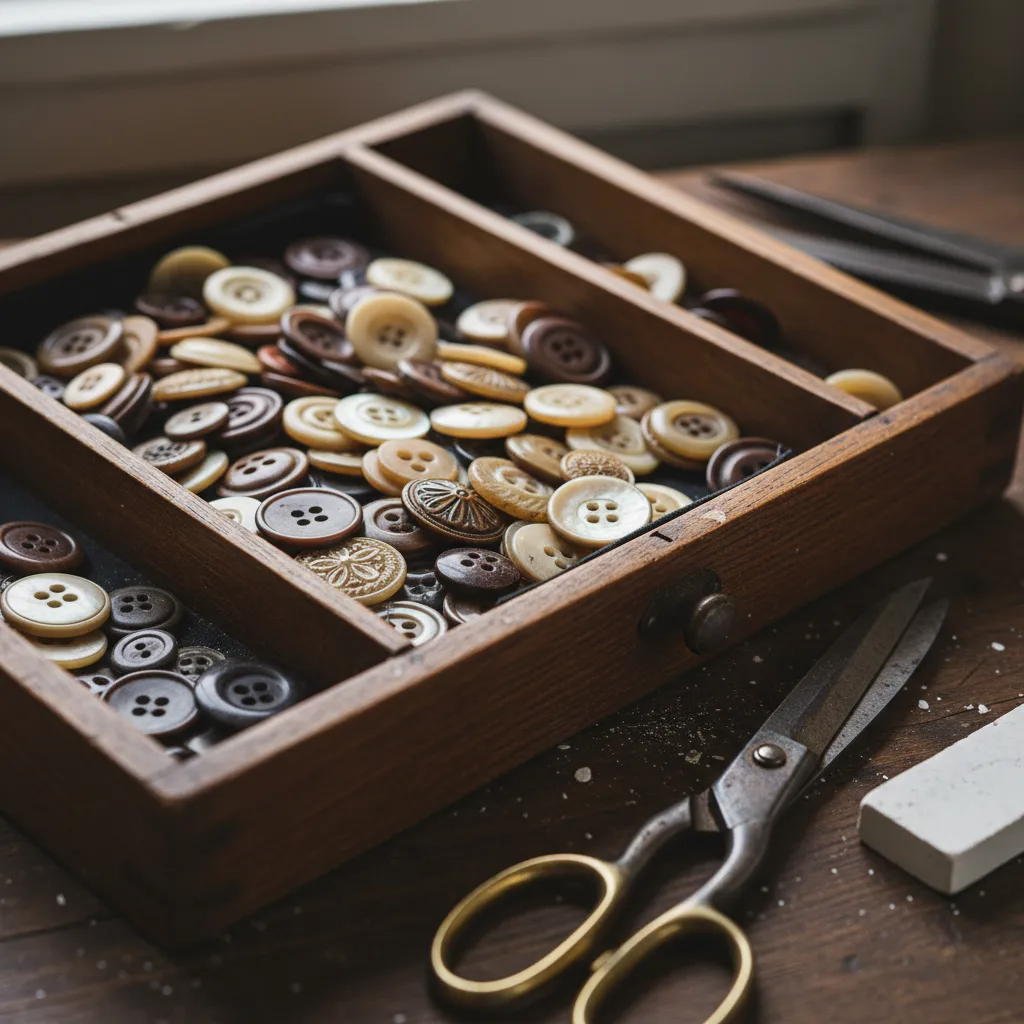
Sifting through compartmentalized trays in these atmospheric retail chambers is a tactile exercise in historical discovery. Seasoned collectors learn to recognize the gentle coolness of authentic mother-of-pearl against the palm, the organic grain patterns of carved cattle horn, and the distinctive weight of antique cast brass fasteners. Rather than rushing through display counters, knowledgeable visitors take their time examining vintage carded sets where original manufacturer labels, lithograph printing, and handwritten merchant notations provide fascinating glimpses into twentieth-century British garment history, offering insight into forgotten textile mills and haberdashery distributors.
Navigating Compartment Drawers and Collector Trays
Approaching a dedicated haberdashery counter in Soho requires a blend of patience and focused intention. Behind narrow storefront windows, long wooden display counters house countless slide-out drawers partitioned into small cubicles, each containing distinct assortments of sizes, lusters, and materials. Unlike generic craft supply outlets that package standardized plastic notions in blister packs, these independent emporiums celebrate individualized discovery, inviting hobbyists to sort through loose assortments using jeweler tweezers and felt inspection trays provided by attentive shopkeepers who know the provenance of every tray in their care.
Engaging with the knowledgeable staff behind the counter often unlocks the most rewarding treasures. Explaining your specific aesthetic focus, whether you are seeking matched suites of shanked blazer buttons, delicate iridescent buttons for silk blouses, or mottled casein discs for a hand-knit cardigan, prompts proprietors to retrieve specialized stock boxes from upper mezzanine shelving or rear storage vaults. These quiet conversations between passionate makers elevate a casual shopping stroll into an inspiring educational exchange regarding materials, casting methods, and archival preservation, enriching your appreciation of classical tailoring details.
Pairing Button Hunts with Soho Architectural Discovery
One of the greatest pleasures of mapping a button collecting route through Soho is experiencing the atmospheric architectural contrasts of this storied central London quarter. Between haberdashery stops, take time to wander down quiet pedestrian mews where cobblestone paving stones and wrought-iron carriage lamps evoke the neighborhood eighteenth-century origins. Tucking into the quiet green sanctuary of St Anne Churchyard offers a peaceful vantage point to examine your morning acquisitions under natural outdoor light, resting on shaded wooden park benches while city traffic hums faintly in the distance.
As you continue onward past vibrant vinyl record shops, traditional Italian delicatessens, and historic coffee bars, the layered identity of Soho becomes delightfully apparent. Architectural details reward observant pedestrians, from ornate glazed ceramic tiles framing heritage pub corners to cast-iron ventilation grates and Victorian brass boot scrapers set into residential doorsteps. Each winding alleyway provides seamless pedestrian connections, allowing you to string together multiple specialized notion shops and textile parlors without ever stepping into congested arterial thoroughfares, creating a wonderfully cohesive walking journey.
Curating Specialized Finds for Garment Restoration
Collecting vintage buttons is rarely just an abstract curatorial hobby; for many visitors, it represents an essential craft practice centered on repair, personal expression, and circular fashion. Bringing swatches of vintage tweed, heavy melton wool, or textured linen along on your walking tour helps ensure that the tones, weights, and diameters of prospective buttons complement your tailoring projects perfectly. A single set of four-hole horn buttons with subtle tortoiseshell marbling can transform a second-hand overcoat into a distinguished bespoke statement piece that endures for decades of regular seasonal wear.
Collectors also seek out novelty buttons from mid-century novelty cards, featuring whimsical carved animal motifs, pressed glass cameos, and vibrant vegetable ivory geometries. These miniature decorative artworks can be repurposed as distinctive cufflink conversions, brooch centerpieces, or focal fastenings on hand-stitched tote bags and knit shawls. Preserving these historic fasteners ensures that the remarkable technical ingenuity of bygone button makers continues to find practical life in contemporary handmade wardrobes, creating tangible links between past craftsmanship and modern bespoke tailoring.
Finding West End Craft Corners with the Karpo APP
While this walk highlights standout haberdashery passages in Soho, central London holds an extensive network of independent artisan purveyors, fabric merchants, and quiet coffee corners. Opening the Karpo APP allows you to describe what kind of textile supplies, notion counters, or relaxing courtyards you want to explore next and browse nearby recommendations across the surrounding West End streets. You can review authentic craft spots at your own pace and choose whichever stops fit your afternoon.
Whether you want to describe a quiet specialty roastery for a restorative pour-over coffee between browsing sessions or look up independent fabric suppliers across neighboring Covent Garden and Fitzrovia, the app returns nearby neighborhood options. You can compare different spots, decide which order to visit them, and set your own walking pace as you seek out rare vintage fastenings that bring character to your handmade attire.
Ask Karpo for more information.
Keep reading
- Shoreditch Comic Shop Crawl Planner: Murals to Manga
 Bermondsey Comic Shop Crawl Planner: Zines Under the Arches
 Clapham Comic Shop Crawl Planner: Charity Shelves and Common