 Clapham Board Game Night Finder: New to London Meetups
Weekend Plans

Botanical Garden Near Me in Enfield: E.A. Bowles' Rare Heritage Flora
Visit the eight-acre botanical garden created by legendary botanist E. A. Bowles in Enfield, North London, home to Victorian glasshouses, heritage pelargoniums, and the historic New River.
When gardeners search for an authentic, plant-lover's botanical garden near me in North London, Myddelton House Gardens at Bulls Cross, Enfield EN2 9HG stands in a class of its own. Located within the London Borough of Enfield and managed by the Lee Valley Regional Park Authority, this eight-acre heritage garden was the lifelong creation and laboratory of Edward Augustus Bowles (1865–1954). Known affectionately in horticultural circles as 'The Crocus King', Bowles was one of Britain's most celebrated self-taught botanists, garden authors, and vice-presidents of the Royal Horticultural Society. The estate remains a living museum of his botanical experiments, open to the public from Tuesday through Sunday throughout the year.
E. A. Bowles and the Creation of an Eight-Acre Plantsman's Paradise
Edward Augustus Bowles lived his entire life at Myddelton House, transforming the surrounding fields and carriage drives into an encyclopedic botanical tapestry. Unlike the grand landscaped vistas of Capability Brown or the formal parterres of royal palaces, Bowles designed his garden as an intimate sequence of microclimates tailored to the physiological demands of rare plants. He collected wild seeds and bulbs during expeditions across the Alps, the Balkans, and Mediterranean hillsides, testing their winter hardiness in the heavy clay soil of Enfield. His practical horticultural insights formed the foundation of his classic trilogy 'My Garden in Spring', 'My Garden in Summer', and 'My Garden in Autumn and Winter', books that garden enthusiasts still cherish today.
Bowles possessed an extraordinary eye for botanical curiosities and natural mutations, creating specialized beds for twisted foliage, variegated leaves, and double-flowering hardy perennials. His National Plant Collection of Crocus species remains world-renowned, bursting into breathtaking carpets of purple, gold, and striped white during late winter and early spring alongside hundreds of thousands of naturalized snowdrops (Galanthus). Throughout autumn, the meadow areas shimmer with lilac autumn crocuses (Colchicum) and hardy pink cyclamen naturalized under deciduous woodland canopy.
The Victorian Glasshouse Range and Heritage Pelargonium Collections
At the northern end of the kitchen garden, the fully restored four-bay Victorian glasshouse range offers an atmospheric glimpse into historical glasshouse cultivation. Rebuilt to original nineteenth-century specifications with traditional timber framing and weighted pulley vents, the glasshouses shelter tender botanical species that cannot withstand British frost. Inside, wooden staging holds tiered displays of rare heritage pelargoniums, scented geraniums, and succulent collections collected and bred by Bowles during the early twentieth century.
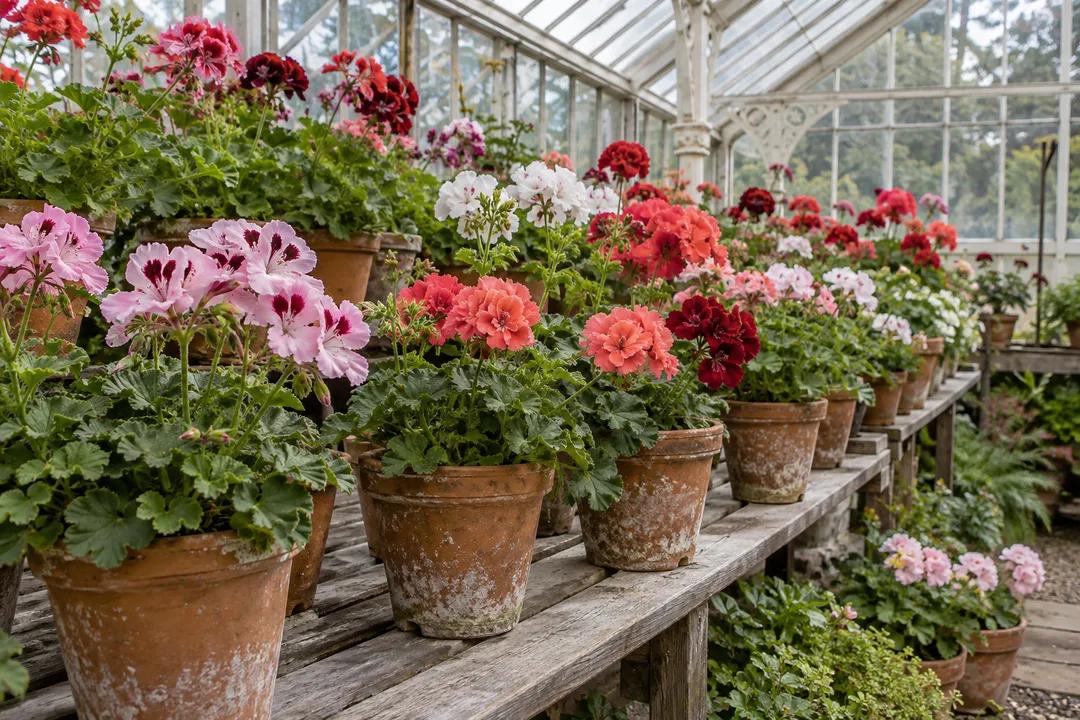
The glasshouse compartments are carefully divided by temperature, featuring a dedicated cactus and succulent room, a temperate pit house, and an unheated alpine display house. In spring and summer, the staging is packed with flowering alpine auriculas in terracotta pots, alongside delicate ferns, bougainvillea, and climbing plumbago clinging to whitewashed brick walls. Stepping into the warm, earthy atmosphere of the glasshouse range reveals the meticulous propagation routines that allowed Bowles to distribute rare plant varieties to botanic gardens across the globe.
The Lunatic Asylum Rock Garden and the Historic New River
One of the most famous and humorous features of Myddelton House Gardens is the rock garden, which Bowles playfully nicknamed 'The Lunatic Asylum'. When parts of historic London Bridge and the City of London balustrades were dismantled during nineteenth-century civic renovations, Bowles salvaged fragments of carved masonry, discarded curbing, and limestone blocks, hauling them to Enfield by horse and cart. He arranged these architectural oddities into a dramatic rocky hillside, planting crevices with dwarf conifers, sempervivums, alpine saxifrages, and rare sedums that thrived in the fast-draining rubble.
Flowing directly through the garden is a picturesque loop of the New River, an historic aqueduct opened in 1613 by Sir Hugh Myddelton to channel clean spring water from Hertfordshire into London. While modern water supply lines now bypass this ornamental loop, the watercourse remains integral to the garden's character, bordered by moisture-loving Japanese irises, royal ferns, and weeping willows. Crossing over the stone footbridge brings visitors into the peaceful meadow orchard and kitchen garden, where heritage apple trees and espalier plums drop fruit onto autumn grass.
Best Seasons and Hours to Tour the Grounds
Myddelton House Gardens is open Tuesday to Sunday from 10:00 am to 4:00 pm, remaining closed on Mondays except on public Bank Holidays. The garden offers distinct botanical highlights throughout the four seasons. February is celebrated for its extraordinary snowdrop festival and early crocus displays, May brings flowering herbaceous borders and wisteria, while October showcases golden foliage on ancient tulip trees and vibrant autumn meadow cyclamen. The quiet weekday mornings provide unmatched photographic opportunities with gentle light filtering through the tree canopy.
Standard garden admission is £6.00 for adults and £2.50 for children, while children under four enter free of charge. Onsite car parking costs £3.50 for up to three hours or £5.00 for the full day, with parking fees directly funding the conservation of the garden. After touring the outdoor beds, stop by the Bowles Tea Room located in the historic stable yard. You can enjoy a pot of loose leaf English breakfast tea for £3.00, freshly brewed filter coffee for £3.20, or a generous slice of homemade Victoria sponge or lemon drizzle cake for £4.20 while reviewing Bowles' original botanical sketches on display.
Practical Notes on Transport and Nearby Forty Hall
Reaching Myddelton House Gardens by public transit is straightforward from central London. Take the London Overground from Liverpool Street to Turkey Street station, which takes around thirty-five minutes, followed by a pleasant twenty-minute walk westward along Turkey Street or a short ride on bus route 217 or 317. For drivers, the estate is situated just two minutes south of Junction 25 on the M25 motorway, easily accessible via the A10 Great Cambridge Road with ample signposted parking at Bulls Cross.
To create a full day of North London heritage exploration, combine your garden visit with a stop at Forty Hall Estate, located just one mile south along Forty Hill. Forty Hall features a magnificent 1629 Jacobean manor house set in nearly three hundred acres of public parkland, complete with an ornamental fishing lake and an organic working farm. Alternatively, garden enthusiasts can cross Bulls Cross Lane to visit Capel Manor Gardens, an adjacent thirty-acre horticultural college estate with themed show gardens. Myddelton House Gardens remains one of Greater London's best-kept botanical secrets, offering intimate, scholarly plant heritage far from the standard tourist trail.
Ask Karpo for more information.
Keep reading
- Clapham Board Game Night Finder: New to London Meetups
 Marylebone Board Game Night Finder: Baker Street Mysteries
 Notting Hill Board Game Night Finder: Two-Player Rainy Dates