 Clapham Board Game Night Finder: New to London Meetups
Weekend Plans
Botanical Garden Near Me in Fulham: Historic Walled Gardens and Rare Trees
Explore the historic 13-acre botanical grounds of Fulham Palace, where Bishop Henry Compton introduced North American trees in the 1600s, featuring a Tudor walled garden and riverside walking paths.
If you are searching for a botanical garden near me with deep historical roots and peaceful seclusion, Fulham Palace Walled Garden and botanical grounds at Bishop's Avenue, Fulham, London SW6 6EA delivers thirteen acres of riverside horticultural history. Set along the north bank of the River Thames, this ancient estate served as the country residence for the Bishops of London from AD 704 until 1973. Today, the entire estate is open to the public free of charge, welcoming visitors from 9:00 am until dusk every day. Within its protected walls and surrounding meadows, you will find specimen trees, a restored Tudor walled garden, and an organic vegetable plot that showcase over three centuries of pioneering British botanical exploration.
Bishop Compton's Seventeenth-Century North American Tree Introductions
The botanical importance of Fulham Palace owes almost everything to Bishop Henry Compton, who occupied the see of London from 1675 to 1713. Compton was one of late seventeenth-century England's most passionate botanists and plant collectors. Exploiting his episcopal authority over the Church of England parishes in the American colonies, he instructed colonial chaplains and plant hunter John Banister in Virginia to send back seeds, saplings, and dried herbarium specimens from the unexplored eastern forests of North America. Compton converted the palace grounds into a pioneering trial nursery, germinating dozens of American species that had never before been cultivated in Europe.
Among his celebrated introductions to British horticulture were the American tulip tree (Liriodendron tulipifera), the black walnut (Juglans nigra), the scarlet oak, and the swamp magnolia (Magnolia virginiana). John Evelyn and other contemporary diarists traveled out from Westminster specifically to marvel at Compton's exotic arbors. Although the original seventeenth-century plantings eventually succumbed to age, several ancient specimen trees still anchor the botanical collection today, including a magnificent Holm oak and descendant tulip trees whose broad leaves turn rich buttery yellow every autumn. Botanical identification labels throughout the arboretum reveal the pioneering provenance of these landmark trees.
The Tudor Walled Garden and the Historic Vinery
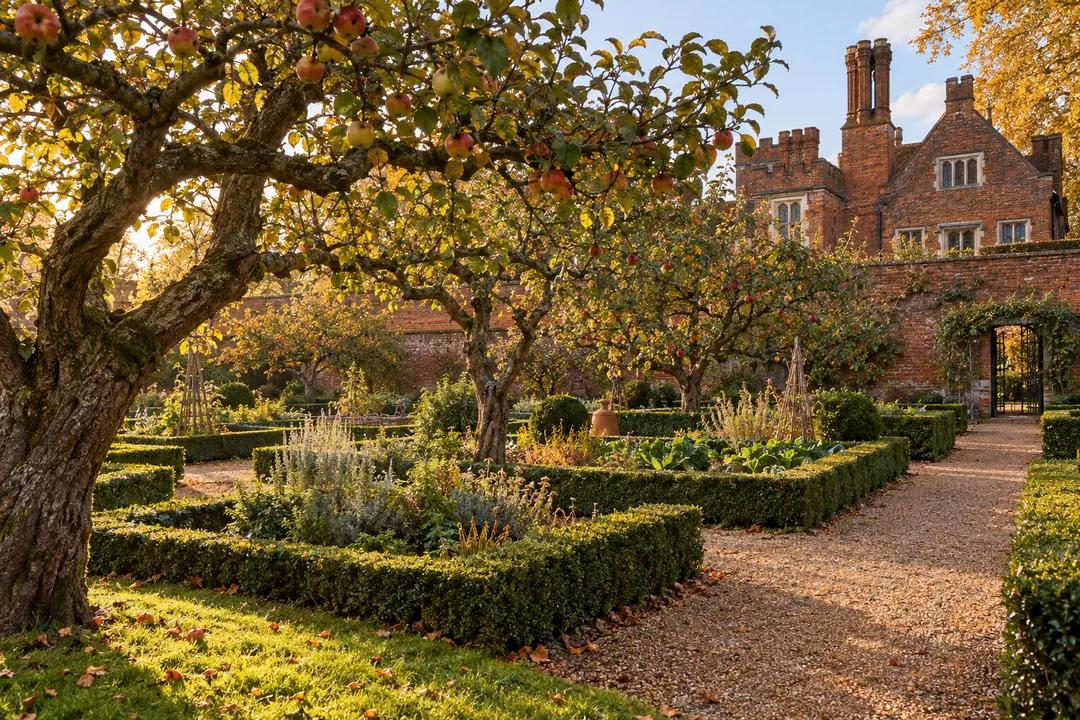
The horticultural heart of the estate is the three-and-a-half-acre Walled Garden, nestled behind ancient Tudor red-brick walls that enclose an intoxicating microclimate. Entering through the ornamental iron gates reveals neatly quartered plots framed by gravel paths, box hedging, and vibrant perennial borders. At the center stands an elegant restored Victorian vinery and glasshouse range, built against the high south-facing brick wall to trap maximum solar heat. Inside the glasshouses, heritage grapevines trail across overhead wires alongside potted citrus trees, pelargoniums, and tender climbing passionflowers.
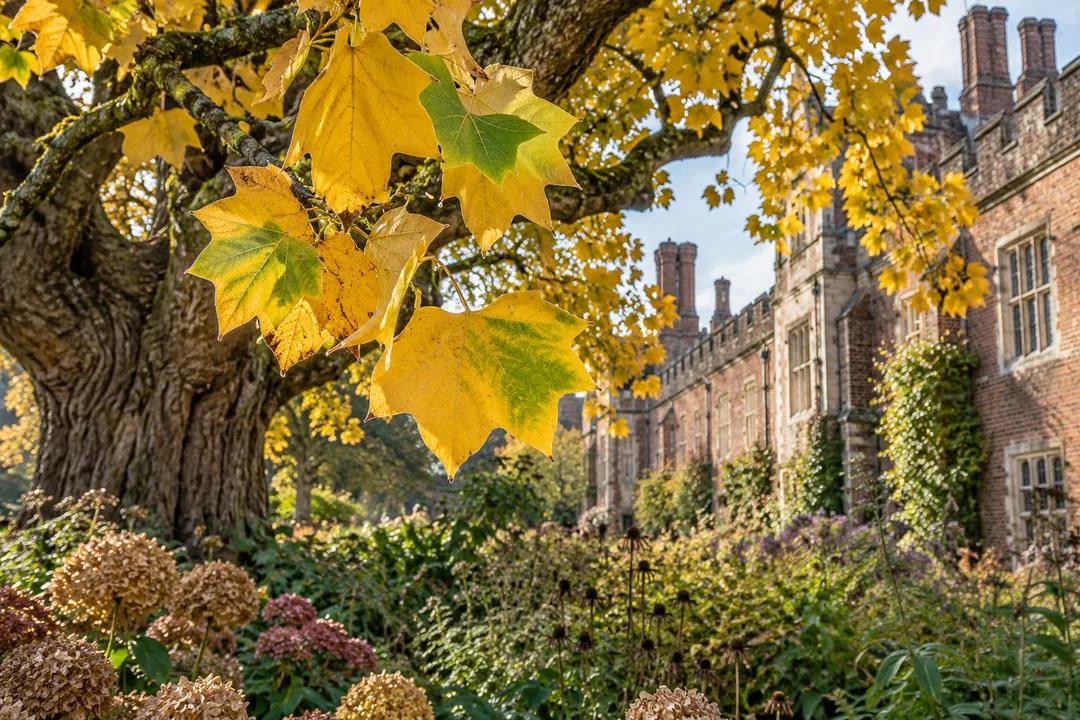
The walled garden is cultivated using organic and wildlife-friendly principles by the palace garden team and local volunteers. A productive knot garden features culinary and medicinal herbs favored during the Tudor and Stuart eras, while nearby apple and pear cordons line the perimeter brickwork. In late summer and autumn, the apple orchard produces heritage varieties that are harvested and pressed into sweet palace apple juice, sold in the gift shop alongside seasonal cut flowers and bunches of garden herbs. Benches beneath timber pergolas draped in wisteria provide peaceful reading spots away from city noise.
The Ancient Moat Path and Bishop's Park Riverfront
Surrounding the palace grounds is the perimeter moat path, following the line of what was once the longest domestic moat in England, measuring approximately one mile in circumference. While the water-filled moat was largely backfilled in the 1920s due to sanitation concerns, the sunken ditch remains clearly visible, now transformed into a biodiversity haven filled with native woodland flowers, wild garlic, and shaded elder groves. Strolling along the moat walkway provides glimpses of the palace's contrasting architecture, from the timber-framed Tudor courtyard built in 1495 to the Georgian Gothic west wing added in the 1760s.
Directly adjacent to the palace lies Bishop's Park, a Victorian public pleasure ground running alongside the Thames Path. You can easily extend your botanical visit by stepping through the palace gates into the park, walking beneath formal avenues of plane trees along the riverbank while watching rowers and scullers glide past toward Putney. The combination of protected historical gardens and open riverfront parkland makes Fulham Palace an essential green destination in South West London, offering a rich variety of plant life and river scenery within a single tranquil morning.
Morning Gate Openings and Best Hours to Dodge Crowds
The palace grounds open daily at 9:00 am and close at dusk, with closing times shifting from 4:00 pm during midwinter to 8:00 pm on balmy midsummer evenings. Visiting on a weekday morning between 9:00 am and 11:00 am guarantees quiet paths and birdsong, allowing you to photograph the walled garden and glasshouses in soft morning light without crowds. The museum rooms inside the palace and the Tudor Great Hall open daily from 10:30 am to 4:00 pm, offering engaging exhibitions about Roman archaeology, medieval bishop life, and Compton's botanical voyages.
Entry to both the botanical grounds and the palace museum is completely free, though donations of £5 are warmly encouraged to support ongoing conservation work. When hunger strikes, head into the palace's Drawing Room Café, which occupies the sunlit former library overlooking the south lawn. The café serves specialty coffee with a flat white at £3.60, a warm palace sausage roll for £5.50, and fresh soup of the day with crusty sourdough bread for £7.50. Sitting on the outdoor lawn terrace with tea and cake while listening to the garden fountain is one of Fulham's greatest simple pleasures.
Practical Visitor Notes and Nearby River Walks
Getting to Fulham Palace is remarkably easy via London Underground. Putney Bridge station on the District line (Wimbledon branch) is an eight-minute walk away, taking you through Bishop's Park along a well-lit paved pathway. Several major bus routes, including the 14, 22, 74, 85, 93, 220, and 430, stop at Putney Bridge or Fulham High Street just minutes from the palace gate. Drivers should note that there is no public parking on site, so arriving by tube, bus, or bicycle along the Thames Path is strongly recommended.
After completing your garden tour, consider walking north along the river path past Craven Cottage, the charming 1896 riverside stadium of Fulham Football Club, toward Hammersmith. Alternatively, cross historic stone Putney Bridge to explore Putney's riverside rowing clubs and independent cafés along the South London embankment. For a relaxed lunch, stop by The Crabtree pub on Rainville Road for river views and cask ales, or indulge at the world-renowned River Café near Thames Wharf. Fulham Palace stands out as a unique London treasure where centuries of episcopal privilege gave birth to a timeless public botanical sanctuary.
Ask Karpo for more information.
Keep reading
- Clapham Board Game Night Finder: New to London Meetups
 Marylebone Board Game Night Finder: Baker Street Mysteries
 Notting Hill Board Game Night Finder: Two-Player Rainy Dates