 Brixton Christmas Light Up Walk Planner: Rainy Arcades
Free Things to Do
Kew Temperate House: Botanical Conservatory of 1,200 Species
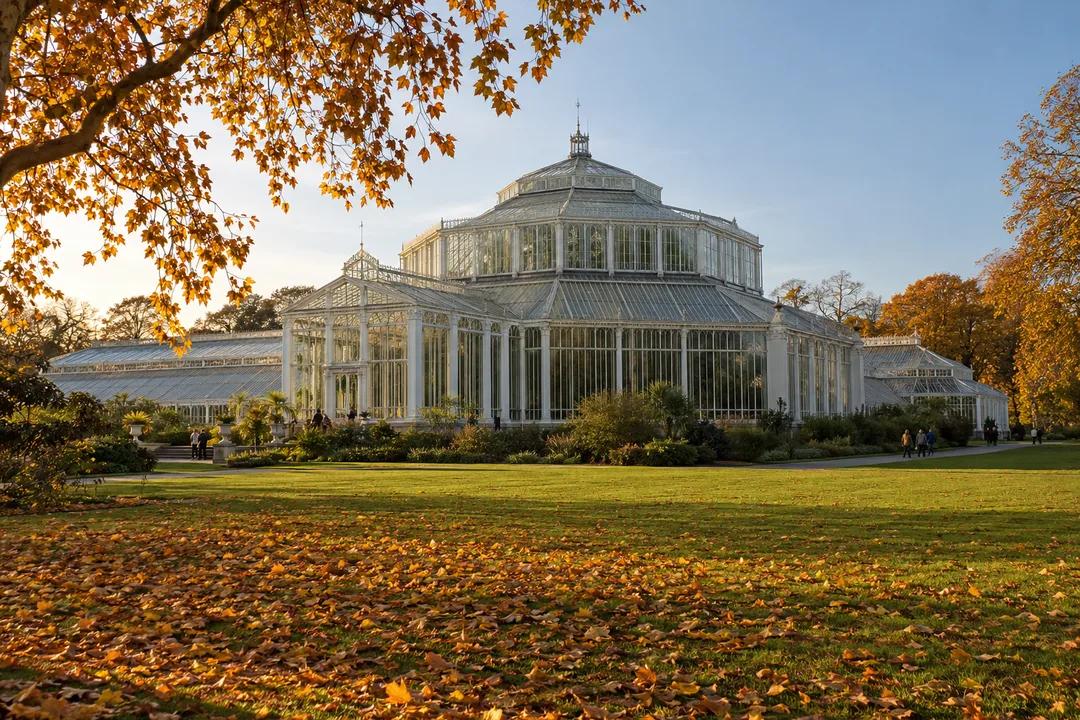
Kew's Temperate House, inside Kew Gardens in Richmond TW9 3AE, is the world's largest Victorian glasshouse. Enter by Lion Gate and climb the gallery first.
The Temperate House at Kew Gardens in Richmond, London TW9 3AE, is the world's largest Victorian glasshouse, and the nearest way in is Lion Gate on the garden's eastern edge. Kew lists around 1,200 species from Asia, Australasia, the Americas and Africa under its glass. For anyone hunting a botanical conservatory in London with real scale, this Grade I listed building is the benchmark.
A Cathedral of Glass That Took Five Years to Save
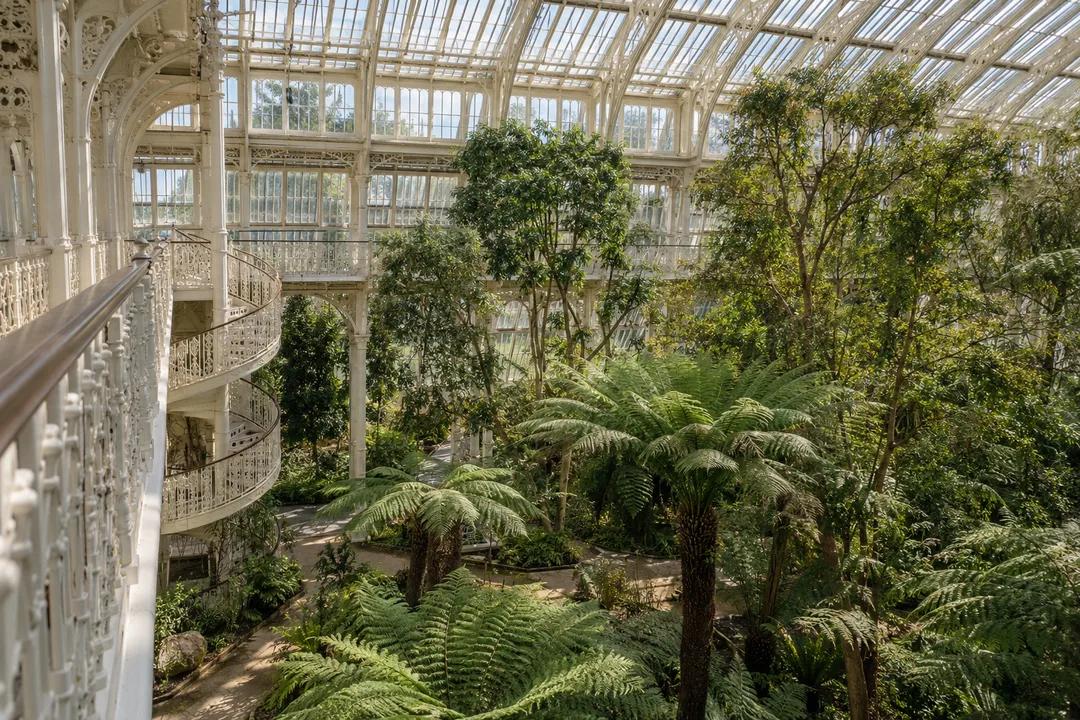
Kew describes the building as a cathedral of plants, and walking the central nave with tree crowns overhead, the comparison holds. It reopened in 2018 after a major five-year renovation, and that same year readers of National Geographic Traveller voted it Best UK National Treasure. The whitewashed ironwork, the long wings and the octagons at each end all came back from that project, along with roughly 3,000 individual plants.
The point of the place is temperate flora, the tender plants that cannot survive a British frost. Kew keeps the glasshouse at a preferred minimum of around 10 degrees Celsius through winter, which makes it a genuinely mild refuge on a raw November day. Walk in from a damp lawn and the air changes immediately, softer and greener, with the smell of wet bark and leaf litter.
The Plants Worth Hunting Down
Start with the Chilean wine palm, Jubaea chilensis, one of the giants of the central section. Kew notes that its sap was widely used for palm wine, which could only be extracted by felling the tree, a sobering detail when you stand at the base of a living one. Then look for the kaka beak, Clianthus maximus, a New Zealand shrub named for the endangered parrot its red flowers resemble.
The most remarkable specimen may be the tree pincushion, Leucospermum conocarpodendron, a South African plant that Kew grew from seed collected in 1803. Kew scientists germinated seed that had sat for two centuries. Nearby is Encephalartos woodii, often called the loneliest plant in the world. It arrived at Kew in 1899 and, as a male with no known female anywhere, has been alone ever since.
Why the Island Collection Matters
Much of the Temperate House tells a conservation story rather than a pretty one. Kew holds significant collections of threatened island flora from remote places such as Saint Helena, the Pitcairn Islands and the Juan Fernández Islands, plants that are rare or already extinct in the wild. Reading the labels in these beds turns a stroll into a lesson in how close some species have come to disappearing.
The glasshouse draws on over 260 years of plant expertise at Kew, and the staff and volunteers who work the beds often know the backstory of individual specimens. If someone is tending a planting, it is worth asking which plants came back from the renovation and which were collected on recent expeditions. Kew's own writing on its plant explorers covers how field science brought many of these species here.
How to Walk It Without Missing the Best Bits
Climb to the high gallery walkway first. From above you see the canopy layout clearly, the tree ferns and palms in the nave, and the ironwork details that are invisible from the floor. Then come down and walk the sections slowly. Most visitors stream straight down the middle, so the side wings and the octagons are usually quieter, especially in the hour after lunch.
For step-free access, Kew advises following the signs to the western side of the building. Weekday mornings in late autumn tend to be the calmest time in the whole garden, when school groups have not yet arrived and the light through the glass is low and silvery. Weekend afternoons, by contrast, fill the central nave and make photography hard.
The glasshouse is also the rainy-day answer at Kew. When showers sweep across the lawns, the Temperate House is the obvious shelter, which means it fills fast the moment the sky darkens. Arriving just before forecast rain, rather than during it, gets you a quieter half hour inside. On cold bright days the reverse is true, and the building stays calm while visitors chase the autumn colour outside.
An Honest Take on What to Skip
Do not try to see the Temperate House, the Palm House, the treetop walkway and the Hive in one short visit. Kew is huge, and people who rush the whole map end up seeing every glasshouse at a jog. If the Temperate House is your reason for coming, give it a full hour and treat anything else as a bonus.
Kew also warns that it may occasionally close attractions for maintenance or visitor safety, and it posts planned closures and visitor notices on its website. If a closure notice lands on the day you planned, the Horniman Museum's Victorian conservatory in Forest Hill is a smaller, free alternative with views over south London.
Give the ironwork its own few minutes before you leave. The spiral staircases up to the gallery are part of the original Victorian frame, and from the top you can follow the whitewashed ribs of the roof as they run the full length of the nave. Photographers tend to crowd the central aisle, but the best angle is often from a side octagon looking back toward the middle, where the palms and the glazing line up in one frame.
Around Kew Before and After
Lion Gate sits on Kew Road, a walk from Kew Gardens station on the District line and Overground. After the glasshouse, the Pagoda is close by on the same southern side of the garden, and the Palm House with its pond is a natural next stop heading north. Kew Village by the station has small cafés and a bookshop if you want to linger, and Richmond's riverside is a short bus ride further on.
Practical Notes
Address: Royal Botanic Gardens, Kew, Richmond, London TW9 3AE, with Lion Gate on Kew Road as the nearest entrance to the Temperate House. Hours: the visit page on kew.org lists the gardens as open daily, 10am to 4pm, with last entry at 3pm. Step-free access is signed to the western side of the glasshouse. Tickets: the Temperate House sits inside the paid garden. Kew's ticket page lists an adult off-peak ticket (1 November to 31 January) at £17 online or £20 at the gate, after peak rates of £25 online and £28 at the gate that run to 31 October. Every Tuesday from 8 September to 29 December 2026, a £10 Tuesdays adult ticket is sold for Tuesday entry. Children aged 4 to 15 pay £2 online or £4 at the gate, and under-4s enter free. Save Kew's visitor notices page in the Karpo APP so closures do not catch you out.
Ask Karpo for more information.
Keep reading
- Brixton Christmas Light Up Walk Planner: Rainy Arcades
 Hackney Christmas Light Up Walk Planner: Canal Boats
 Islington Christmas Light Up Walk Planner: Square Dates