 Shoreditch Comic Shop Crawl Planner: Murals to Manga
Hidden Gems & Odd Finds
Islington Bookbinding Linen Thread Picker: Waxed or Bare
Decide between pre-waxed and bare unbleached linen by how your stitches should look, then browse Islington's antique passages for old bindings worth studying.
Waxed linen and bare linen can be spun from the same flax, yet they sew like two different materials, and that coating decision shapes a handmade book more than most beginners expect. Islington is a good place to think it through. Its antique passages, Georgian terraces and the canal running beneath Upper Street offer plenty of old notebooks, ledgers and albums to study, and every one of them shows how its maker treated the thread.
What the Wax Actually Changes
A coat of beeswax turns soft, slightly hairy linen into a smoother, firmer strand. The fibres lie down, so the thread slides through sewing holes without fraying, and the slight tack helps each stitch hold its tension while you pull the next one. Bare linen, by contrast, is matte and supple. It grips paper fibres more directly, which some binders like for long-lasting text blocks, though it tangles more readily if you work with long lengths.
The visible difference matters most on exposed spines. Pre-waxed thread keeps an even sheen and a crisp, rounded profile, so long-stitch and chain patterns look tidy from across a room. Bare thread hand-waxed lightly looks quieter and more textile-like. Neither is correct in every case. Hold a waxed sample and an unwaxed sample against the cover material you want, whether cloth, leather or card, and the right pairing usually becomes obvious within seconds.
Pre-Waxed Thread: When Convenience Wins
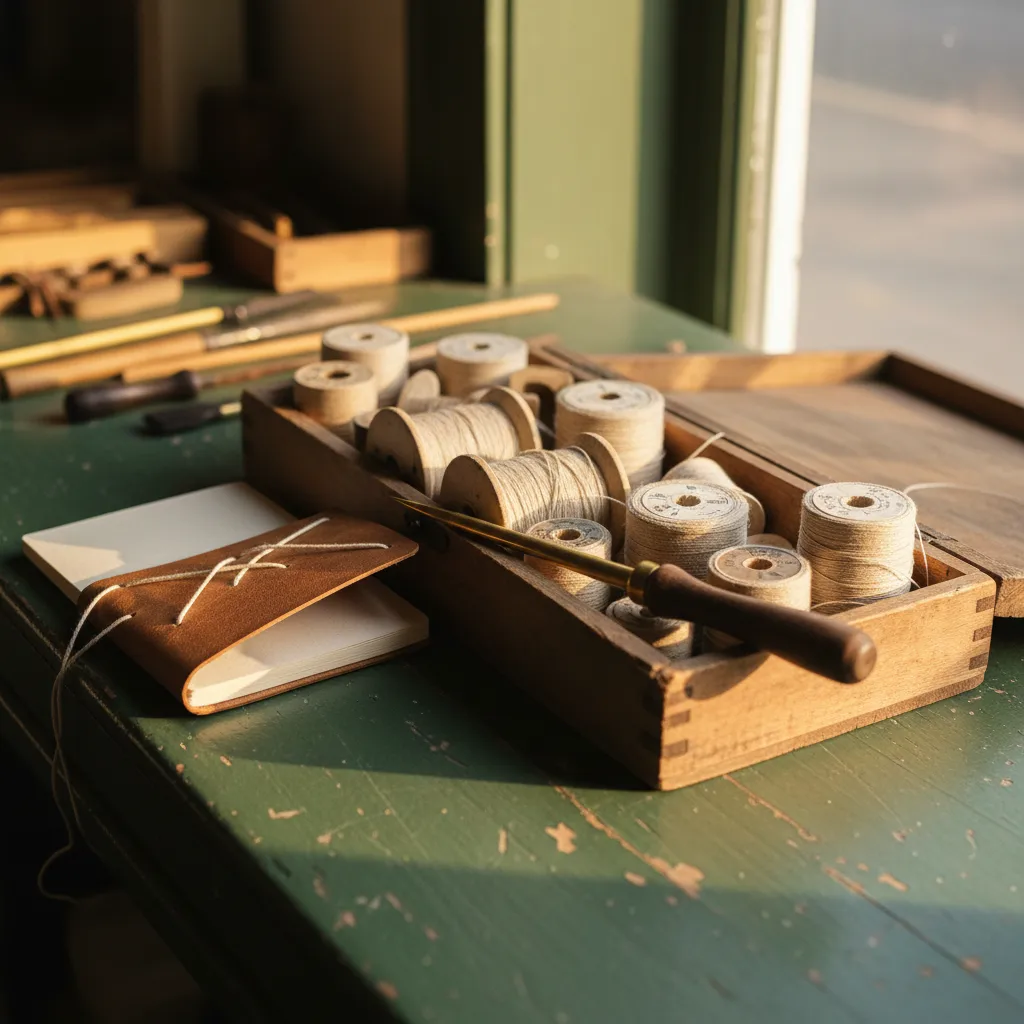
Commercial pre-waxed linen is coated evenly along its whole length, which saves time and removes guesswork. It is a sensible choice for coptic bindings, long-stitch journals and any design where the thread is part of the decoration. Because the coating is consistent, two books sewn months apart will match. The drawback is control: some pre-waxed threads feel heavy with wax, leaving residue in fine paper or making knots bulky at the kettle stitch.
Test a pre-waxed thread by pulling a short length firmly through a folded scrap of your chosen paper. Look at the hole afterwards. If you see a waxy smear or the paper has darkened, that thread is over-coated for delicate sheets, although it may still be ideal for heavier stock. Run a fingernail along the strand too. A thread that flakes wax under light pressure will shed onto your work as you sew.
Pre-waxed thread also ages on the shelf. Cards or spools kept near a sunny window or a radiator can lose some coating or grow slightly brittle, while those stored somewhere cool stay supple for a long time. When you compare samples, flex each strand into a tight loop. A thread that cracks its wax or holds a sharp kink is past its best, and it will fight you through every station of a long book.
Bare Linen and the Hand-Waxing Ritual
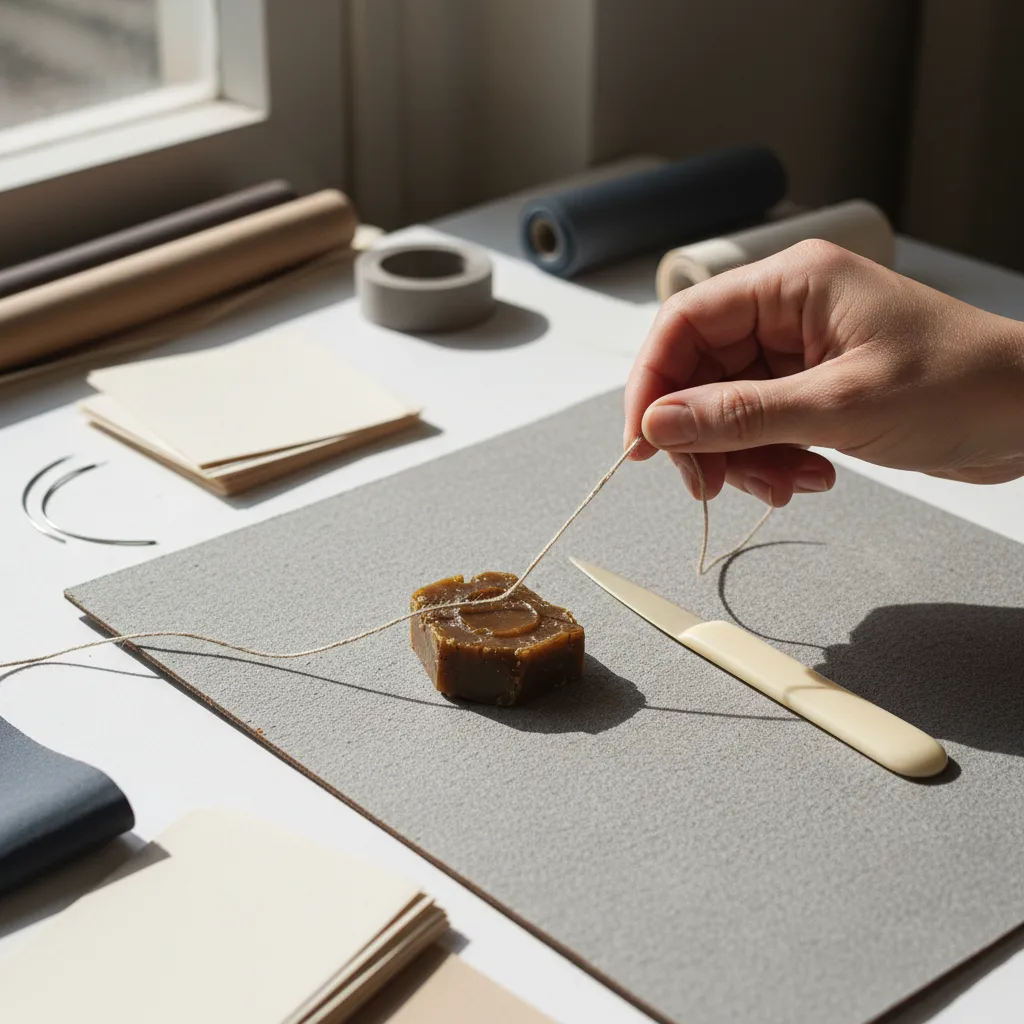
Bare linen asks for a little more effort and repays it with flexibility. You can wax only the length you are about to use, add more coating for an exposed stitch and leave hidden sewing almost dry. Pass the thread over a block of beeswax two or three times while pressing it into the surface, then draw it through your fingers to warm and spread the coating. The thread should feel smooth, not sticky.
The wax itself varies. Natural yellow beeswax has a faint honey scent and a gentle grip, while paler refined wax tends to feel a little harder. Some binders keep an old, grooved cake for years, since the worn channels guide the thread neatly. Avoid craft wax blends with added fragrance or colour if you are sewing archival work. They can transfer onto pages, and their behaviour in warm rooms is less predictable than plain beeswax.
Reading Old Bindings in Islington's Passages
Islington's antique arcades and market stalls are full of objects that were sewn by hand long before anyone sold pre-waxed thread on cards. Turn an old ledger toward the light and look along the spine. Tight, flat sewing with no visible gaps usually means a lightly waxed thread pulled firmly. Loose stitching with fuzzy fibres suggests the thread dried out or was never coated. These small observations teach more than any label.
The surrounding streets help you stay unhurried. Georgian squares and quiet residential terraces sit just behind the busy main road, and the canal towpath offers a calmer stretch where you can sit and compare samples. Antique dealers, illustrators and weekend browsers share the passages, many of them handling paper goods with the same care you will need at the sewing frame. Ask questions politely, and enjoy the habit of looking closely. A ledger with a cracked spine and loose sections is just as instructive as a perfect one, because the failure shows exactly where the thread gave up, whether at the kettle stitch, along the fold or where the cover joined the text block.
Where Karpo APP Fits
When you want to see paper, stationery or craft supply spots near Islington, Karpo APP offers nearby recommendations you can scan quickly. It stops there. The choice of which suggestions to follow, the order of your visits and whether you walk along the canal or take the Tube are entirely yours. That freedom suits a material decision like this one, where you may linger at one counter and skip three others.
An Honest Verdict on Coatings
For a first coptic or long-stitch book, pre-waxed linen is the easier start, since it hides small tension mistakes and looks neat. For sewn text blocks inside a hard cover, bare linen waxed by hand is usually the better long-term choice, because you control residue and bulk. Skip heavily coated, brightly dyed thread for archival journals. It looks cheerful on the card, but it can leave marks on pale paper and feels stiff at the knots.
Getting Ready to Sew
Bring a folded signature of your intended paper, a scrap of cover material and a small cake of beeswax when you browse, so every thread you consider can be tested against what you already own. Cut generous lengths, wax only what you need and sew a short sample book. Judge the shine, the tension and the residue, then commit. Islington's mix of old paper and quiet streets makes the testing feel like part of the craft.
Ask Karpo for more information.
Keep reading
- Shoreditch Comic Shop Crawl Planner: Murals to Manga
 Bermondsey Comic Shop Crawl Planner: Zines Under the Arches
 Clapham Comic Shop Crawl Planner: Charity Shelves and Common