 Shoreditch Comic Shop Crawl Planner: Murals to Manga
Hidden Gems & Odd Finds
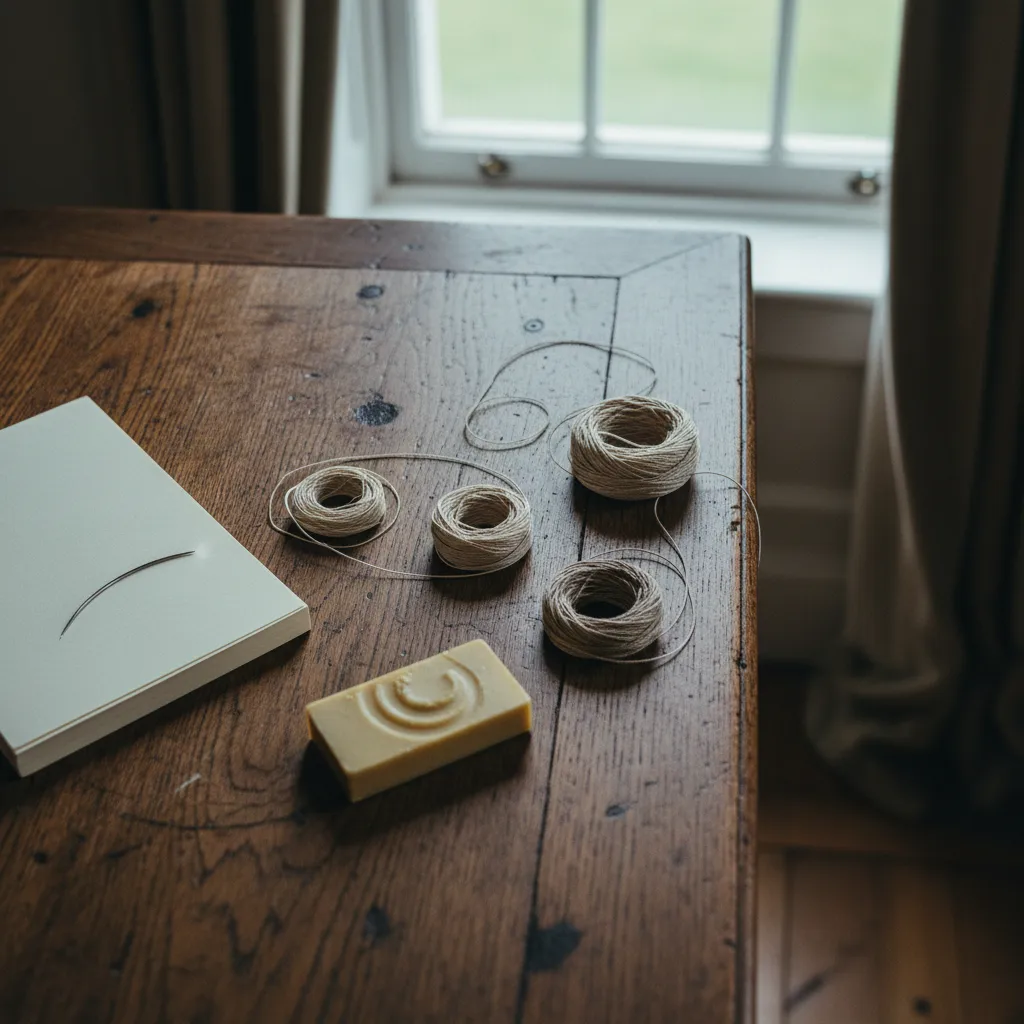
Bookbinding Linen Thread Picker: Bloomsbury Weights and Wax
Match unbleached linen thread thickness to your paper stack and decide on beeswax before a quiet browse through Bloomsbury's squares and bookish streets.
Unbleached linen thread is the quiet workhorse of hand bookbinding, and the right weight depends on two numbers you can count at your own table: how many sheets sit in each folded signature, and how many signatures make the book. Bloomsbury suits this kind of homework. The district grew up around scholarship, publishing and reading rooms, and its garden squares invite you to sit on a bench with a folded sample and think before you buy anything at all.
Start With the Paper, Not the Spool
Before you look at any thread, fold one signature of the paper you actually plan to use and press it flat with a bone folder. Note the thickness of that fold, then stack your planned signatures and see how tall the spine will be. Thread adds height at every sewing station, so a book of twenty signatures sewn with a thick thread can end up noticeably fatter at the spine than at the fore-edge. That swell is the problem you are really choosing against.
Light text-weight paper folded in fours or fives usually wants a fine thread, because a heavy strand will build up a wedge-shaped spine that fights the cover. Heavier drawing paper or handmade sheets with a soft deckle can carry a thicker linen without much visible swell, since the paper itself is already bulky. If your paper sits somewhere between, sew a short test book of four signatures and look at it from the head. A flat, even spine means the match is close.
Reading the Numbers on Linen Thread
Linen bookbinding thread is often labelled with two figures, such as a count followed by the number of plies twisted together. A higher first number generally means a finer single strand, while the second number tells you how many strands are twisted into the final thread. That logic feels backwards to many beginners, so it helps to hold two samples side by side rather than trusting the label alone. Run each between your fingers and look for evenness along the length.
Ply count changes behaviour as much as thickness does. A thread with more plies tends to be rounder and stronger, while a lower-ply thread lies flatter inside the fold and can pull tighter against the paper. For a pamphlet or a slim notebook, a flatter thread disappears into the gutter. For a sewn text block that will be opened hundreds of times, the rounder, stronger thread earns its slight extra bulk over years of use.
Unbleached Versus Bleached Linen
Unbleached linen keeps the warm grey-brown of the flax, and many binders prefer it for archival-minded work because it has been through fewer finishing steps. It also hides small marks from handling, which matters when you sew slowly and rethread often. Bleached or dyed linen can look crisper against white paper, yet the colour sits on top of the fibre and some cheaper dyes rub off onto pale signatures. In a sober Bloomsbury-style journal, the natural tone usually reads as more honest.
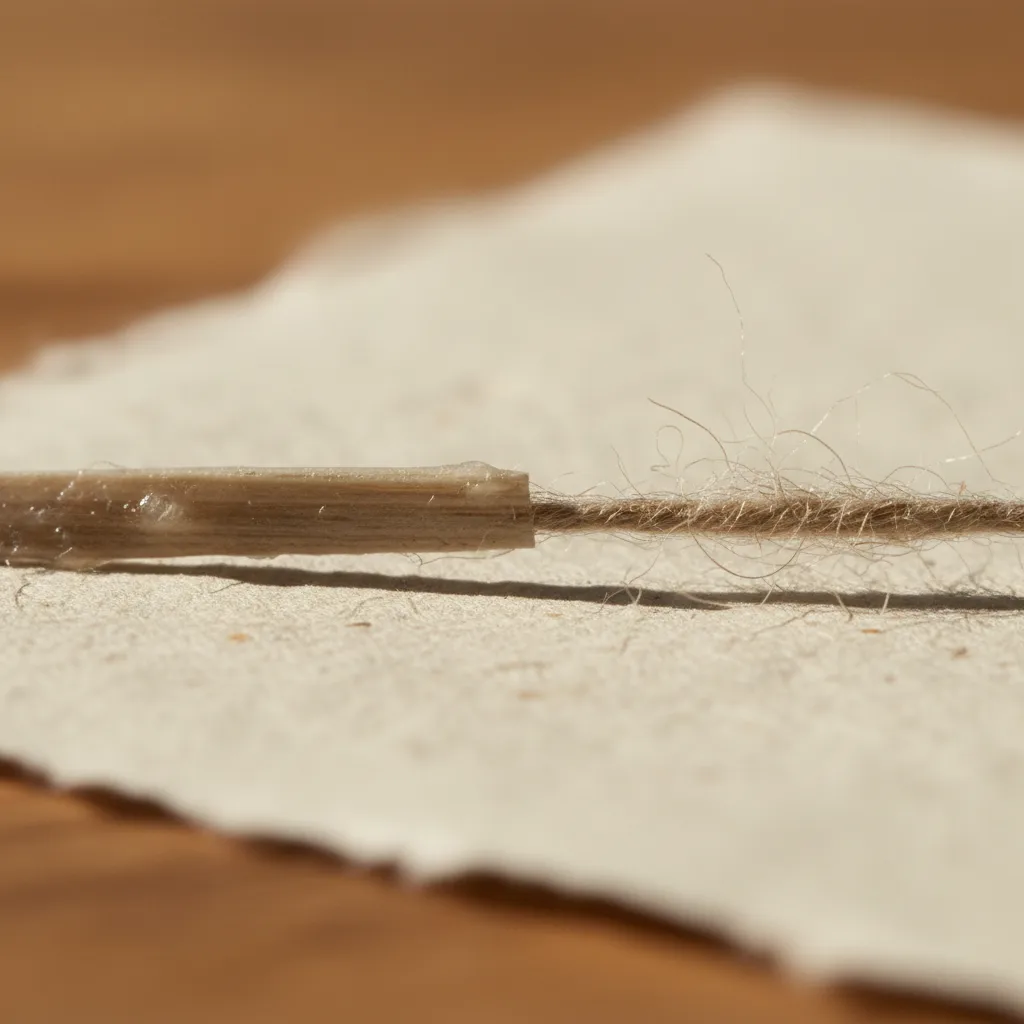
Look closely at the fibre itself. Good linen thread has long, smooth fibres with only a light halo of fuzz, while poorer thread sheds little hairs that catch in the sewing holes. Pull a short length hard between your hands. It should feel dense and slightly cool, and it should not stretch much. If it unravels into separate plies the moment you cut it, sewing will be fiddly and the knots at the kettle stitches will be less secure.
The Beeswax Question
Beeswax does three jobs on linen thread: it binds stray fibres down, it helps the thread grip itself so stitches stay tight, and it reduces tangling as you pull long lengths through the folds. Pre-waxed linen arrives evenly coated and ready to sew, which is convenient for exposed spine work where you want consistent shine. Unwaxed linen gives you control. You decide how much coating to add, and you can leave the inner sewing of a case binding nearly dry.
Hand-waxing is simple. Draw the cut length of thread across a small cake of beeswax two or three times, pressing gently so the thread leaves a groove, then pull it between finger and thumb to warm the wax into the fibres. Too much wax leaves sticky deposits in the sewing holes and can stain soft paper. Too little and the thread kinks as soon as you double it back. A quick test stitch on scrap signatures shows the right amount for your paper.
A Calm Way to Browse the Neighbourhood
Bloomsbury rewards a slow pace. The Georgian terraces around its squares, the lanes behind the big museum and the streets lined with secondhand bookshops all make good settings for looking at how real books are sewn. Old bindings in bookshop windows are an informal reference library: notice which spines lie flat and which have swollen, and you will start reading thread choices without touching anything.
If you prefer company, nearby art schools and university buildings give the area a steady rhythm of students carrying portfolios and folded paper. Weekday mornings tend to feel unhurried, and a garden square bench is a fine place to compare the samples you bring from home. Bring a small zip pouch with two or three thread lengths, a folded signature and a scrap of beeswax, so you can test ideas against the paper you already own.
Using Karpo APP Without Overthinking It
Karpo APP can suggest nearby paper, stationery and craft supply spots around Bloomsbury, which is useful when you already know the thread weight you want and simply need somewhere close to look. Treat those suggestions as a starting list. You choose which places to visit, how long to linger and how to get between them, whether that means a walk through the squares or a short bus ride toward Holborn.
A Simple Decision Checklist
Choose a fine, flatter linen if your paper is thin and your book has many signatures. Choose a medium thread for general notebooks with mixed paper. Save thick, multi-ply linen for exposed spines, heavy drawing paper or books you want to show off. Pick pre-waxed for decorative stitching and unwaxed if you want to tune the coating yourself. One honest note: skip buying a full cone of an unfamiliar thread for a first project. A small spool tells you everything you need.
Before You Sew the First Station
Cut a thread roughly the length of the spine times the number of signatures, plus a little extra for knots, and wax it if needed. Pierce your sewing stations with an awl through a folded jig so the holes line up. Sew a test book first, judge the spine and adjust the weight. Once the match feels right, Bloomsbury's reading rooms and bookish streets give you plenty of reasons to keep making books.
Ask Karpo for more information.
Keep reading
- Shoreditch Comic Shop Crawl Planner: Murals to Manga
 Bermondsey Comic Shop Crawl Planner: Zines Under the Arches
 Clapham Comic Shop Crawl Planner: Charity Shelves and Common