 Shoreditch Comic Shop Crawl Planner: Murals to Manga
Hidden Gems & Odd Finds
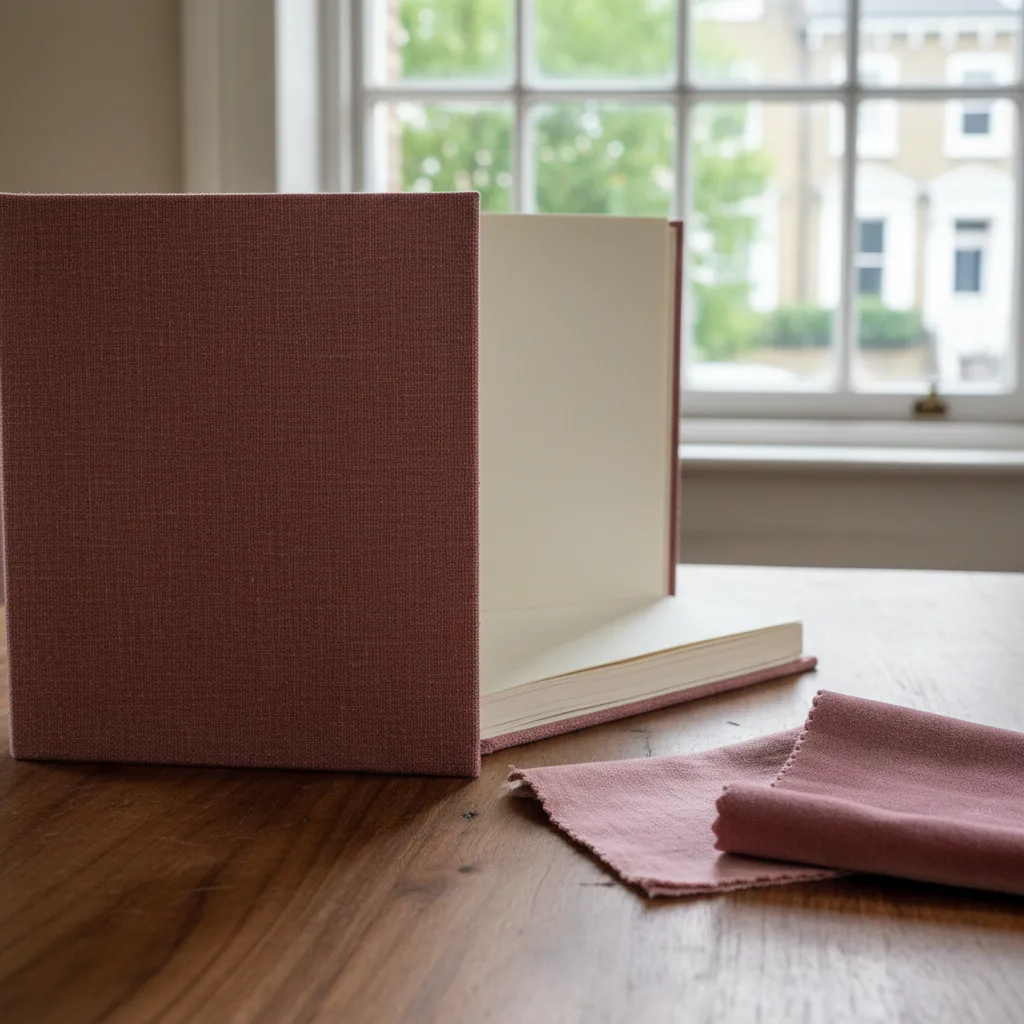
Islington Book Cloth Binding Material Picker: Gift Choices
Choose book cloth in Islington for a gift album by comparing touch, colour and opening comfort, then give the cover a clear purpose before browsing.
The cover of a gift album should feel right to the person who will open it. An Islington book cloth binding material picker therefore begins with the recipient's habits: whether the book will live upright on a shelf, rest on a coffee table or travel between family homes. Choose a surface and colour that welcome handling, then work outward to the album structure. A beautiful swatch becomes a meaningful choice when it belongs to the way this particular gift will be used.
Start with the hands that will hold it
Picture the recipient turning the first page and closing the album after sharing it. Someone who prefers understated objects may enjoy a plain weave in a muted tone; someone who loves visible texture may welcome a more expressive cloth. Use those observations as a starting point rather than a personality test. If you are unsure, ask about a favourite book or an object they already keep nearby, then consider the quality that makes it appealing.
An album is also an invitation to contribute. If pages will receive handwritten captions, choose a cover language that leaves room for that informal character. A highly ceremonial exterior might suit a completed keepsake but feel forbidding for a book that grows over time. Decide whether you are giving a finished narrative or an open-ended collection before collecting samples. That distinction can resolve a colour argument more effectively than holding another handful of attractive pinks against the window.
Take a gentle palette into Islington
Islington's residential squares and the smaller passages around its busier streets make a fitting setting for thinking about intimate objects. Let warm brick, pale painted wood and the darker edges of railings suggest relationships between colour and texture. You are not trying to reproduce the street on a cover. A plum cloth with an ivory endpaper may simply carry the same balance of warmth and restraint that appeals to you during a London afternoon.
For an independent browsing pause, consider Camden Passage or a walk around an Islington square. Choose the sequence yourself and keep the album brief on paper. Notice whether you are drawn to worn finishes or crisp new surfaces, then ask if that preference belongs to you or to the person receiving the gift. Separating those tastes is an affectionate part of making something by hand, especially when the project is intended to become someone else's everyday possession.
Colour needs a companion
A swatch rarely appears alone on a finished album. Put it beside the intended endpaper, the page tone and a representative photograph you own. A warm image can sit differently against burgundy than against a cool grey; cream paper may soften a strong cloth while bright white sharpens it. Keep the comparison set small enough that you can name the relationship you like. “The cover makes these faded photographs feel warmer” is a better brief than “this colour seems elegant.”
Think about the inside of the cover as well. A patterned endpaper can be delightful, but a busy print beside small photographs and handwritten captions may compete with the material the album is supposed to celebrate. A plain lining gives the cloth more presence. If both sides are expressive, look for a shared tone or a clear difference in scale. The aim is a coherent object, not a collection of individually attractive materials with no space between them.
The album's opening matters

Work out the album construction before making the cloth purchase. Added photographs create thickness, so a structure designed for plain writing pages may not behave the same way once filled. Make a dummy with paper placeholders representing the intended contents and examine how it closes. Choose the covering material in relation to that structure, following a suitable binding method rather than hoping the cloth will compensate for an unresolved spine or an overfilled book.
For an ordinary new album, use a sample you own to trial the covering process on spare board. Look at how the material turns around the edge and whether the finish changes with your chosen adhesive. Leave the trial to dry as directed before deciding. Do not experiment on family photographs or old documents. Valuable originals need appropriate storage and handling choices; a handmade cover can be a gift in its own right without becoming a claim about preservation.
Decide where decoration belongs
A title label, ribbon or contrasting spine should have a clear purpose. If the album may be rearranged or expanded, a very specific label can make the contents feel fixed too early. You might prefer an unlabelled cover and a dedication inside. Alternatively, a small recessed label can give a broad plain panel a focal point. Build a paper version first so you can judge proportion without cutting into the candidate cloth.
Skip pale, delicate-looking cloth when you know you will spend the whole presentation explaining how carefully the recipient must treat it. That warning can undermine the generosity of an object meant to be opened and shared. Choose a finish you are comfortable seeing handled, while accepting that different materials show use differently. A gift that develops ordinary signs of life can be more inviting than one that makes its owner nervous about touching the cover.
Discover places with a clear request
The Karpo APP can recommend nearby places around Islington. Ask for places of interest to someone choosing materials for a handmade photo album, perhaps with an interest in paper, book arts and craft objects. Consider the recommendations and make your own choices about stops, timing and transport. Keep material measurements and any samples you obtain in your own folder, so the browsing afternoon remains connected to the album you are making.
If the cloth that suits the recipient does not emerge, let the gift idea rest instead of replacing it with an elaborate compromise. A simpler album, a smaller format or a plain case with a thoughtful dedication may carry the intention more clearly. You can still enjoy the passages and squares as a separate part of the day. Good browsing leaves you with a sharper understanding of the gift, even when the final material decision happens later.
Practical notes before the dedication
Bring a photograph copy, a page sample and a drawing of the proposed album. Protect personal images and show only what you are comfortable sharing. Ask permission before touching displayed swatches and label your own samples promptly. Once the cover, pages and opening method feel consistent, stop looking for decorative upgrades. The most persuasive material is the one that makes the recipient want to open the album and stay with the memories inside it.
Ask Karpo for more information.
Keep reading
- Shoreditch Comic Shop Crawl Planner: Murals to Manga
 Bermondsey Comic Shop Crawl Planner: Zines Under the Arches
 Clapham Comic Shop Crawl Planner: Charity Shelves and Common