 Shoreditch Comic Shop Crawl Planner: Murals to Manga
Hidden Gems & Odd Finds

Hackney Book Cloth Binding Material Picker: Reuse First
Choose book cloth in Hackney around usable remnants, sound joins and daily wear, with practical comparisons for a notebook made from smaller pieces.
A remnant is useful only when its sound, usable area fits the cover you want to make. That is the starting point for a Hackney book cloth binding material picker aimed at a notebook that will be carried, opened and marked. Small pieces can give a personal project character, but an attractive scrap does not settle the questions of backing, joins or wear. Begin with the dimensions of a daily notebook and let the available shapes influence decoration rather than dictate a fragile structure.
Draw the cut before admiring the cloth
Make a full-size cutting diagram on scrap paper, including the parts that turn around the board. Keep the spine piece separate if your design uses a contrasting spine. Put the diagram over your own remnants at home and mark any area that cannot be used because of a hole, a stain or an uncertain edge. This exercise distinguishes a genuinely workable piece from one that merely seems generous when folded on a table.
An irregular shape can still be useful if its good area covers a complete panel. Rotate the paper diagram and consider which thread direction would run along the book. Do not assume that turning a remnant sideways is a harmless way to save cloth; a directional texture may then look inconsistent across the two covers. For a paired design, seeing the front and back together matters more than using every last narrow strip.
Hackney as a colour conversation
Let the neighbourhood contribute energy to the outing rather than claims about a specific seller. Around Hackney, the contrast between brick streets, painted surfaces and greener stretches makes a lively reference for a working notebook. An olive cover and a terracotta spine could feel grounded; a patch of ochre might give the object a more playful edge. These are design possibilities you bring to the area, not descriptions of materials waiting behind an unnamed shop window.
If you want a break from close material comparisons, choose your own walk around London Fields or toward Broadway Market. Look at how a bright detail sits against an ordinary background, then return to the notebook brief. You might decide that only the spine needs a strong colour. A few observations can be more useful than a whole afternoon of gathering incompatible ideas, particularly when the project begins with a limited pile of fabric.
The join should earn its place
Patchwork can be an intentional cover design, but joining scraps introduces another decision about thickness and movement. A seam that looks charming on a flat textile may create an awkward ridge when it is wrapped around board. Before using a combination, make a small trial with the actual construction method you intend to follow. Keep experimental samples separate from anything you are hoping to cover that day, so an uncertain join does not become a rushed commitment.
For a first remnant notebook, consider placing a whole sound piece on each board and using a separate spine colour. This gives the smaller pieces distinct jobs without asking a decorative seam to carry the entire visual idea. A narrow strip can become a label border or a separate accessory instead. Reject any layout that places your most doubtful join exactly where the cover will be handled most often; economy is useful only when the result remains pleasant to use.
Decide what reuse means to you
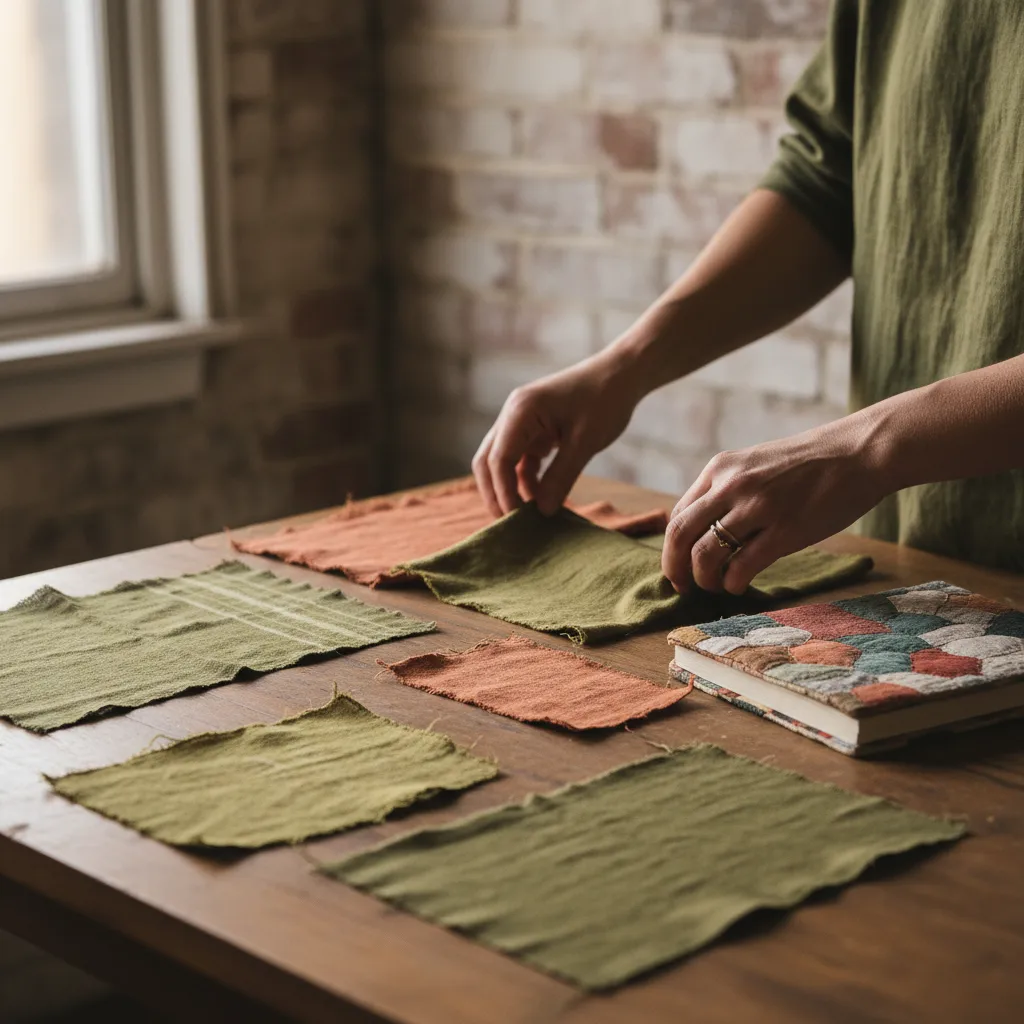
“Reused” can describe many different starting points, from an offcut of purpose-made book cloth to a piece of household fabric. Those options are not interchangeable. A loose textile might need backing or another preparation process, and its suitability depends on the fibre, finish and adhesive method. Describe the material accurately in your own project notes. Calling every scrap book cloth hides the very differences that this outing is supposed to help you understand.
Avoid treating reclaimed cloth as automatically safer for an important object. For a new everyday notebook, the appeal might be its existing marks and the challenge of using a small area thoughtfully. For anything intended to protect valuable papers, the requirements are different and deserve informed material advice. A sustainable intention works better when the project has a realistic life, rather than when a cover fails and the whole exercise has to begin again.
Think about the bag it will live in
A daily notebook meets coat cuffs, other books and the bottom of a tote. Consider whether you want a surface that records that contact visibly or one that remains visually quiet. Pale open weaves and very dark smooth finishes can show different kinds of marks; judge the candidate in relation to how you actually carry things. A swatch held against your own bag can make the decision more concrete than an abstract preference for a fashionable colour.
On a sample you own, test your intended adhesive and let the trial dry fully before examining it. Observe whether preparation changes the surface or whether an edge begins to lift. Do not rub a display piece aggressively to imitate wear, and do not assume a quick tactile impression proves long-term durability. The useful outcome is a short comparison between a few suitable materials, with the uncertainties written down in language you will understand when you return to the bench.
Nearby recommendations, independent decisions
Ask the Karpo APP for nearby place recommendations in Hackney related to craft materials, paper or handmade stationery. You could describe an interest in remnant-based notebook covers and places worth browsing for inspiration. From those suggestions, choose your own stops and travel arrangements. Keep a separate handwritten project sheet for dimensions and material notes, so the purpose of the outing remains clear while you consider places that interest you.
Do not build the whole afternoon around finding a matching piece for one tiny scrap. If the candidates you encounter ask for too many compromises, pause the material decision and enjoy the neighbourhood on its own terms. Back at home, lay out the pieces you already own and see whether a simpler two-colour arrangement answers the brief. Sometimes a smaller notebook is an intentional redesign; sometimes saving the remnant for another project is the more honest choice.
A practical stopping point
Pack a flat paper cutting diagram, the paper you plan to write on and a sleeve for samples. Keep drinks away from any comparison cloth and request permission before handling material. Once a candidate fits the diagram, suits the construction and feels right for daily carrying, stop adding alternatives. A notebook made from modest pieces succeeds when each piece has a reason to be there, and when the finished object invites use rather than careful protection from ordinary life.
Ask Karpo for more information.
Keep reading
- Shoreditch Comic Shop Crawl Planner: Murals to Manga
 Bermondsey Comic Shop Crawl Planner: Zines Under the Arches
 Clapham Comic Shop Crawl Planner: Charity Shelves and Common