 Brixton Vintage Thrift Shop Finder: South London Retro Gems
Hidden Gems & Odd Finds
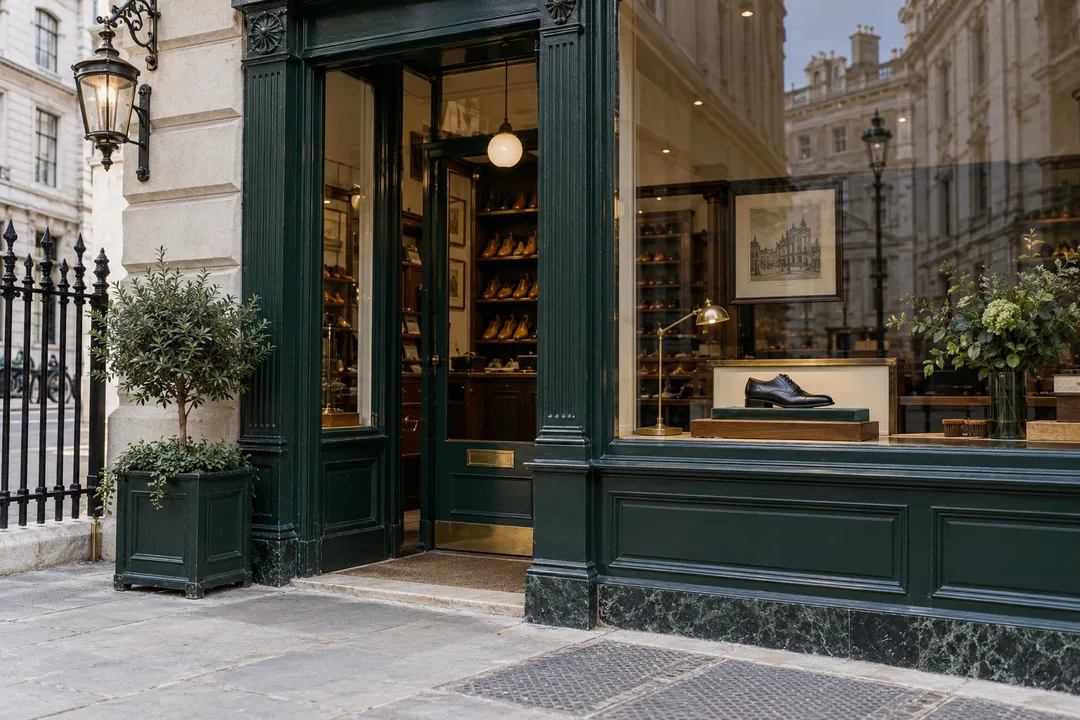
John Lobb Bespoke Shoemaker: St James’s Fit Guide
John Lobb at 9 St James’s Street offers weekday and Saturday shop hours, a 1849 bootmaker story, and a fitting conversation built around one owner.
John Lobb’s original London bootmaker shop is at 9 St James’s Street, London SW1A 1EF. The company’s official shop page lists Monday to Friday from 9am to 5:30pm and Saturday from 9am to 4:30pm, with +44 20 7930 3664 as the shop telephone. This is the address for a serious bespoke conversation, not merely a browse through a ready-to-wear display. John Lobb’s own site says each shoe, boot, or slipper crafted at 9 St James’s Street is unique to its owner, and the company invites in-shop, at-home, and international consultations. Begin with that promise, then make it practical. Bring one pair of trousers, one clear use case, and enough time to talk about the shape your foot needs rather than the name you want to wear.
Start at the independent London bootmaker
The number 1849 appears throughout John Lobb’s own story because the family firm traces its foundation to that year. The history page describes the move to London after the first Royal Warrant, the opening of a Regent Street shop in 1866, and the later move to 9 St James’s Street in 1944. That chronology gives the present shop unusual weight, but the history is most useful when it changes what you inspect. Look for the relationship between a sturdy bootmaker tradition and the clean lines of a dress shoe. Ask why a particular waist, toe, or heel belongs to the house. The answer should be about construction and wear, not just prestige. If the consultation becomes a lecture on celebrities or royal associations, bring it back to your foot, your wardrobe, and the occasions that will justify the long process.
Why the 1849 story still matters
A first bespoke conversation should cover four things in order: how you walk, what you wear, what shape feels comfortable, and what you want the finished pair to do. Say whether the shoes are for office days, formal dinners, travel, or a mixed calendar. Mention standing, uneven feet, heel slip, pressure points, and any old pair that finally taught you what not to buy. John Lobb’s official language is deliberately personal, describing footwear around the owner’s needs and character. Use that as permission to be specific. Bring socks that match your normal wear, and arrive in trousers rather than shorts so the silhouette can be judged. You do not need to arrive with a final style name. The fitter’s job is to turn a practical brief into a shape that can be made.
What a first bespoke conversation should cover
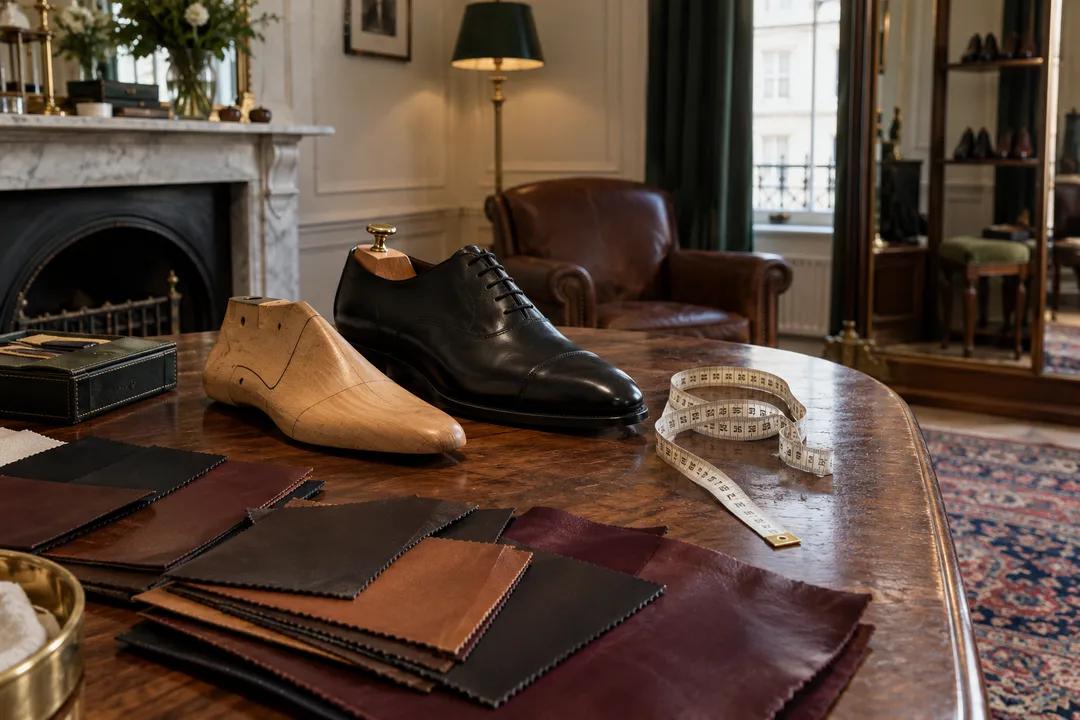
The last is the quiet centre of bespoke shoemaking. It sets the outline around which the upper is built, so its proportions affect toe room, instep height, waist shape, and heel security. Watch how the fitter evaluates your feet rather than focusing only on the measuring tool. A good appointment notices asymmetry and asks how you use the shoes. Walk slowly, stand still, and describe the sensation without trying to sound knowledgeable. “My heel lifts when I turn” is more useful than “I need a tighter shoe.” If a classic cap-toe looks elegant in the mirror but pinches when you bend the forefoot, the last is wrong for the brief. The point of bespoke is not to make discomfort look expensive. It is to create an object whose line and function agree.
A last is the heart of the order
Prepare for the fitting room by reducing distractions. Turn off the urge to compare ten brands in your head and concentrate on the pair in front of you. Ask how many fitting stages the order normally involves, what changes can be made after the first trial, and how the personal last is stored for future work. John Lobb’s official site explains the consultation route but does not publish one universal bespoke price on its shop page, so let the specification and quotation define the cost. That is a better conversation than guessing from ready-to-wear models. Keep a record of the selected leather, toe shape, sole, and any special detail. A private order can take months, and the notes will help when the memory of the first meeting becomes less precise than the excitement of the final pair.
How to prepare for the fitting room
Study the categories that reveal the house most clearly: a restrained Oxford, a loafer with a confident throat line, a riding or walking boot, and a slipper whose proportion makes the absence of laces feel intentional. The official online shop also presents leather goods and bespoke accessories, which helps place footwear inside a wider bootmaker tradition. Do not choose by colour alone. Look at the edge finish, the transition from upper to sole, and the way the heel sits under the leg. Black calf is unforgiving and therefore useful for learning; brown leather shows patina and movement; a boot makes the relationship between foot and ankle easier to see. Ask which style will be easiest to maintain in your life. The most beautiful pair is the one that still earns its place after the first season.
The shoes worth studying in person
The quotation should be treated as part of the design, not as an awkward final number. A bespoke shoe can involve choices about leather, sole, welt, finishing, and the number of fittings, so write down what the quoted figure includes. Ask how the house handles a change between the trial shoe and the finished pair, and whether future orders can use the same personal last. That conversation is especially useful if this is your first commission. It lets you compare a long-term relationship with a one-off purchase without reducing craft to a simple price-per-pair calculation. A clear brief and a clear record keep the order calm when months pass between the first measure and the final handover.
A measured St James’s walk
After the appointment, take a measured route through St James’s rather than sprinting toward the next luxury landmark. Walk toward Jermyn Street to compare the district’s relationship with shirts, fragrances, and footwear, then turn toward St James’s Square for a quieter pause. If you want a longer loop, continue toward Piccadilly and Green Park, but keep the route easy if you are wearing new shoes. The neighbourhood rewards looking closely: doorways, stonework, and small windows all echo the same preference for material and proportion that makes bespoke footwear interesting. Write down the address, telephone, proposed timeline, and the specific fit issue discussed before you leave. A good walk gives the decision time to settle, while a rushed shopping circuit turns every pair into a blur of polished leather.
Practical Notes for John Lobb
Practical details: John Lobb’s official shop page lists 9 St James’s Street, London SW1A 1EF; +44 20 7930 3664; Monday to Friday 9am–5:30pm; and Saturday 9am–4:30pm. The company describes itself as the original British bootmaker since 1849, and its history page records the move into the current premises in 1944. Book a consultation for bespoke work, wear normal trousers and socks, and bring a real use case rather than a fantasy brief. Ask about the last, fitting sequence, storage, leather, sole, and care. Leave price questions to the quotation because the official shop page does not publish one universal bespoke figure. John Lobb rewards patience: the shop visit is the beginning of a relationship between one foot, one last, and one pair.
Ask Karpo for more information.
Keep reading
- Brixton Vintage Thrift Shop Finder: South London Retro Gems
 Notting Hill Vintage Thrift Shop Finder: Preloved Rails
 Soho Vintage Thrift Shop Finder: West End Designer Archives